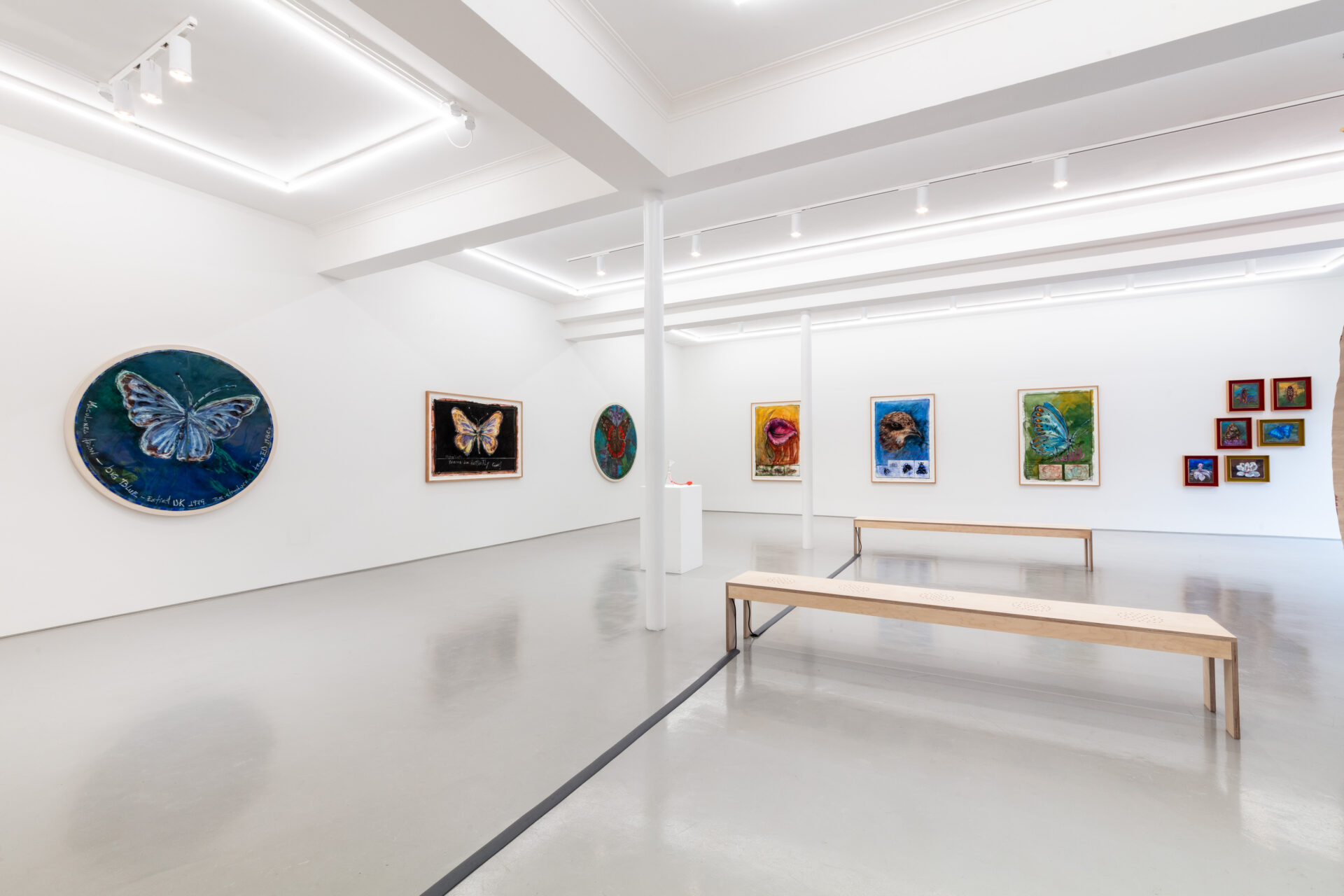
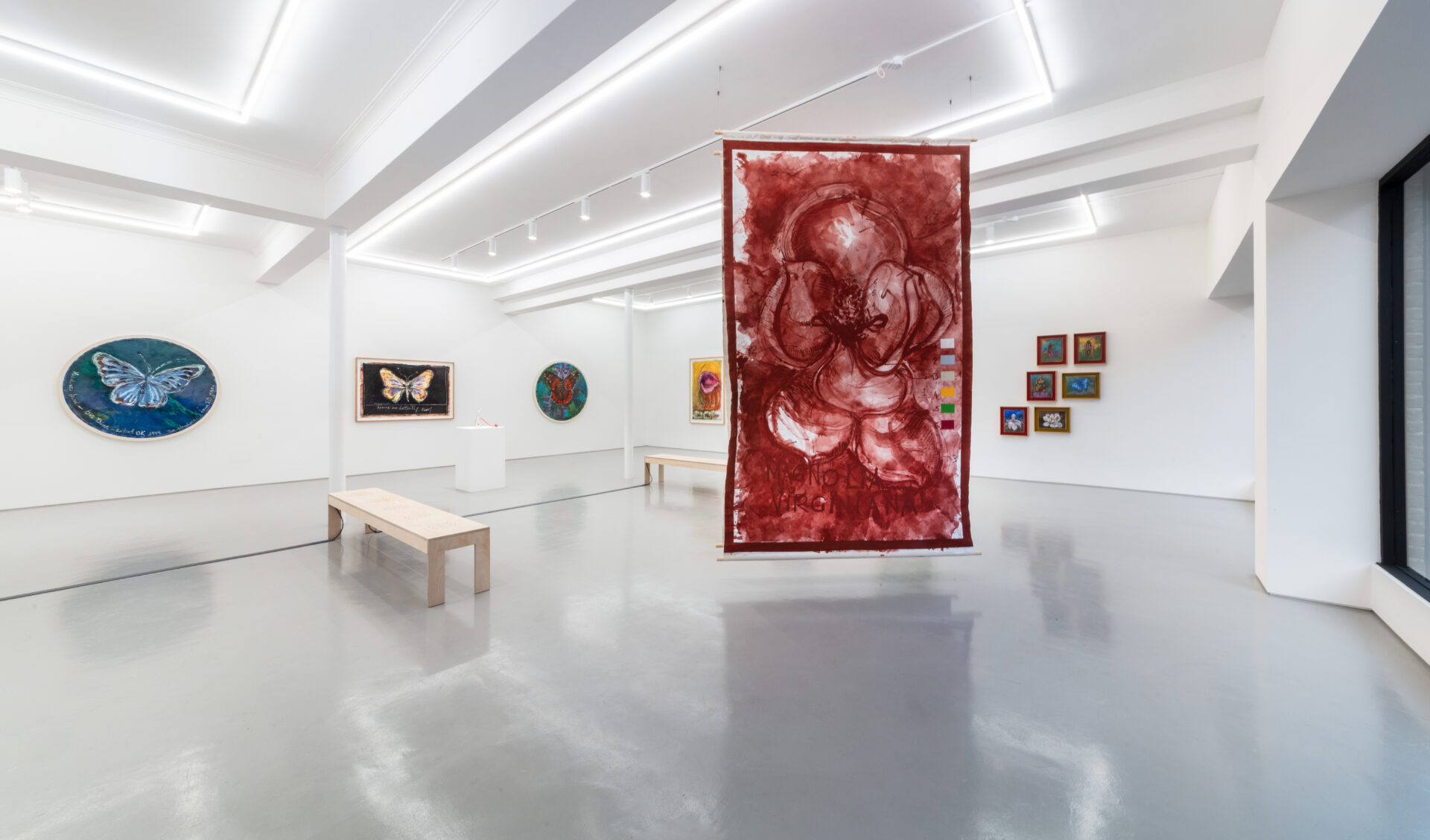
Championing the material and the immaterial with equal curiosity, Oswaldo Maciá spotlights topics such as evolutionary interdependence and the survival of species with grace rather than didacticism. A flaneur of the natural realm, he finds inspiration by observing the many links between fauna, flora and human behaviour, using these observations to create immersive environments where sound, sculpture, smell and pictorial compositions each play a role. In his interconnected webs, a coal mine station in Svalbard, majestic Military Macaws, and the combination of wind and dust that emerge from the Sahara Desert negotiate their existences with one another, in ever more fragile balancing acts.
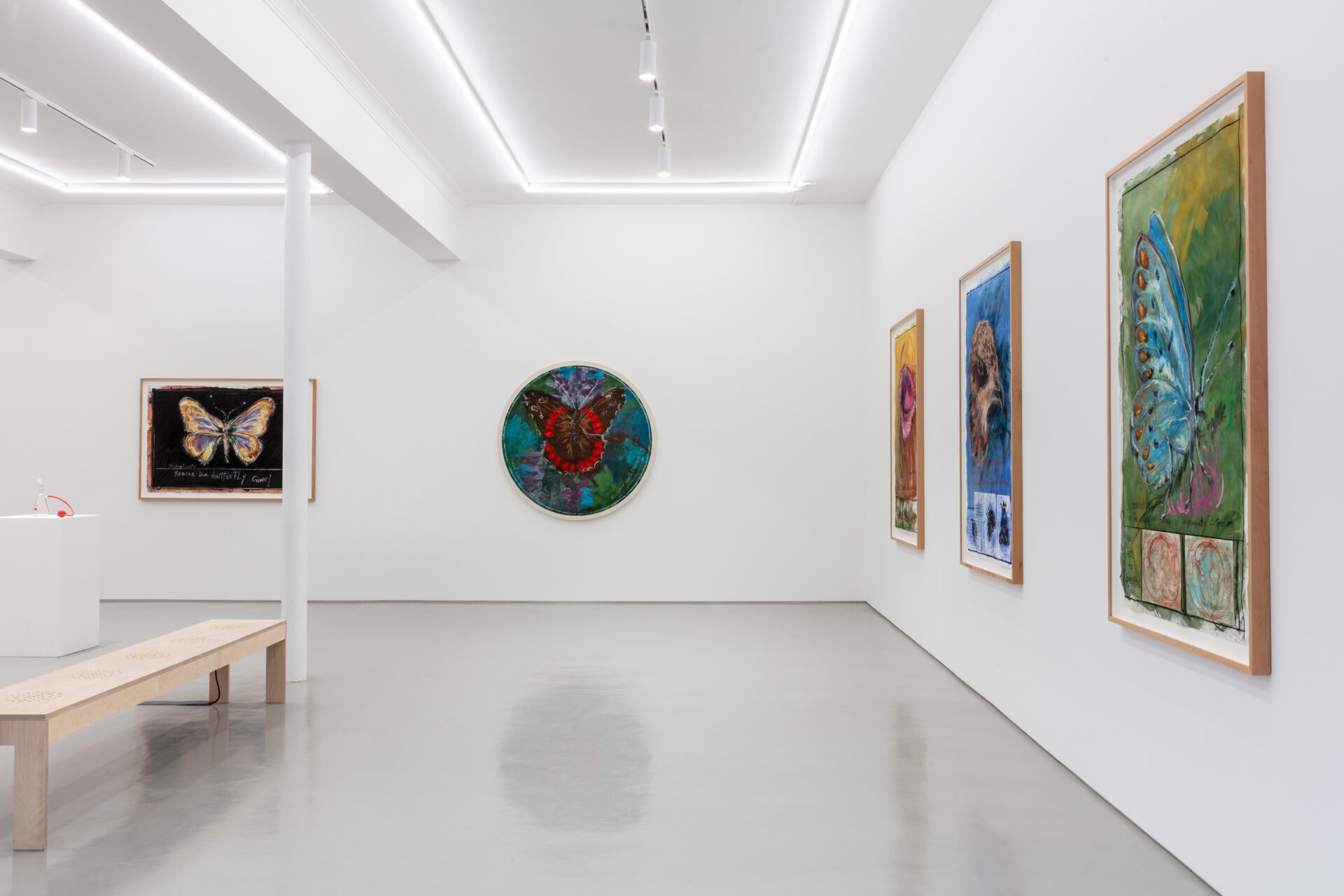
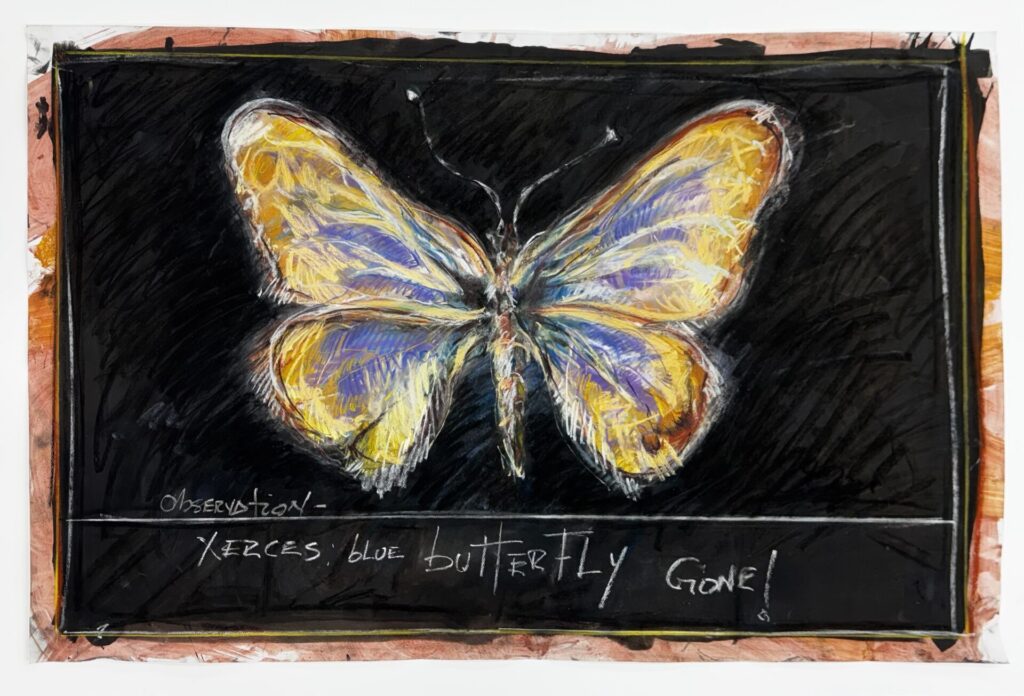
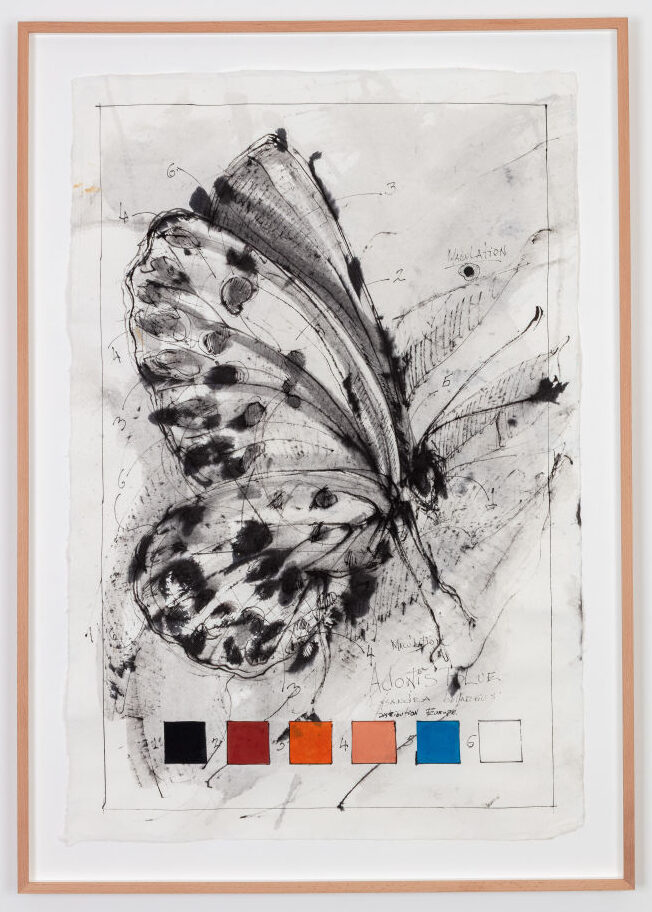
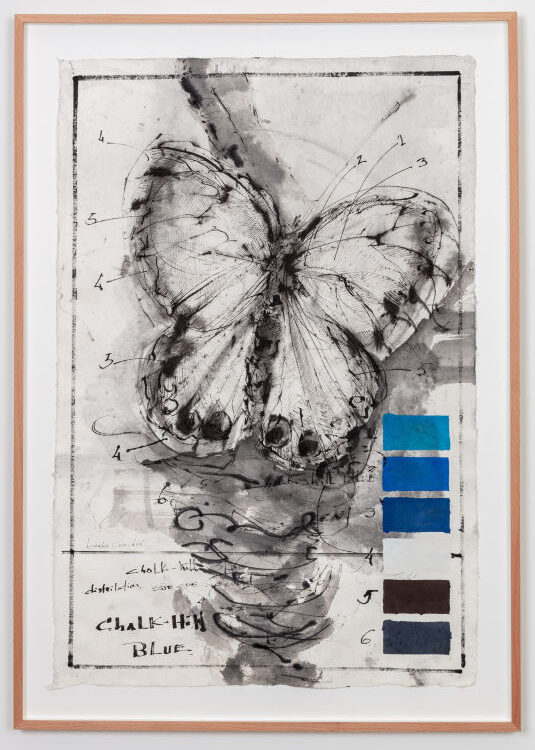
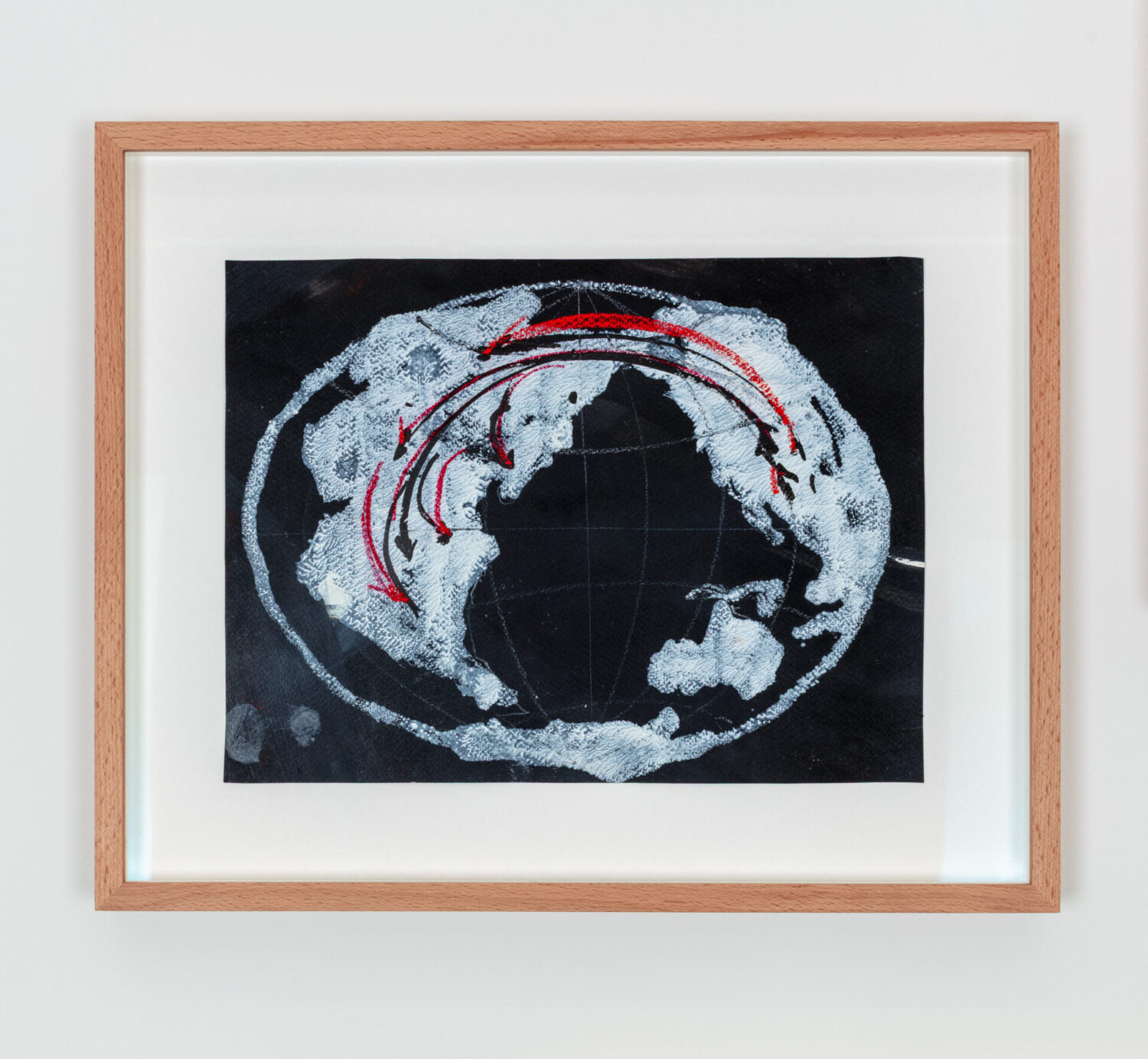
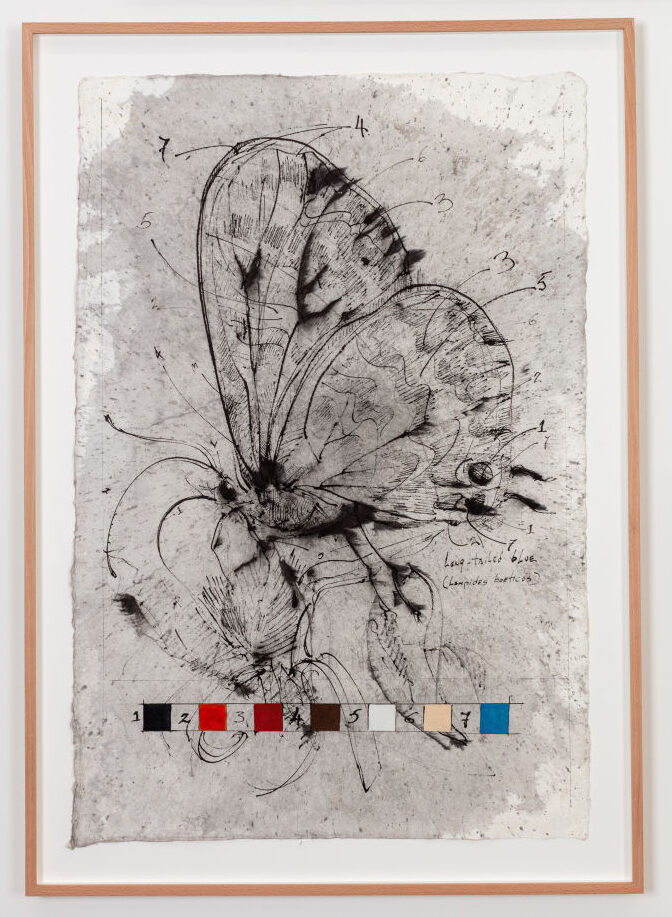
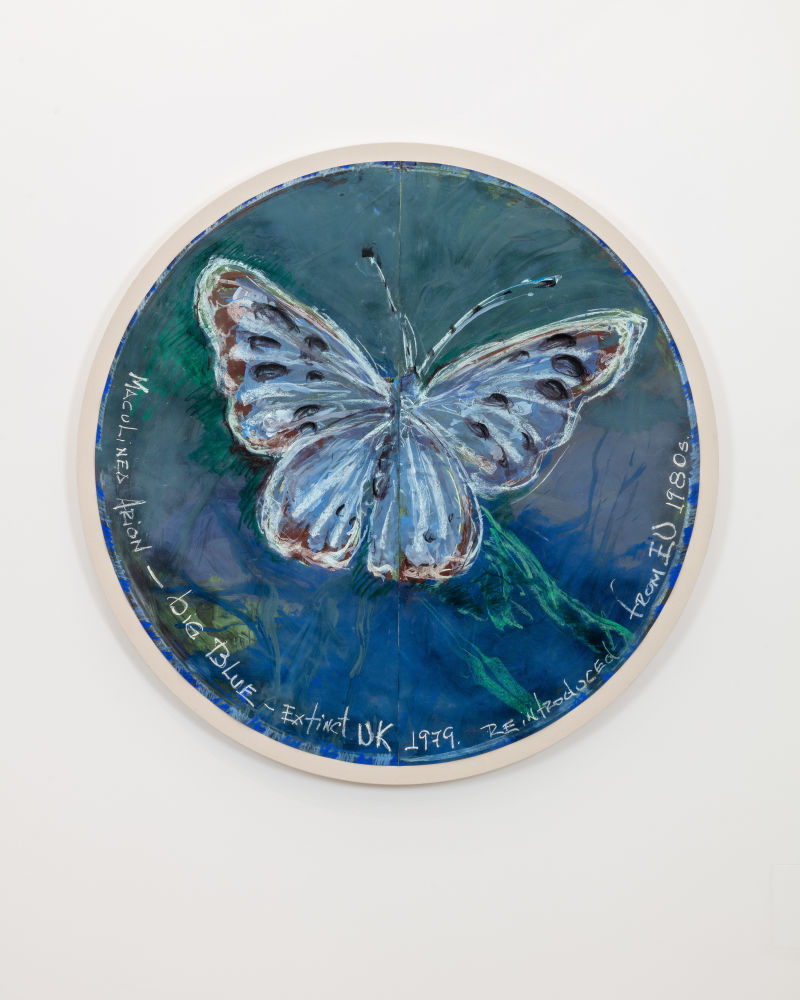
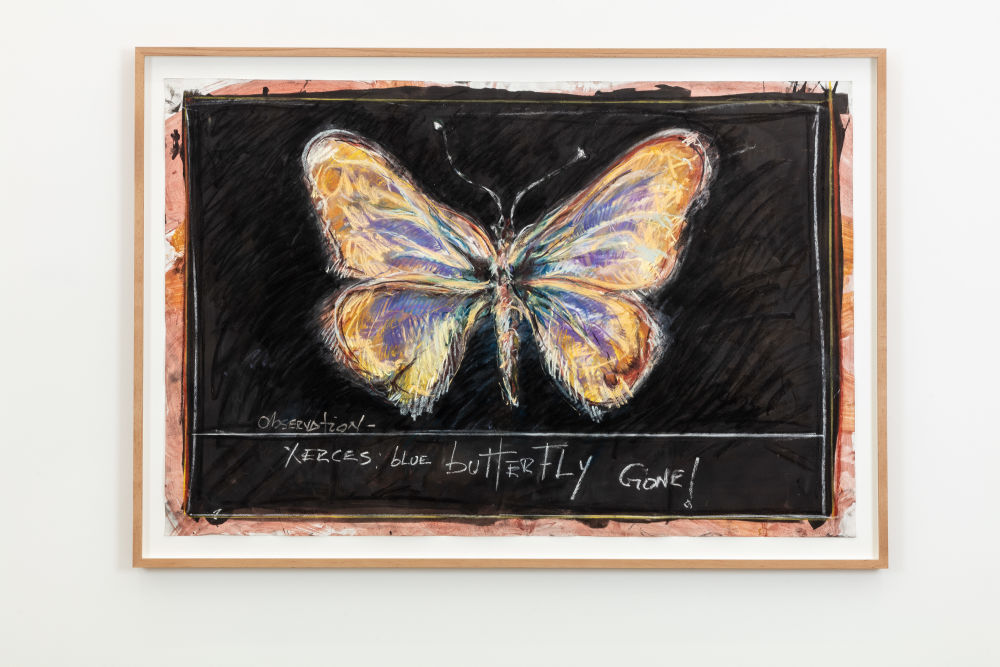
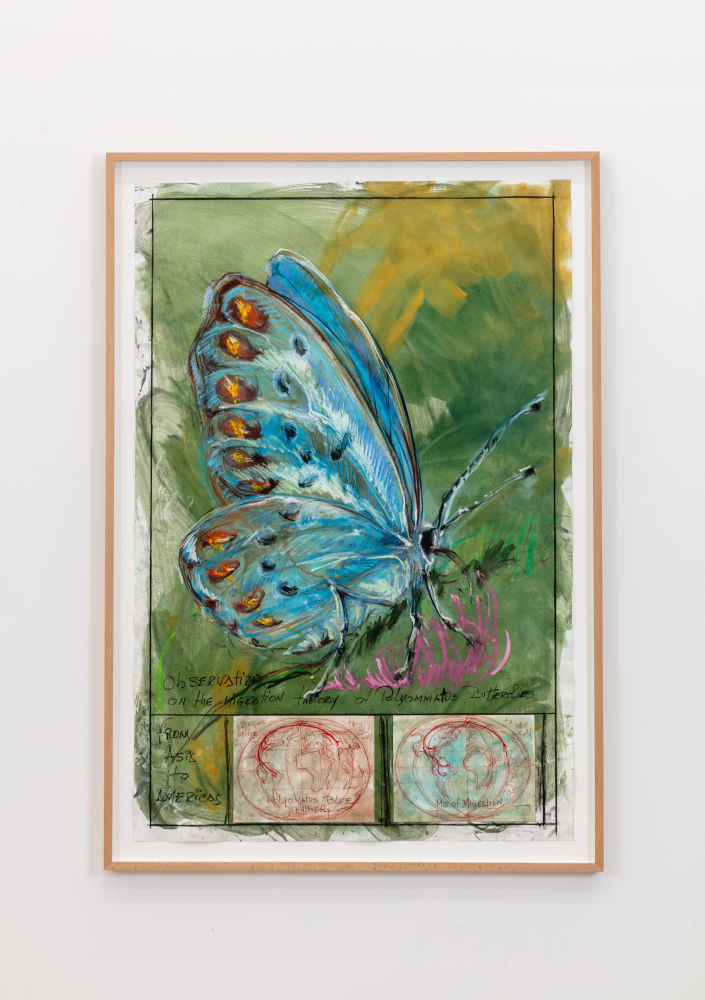
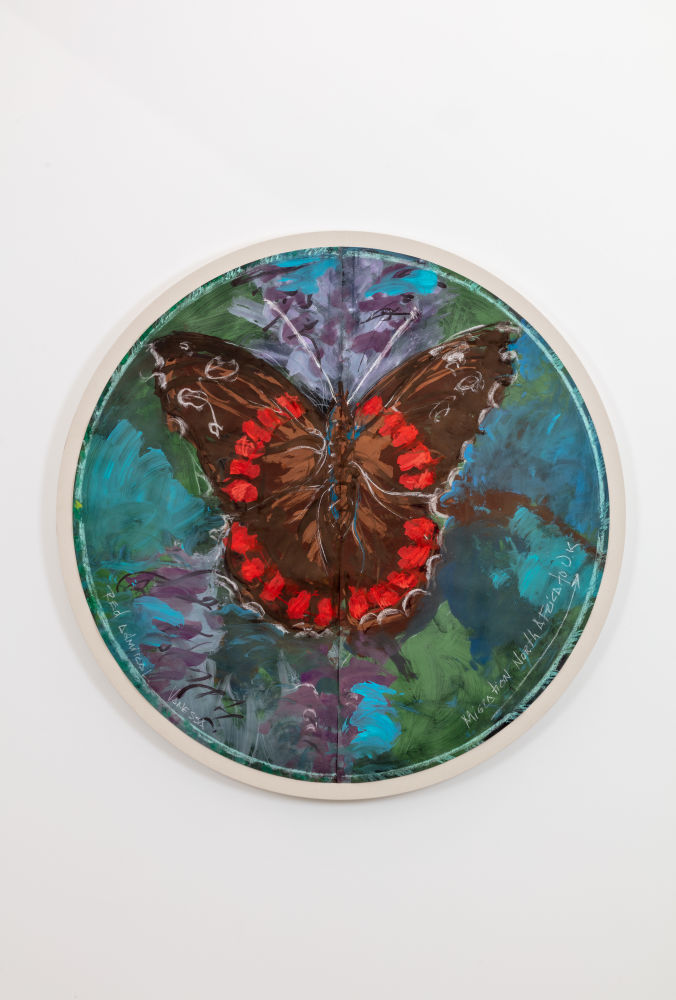
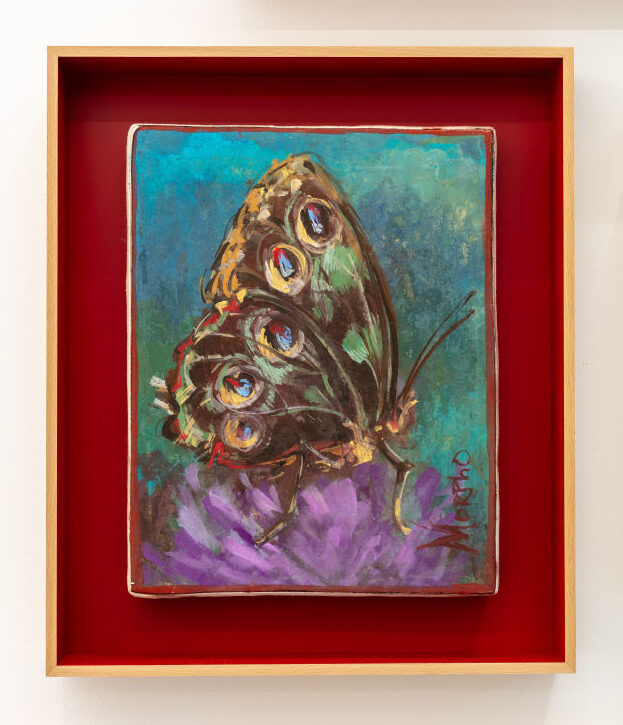
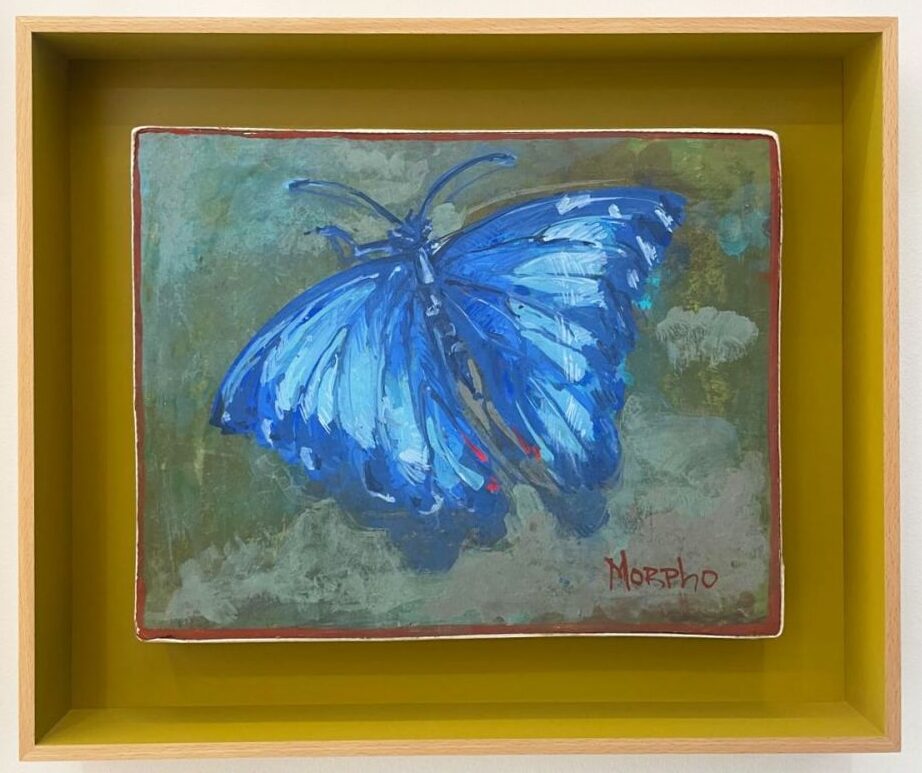
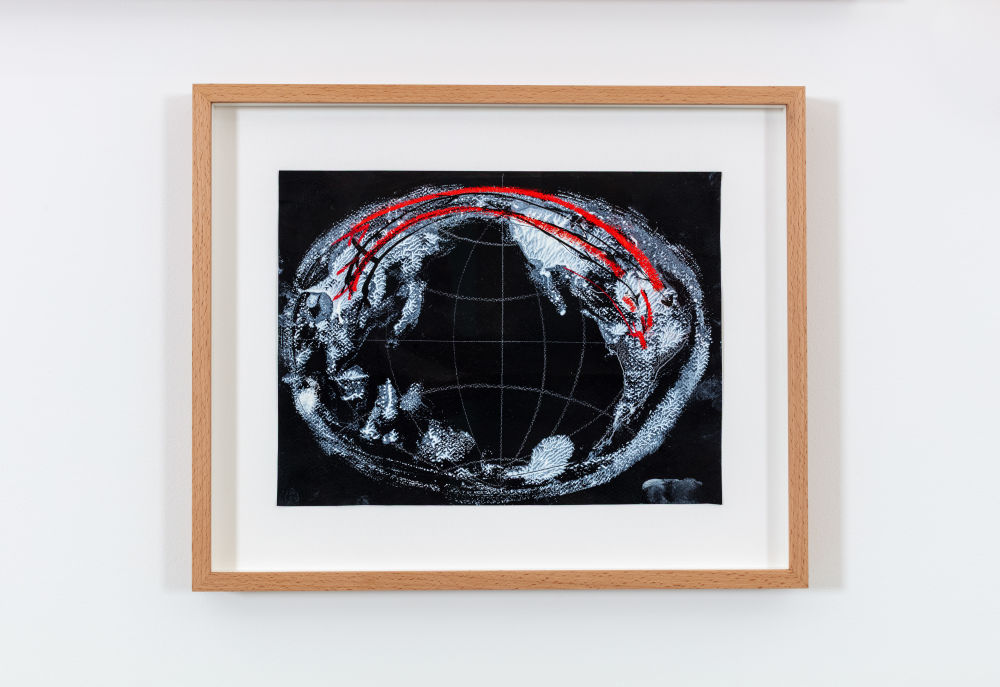
An enduring fascination with migratory movements of species, man-made and natural alike, runs through his practice. Questioning the very idea of the indigenous, Maciá looks at plants and animals that travel far and wide, natural movements and displacements that result at times in their survival, at times in their extinction. One case study that informs several of the works on show is that of Vladimir Nabokov’s observations of the migratory patterns of Blues, a subfamily of gossamer-winged butterflies. Better known for his literary work, Nabokov was also a diligent lepidopterist, who hypothesised that Blue butterflies arrived in the Americas from Asia by crossing the Bering Strait over a period of millions of years. When he made these findings public in 1945, he was ridiculed by the scientific community, who deemed his hypothesis improbable due to the short lifespan of a butterfly. Yet today, through DNA sequencing techniques, we know his findings to be true.
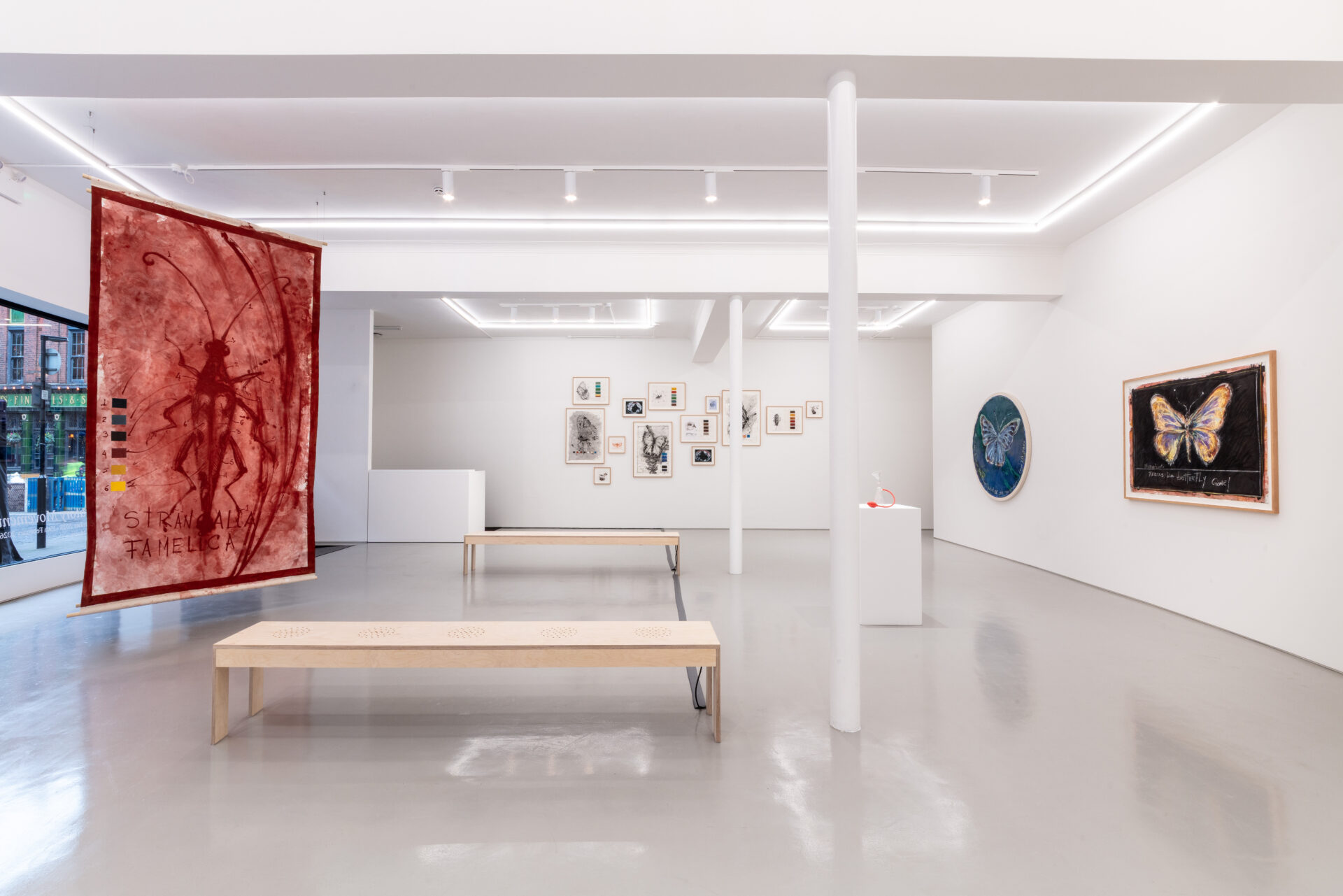
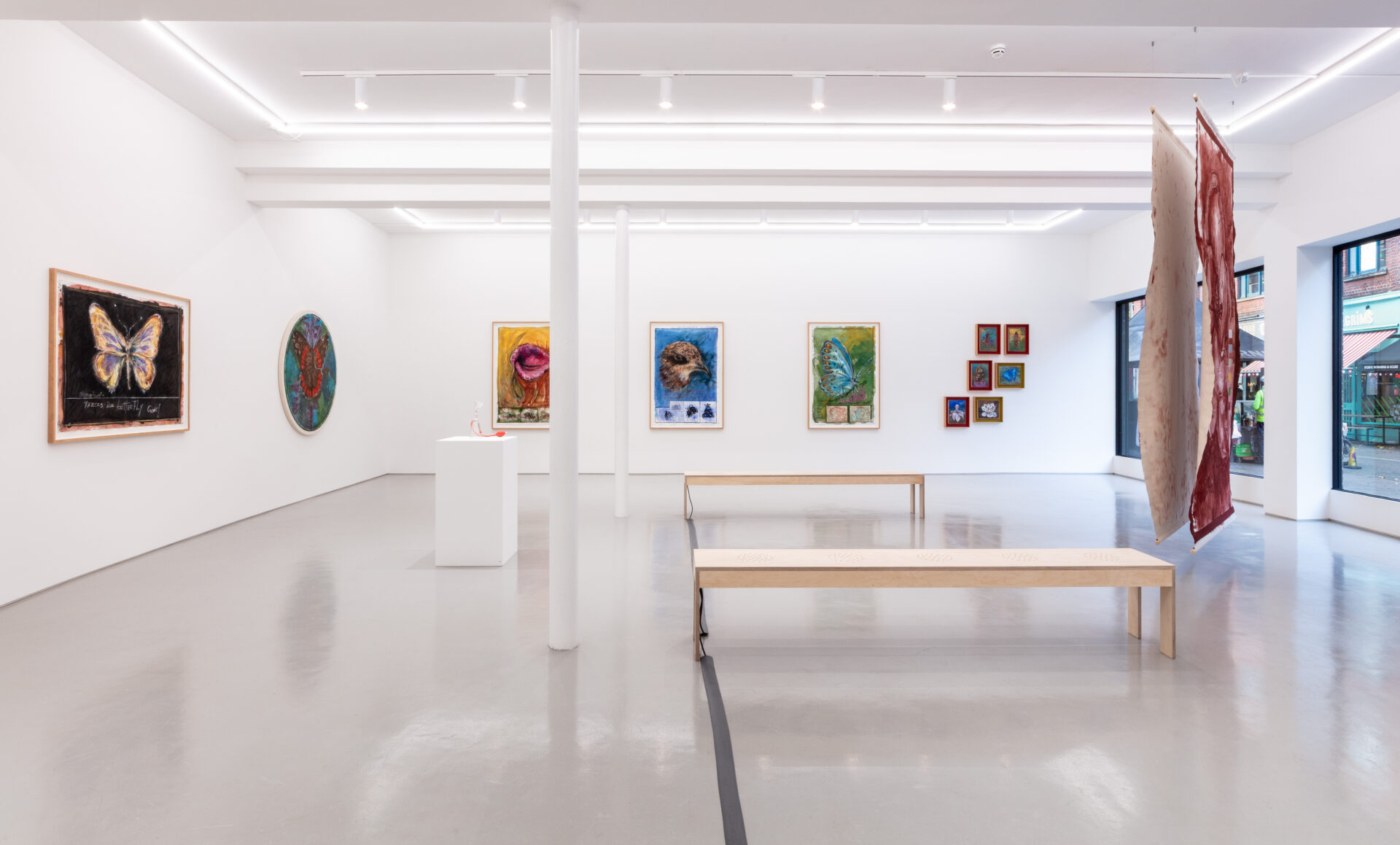
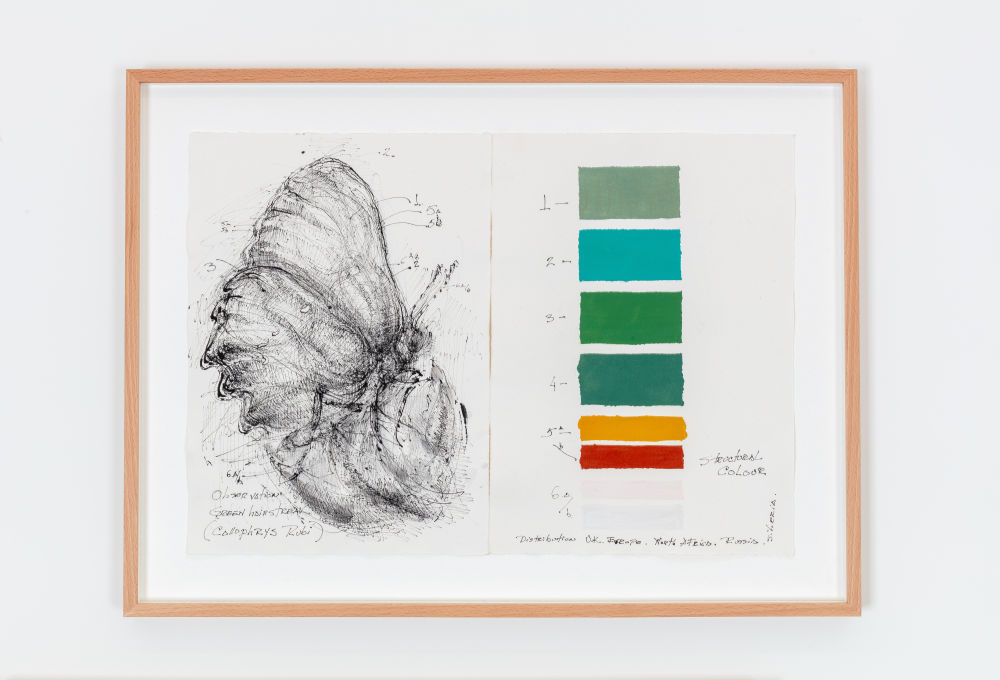
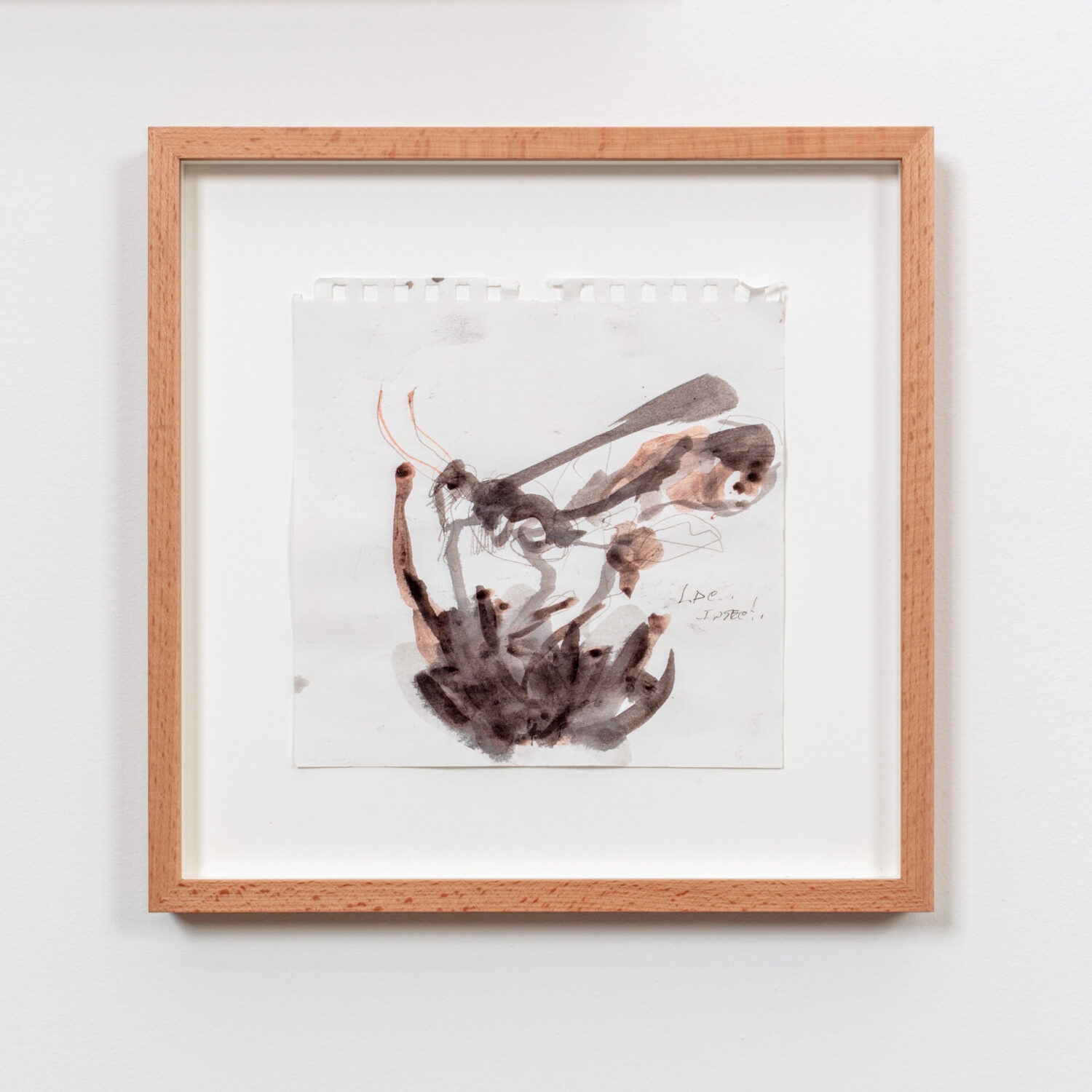
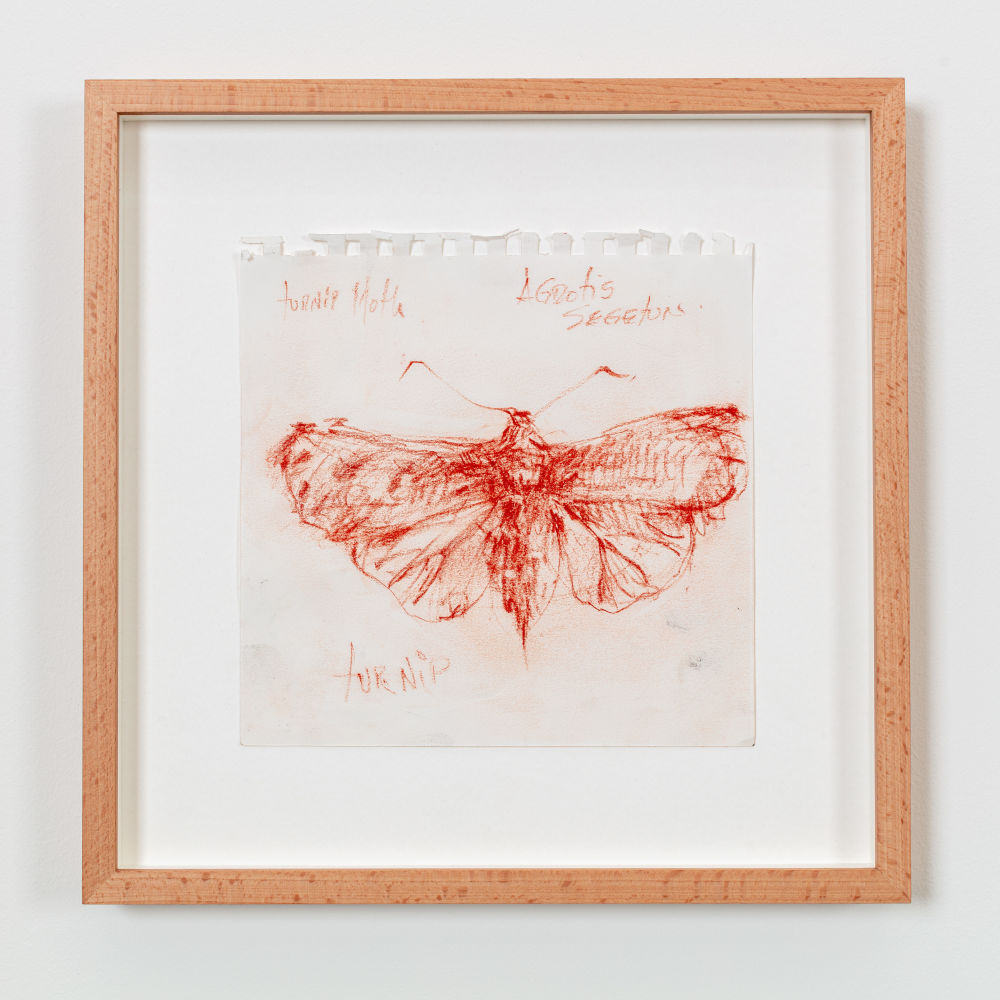
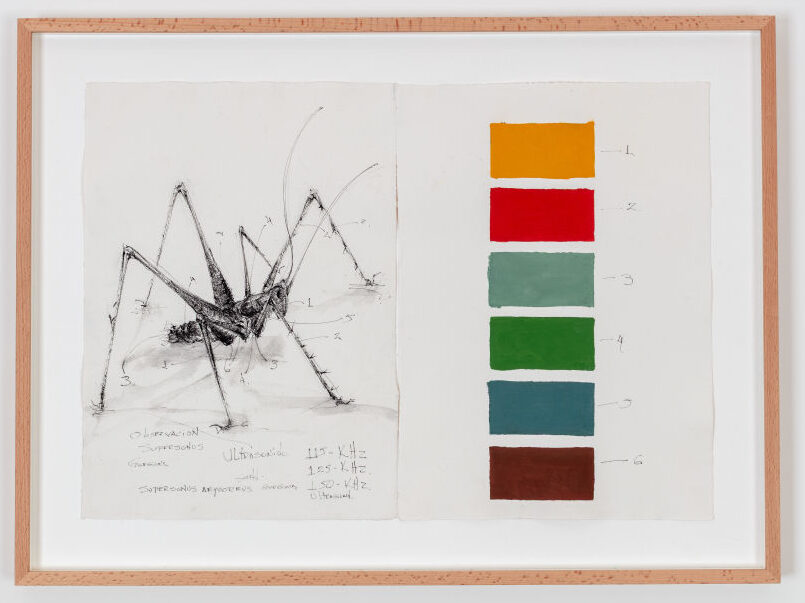
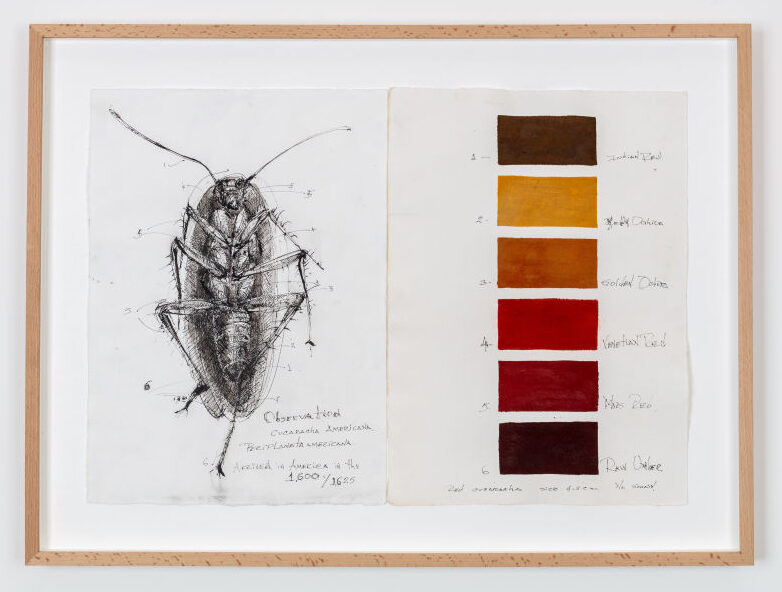
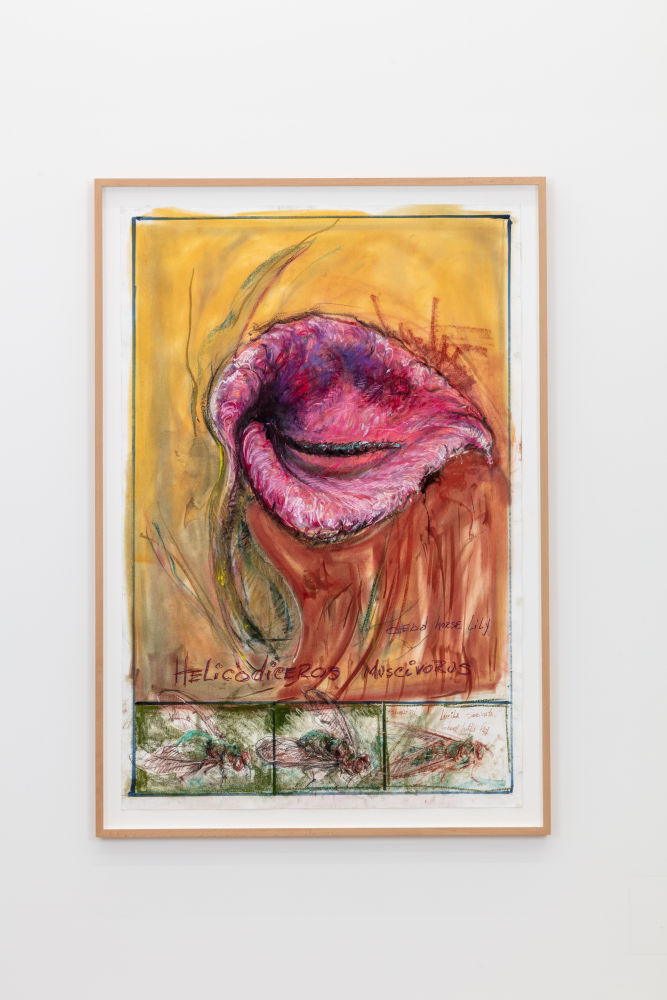
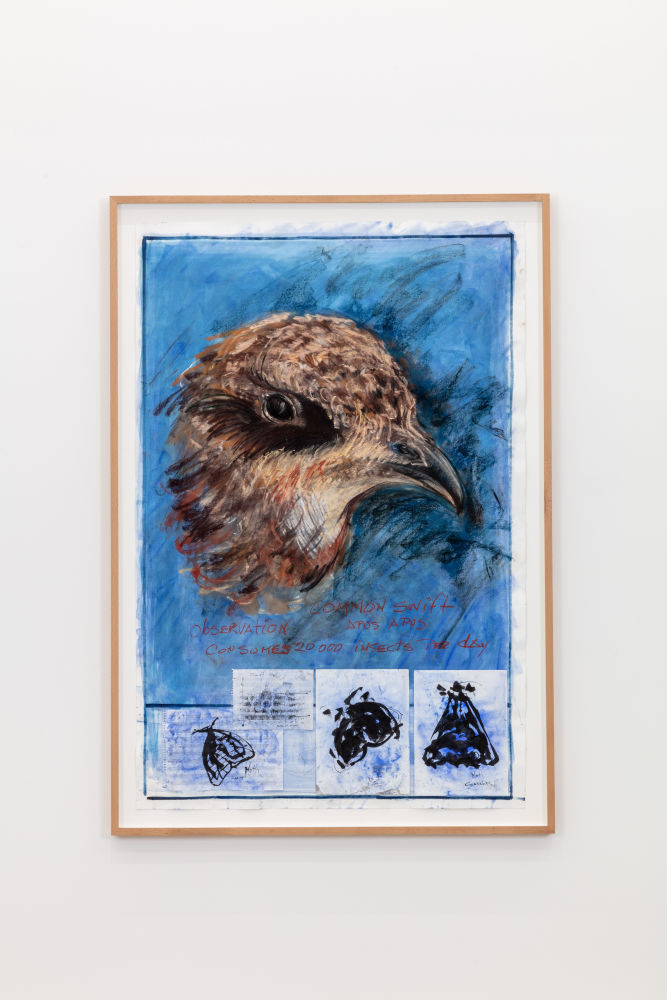
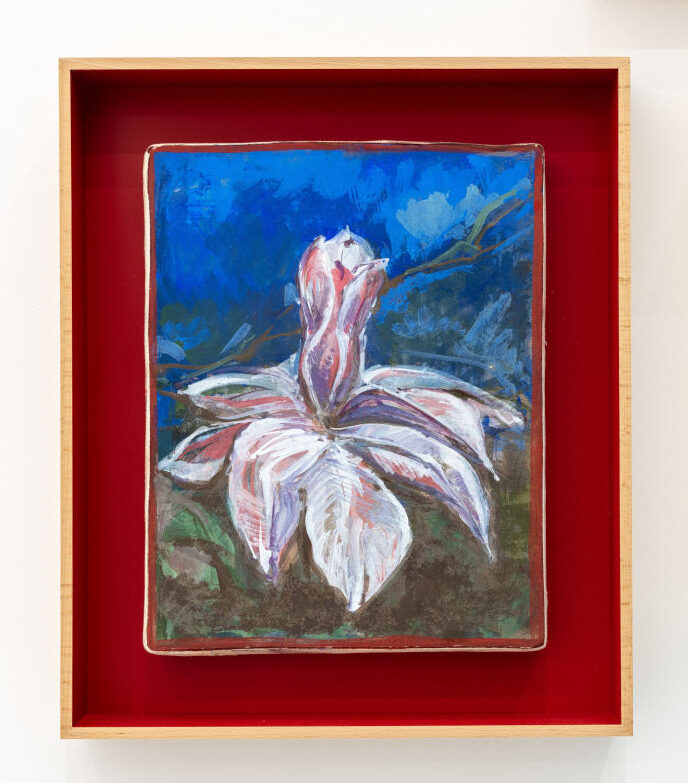
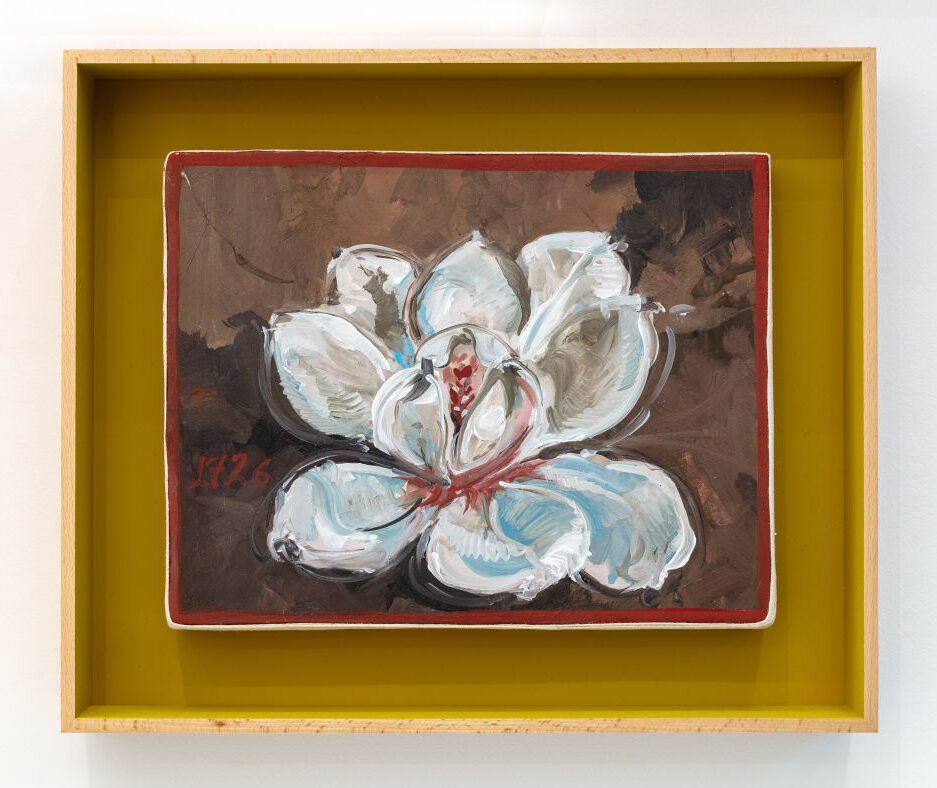
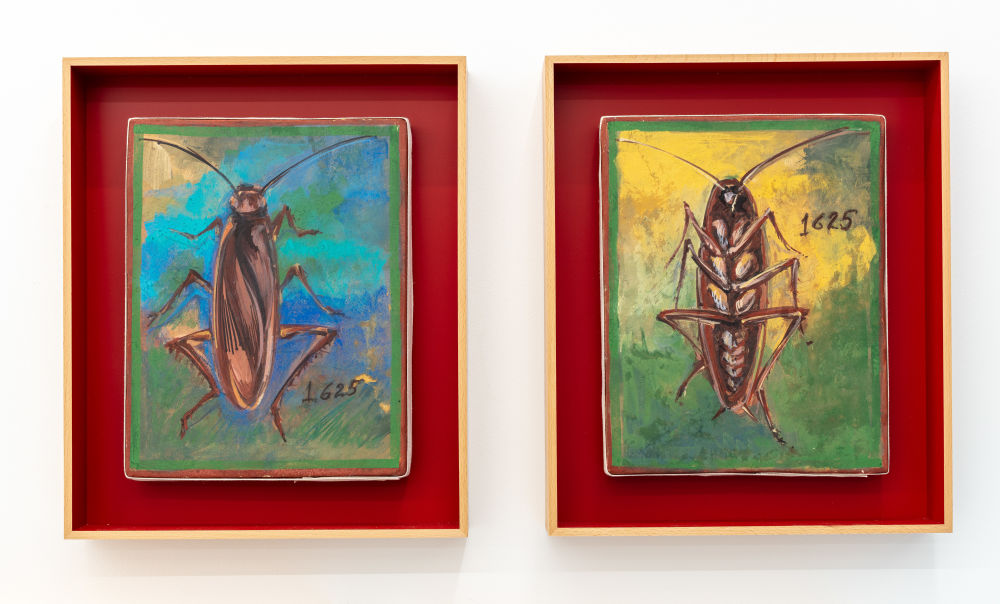
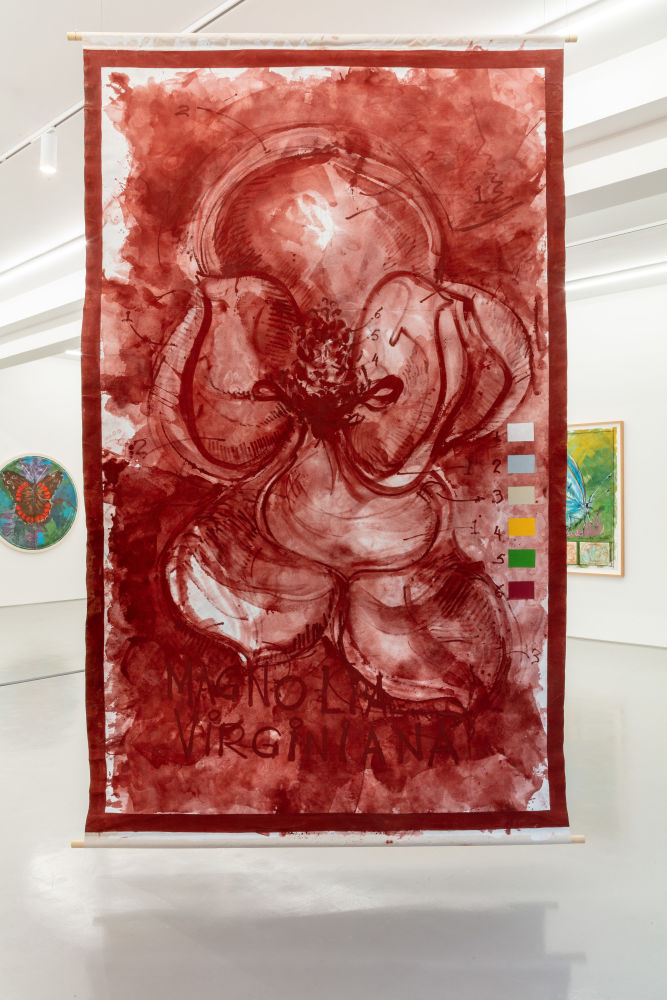
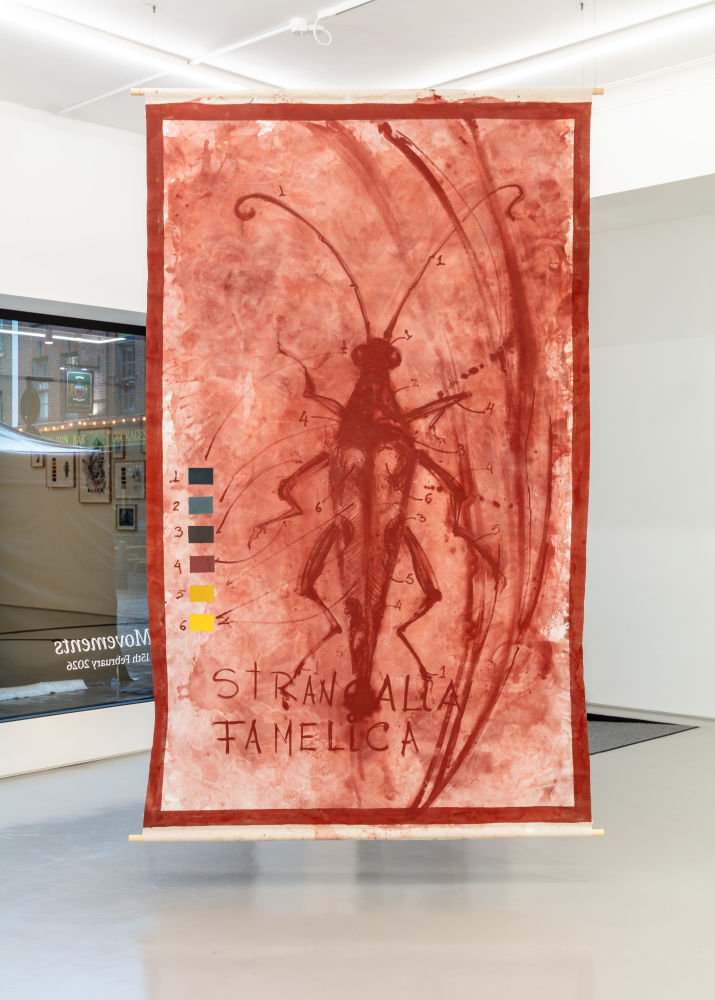
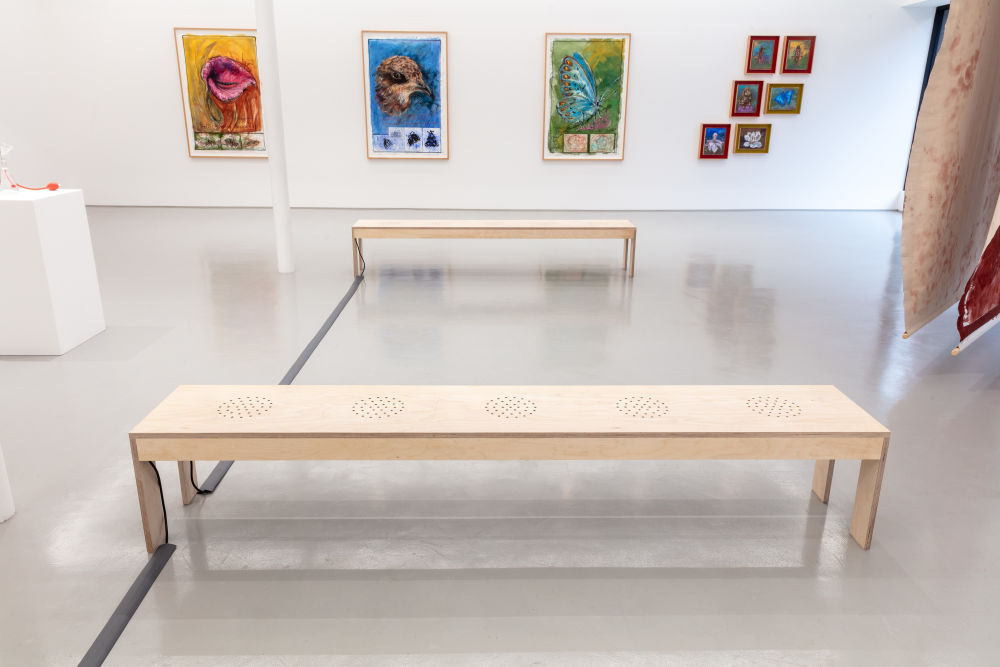
Other plants and animals that feature in frescoes, study-like watercolours and ink works scattered around the walls are different butterflies, the common swift – an inconspicuous looking but noisy Afro-Palearctic migratory bird that eats 20,000 insects per day and can fly for ten months without landing – magnolias, cockroaches and the frightful dead horse arum lily. The latter is a gorgeous yet peculiarly scented pink flower that attracts blow flies by emitting the putrid smell of carcasses. Though the flies meet their fate in this deadly encounter, the flowers are thus pollinated and carry on with their lifecycles. This interdependency between species is further explored in two banner-like canvases that hang from the ceiling: one shows the Magnolia virginiana flower, the other the Strangalia famelica beetle that pollinates it, an unusual relationship with one of the longest evolutionary histories.
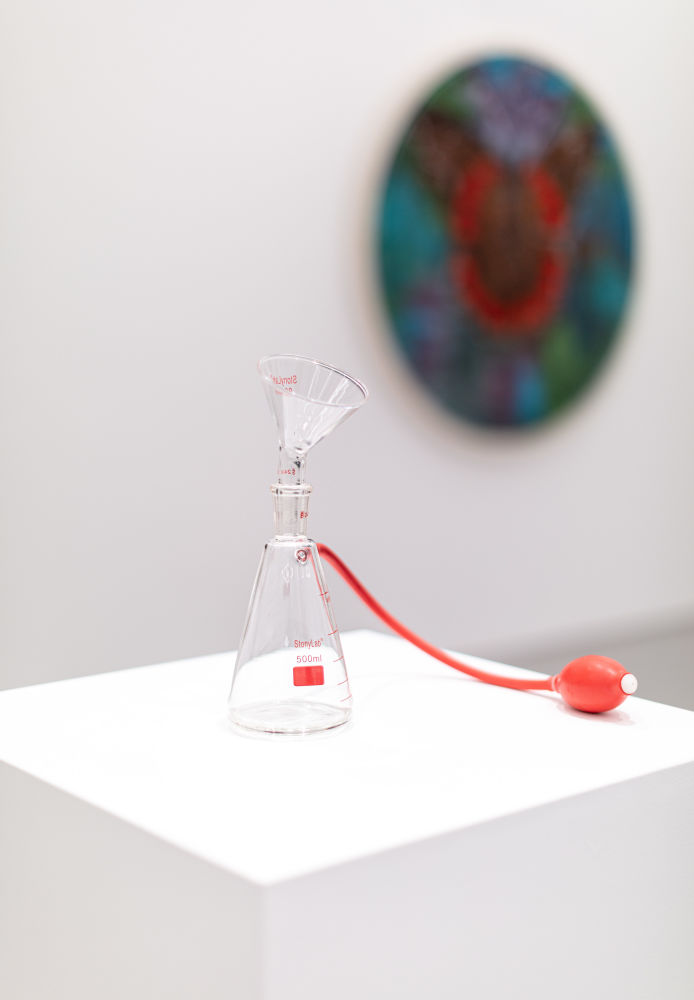
The same ‘gatekeeper’ arrogance that led scientists of the 1940s to look down on Nabokov’s findings inspired clergyman John Wilkins to attempt to determine all the species that embarked on Noah’s legendary Ark – the first and most archetypal mass displacement of species in Christian mythology. Wilkins’ efforts, made in 17th-century Britain, inform Maciá’s Tomorrow will be Cloudy (2001–25), a sensorial-acoustic composition devised with sounds from all the species listed by Wilkins, sourced by the artist from the British Library’s archives. The sound piece emerges from within benches custom-designed by Jasper Morrison, so that the viewer can both hear and feel the sound in their bodies whilst sitting on the benches. Between these sculptural objects lies a pedestal with a vessel containing one of Maciá’s signature smell works, Consciousness, created in 2025 in collaboration with Senior Perfumer Ricardo Moya, from IFF1. And what should consciousness smell like? Experienced together, sound and smell create an olfactory acoustic composition, a term coined by Maciá to describe the Gesamtkunstwerk that he conceives anew in each of his projects.
Curated by Maria do Carmo M.P. de Pontes.
This exhibition will run from 5th December 2025 to 15th February 2026, Wednesday to Sunday, 12-6 pm, or by appointment. The gallery will be closed for the festive period from 6 pm on 20th December 2025, and will reopen at 12 pm on 7th January 2026.