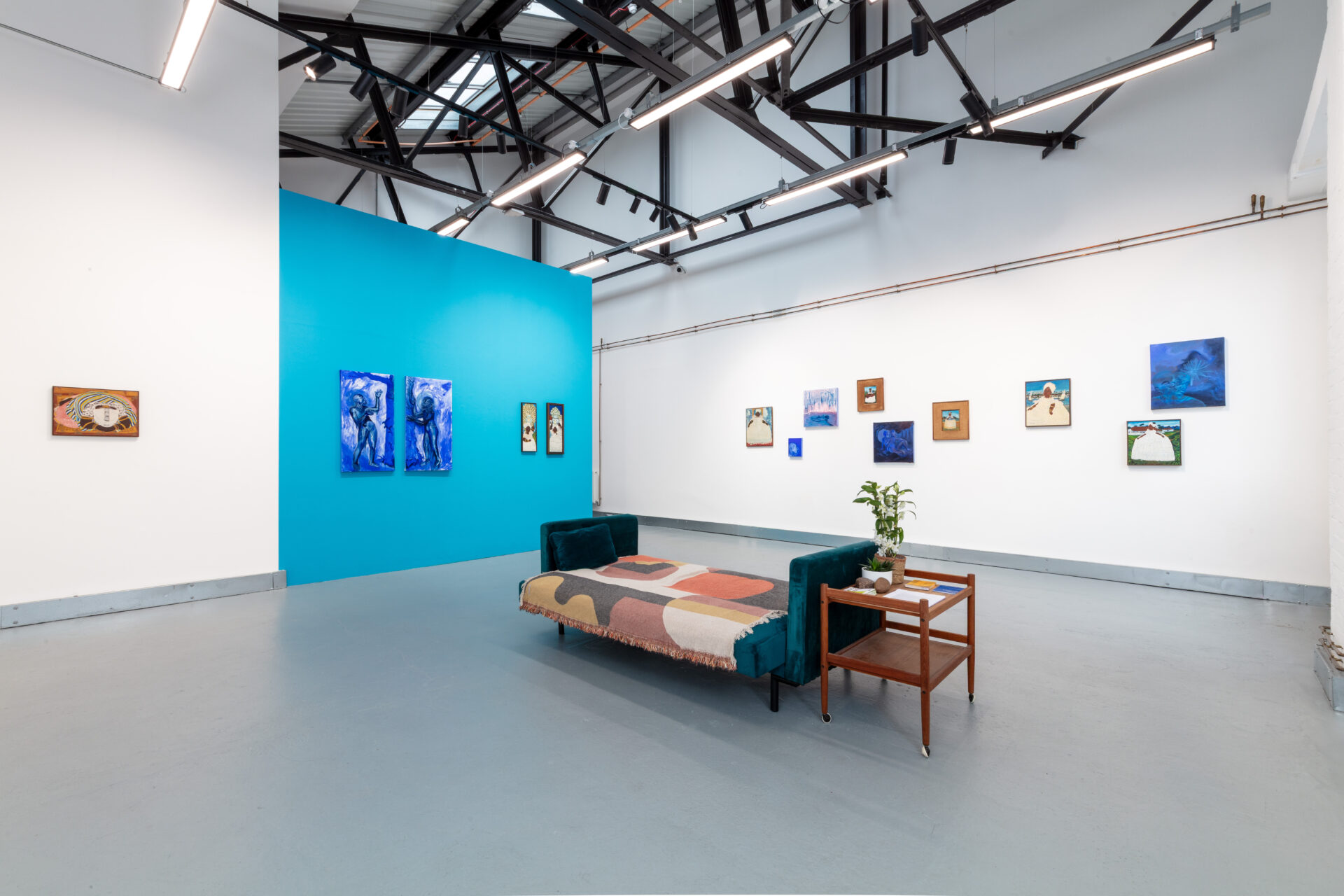
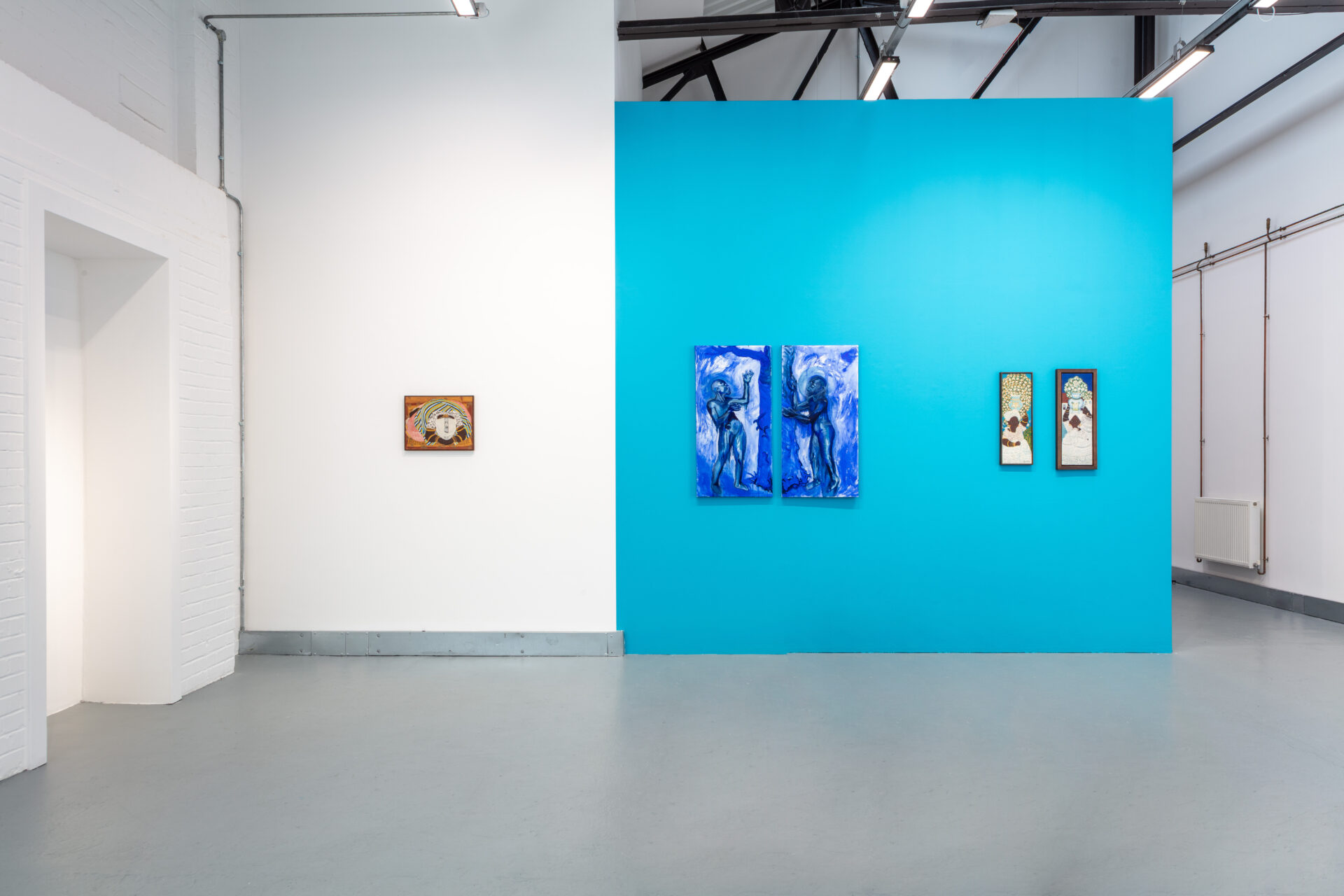
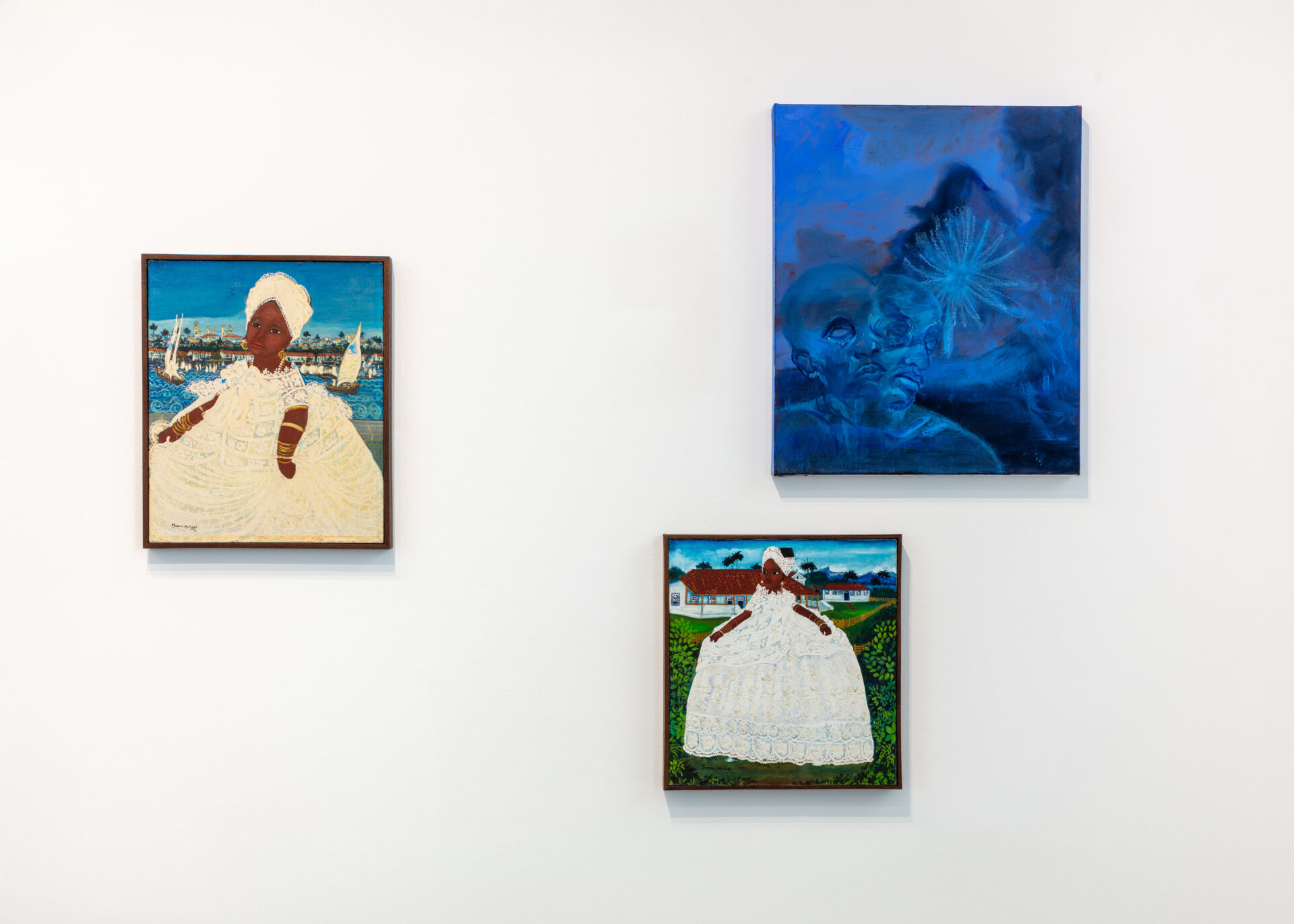
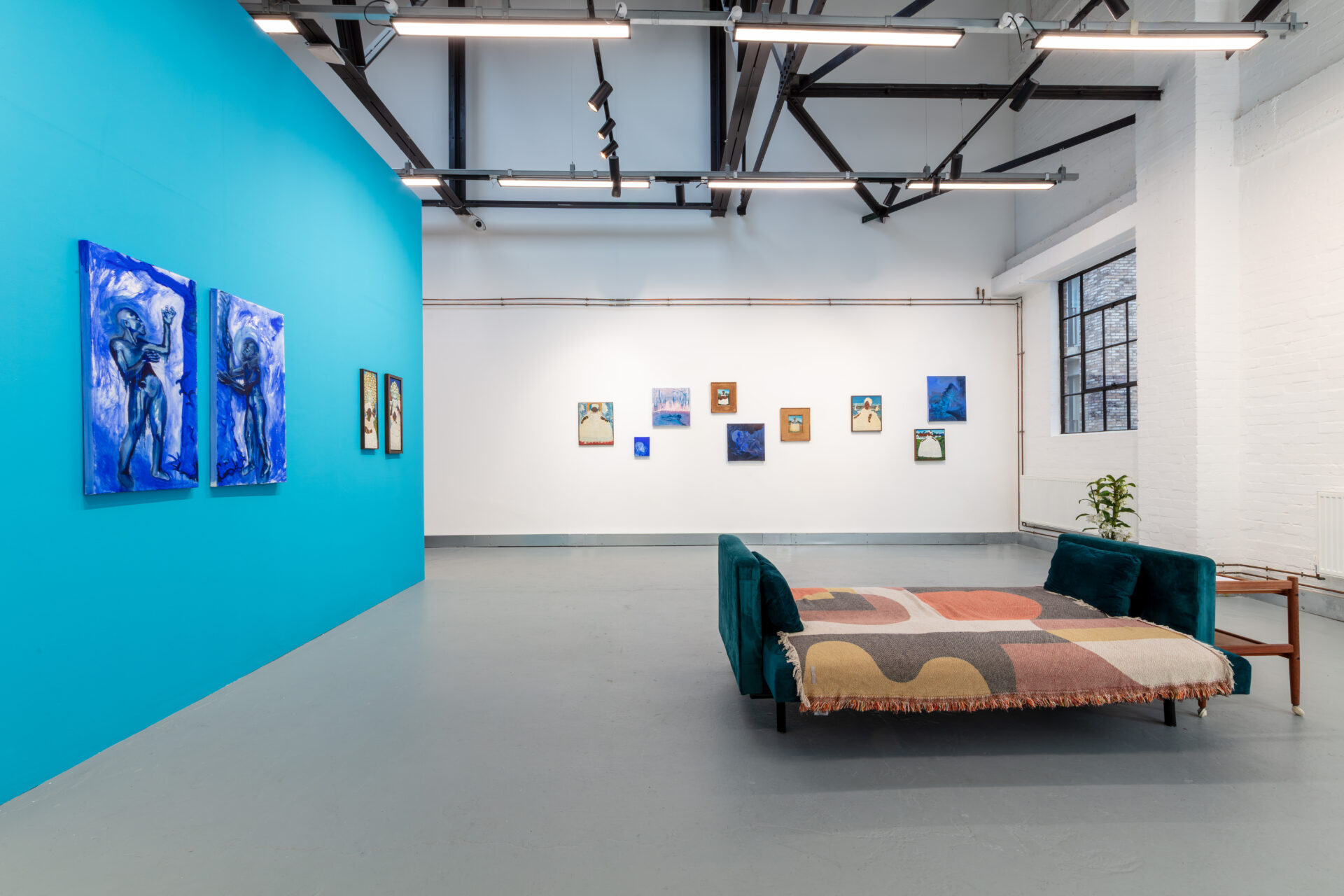
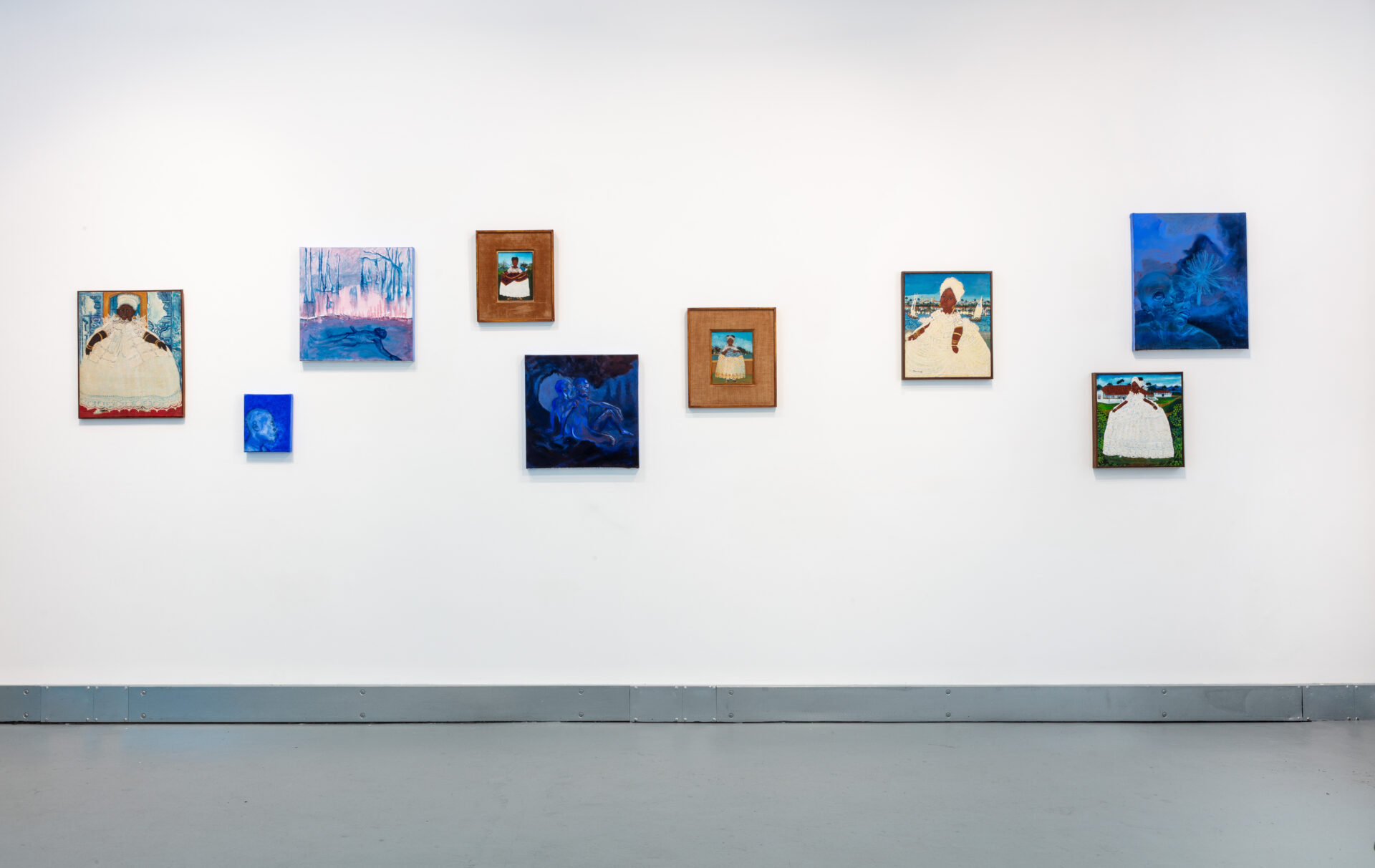
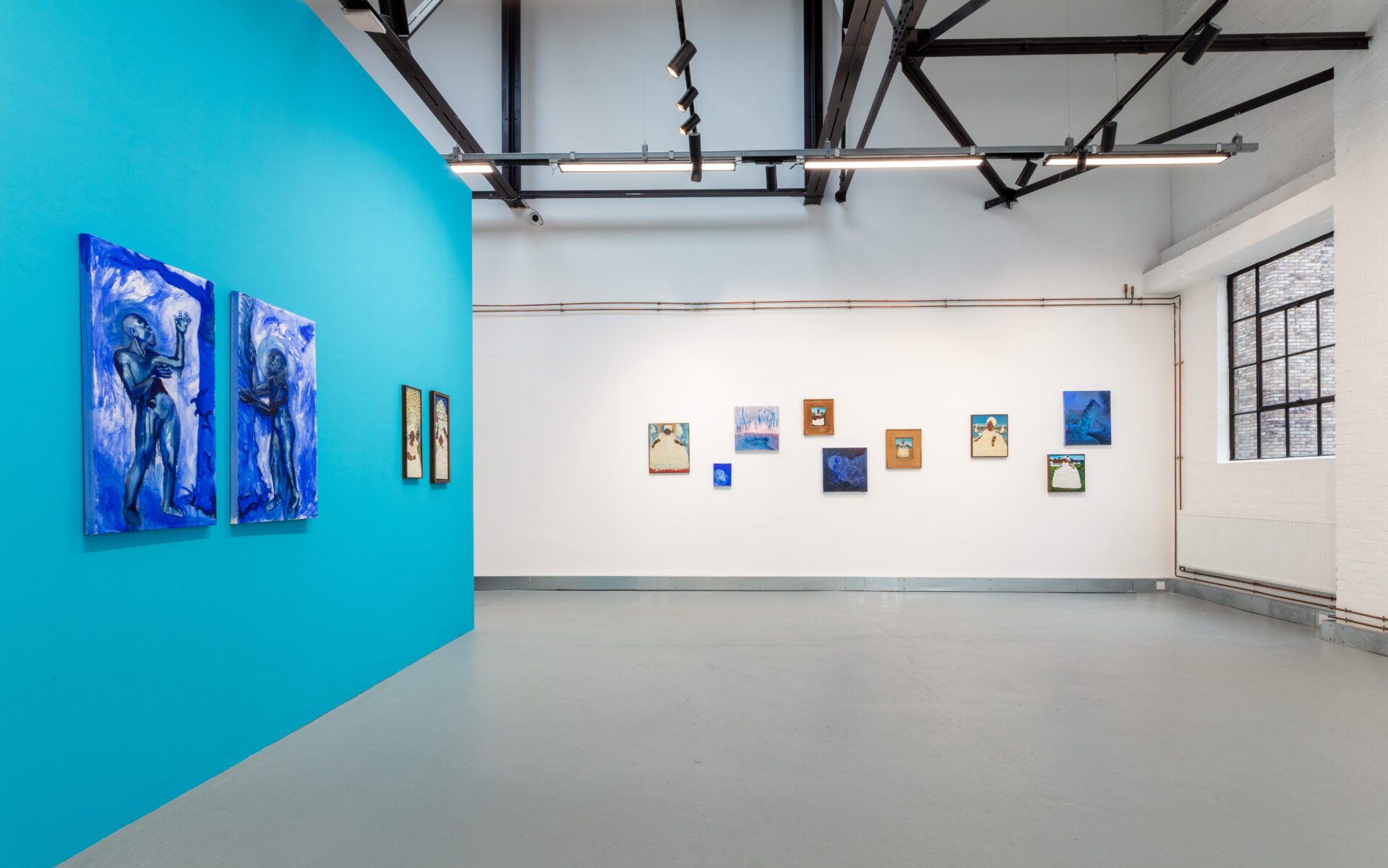
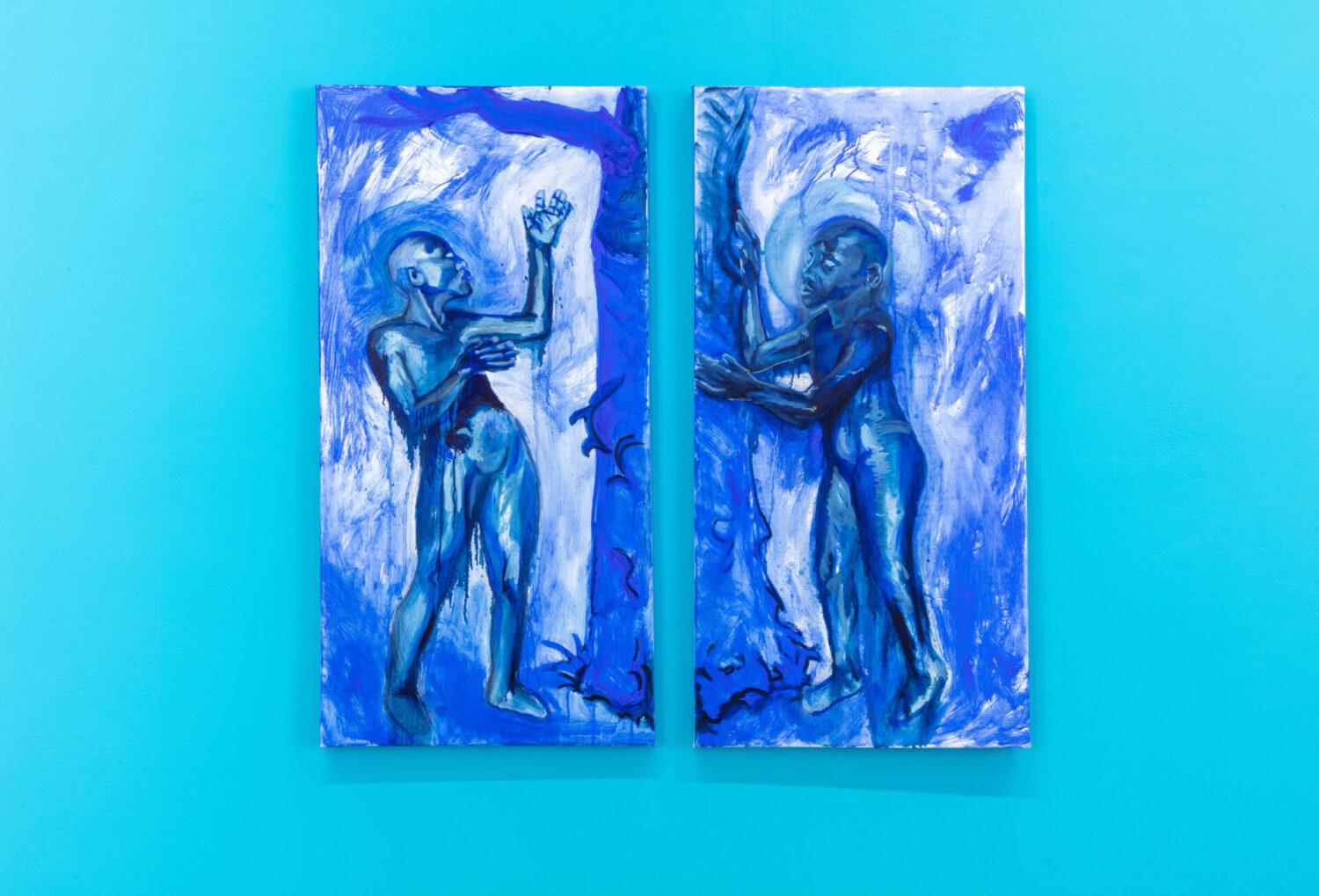
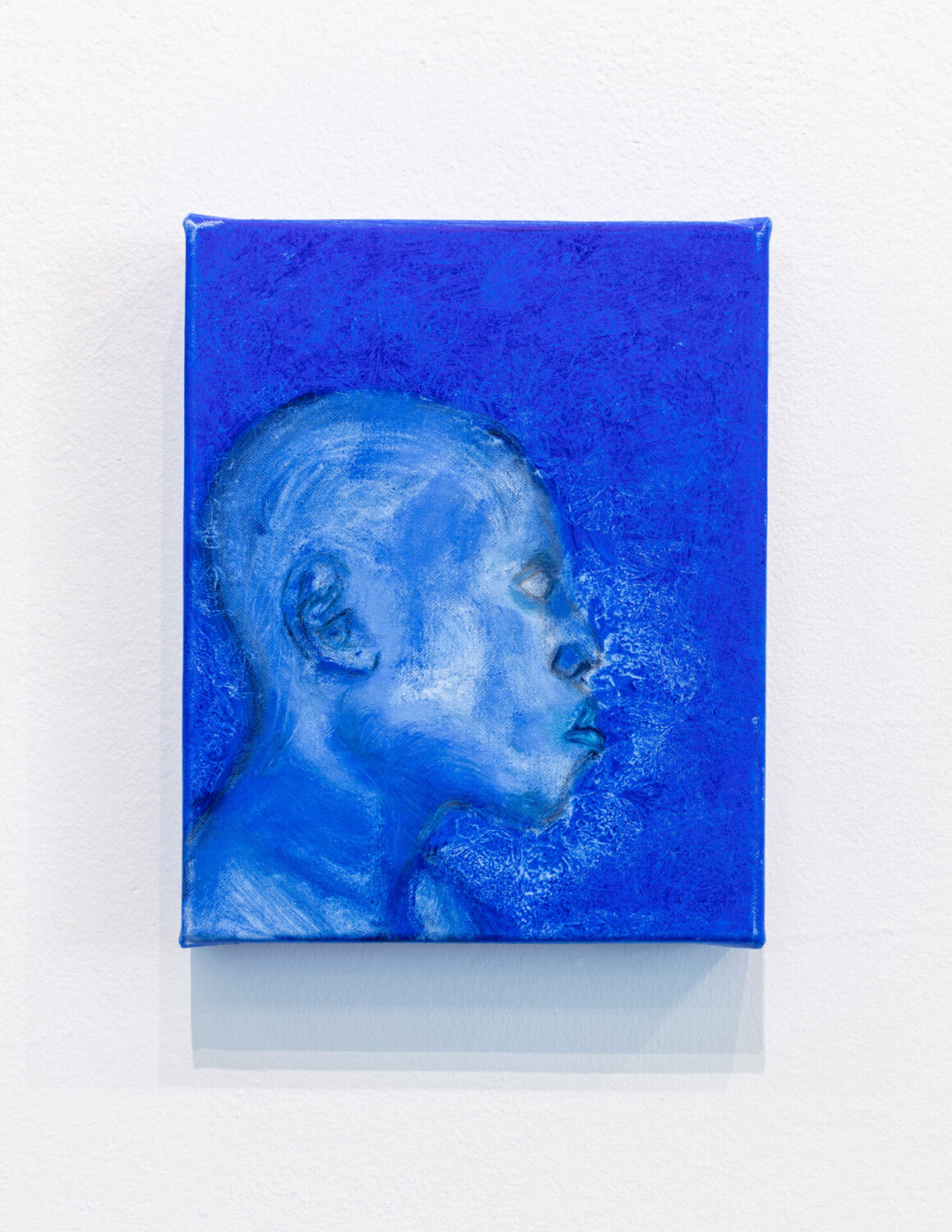
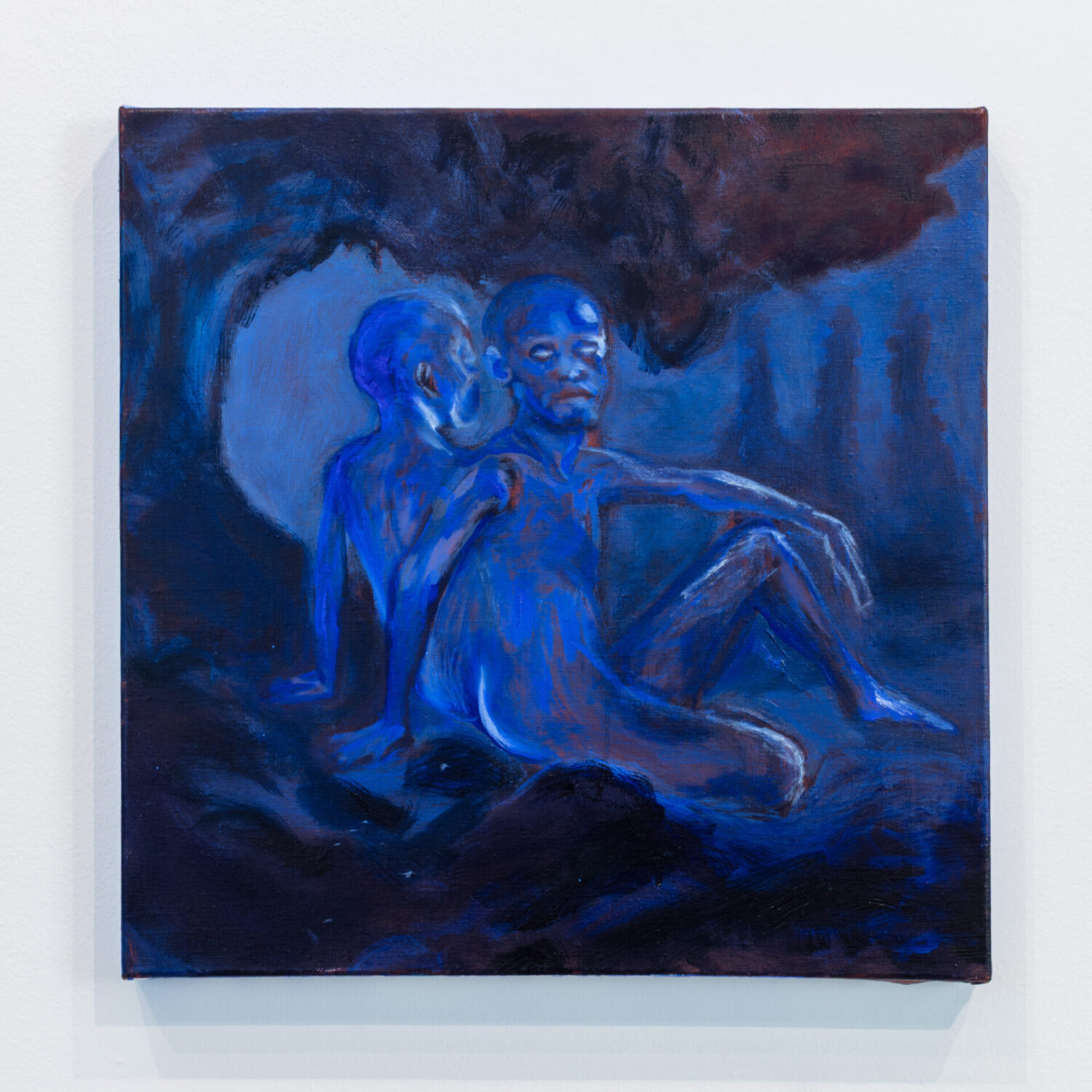
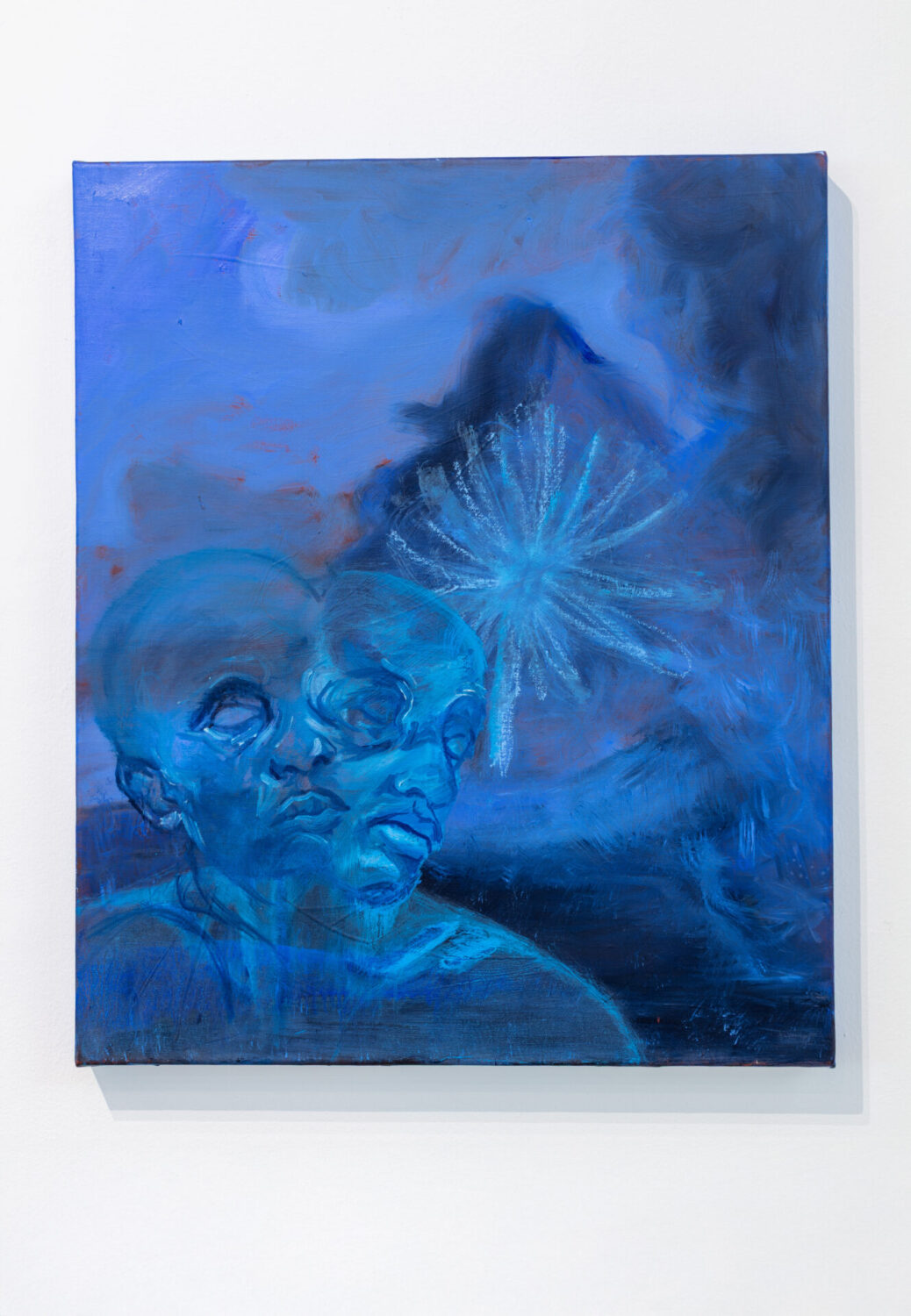
Beyond standing for a happy coincidence, Yemanjá sets the tone of Two Shores, a display of paintings shaped by syncretic beliefs, portraiture and the omnipresence of blue. This is the hue that predominates across Saint Takyi’s compositions, so much so that it became their signature style. In their newest body of work, Takyi continues their explorations around bodies – often modelled after their own – this time giving way to beings that are neither children nor adults. One can argue that they are barely humans, but rather humanoid figures like those who inhabit a dream, or an alien planet. Such a sense of estrangement is emphasised by the background that surrounds them: other than being outdoor settings, Takyi offers little more to identify the context, or the time – of the day, of the year – where the paintings take place. Adding to the mystery, though their characters seem to be males, ultimately their gender is undetermined.
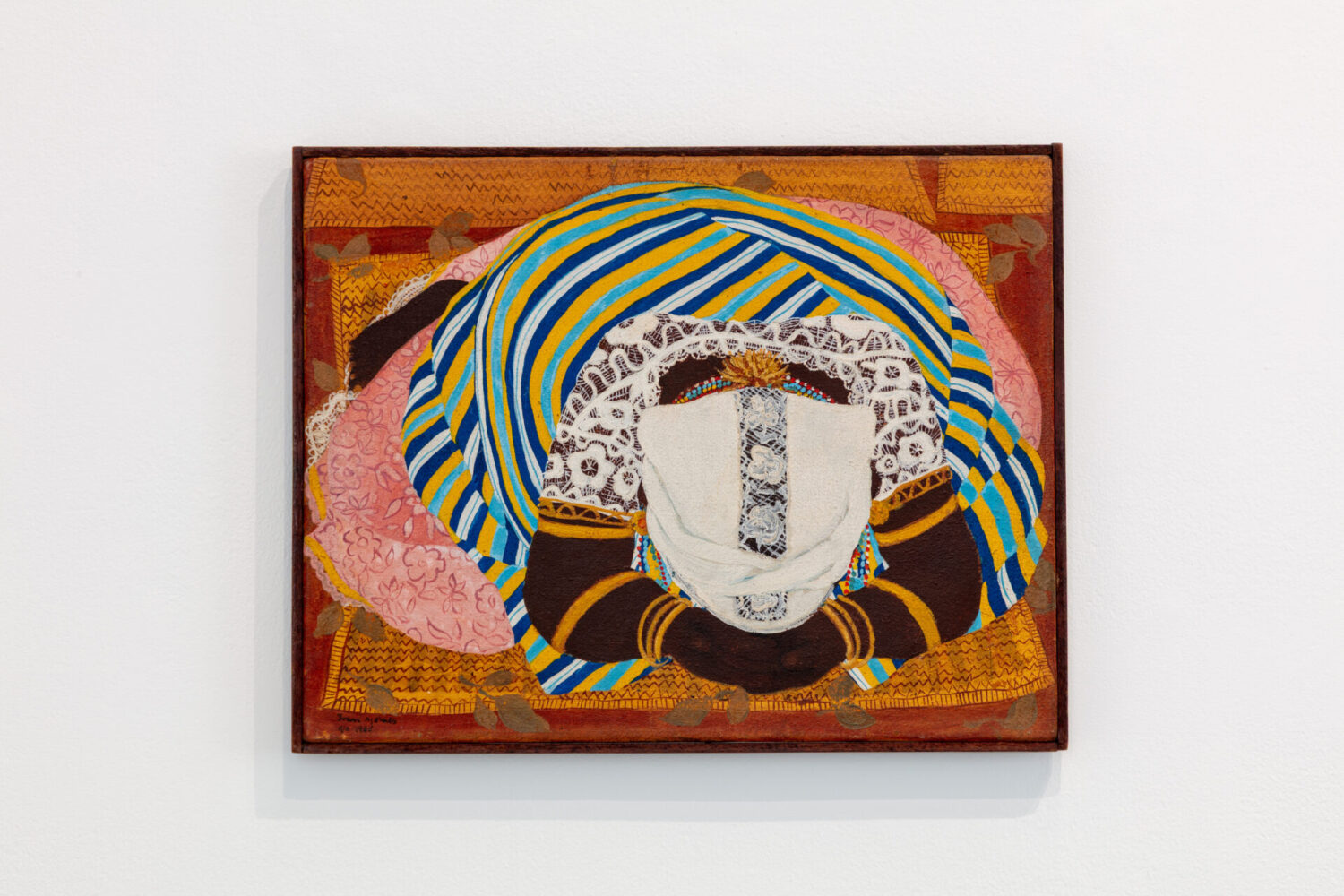
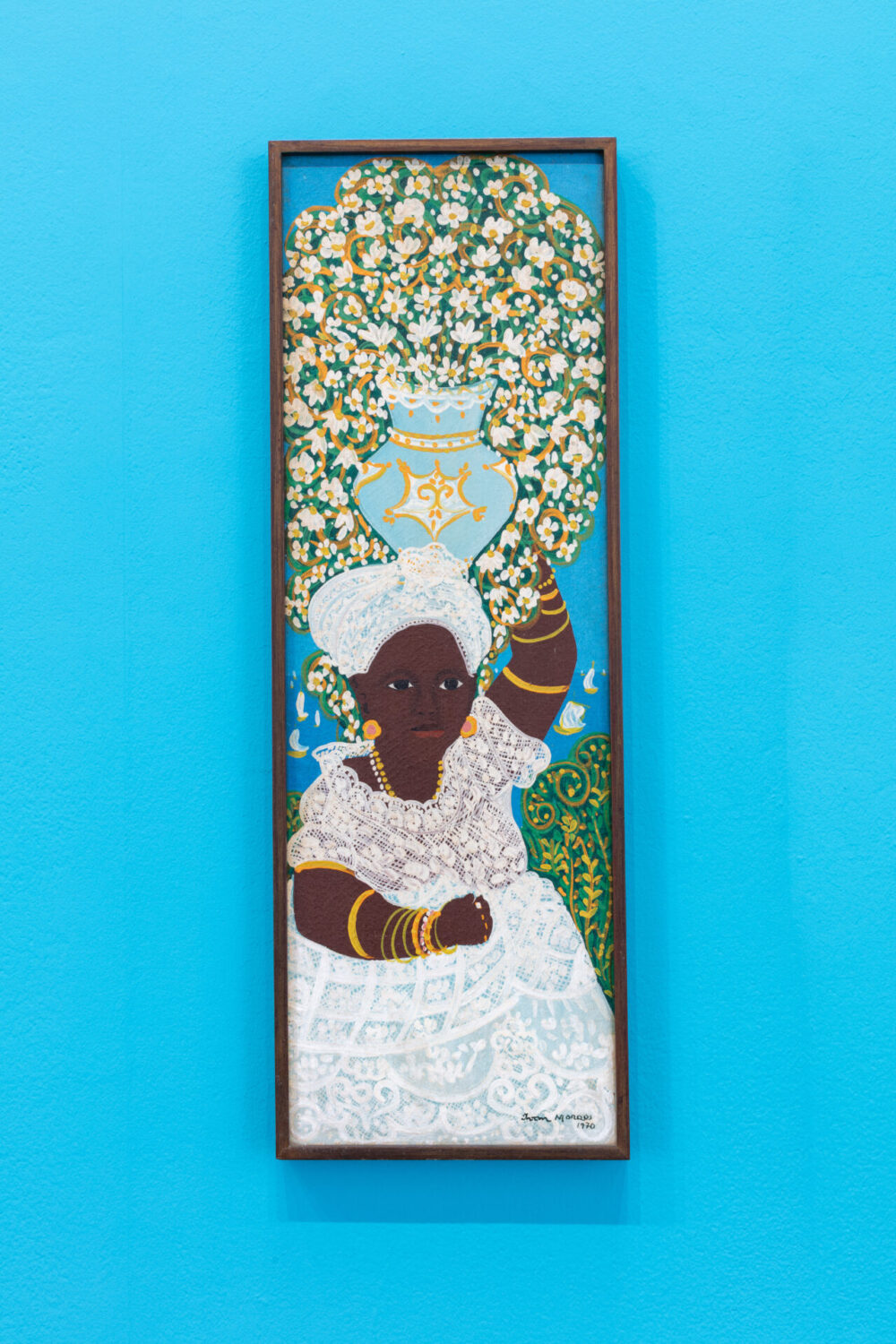
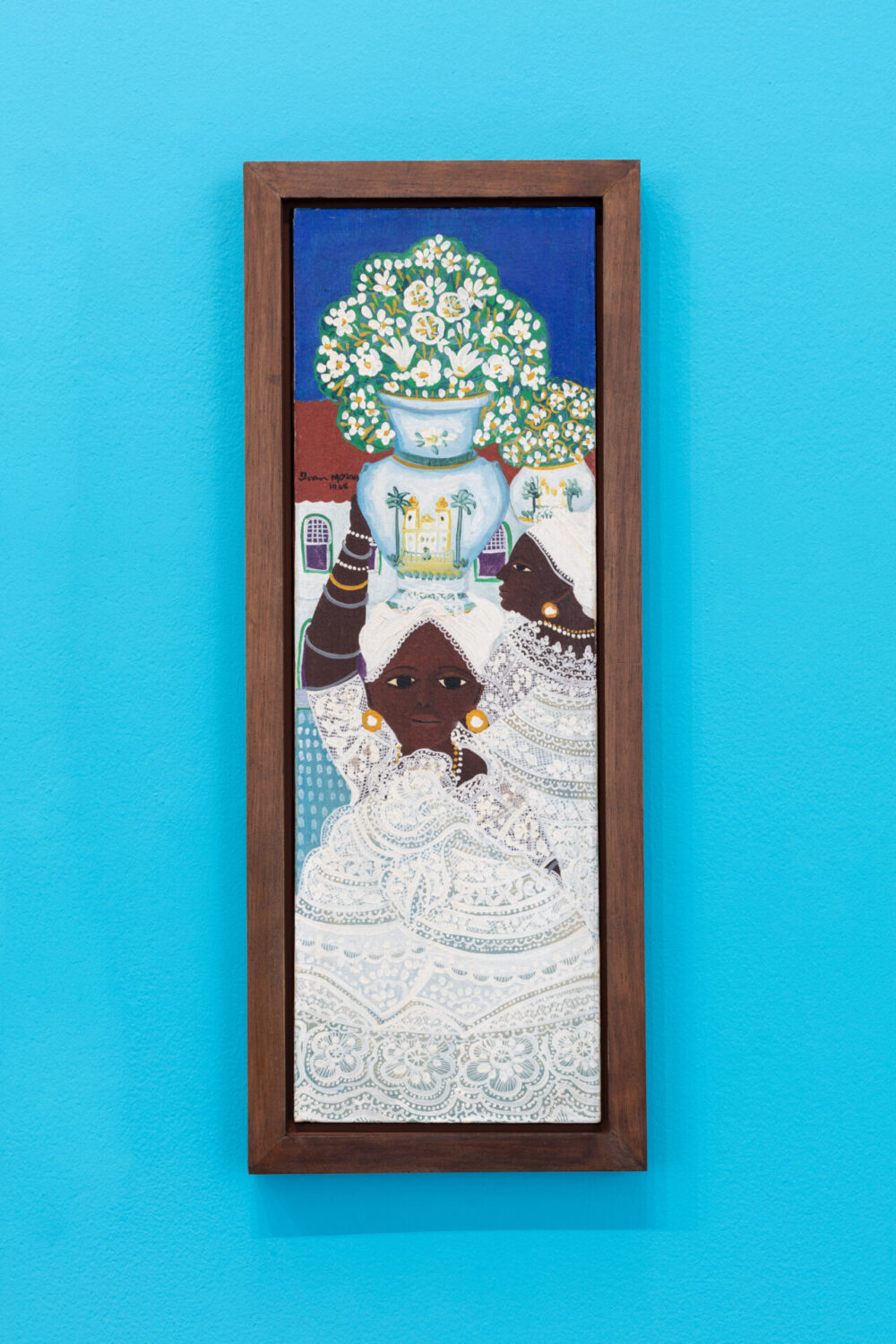
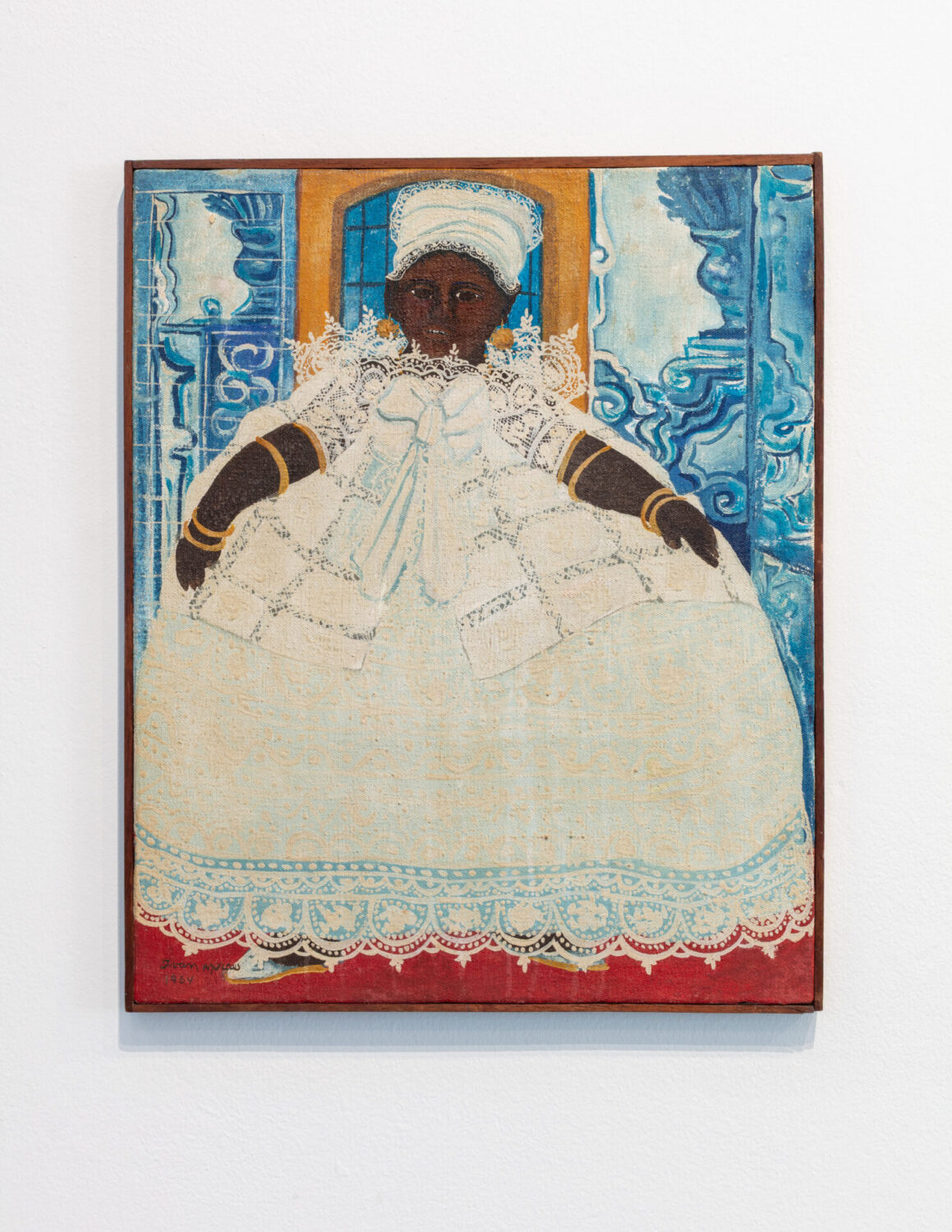
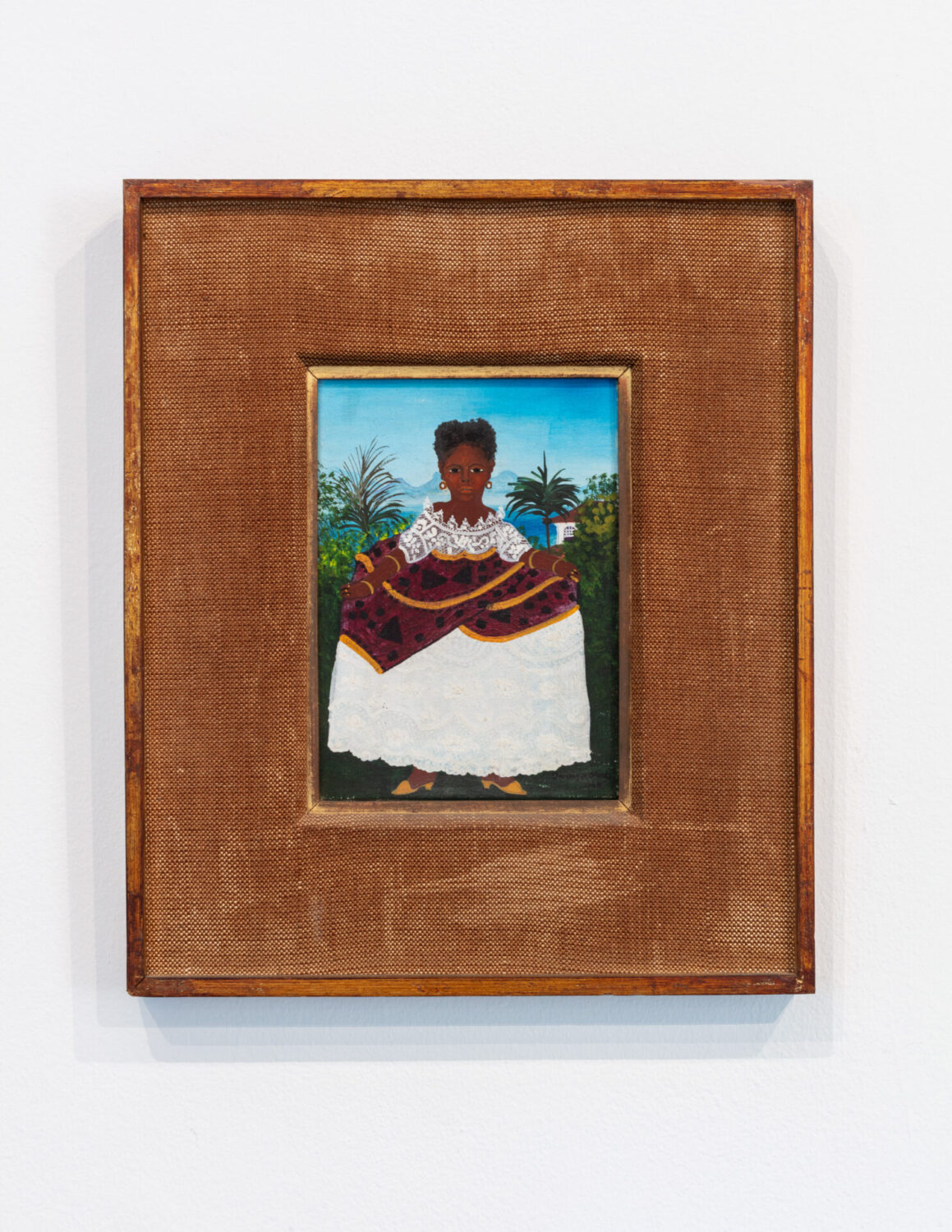
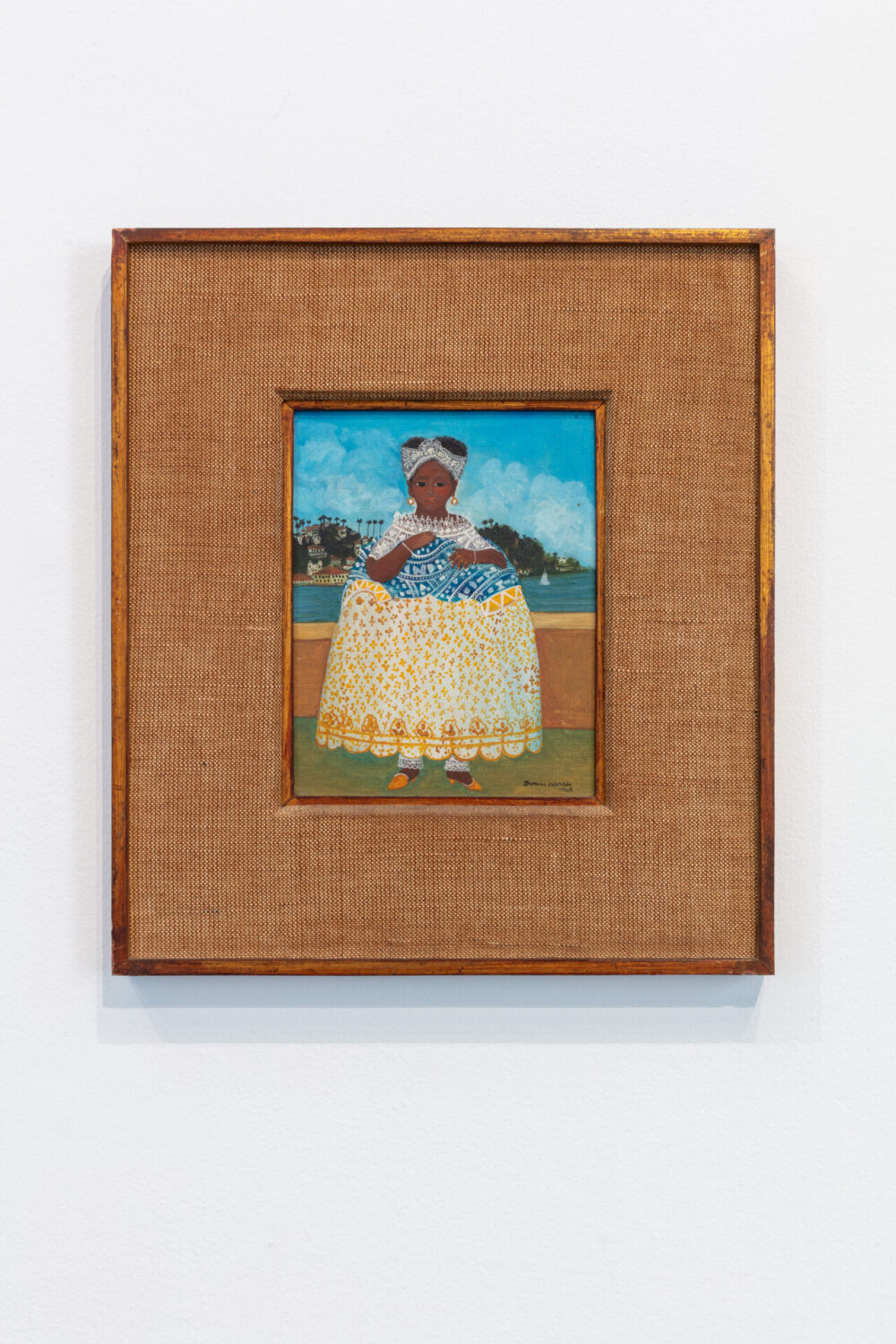
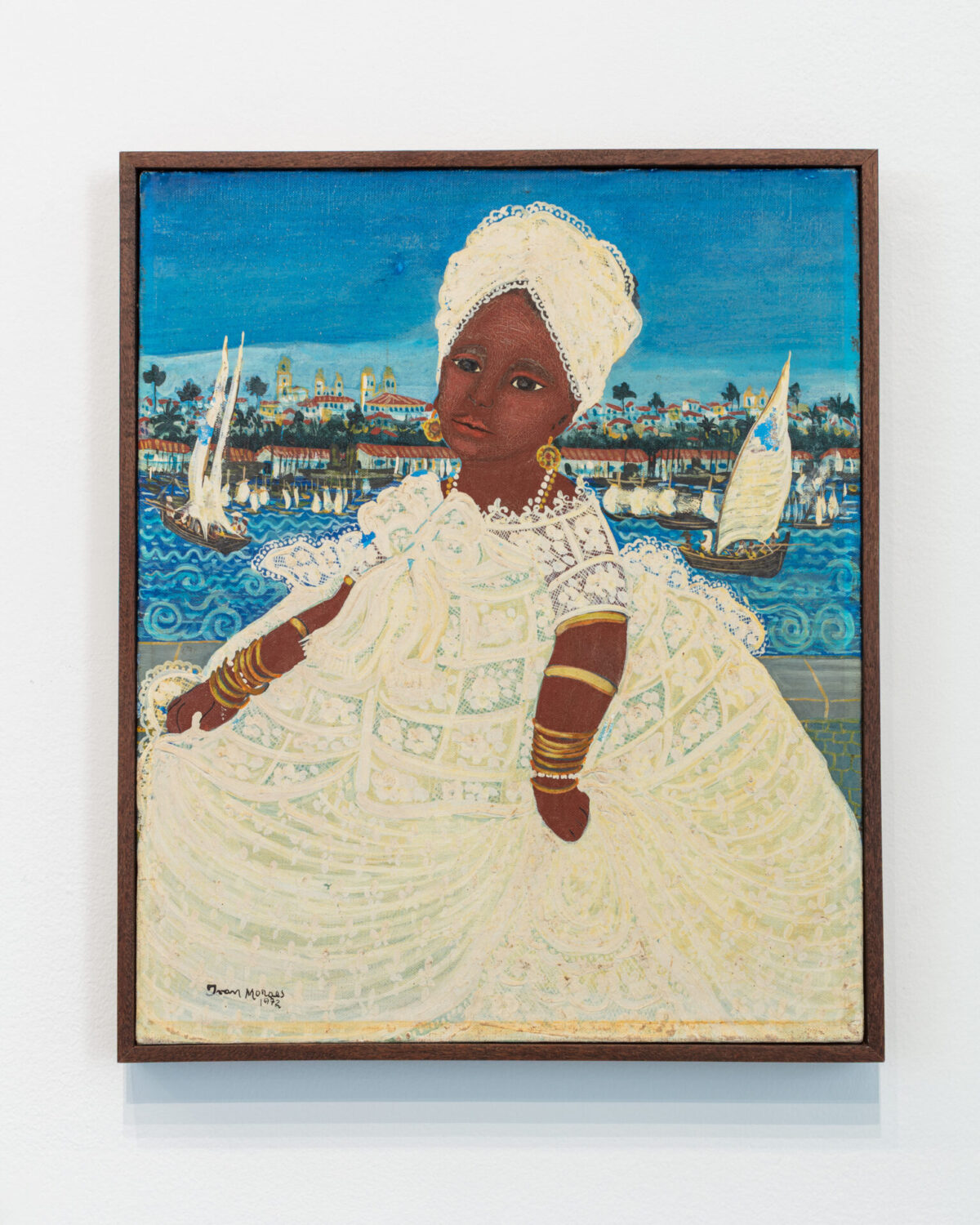
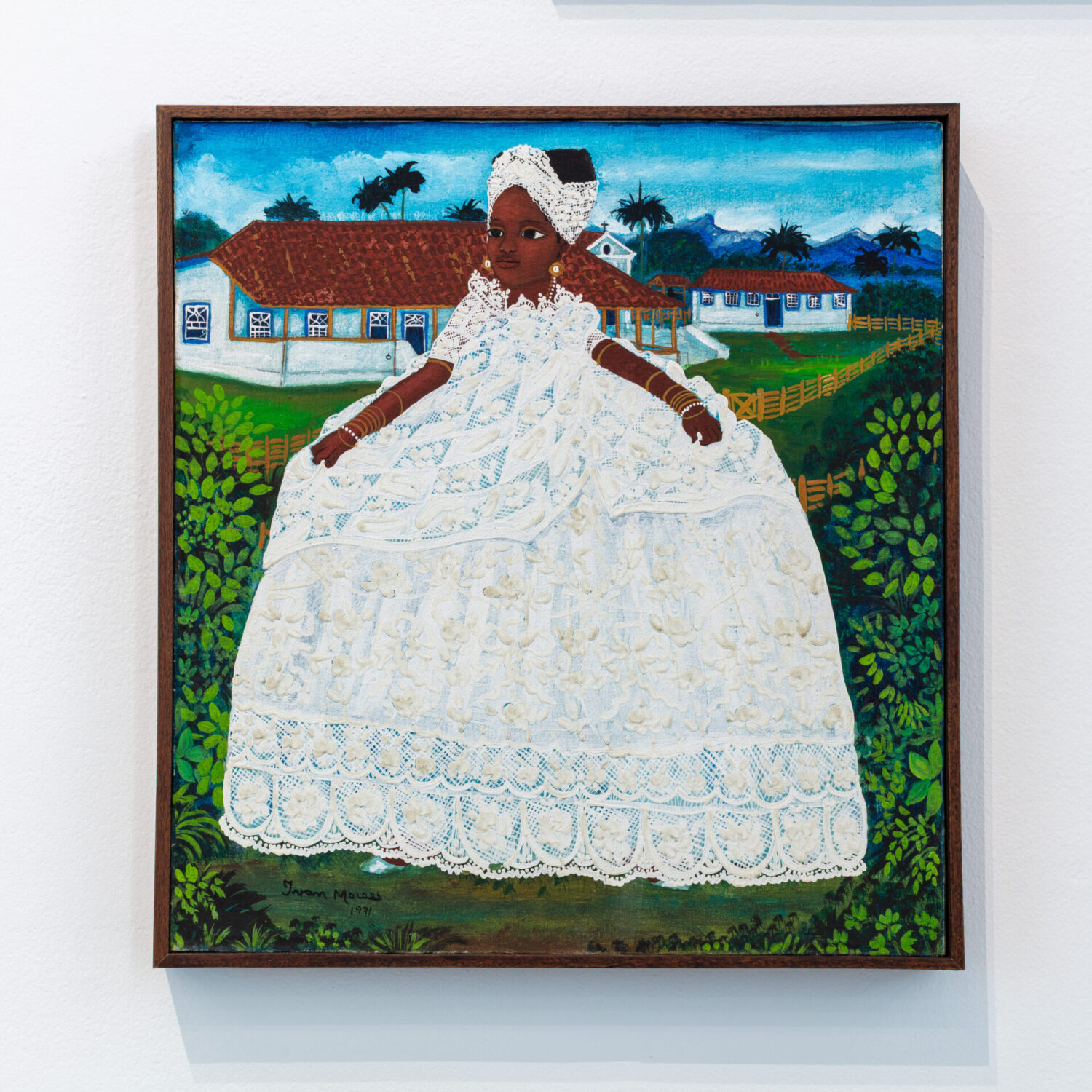
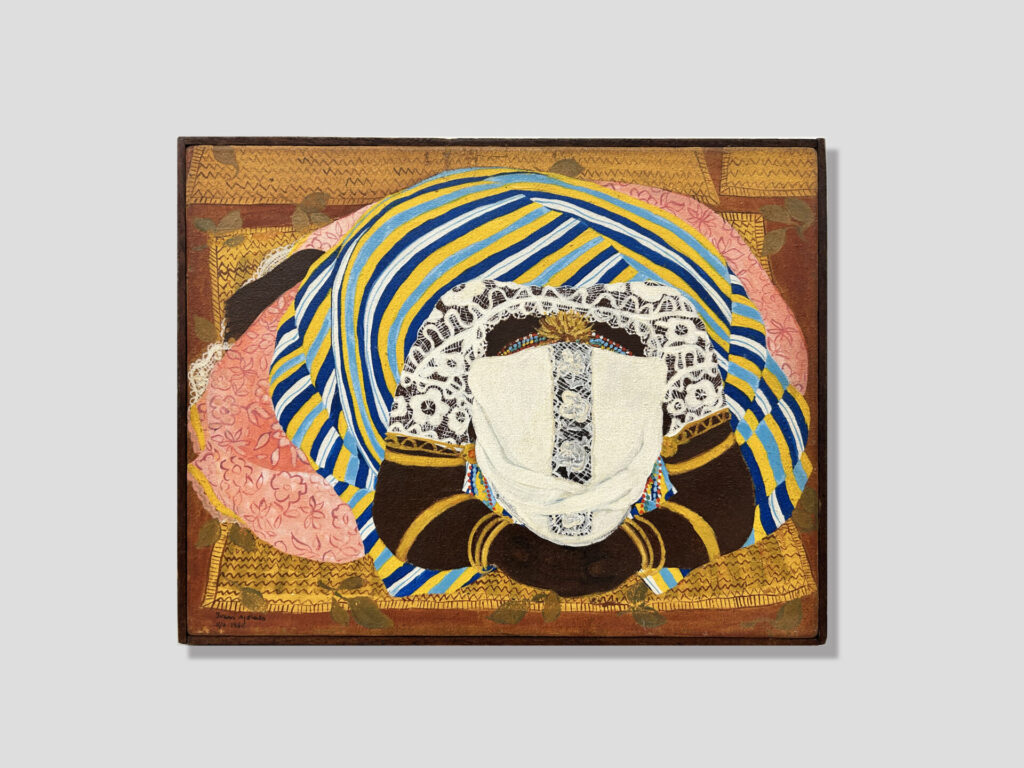
Ivan Moraes, in turn, is unambiguous about his subject matter, namely the women from Brazil’s Northeastern state of Bahia who dress in traditional Candomblé garments. Musicians like Sérgio Mendes and João Gilberto have long praised the grace of the Baianas in their songs, yet, perhaps, no artist has painted them with the same diligence or attention to detail that Moraes has. Still relatively unknown even in his native Brazil – despite having enjoyed a successful career from the 1960s to the 1990s – not much is known about what drew him to his enduring subject matter either, especially considering that he himself was from Rio de Janeiro, not Bahia. The most likely scenario is that he had an aesthetic appreciation for the beauty of their garments, the intricacies of the white lace against their skin and the golden ornaments that complete their look – elements that he captured with painstaking beauty. As with Takyi’s paintings, shades of blue are present throughout the works, but in a much more subdued way, as sky, water and the traditional Portuguese white and blue tiles that are seen in Brazilian colonial buildings.
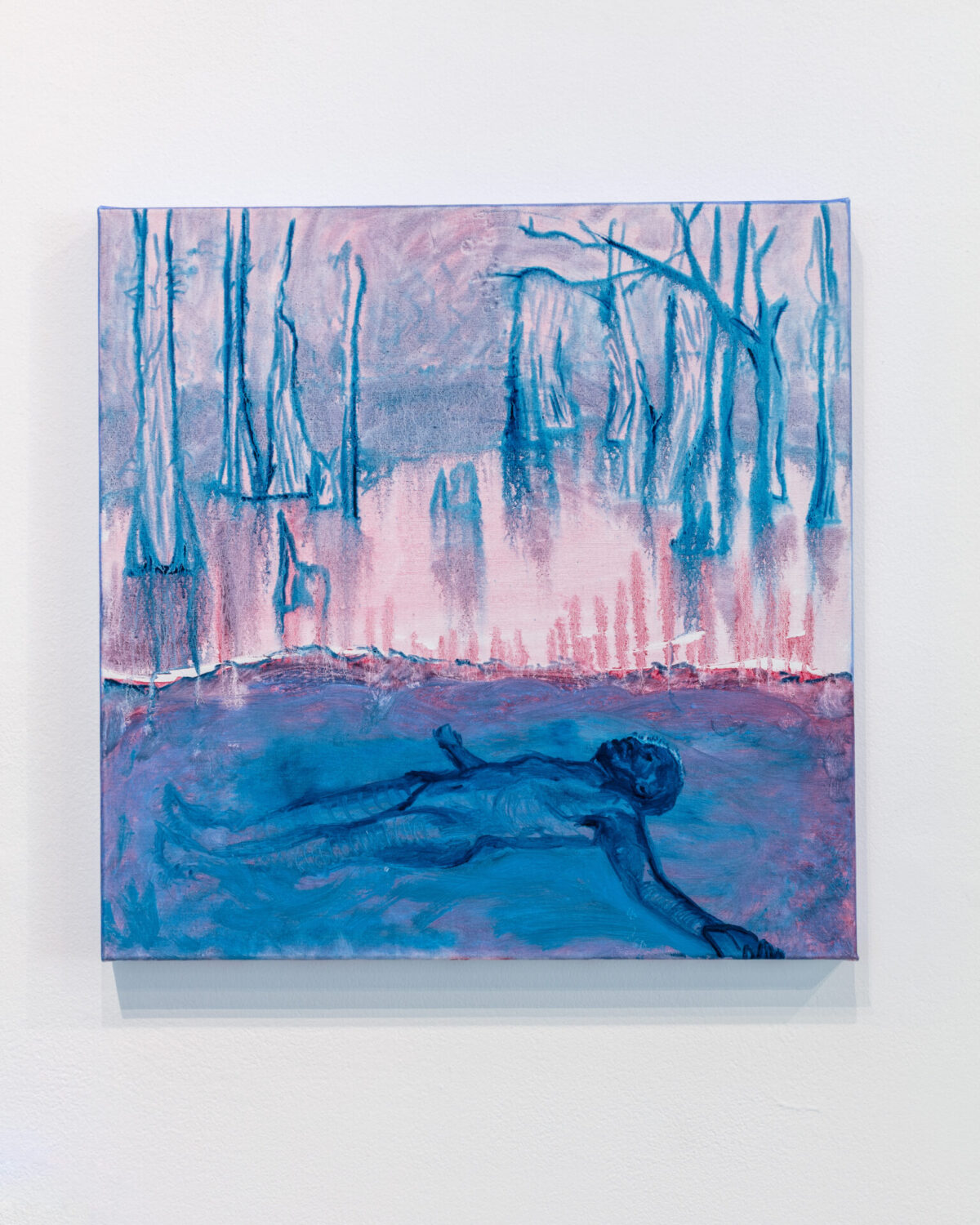
Whilst Moraes favours the depiction of one character per painting, Takyi explores dualities in their compositions. Three of their five works on show depict two characters strikingly similar, alluding to mythological siblings such as Cain and Abel, or Remus and Romulus. Even in paintings with a single character, a sense of doubleness is suggested by the title, as is the case in First to be born, first to die (2026). This shows a figure lying on the ground, arms open to the sides at such an angle as to draw a cross, in front of what seems to be a swamp of leafless trees. Noteworthy, this is the work where they flirt with pigments the most, adding shades of red and pink to the composition. Takyi’s interest in dualities can perhaps be traced back to the artist’s own mixed background: born in the Netherlands and raised in Britain, Takyi carries Ghanian ancestry and has recurrently addressed Asante mythologies in their work – though they were brought up in a Christian household. Whereas Moraes’ personal beliefs are unknown to the public, the important fact is that the Candomblé religion that he recurrently addresses was built upon an amalgamation of faiths. Working across two shores of the Atlantic Ocean through different moments in history, Saint Takyi and Ivan Moraes both celebrate the power of diversity through unique styles.
Curated by Maria do Carmo M. P. de Pontes.
This exhibition will run from 6th February to 28th March 2026, Wednesday to Saturday, 12-6 pm or by appointment.