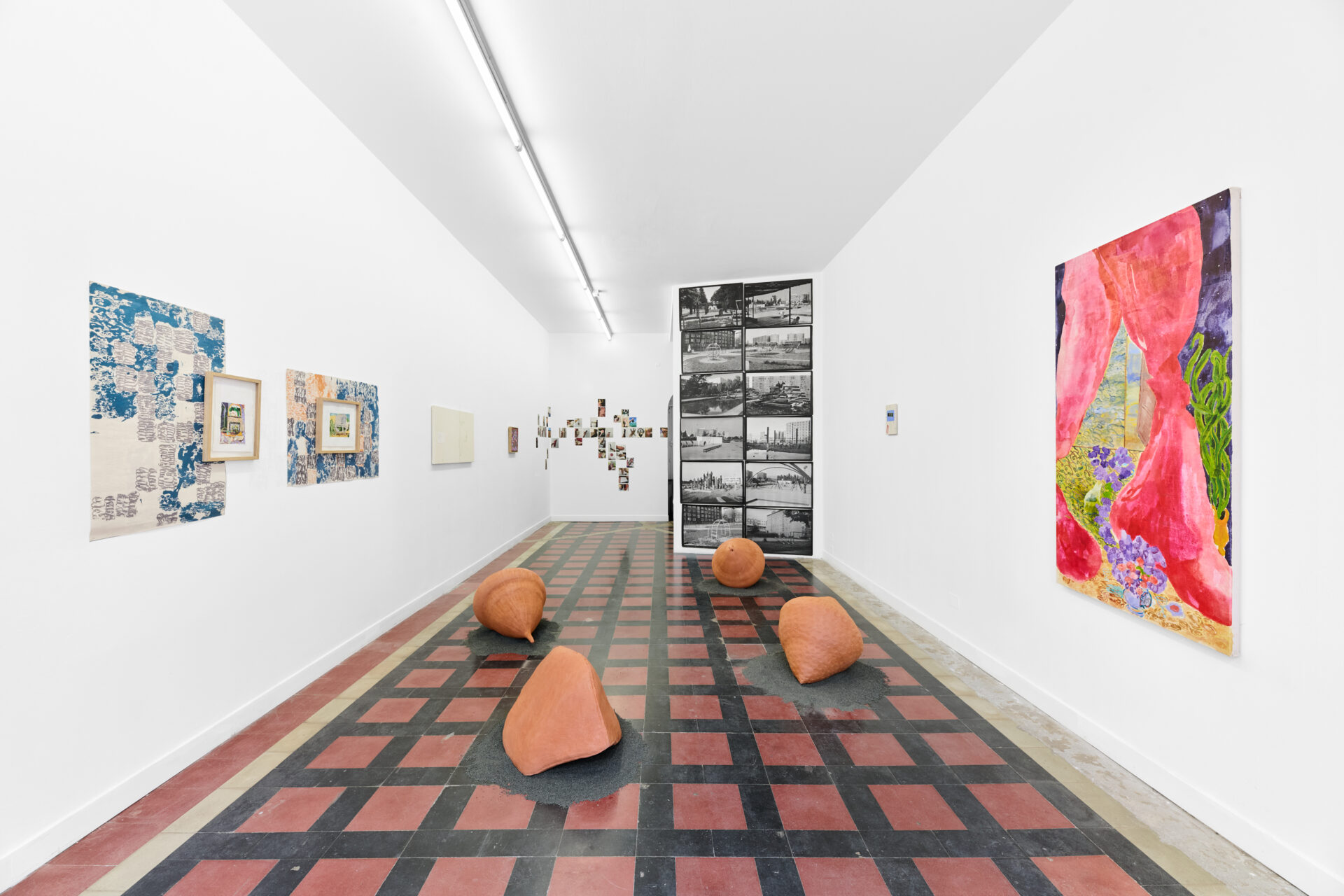
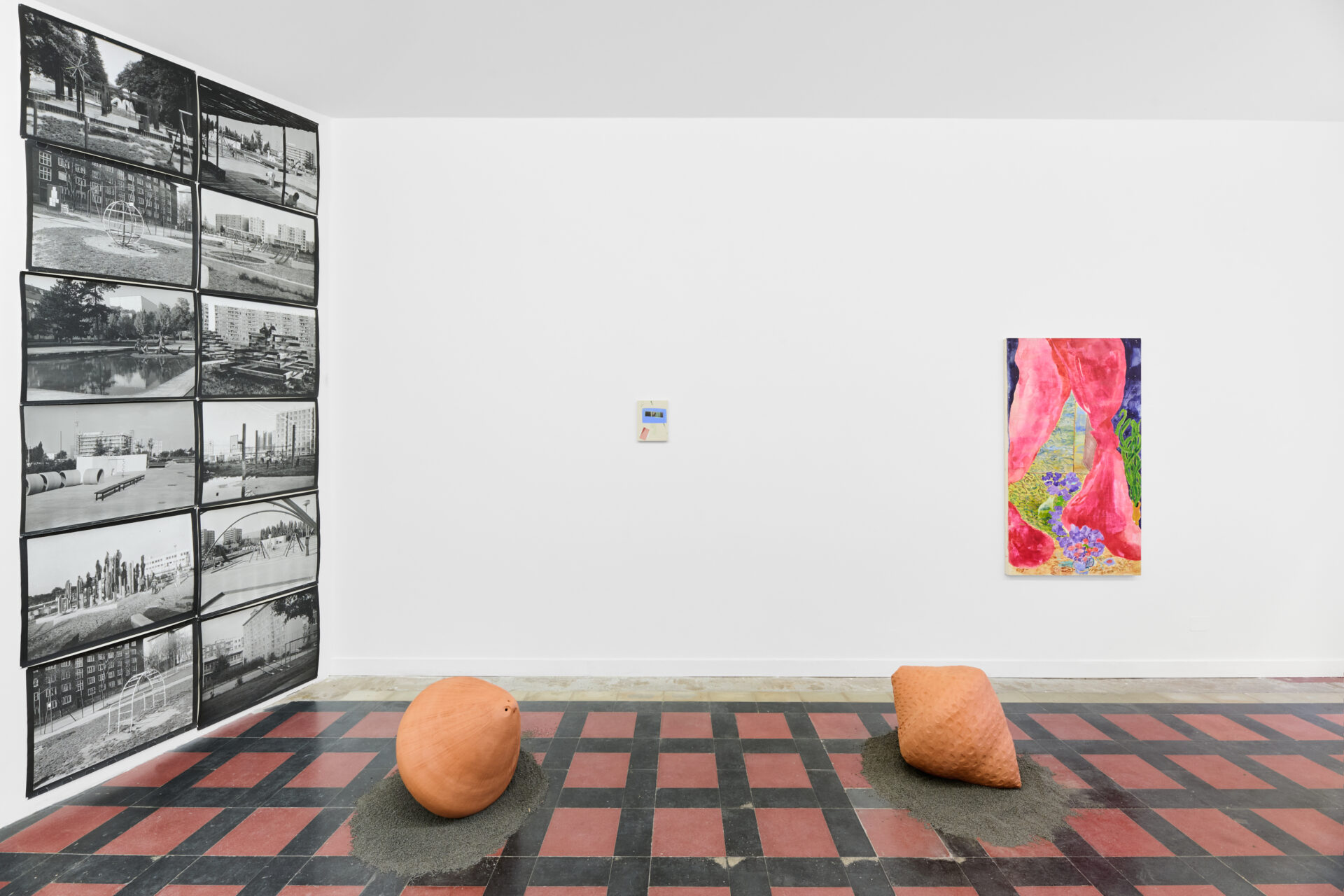
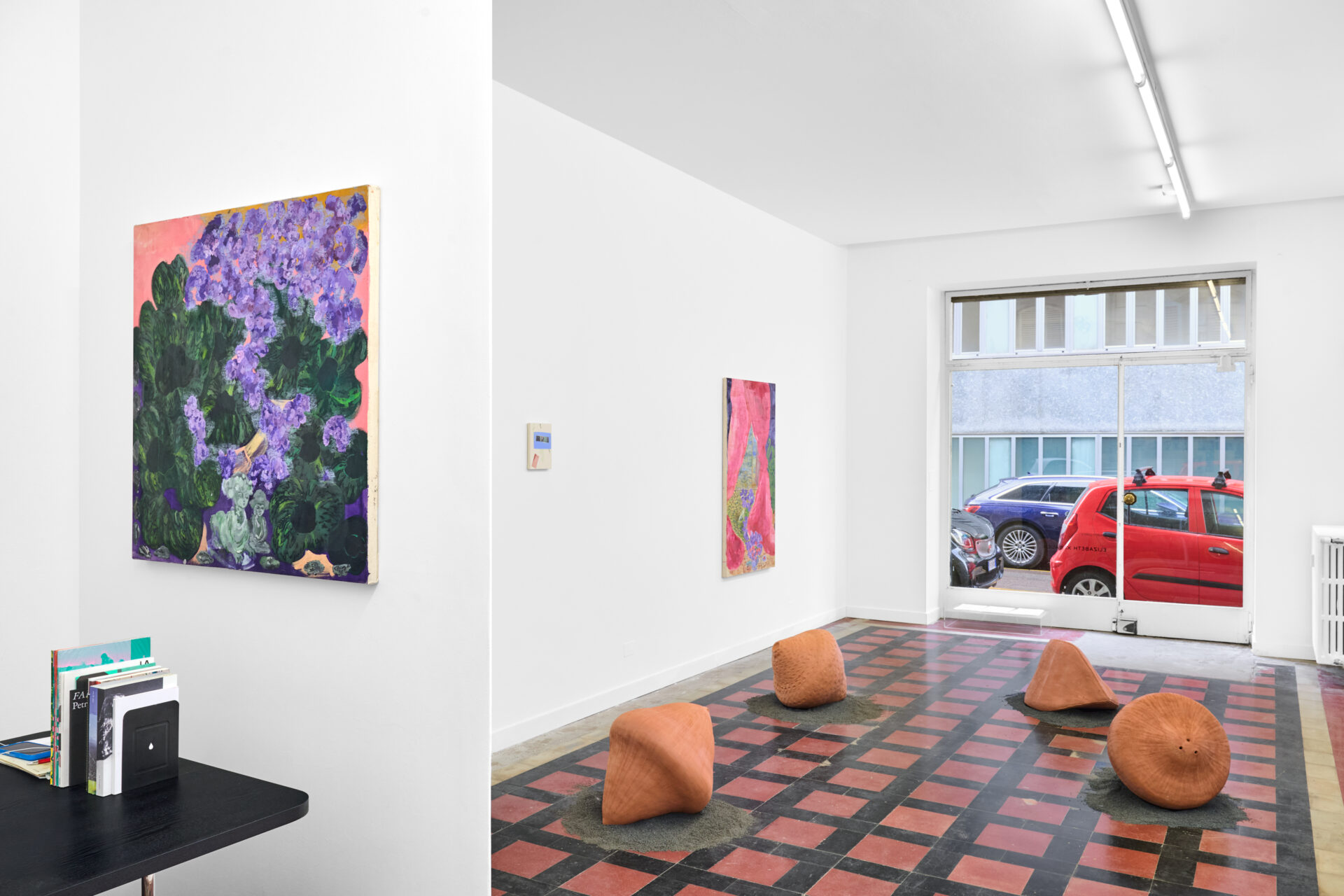
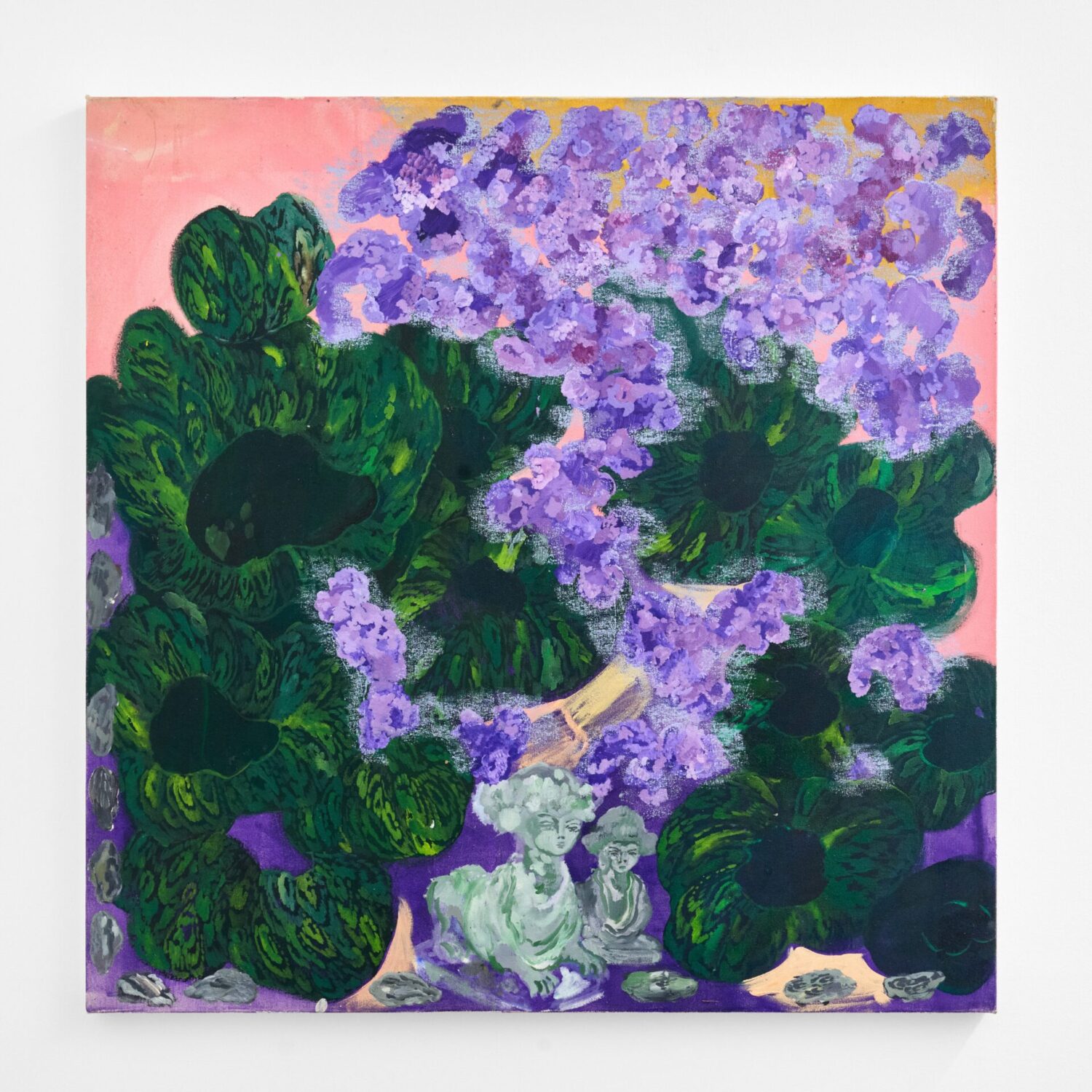
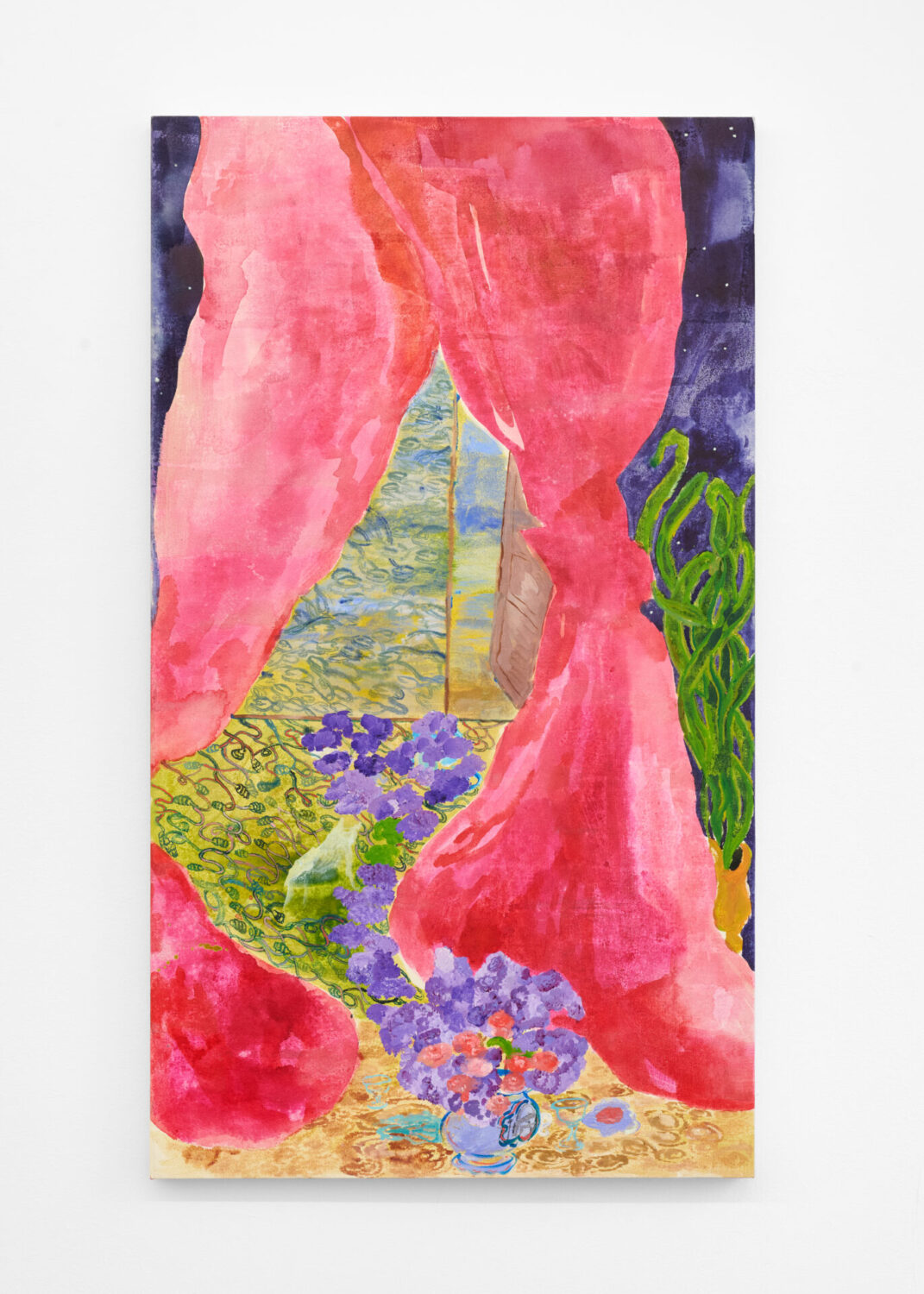
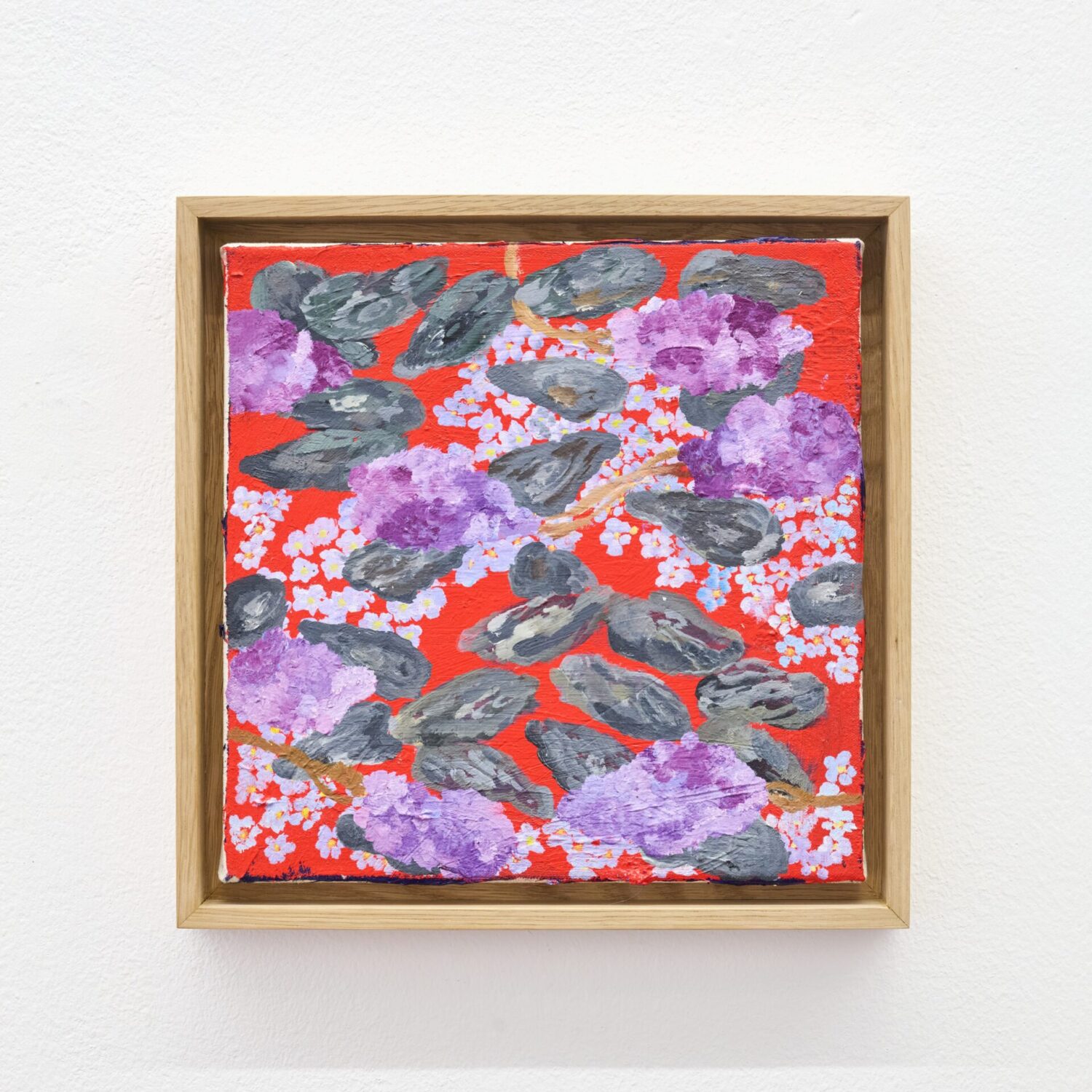
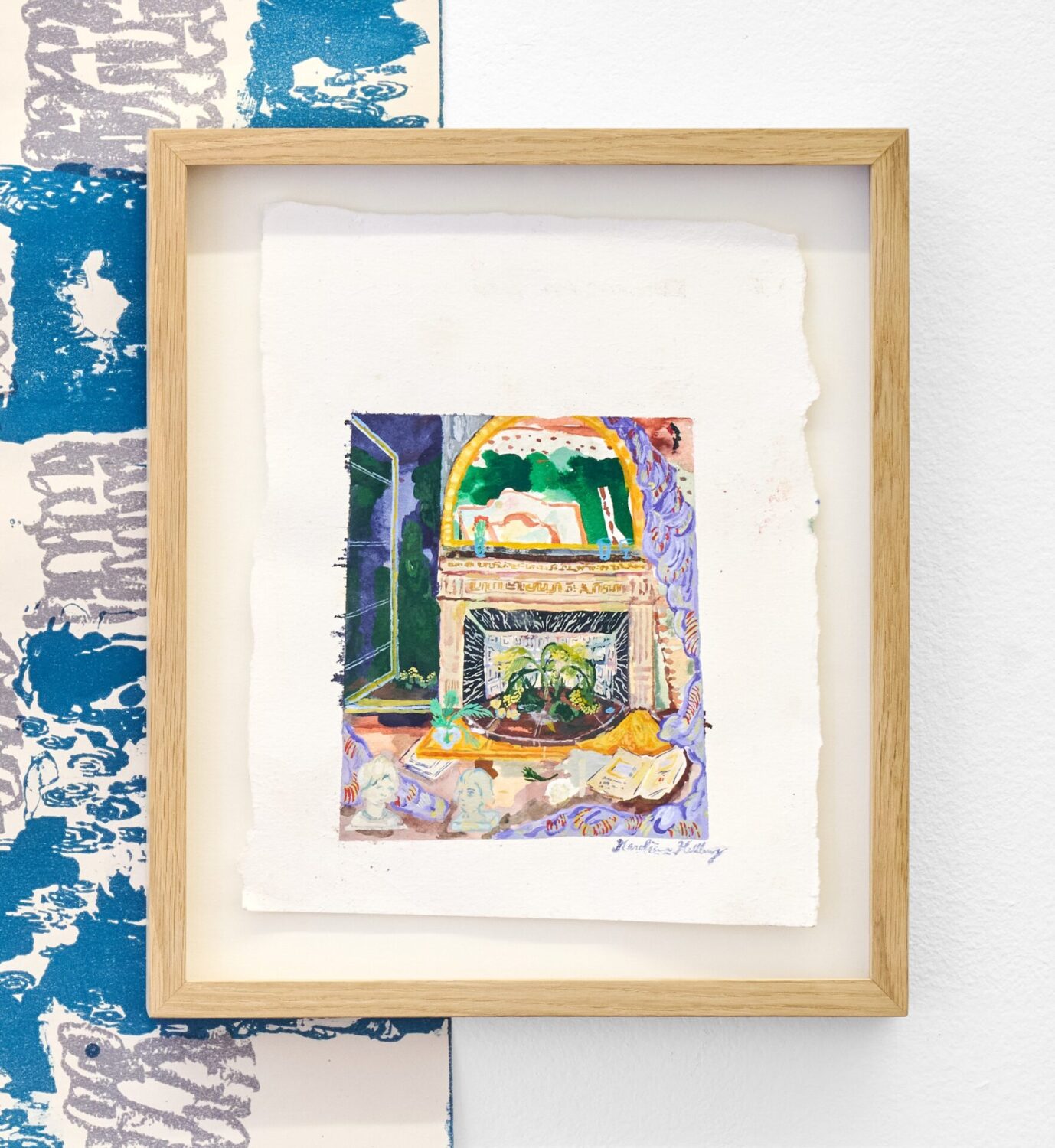
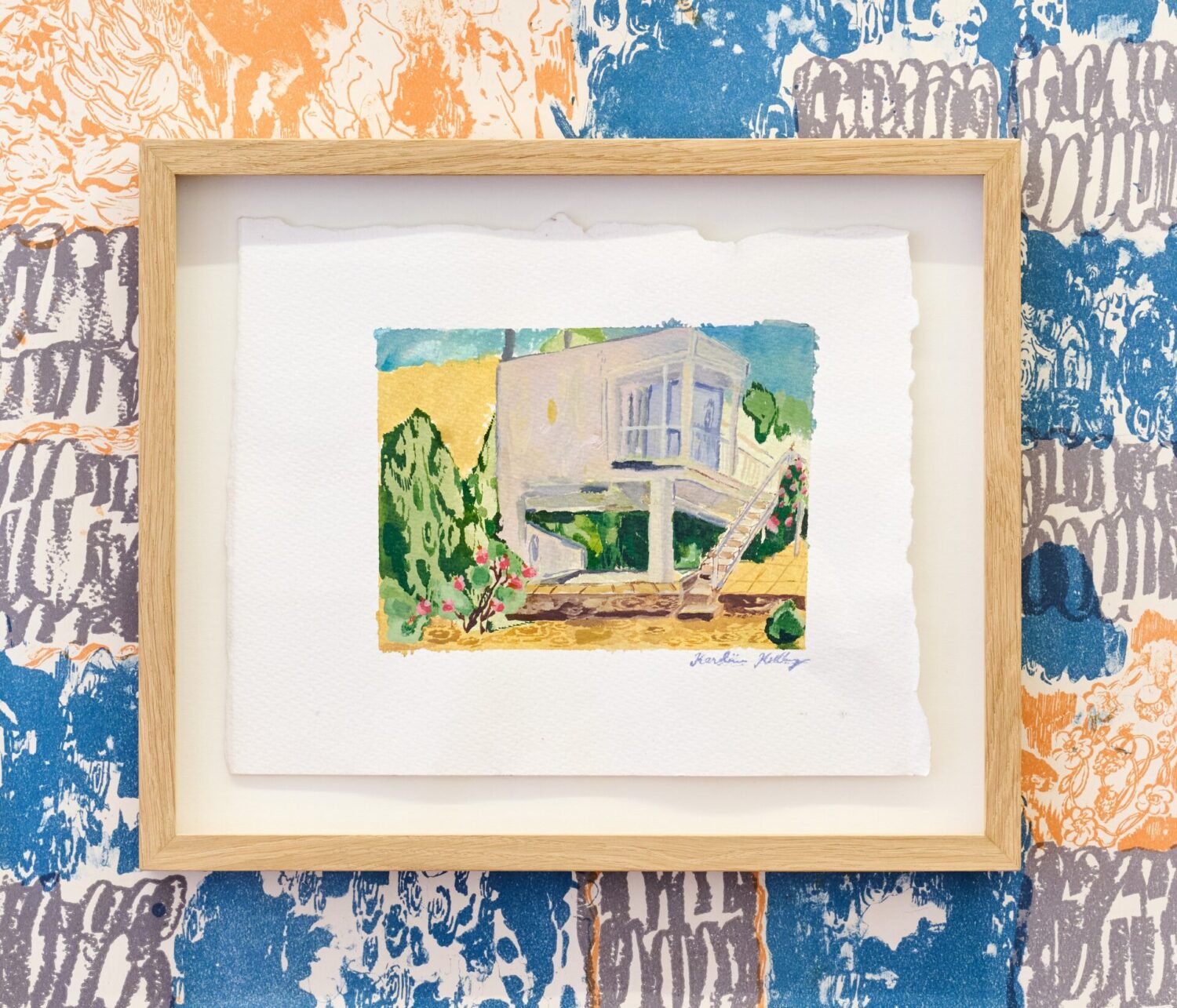
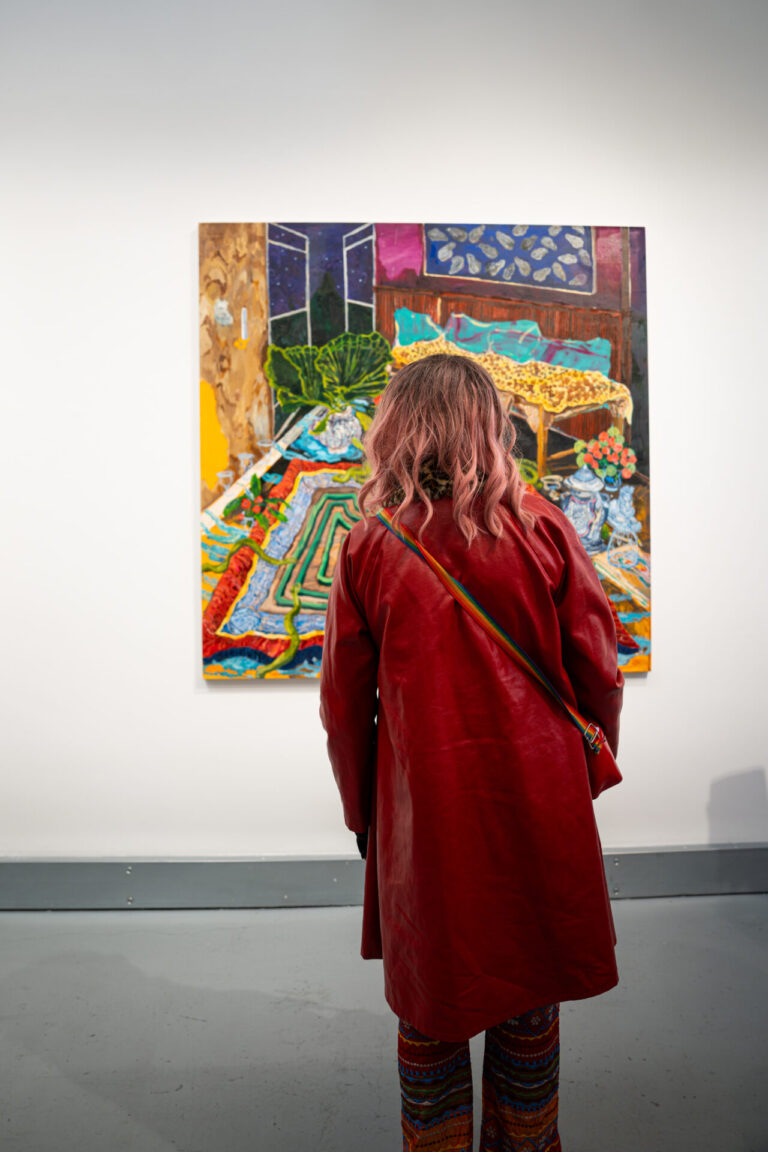
No Hay Banda brings together a cohort of four living artists whose practices offer insights on how idleness should be approached not as a cue for laziness, but rather as an opportunity for creative endeavours. Karoliina Hellberg sets the atmosphere of the show with immersive paintings and watercolours that blur indoors with outdoors, dreams with reality. In these settings, bodies are never depicted but suggested through objects such as empty glasses or cigarette butts. Every brushstroke she makes conveys ambiguity, from the kind of light, and thus time of the day that is being portrayed, to the nature of the environments that are on show. At first, her lush settings seem to be the almanac entry for contentment, yet menace is ever present: snakes that emerge from a bunch of hydrangeas, a waterfall that inundates an otherwise pristine sofa, in a permanent friction between comfort and threat, be that physical or metaphorical.
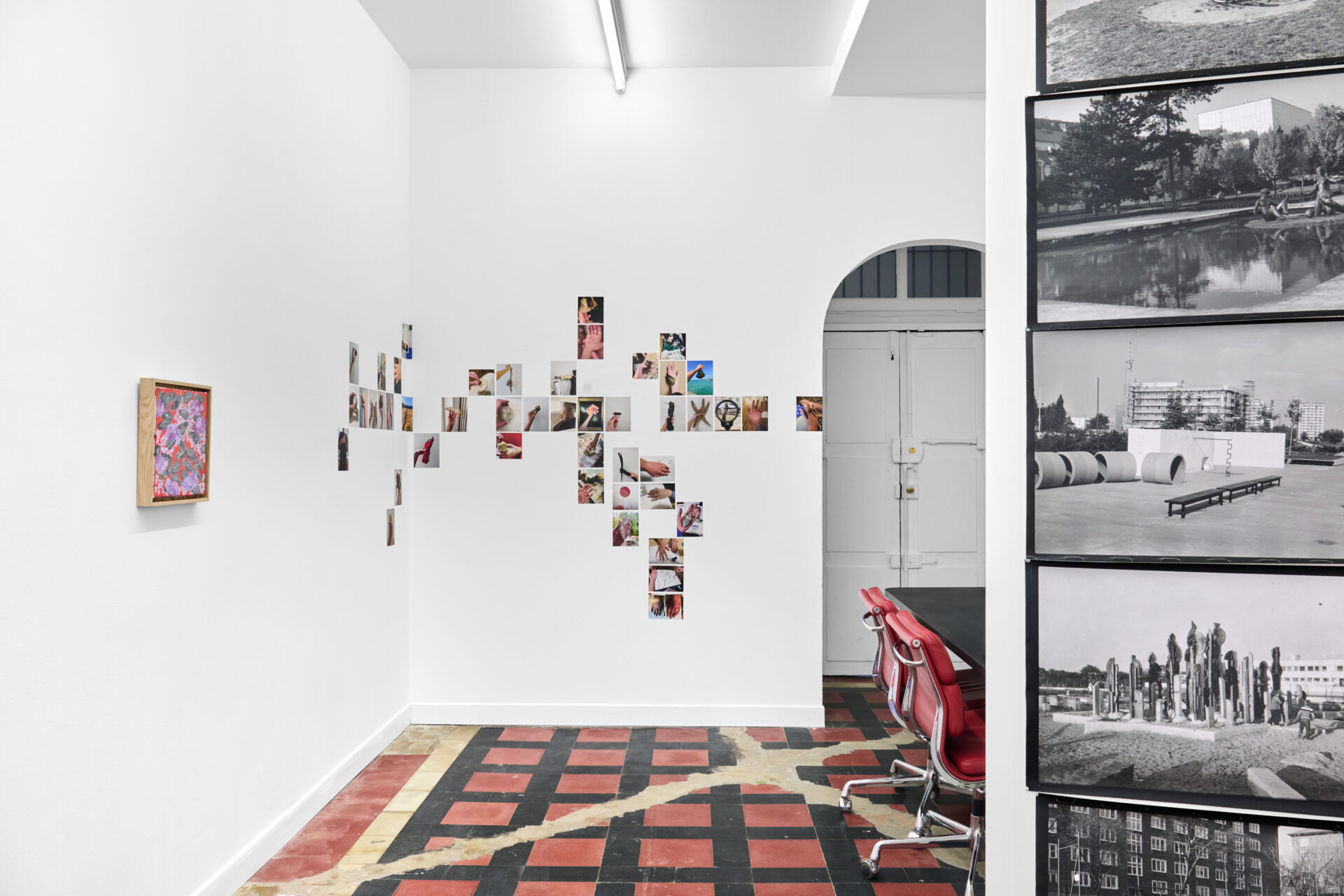
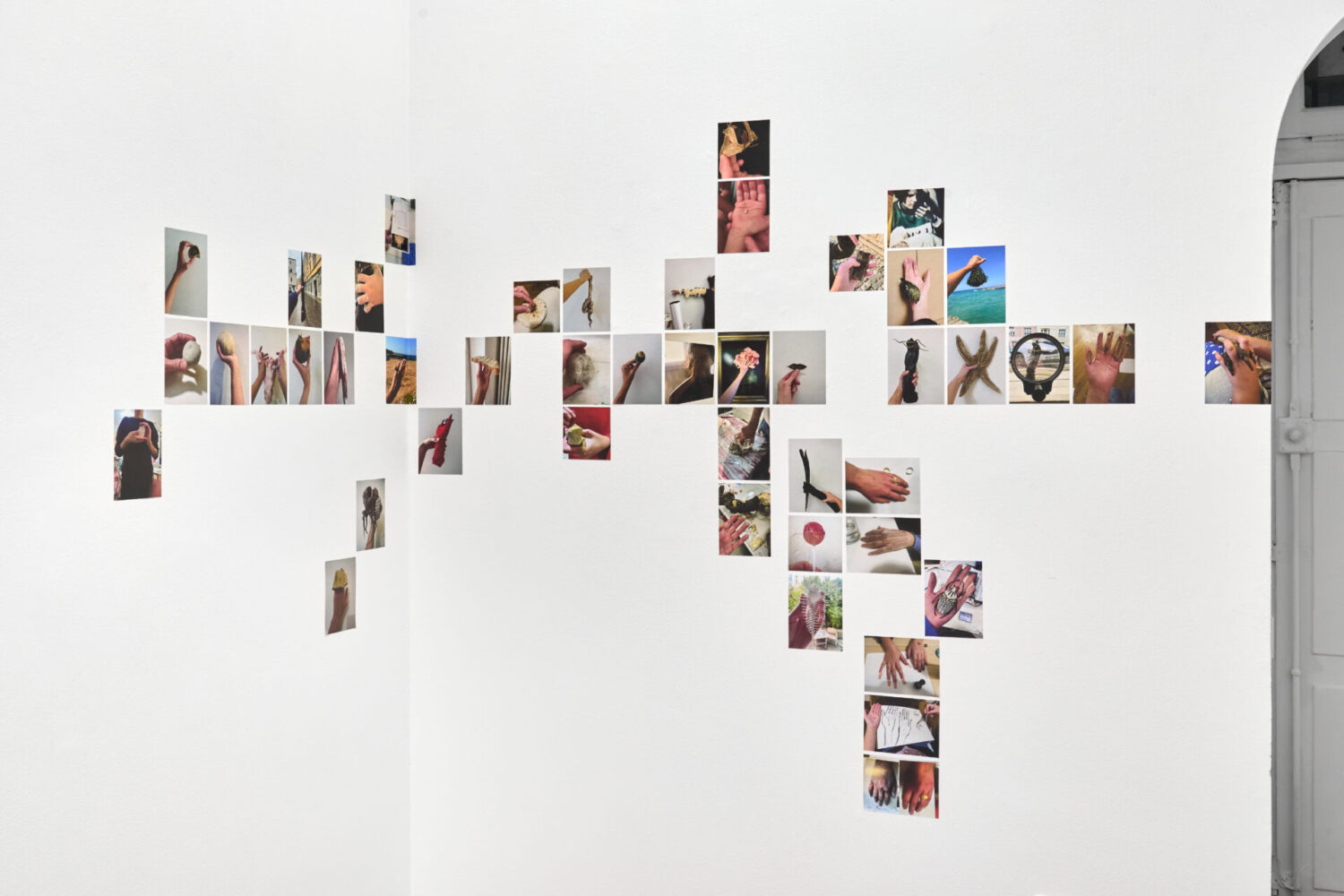
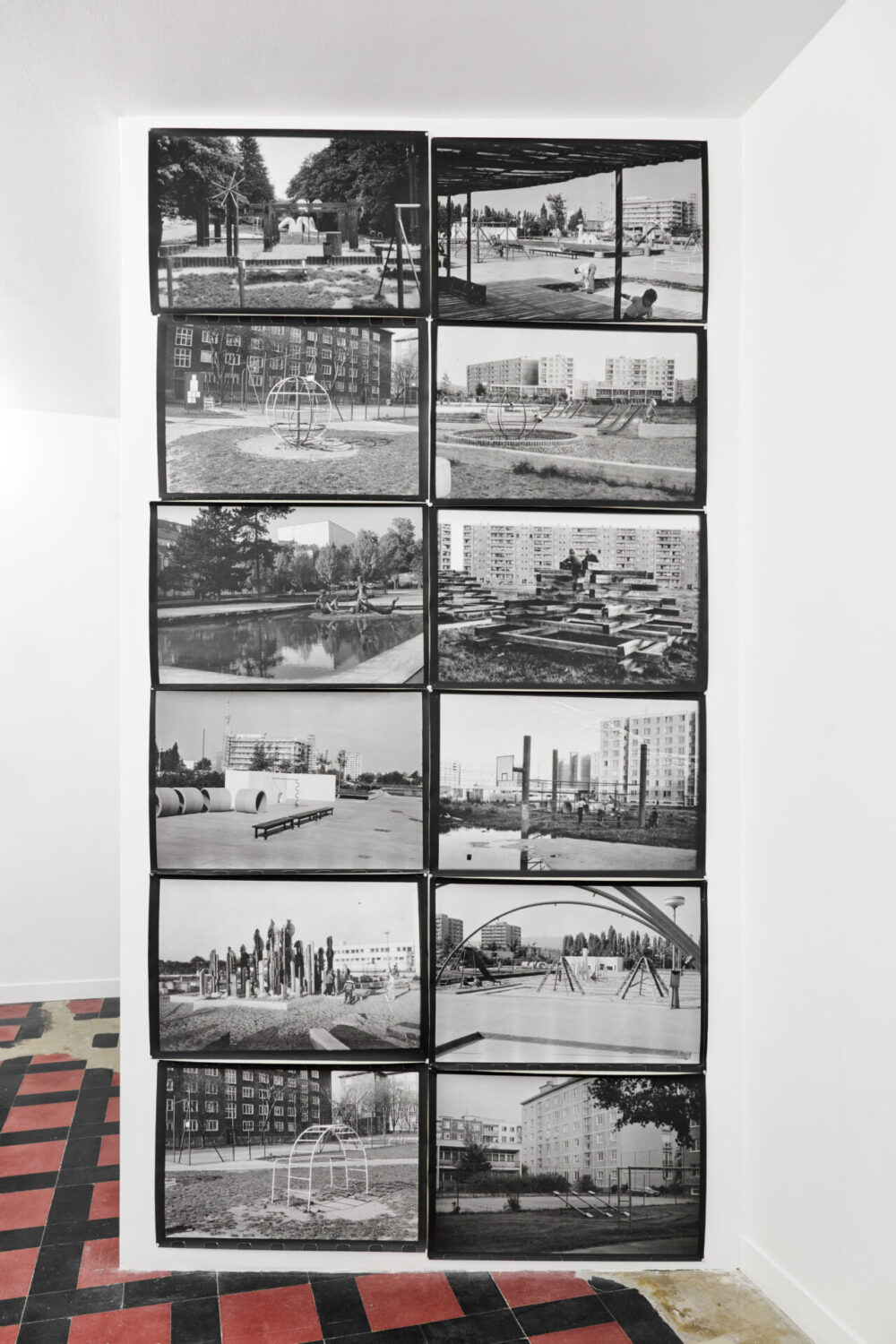
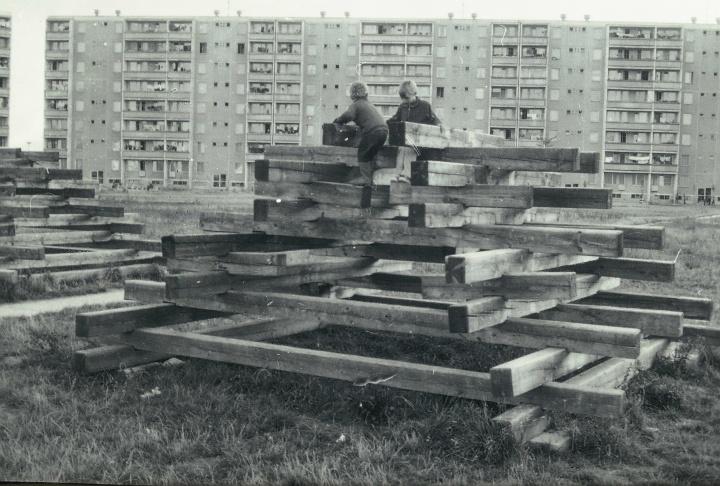
The suggestion of bodies is felt also in Playgrounds, a series of works by Petra Feriancová, in which she gathers photographs of public spaces in Bratislava, authored both by her and her father in the 1970s. Photographed in black and white, there is a sense of eeriness enveloping these works, sometimes emphasised by the Soviet building blocks in the background of the images, and others by the fact that the playgrounds seem mostly like public monuments being used for play, pointing to a state failure – intentional or otherwise incompetent – to provide adequate playing environments for its population. Politics appear in a more subdued way in Hands (2017–2025), an ongoing series of postcard-shaped photographs where the artist depicts hands that are doing something, but not necessarily something with a tangible goal. Rather, they hold, scratch, hide, toast and show, giving way to a collection of gestures characterised by lyricism.
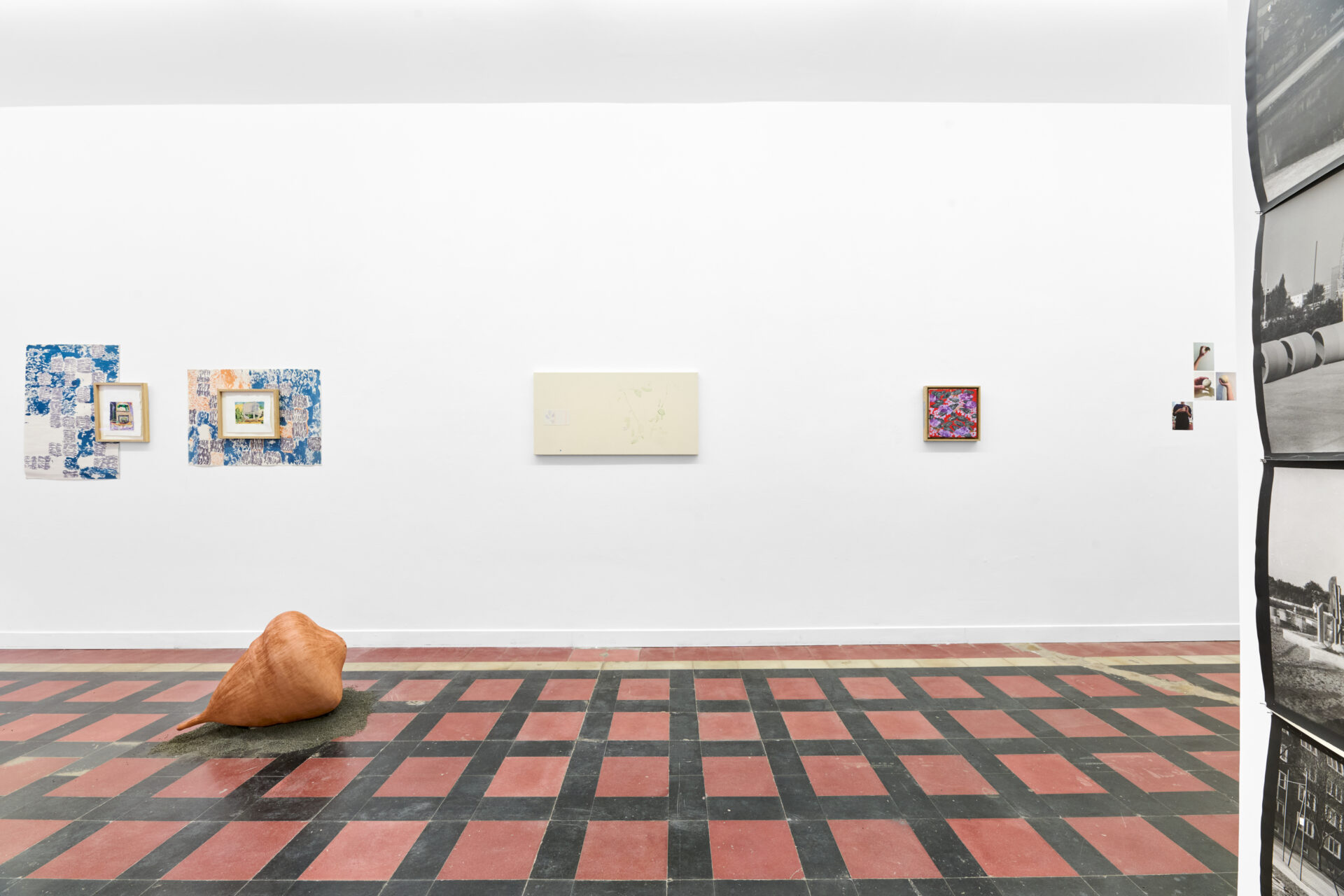
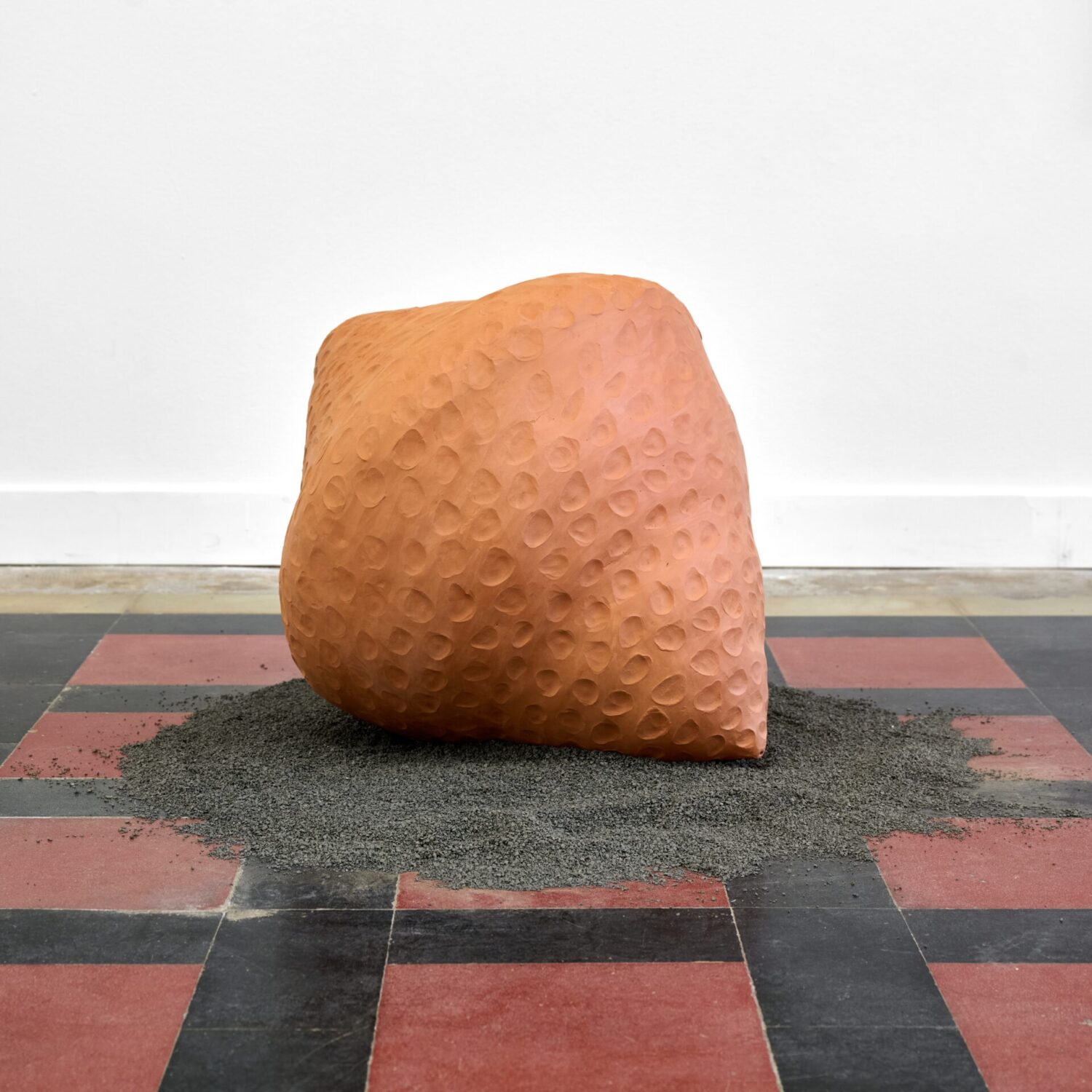
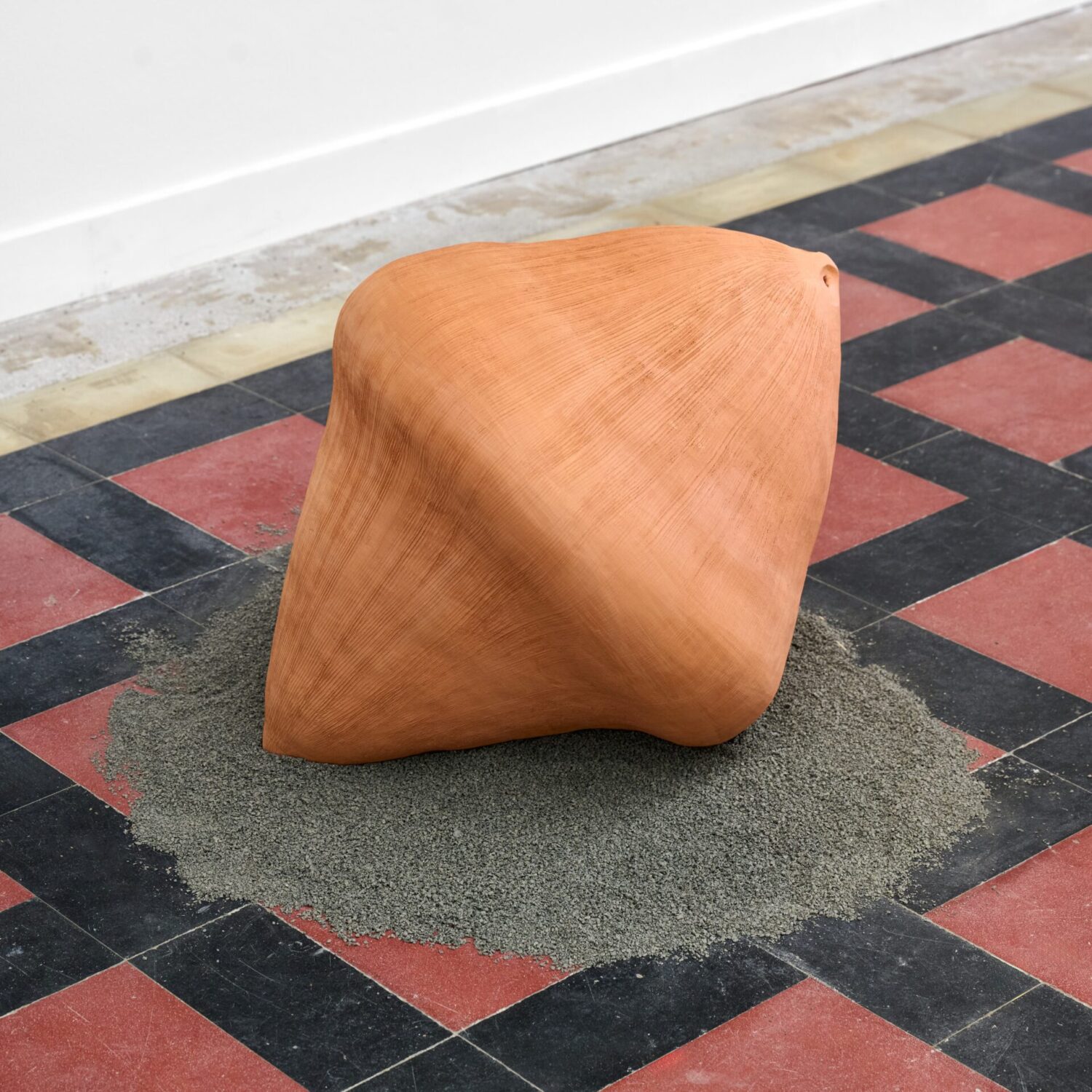
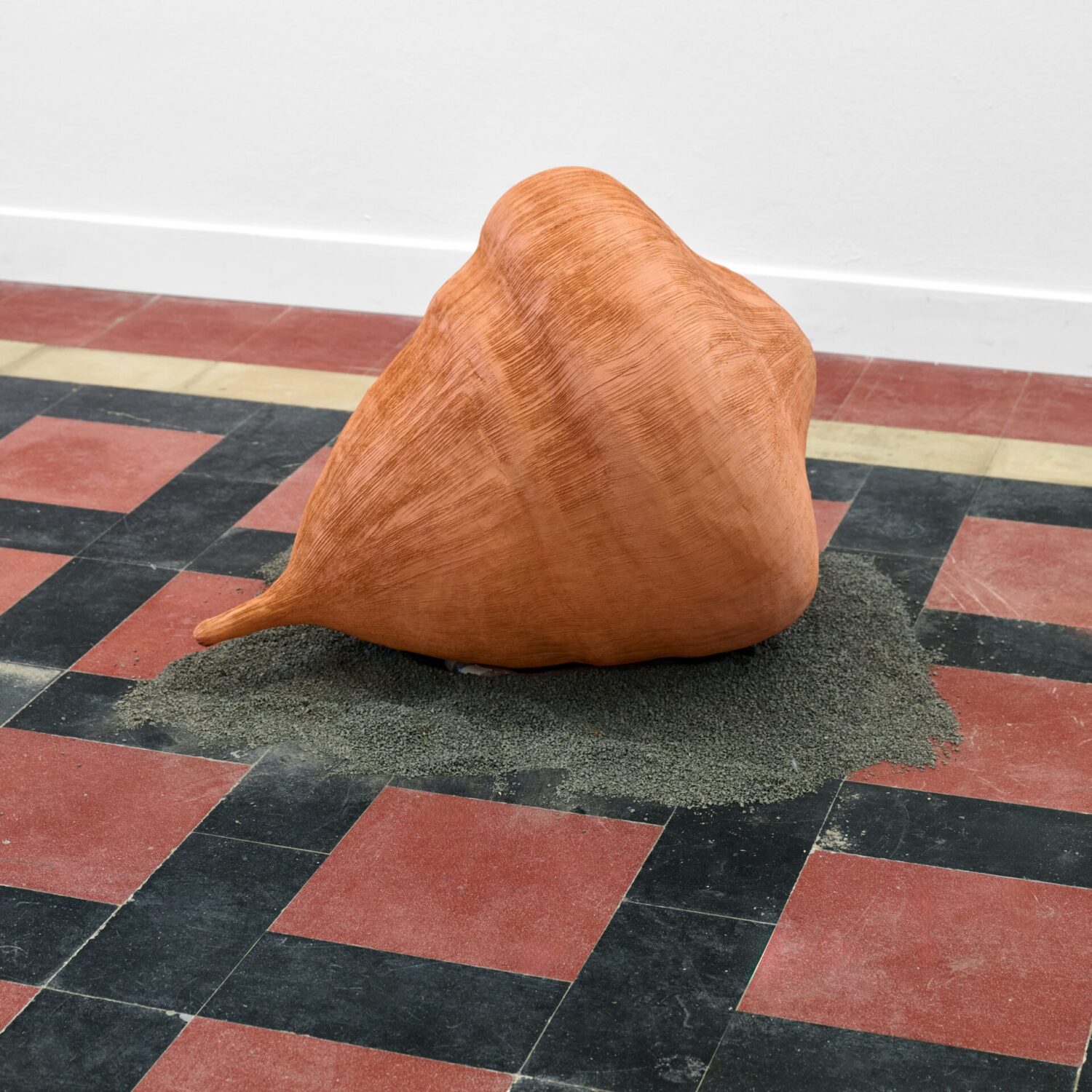
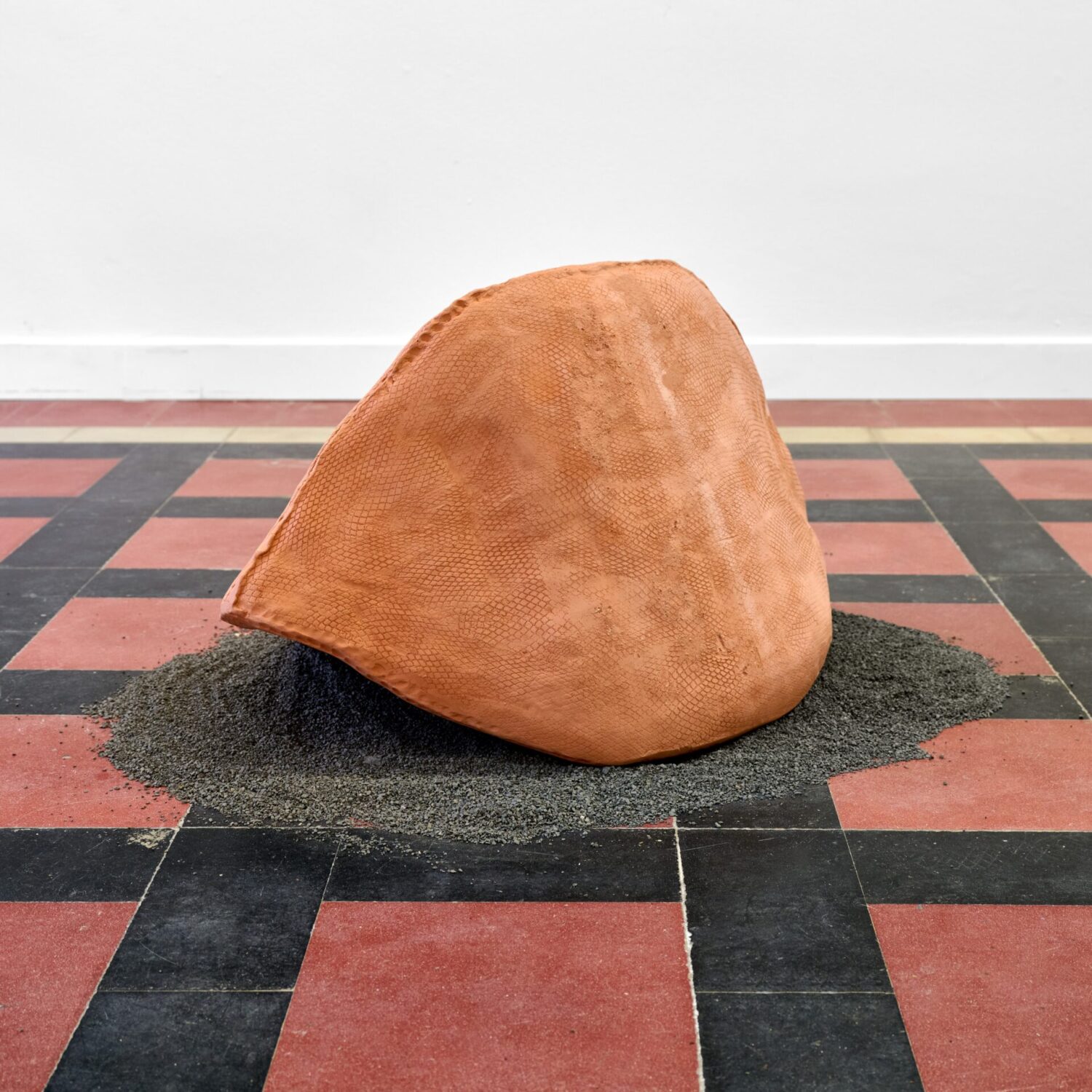
Time is the very substance of Vandria Borari’s Yupirungáwa series (all works 2026), where she creates aggrandised seeds in ceramics – a kind of labour that, in itself, requires patience and malleability to embrace the unforeseen events that can happen in every step of the way. The title of the series stands for ‘origin’ in the Indigenous language Nheengatu, and the four sculptures on show each depict replicas of seeds of the palms Tucumã and Curuá, the Pará nut and the Murici – all species that abound in the Amazon rainforest. A lot can be learned by observing the lifespan of plants, from watching them grow and perish, disintegrate and feed back into the soil, allowing for life to emerge anew. A large part of that cycle happens beneath the earth, where life brews through actions that cannot be seen but are undeniably there.
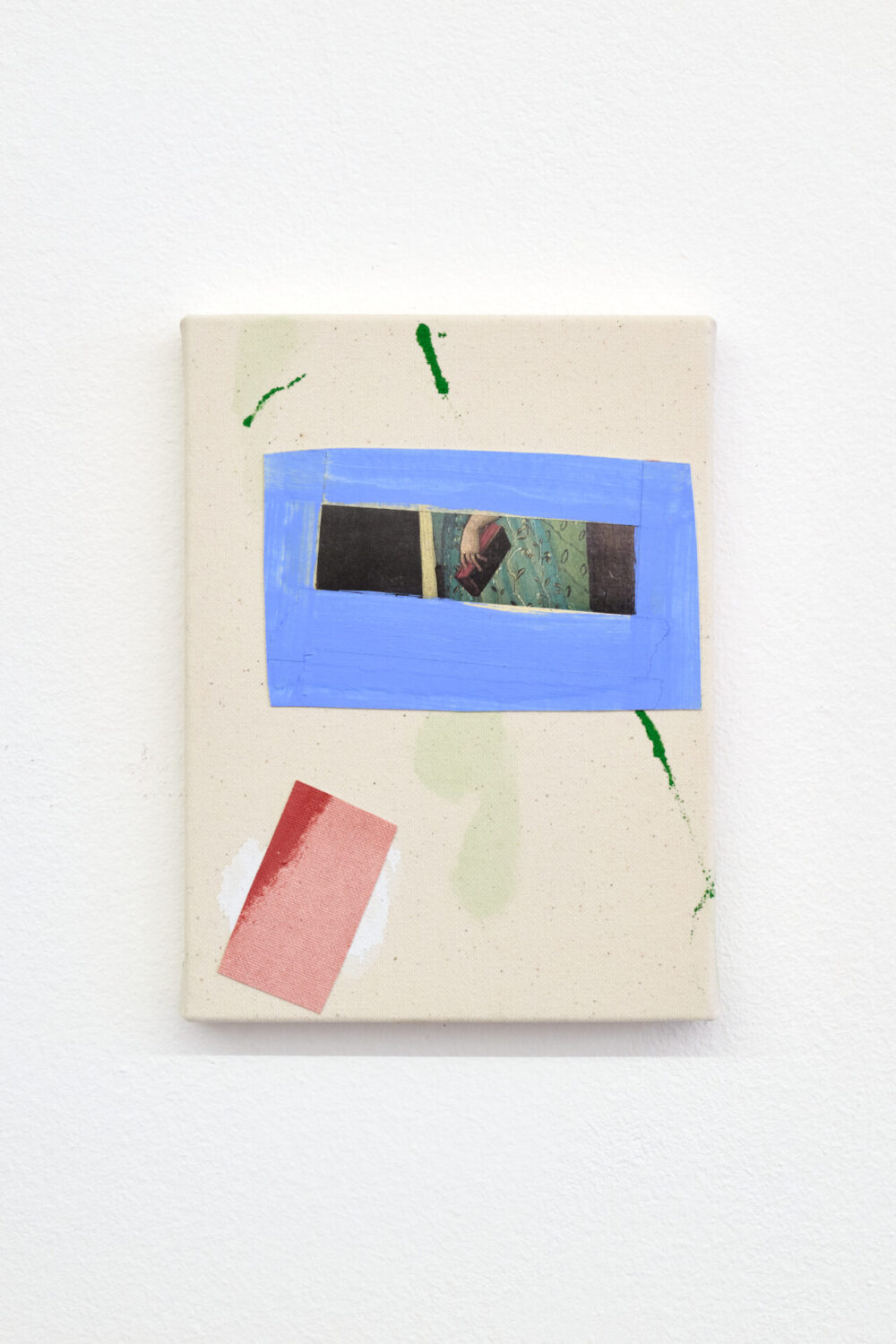
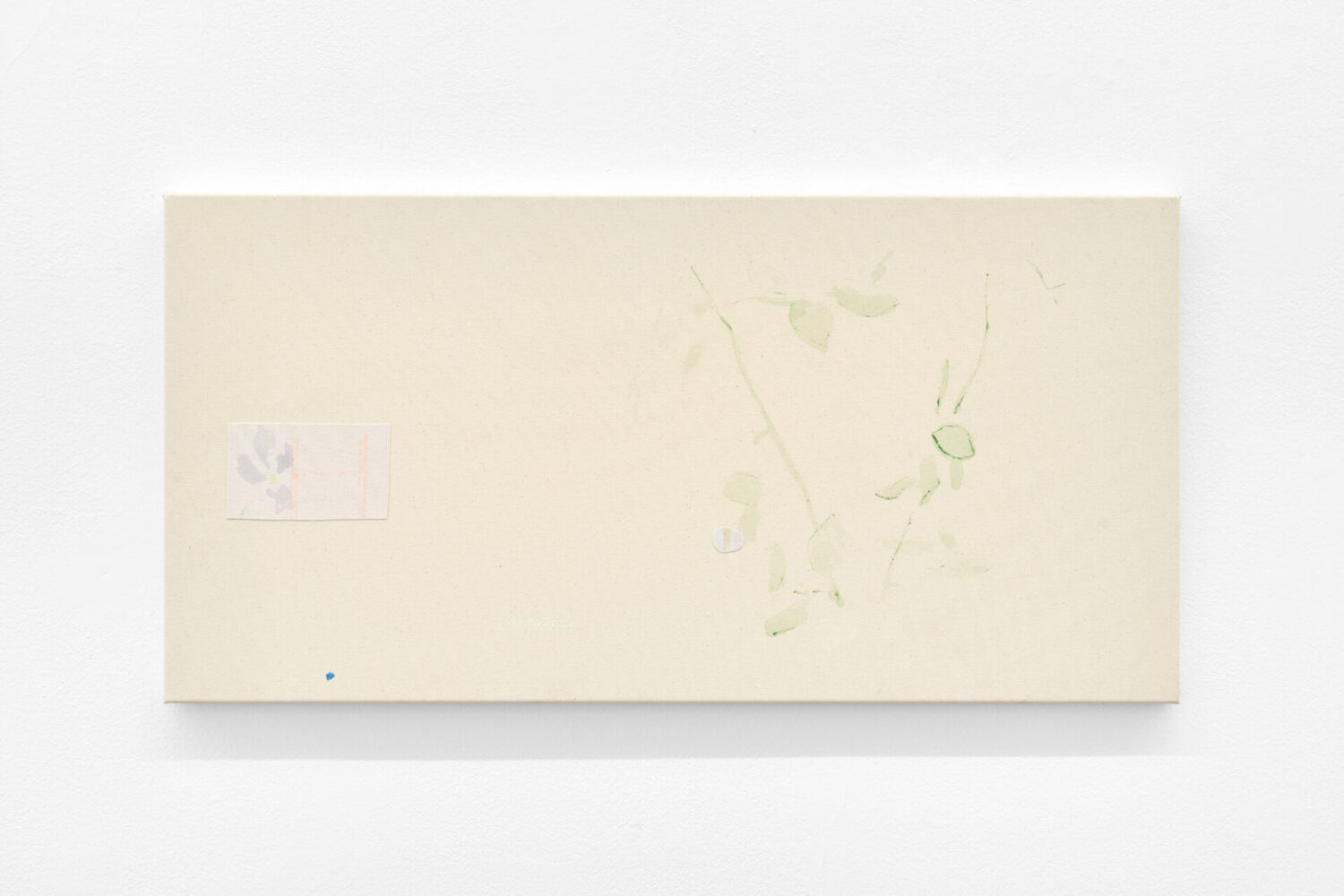
Silence and contemplation are two of the main forces behind Sofia Silva’s compositions, an artist who is not afraid to embrace large areas of seeming lack of action in her paintings. Neither does she shy away from cutting segments of her works and collaging the fragments together, forming new compositions through a self-recycling logic. Such cutout tactics are visible in Non rompetemi i coglioni (Girl Interrupted While Reading) (2026), the smallest of two works on show, as well as in Camera Bianca (2026), a painting depicting a sparsely populated domestic setting. In the centre of the latter, the artist has inscribed “con tutto il cuore” (with all my heart), a verse drawn from the prayer Atto di dolore, traditionally recited during confession as a means of repentance. Through small, powerful gestures, Silva demonstrates that whispers can be more meaningful than the sound of a thousand drums.
No need for a band.
Curated by Maria do Carmo M. P. de Pontes.
This exhibition will run from 29th May to 3rd July 2026, Tuesday to Friday, 3-7 pm, or by appointment.