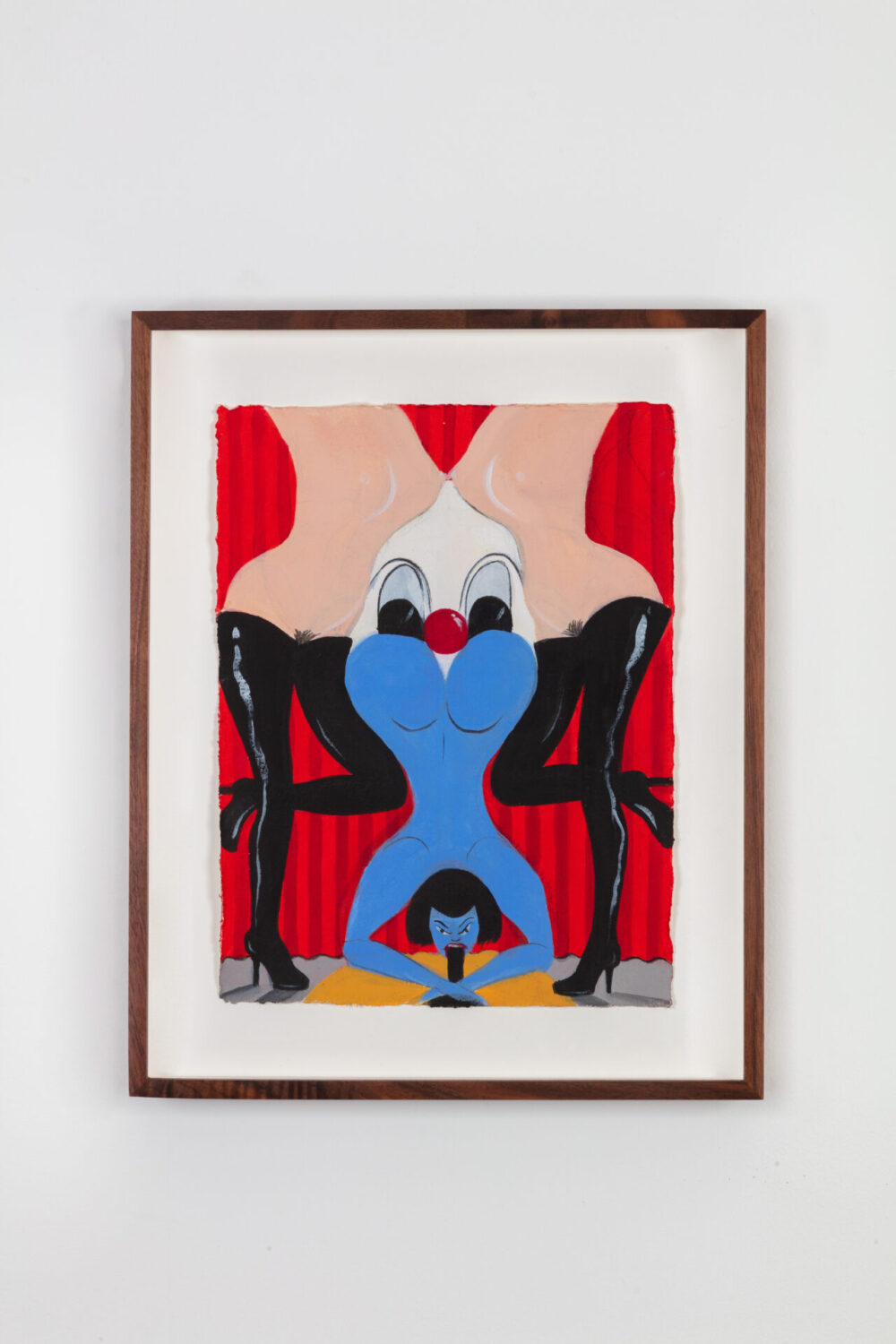
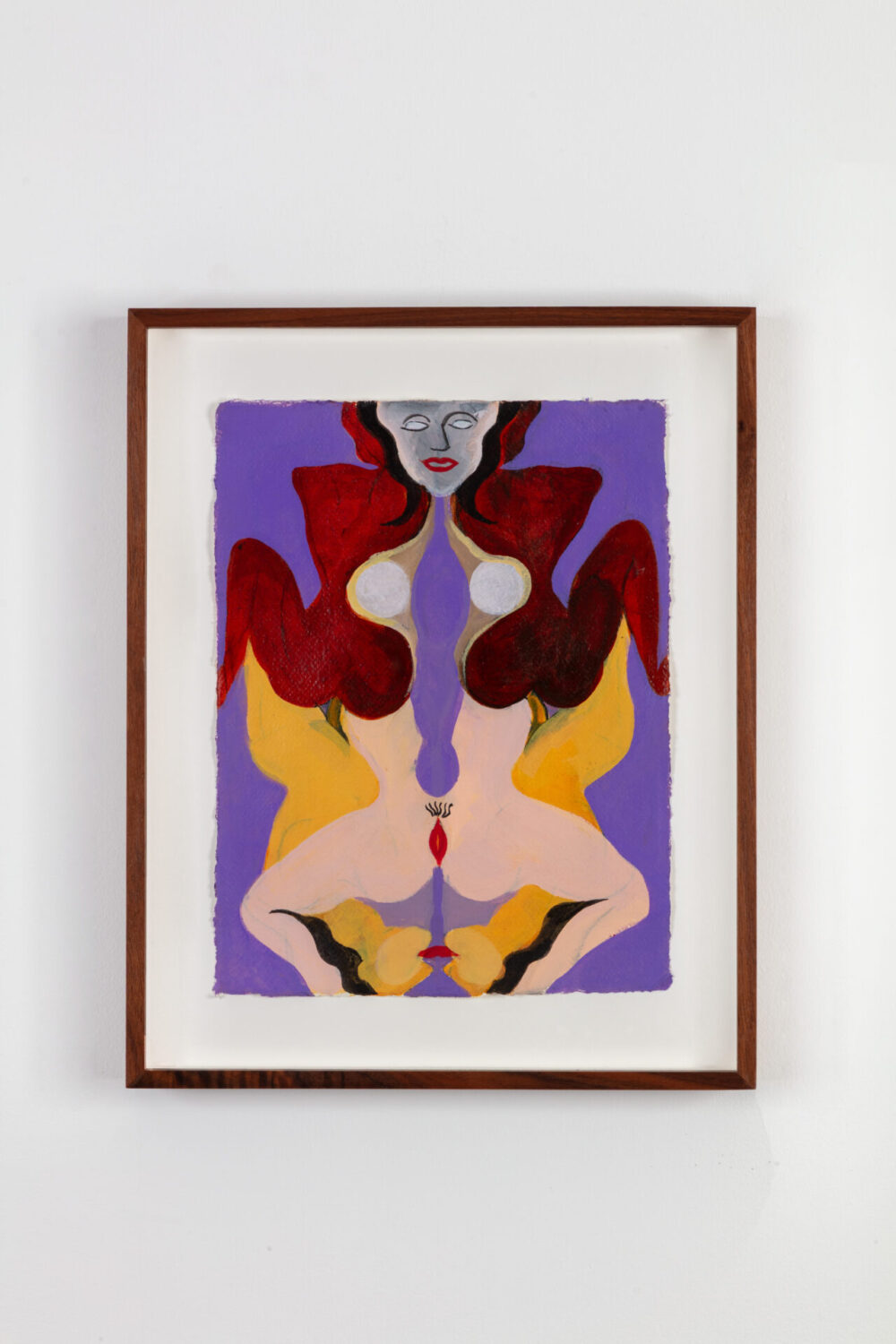
Audre Lorde was a self-proclaimed ‘black, lesbian, feminist, socialist, mother, warrior, poet’ whose writings offer welcome alternatives to mainstream views of the world. She fought tirelessly against social injustices, whatever forms these might take – ‘there is no hierarchy of oppressions’, she famously wrote in a 1983 essay. In one of her most eminent texts, Uses of the Erotic: The Erotic as Power, Lorde locates the nature of the erotic ‘as a source of power and information’, which, she argues, is deliberately confused by men with pornography to undermine this intrinsic feminine power. ‘When I speak of the erotic’, Lorde wrote, ‘I speak of it as an assertion of the lifeforce of women; of that creative energy empowered, the knowledge and use of which we are now reclaiming in our language, our history, our dancing, our loving, our work, our lives’. Therefore, to frame agency as promiscuity is not only wrong but obscene.
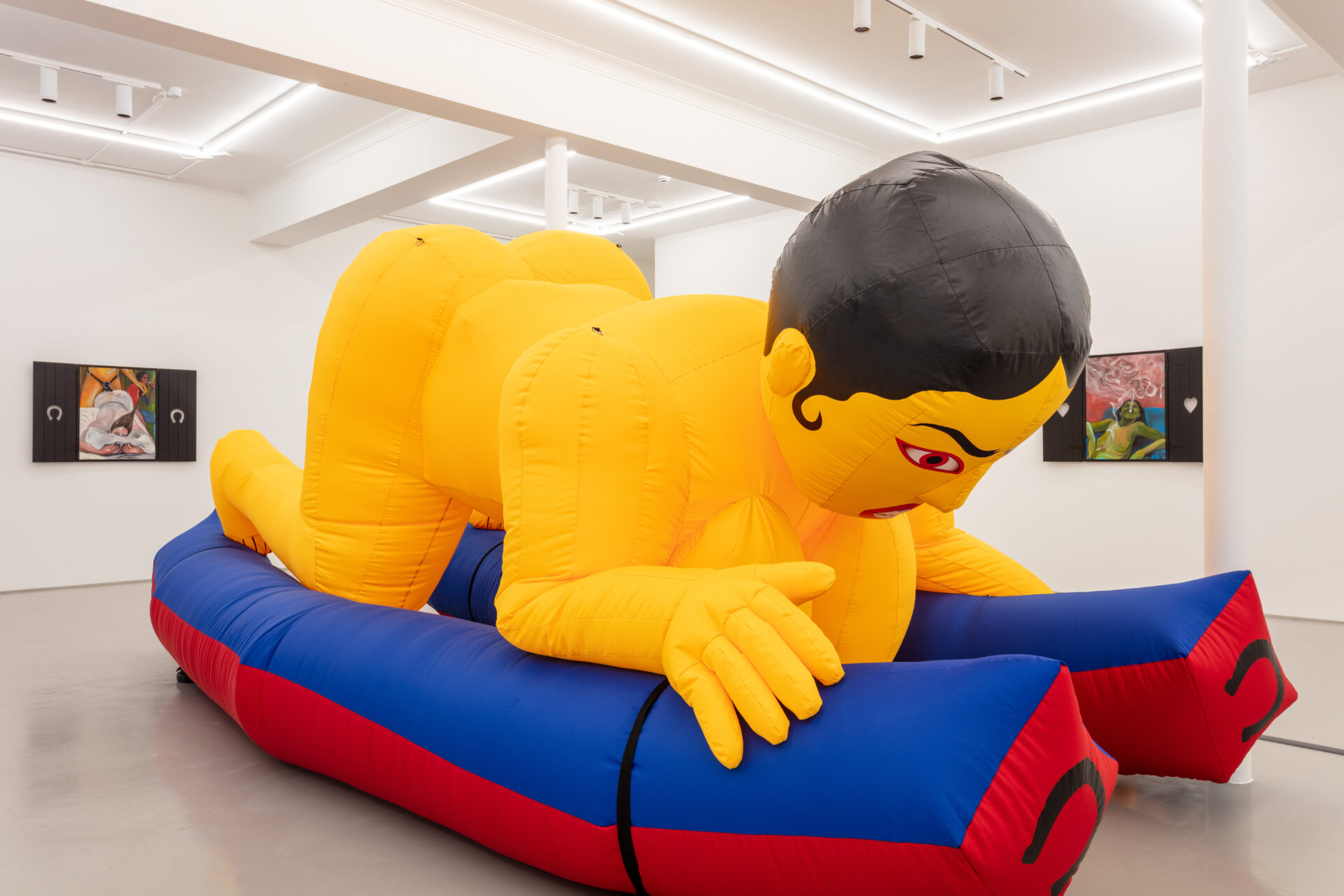
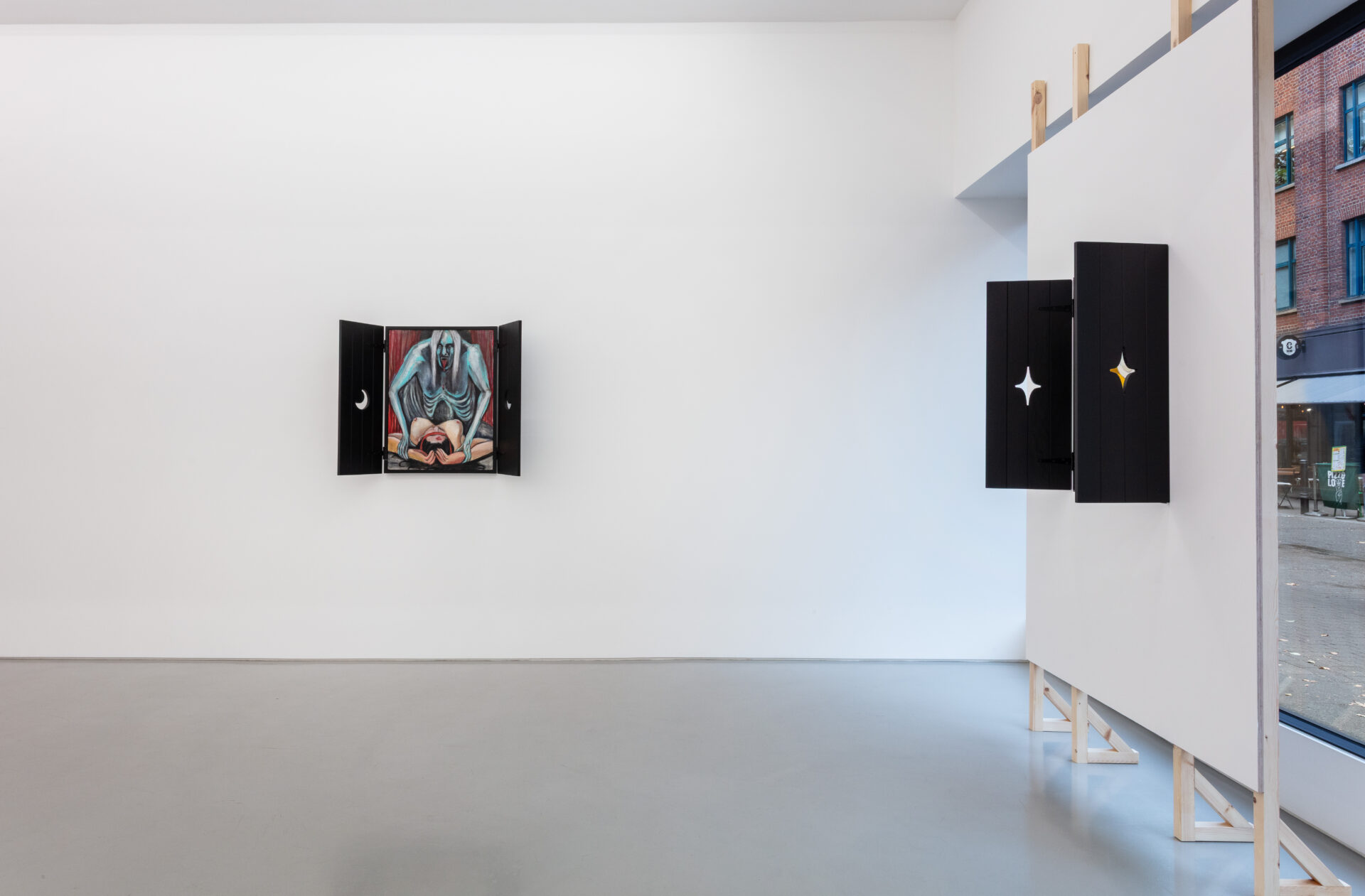
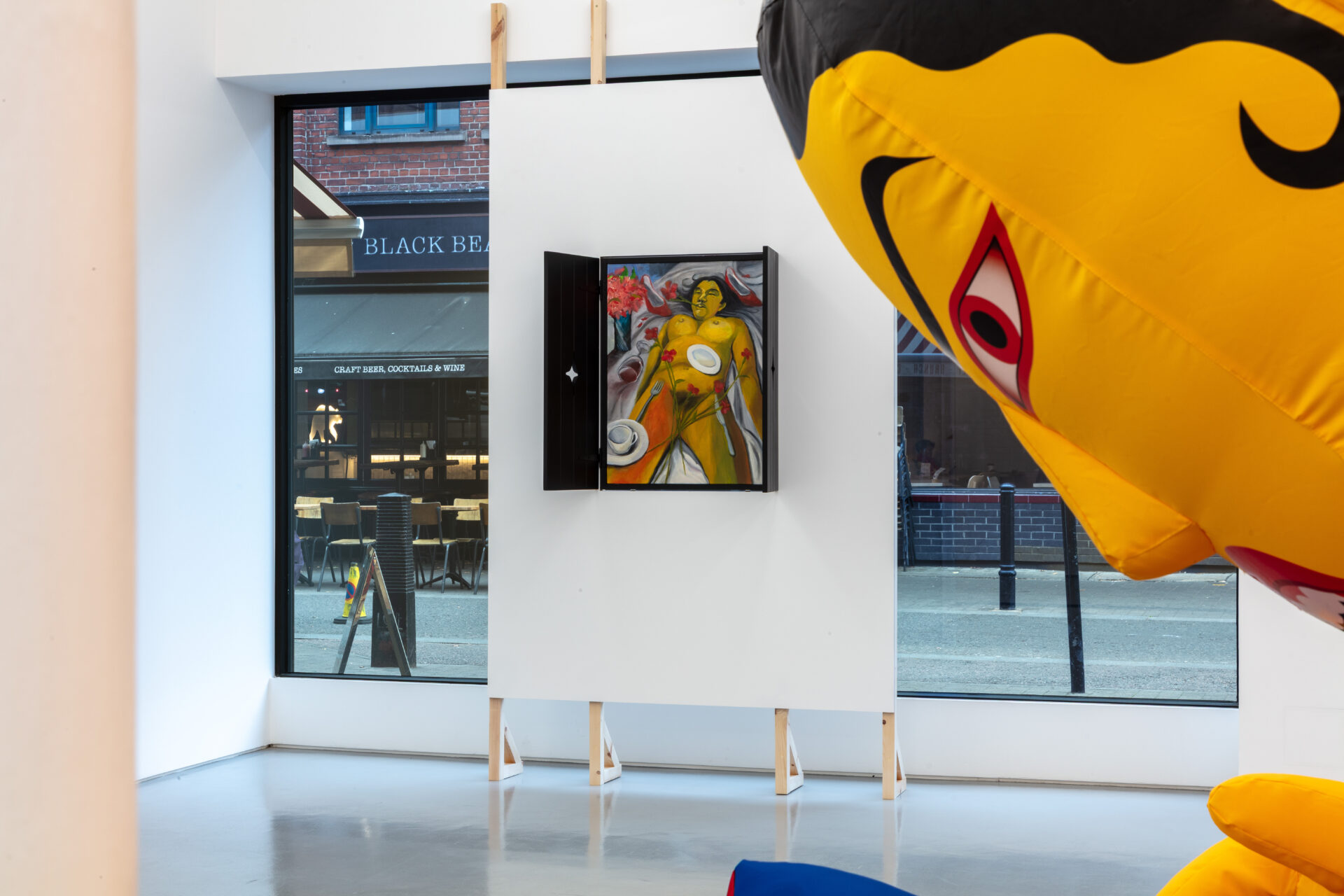
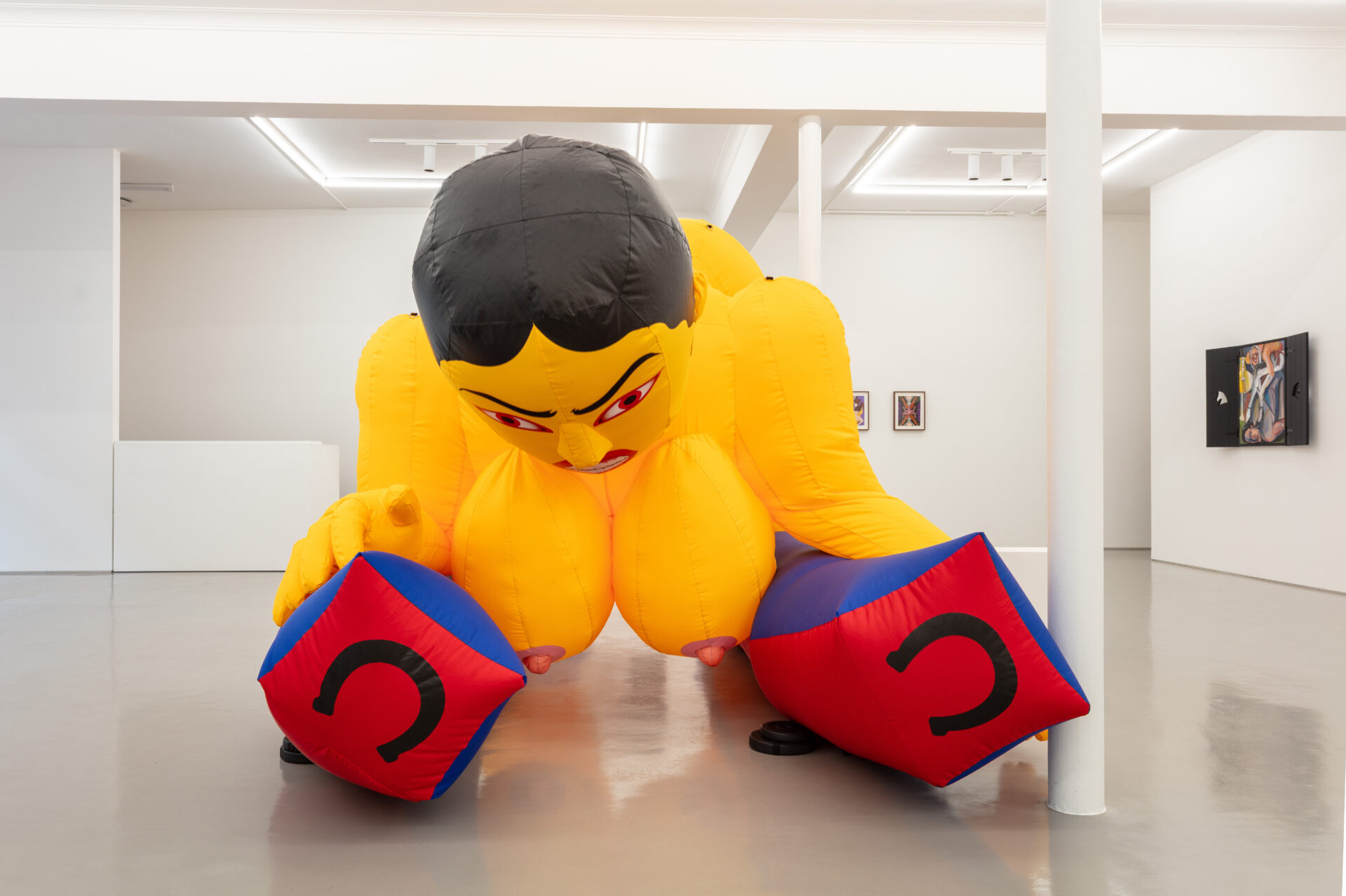
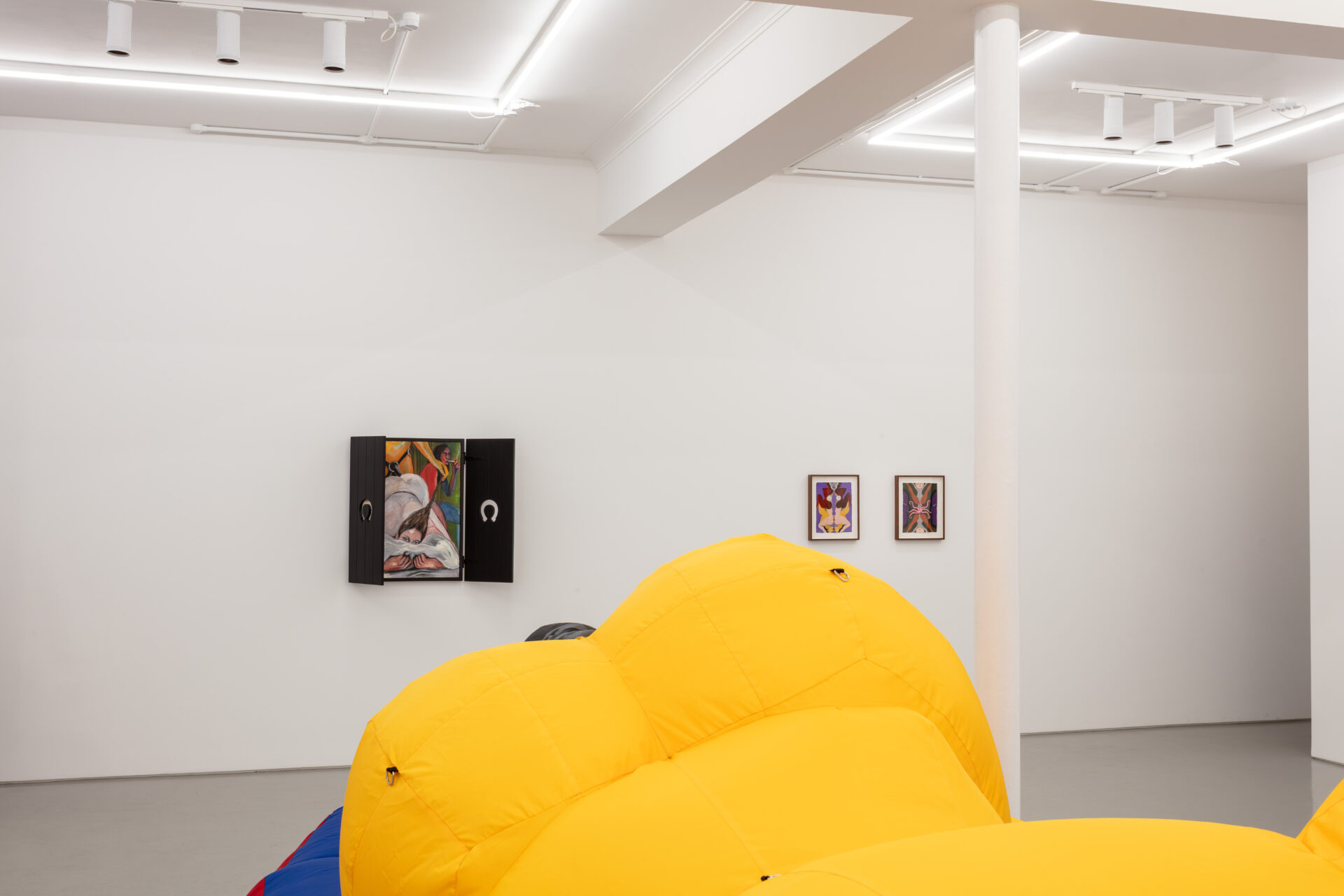
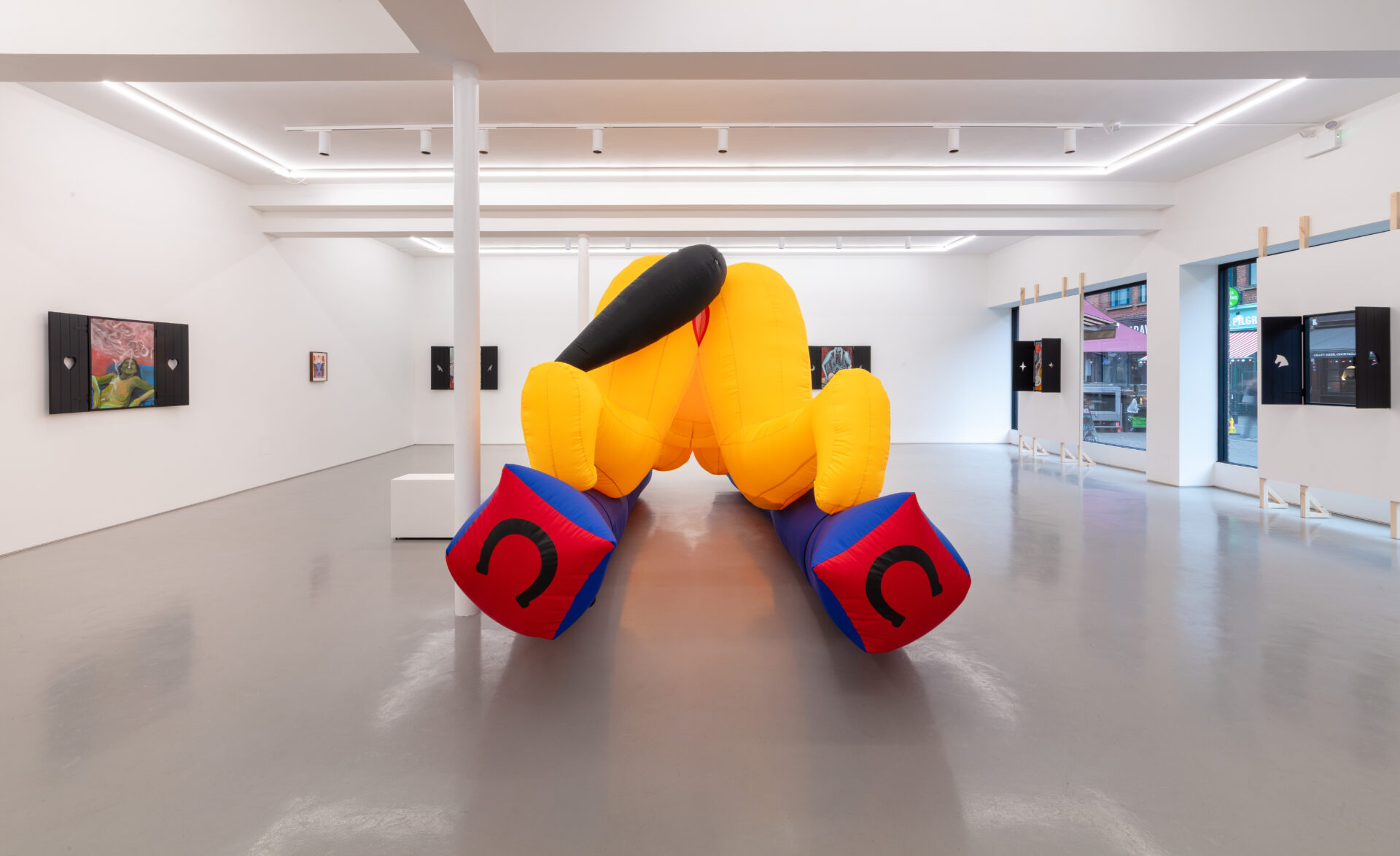
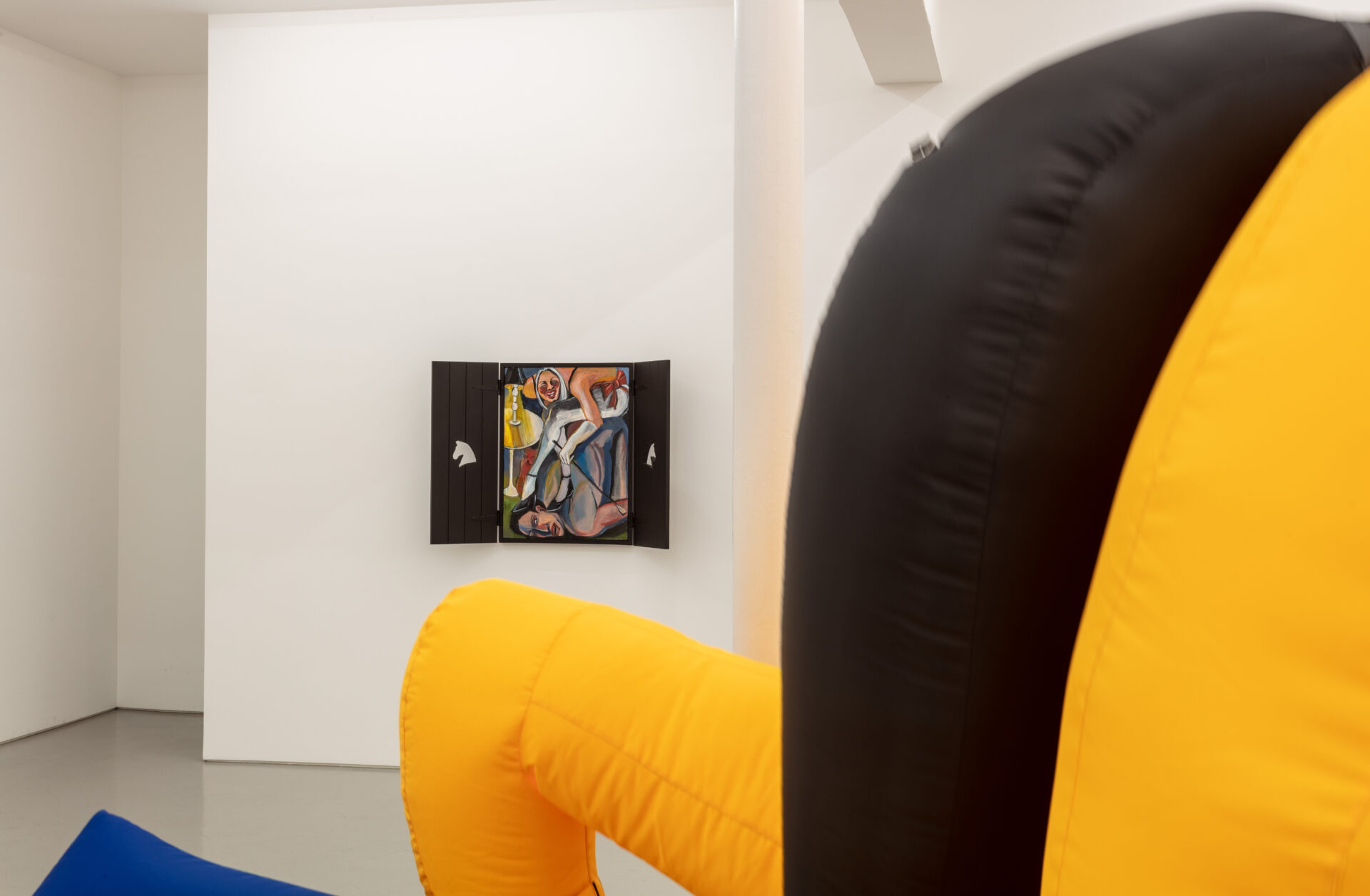
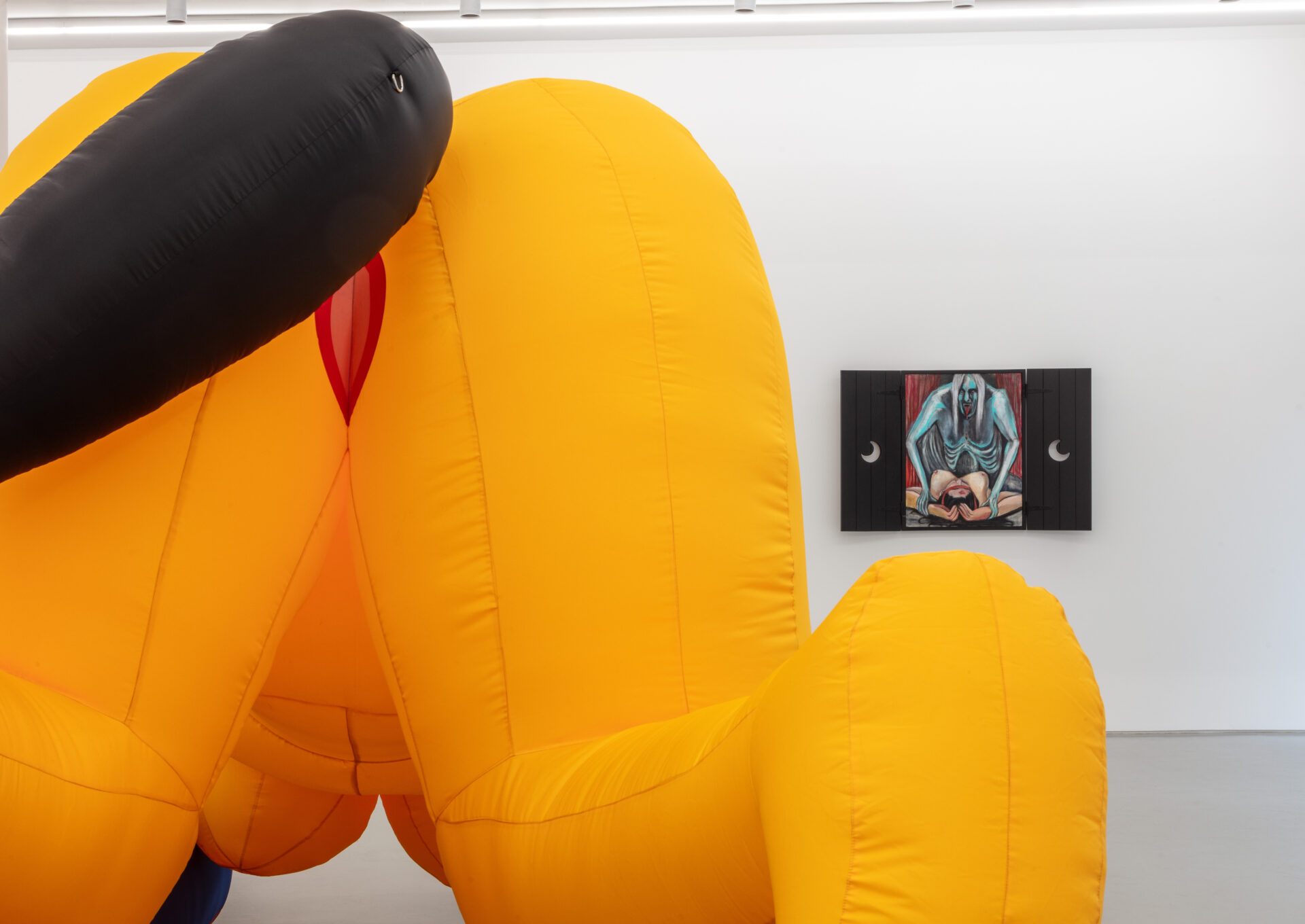
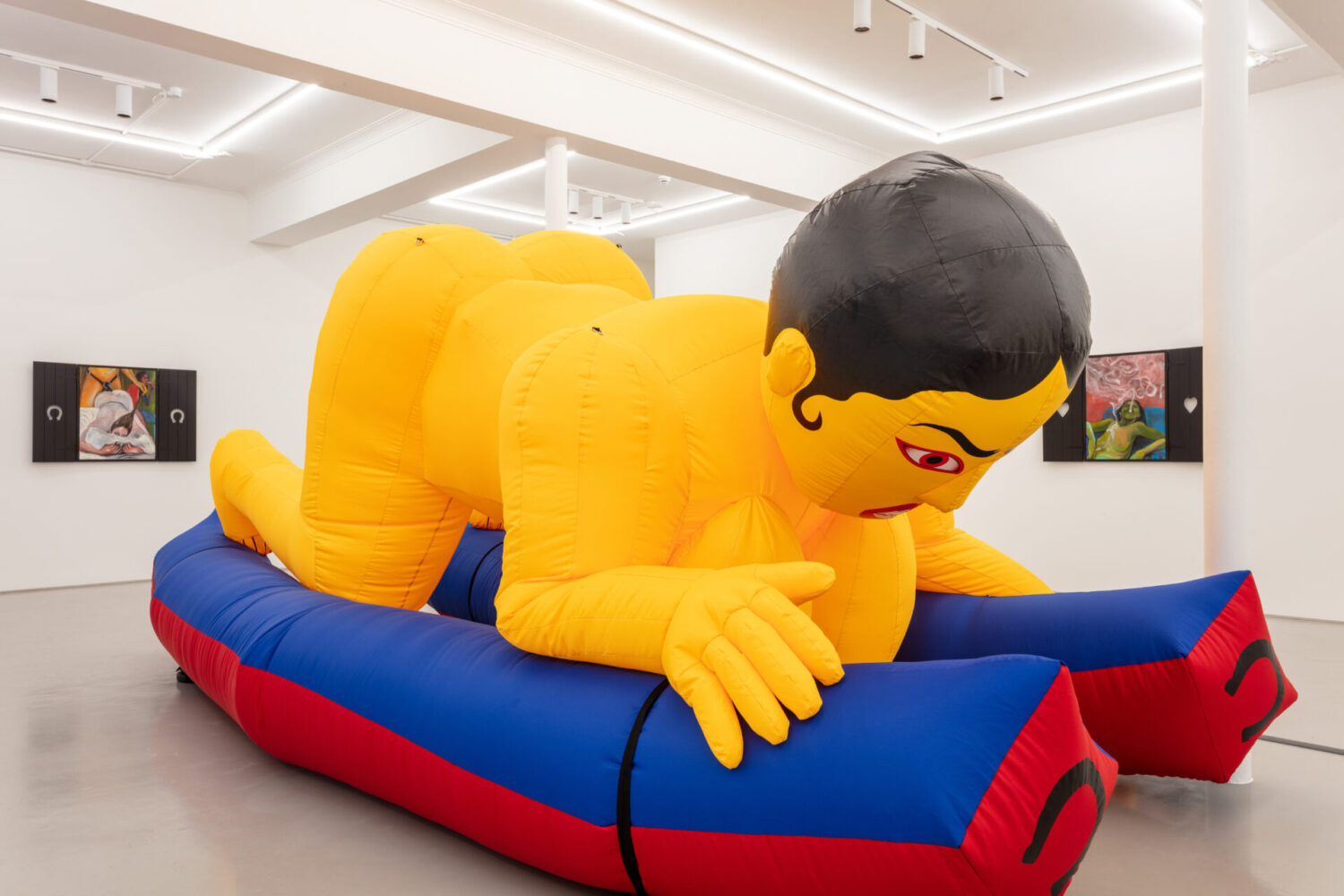
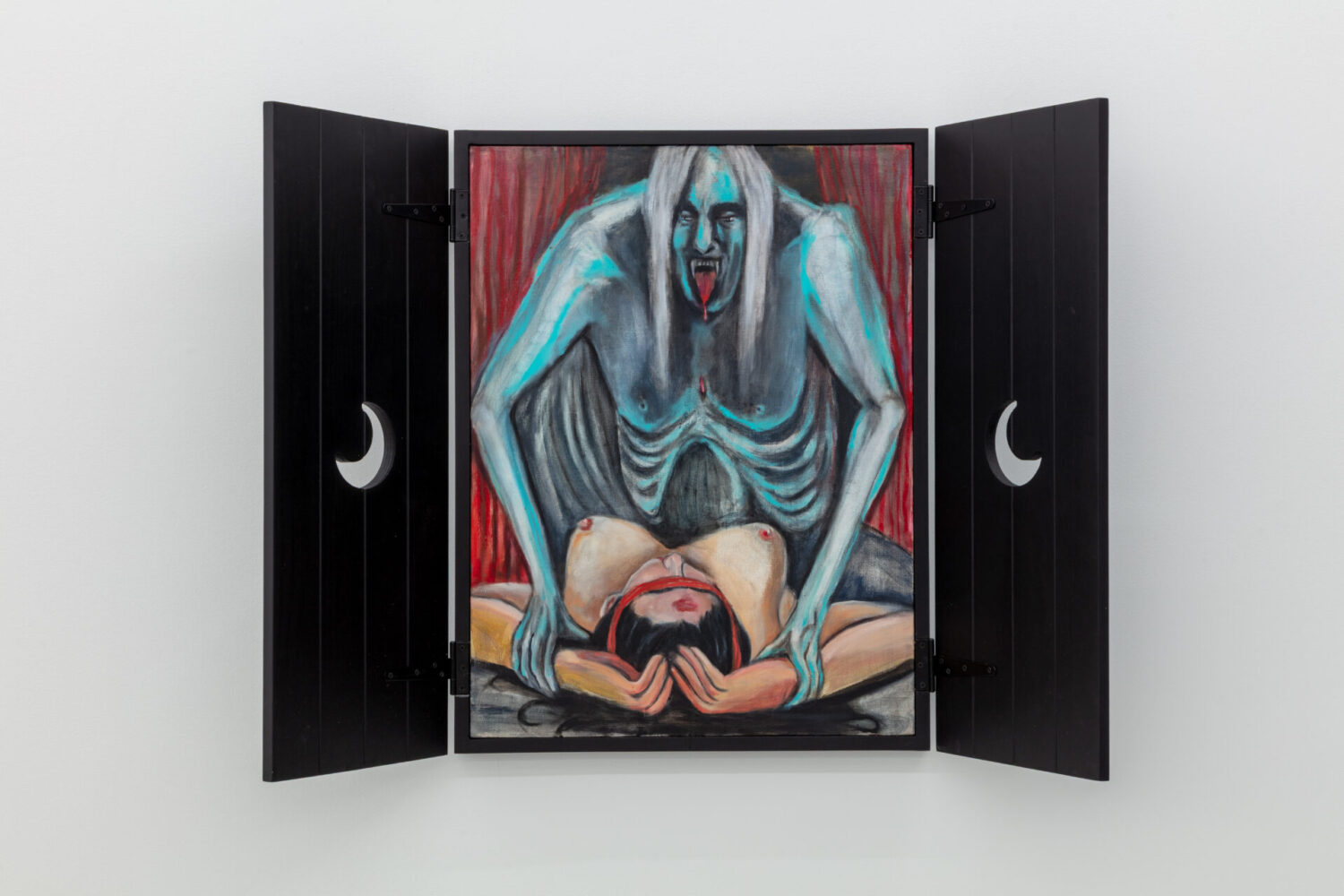
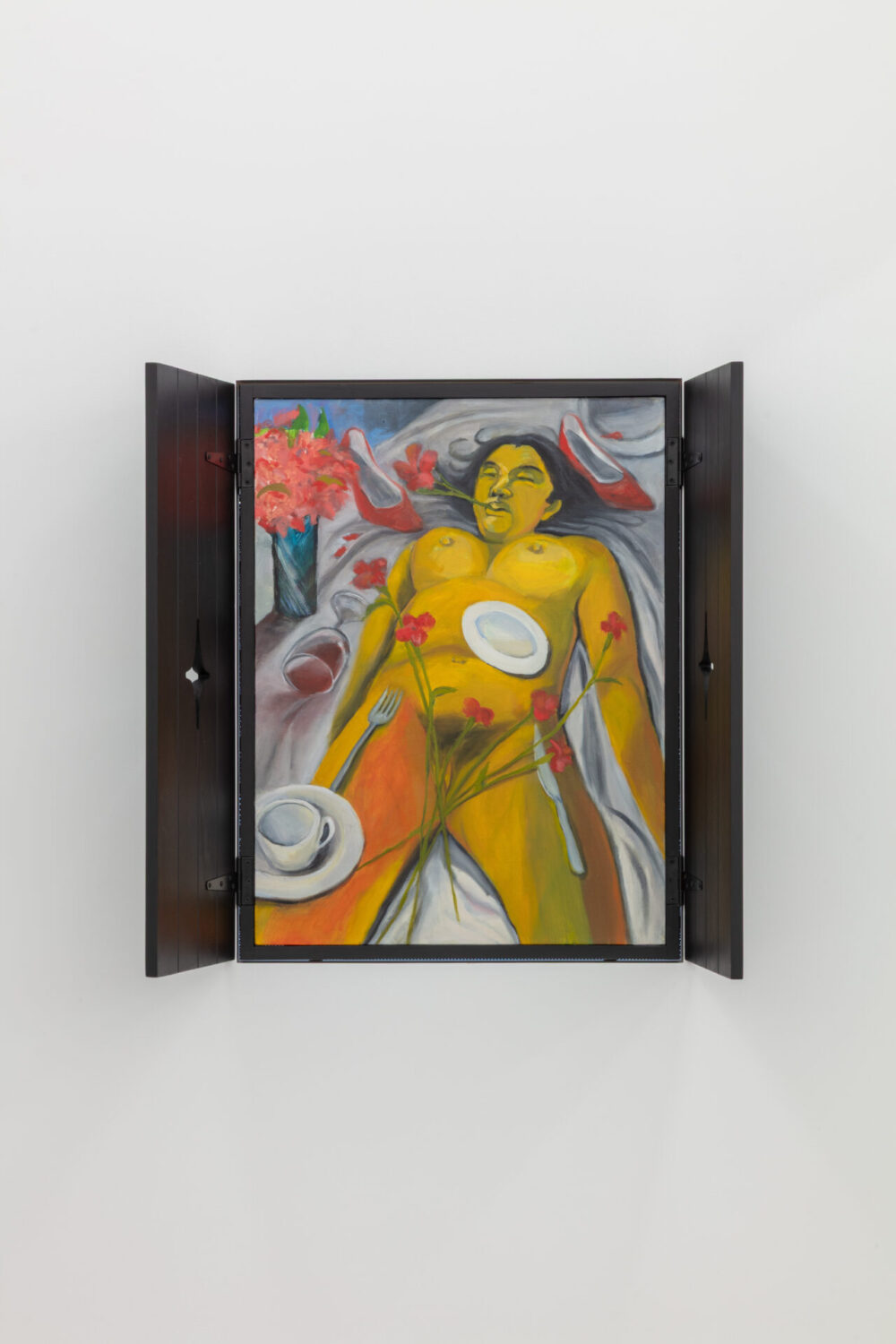
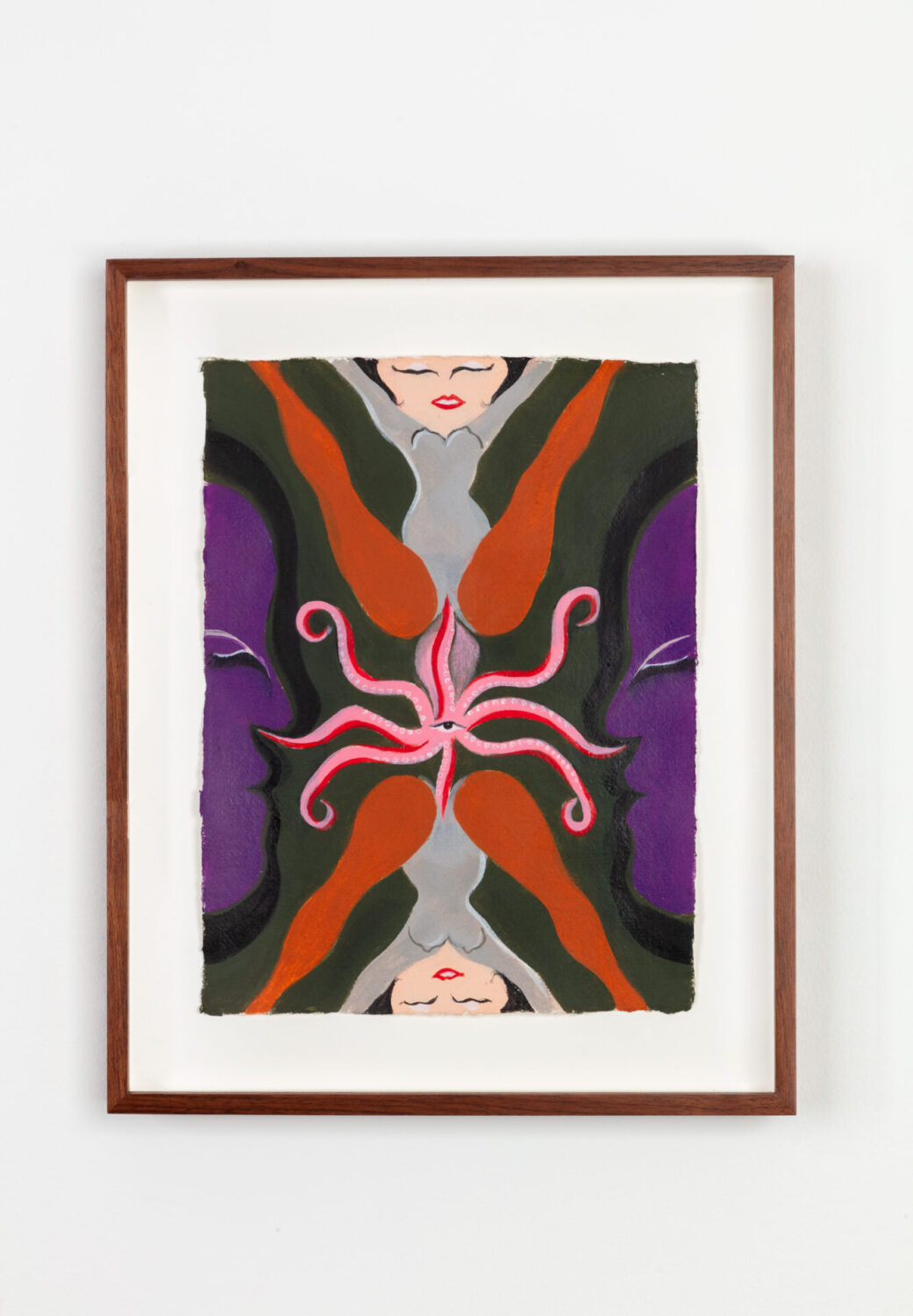
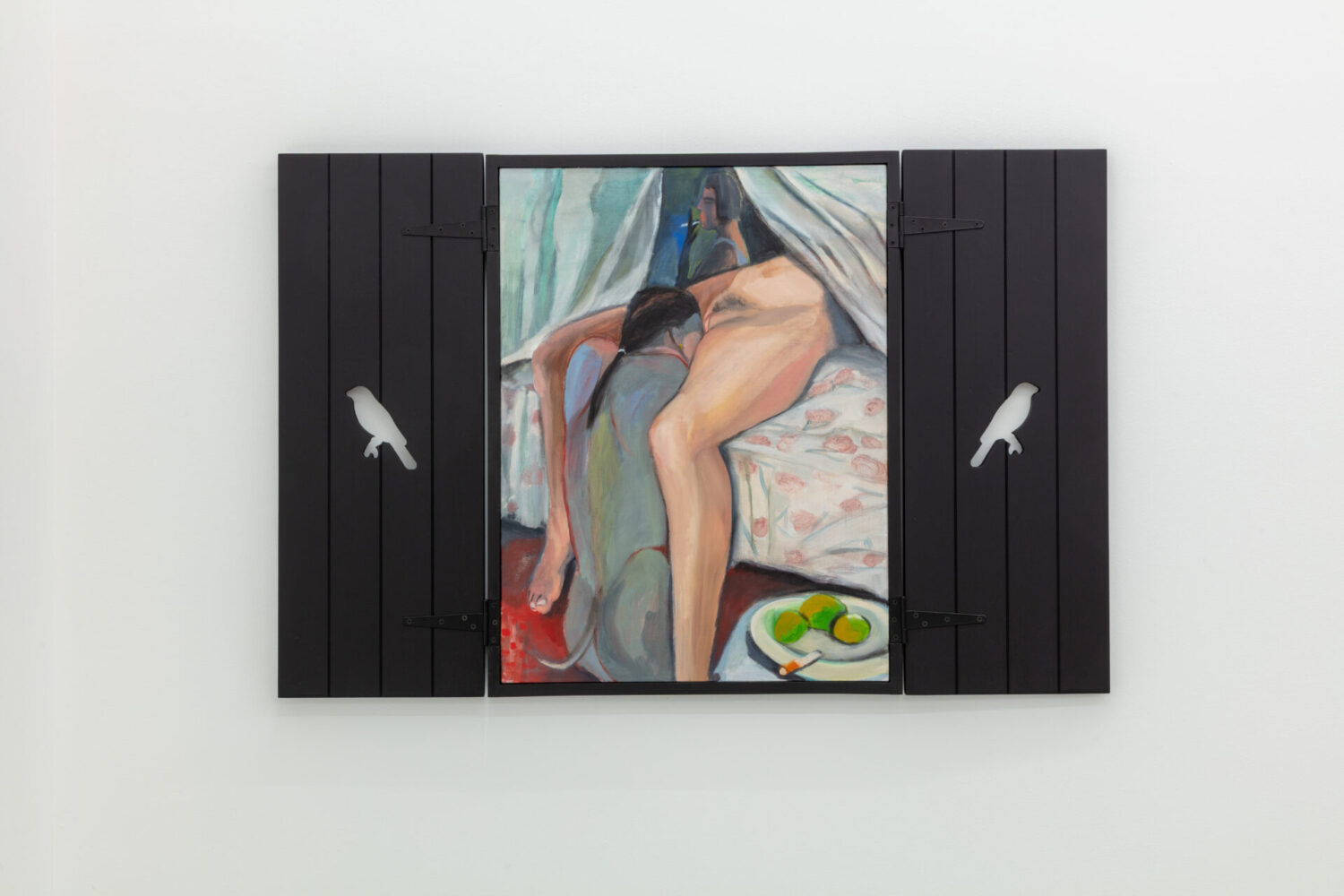
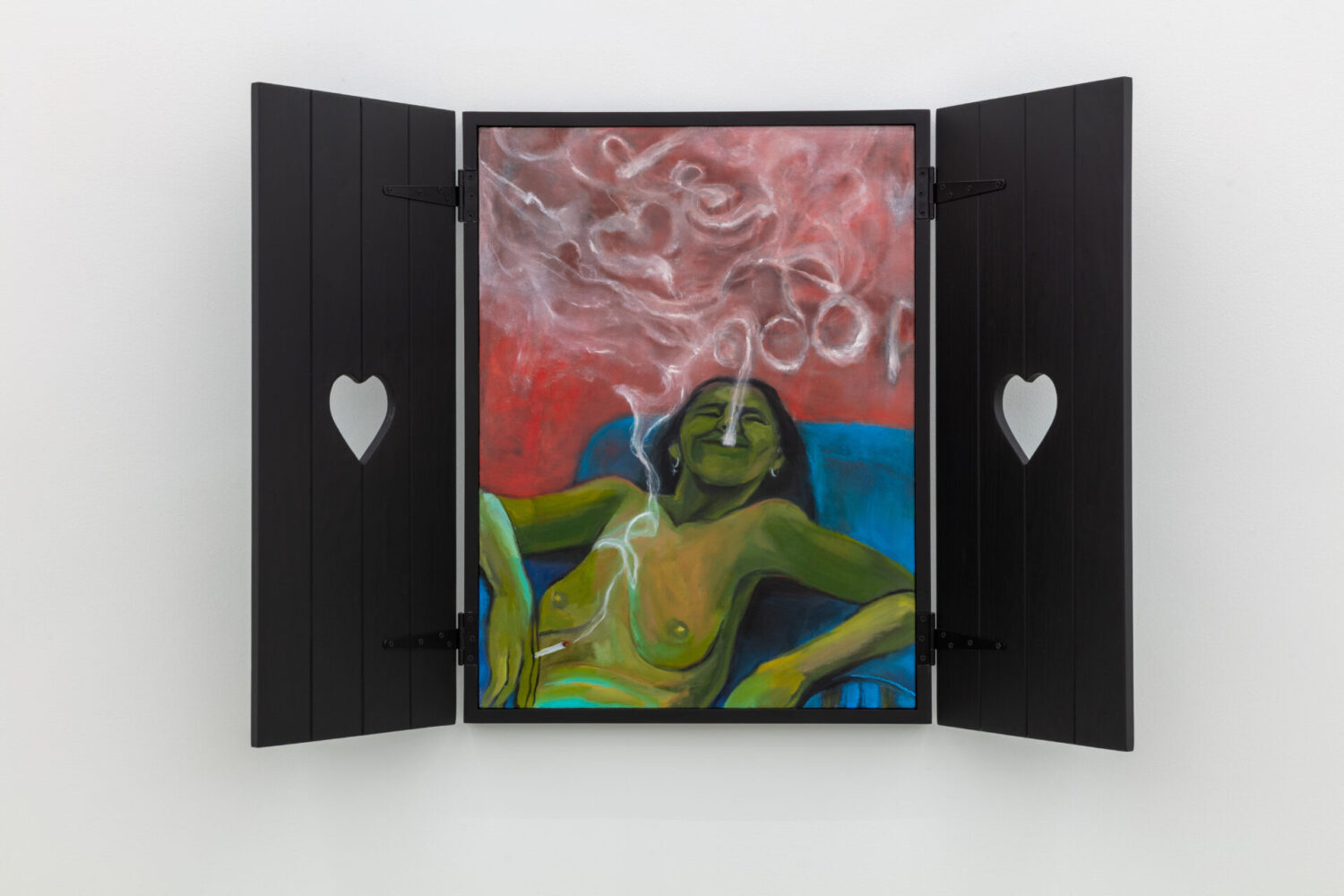
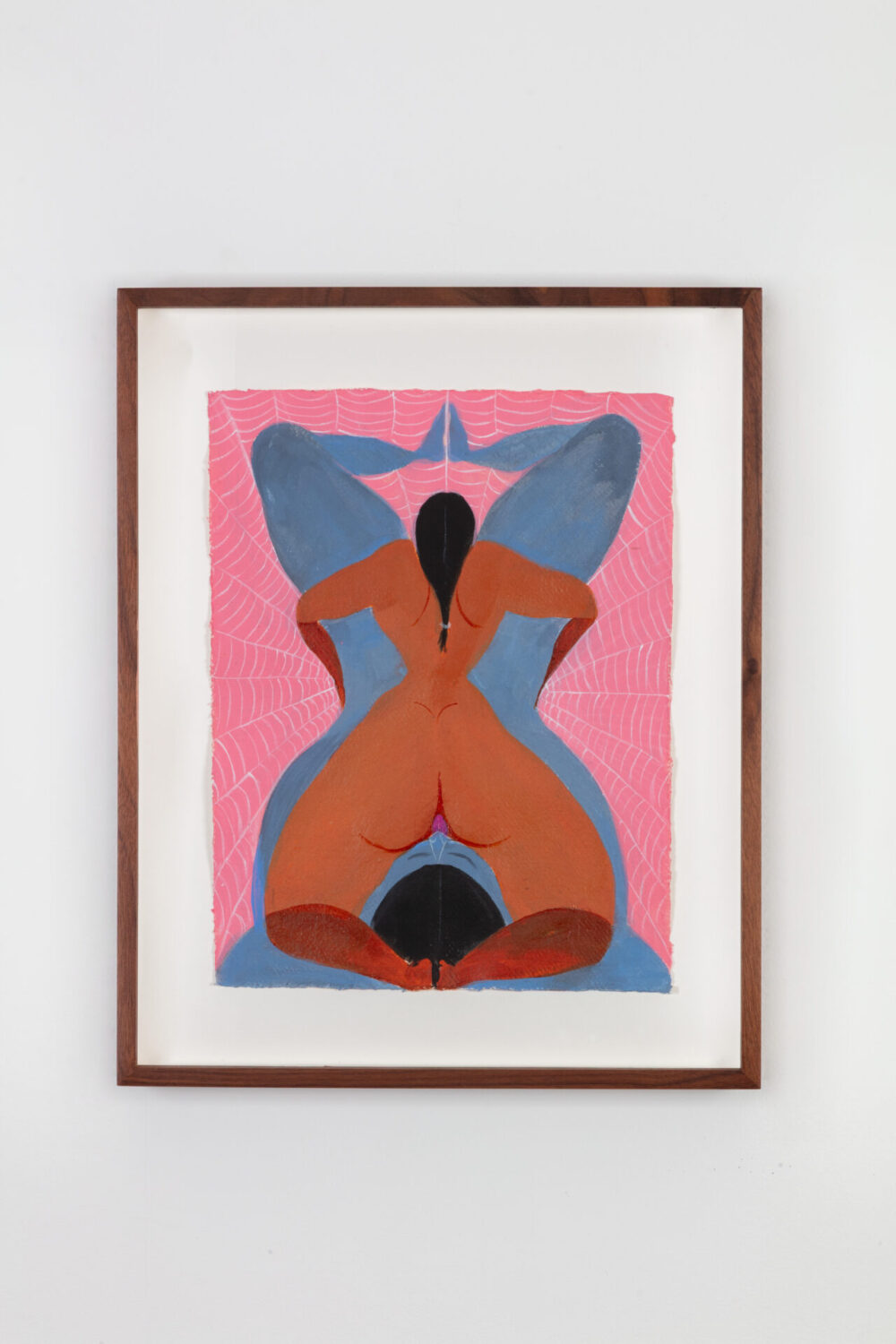
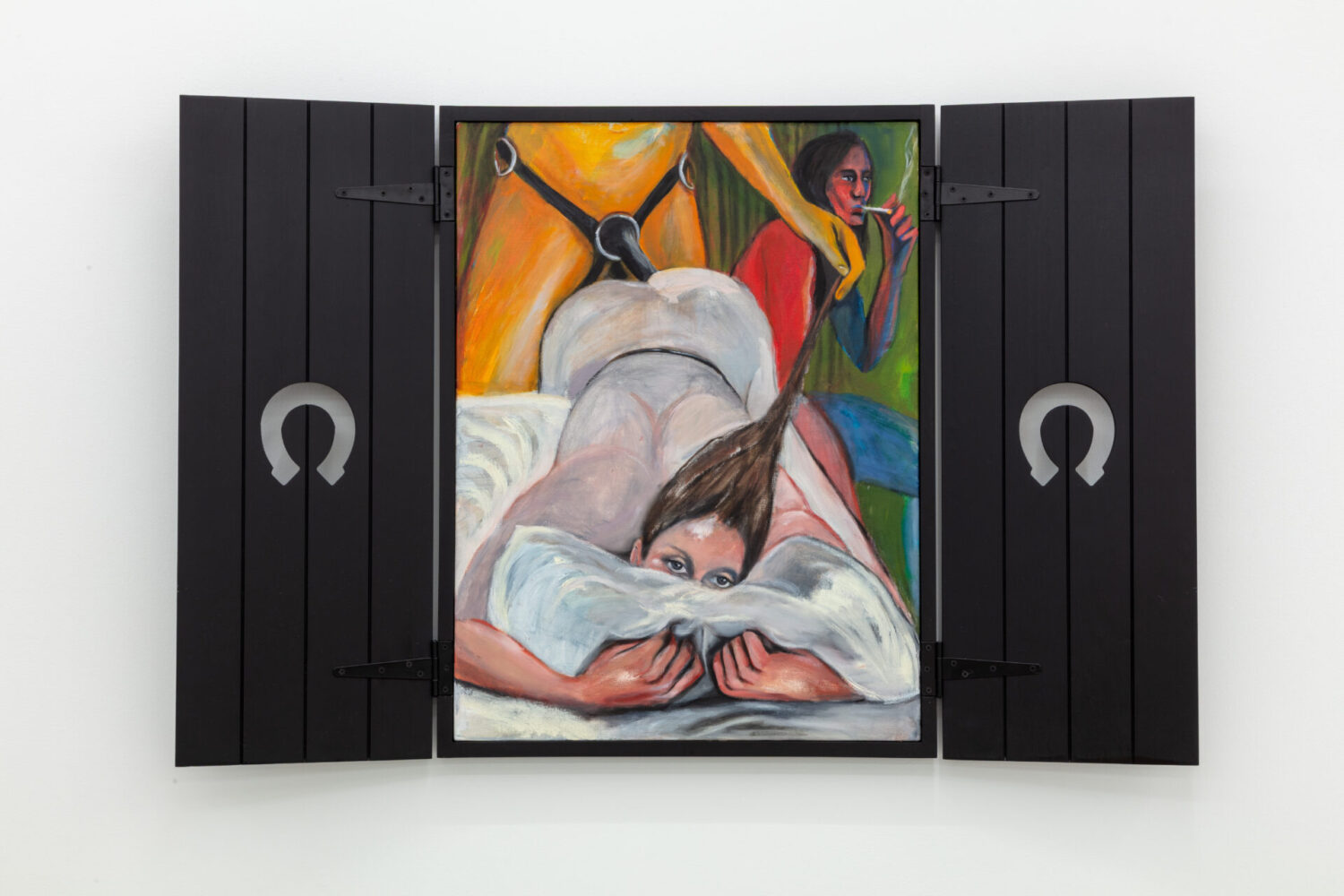
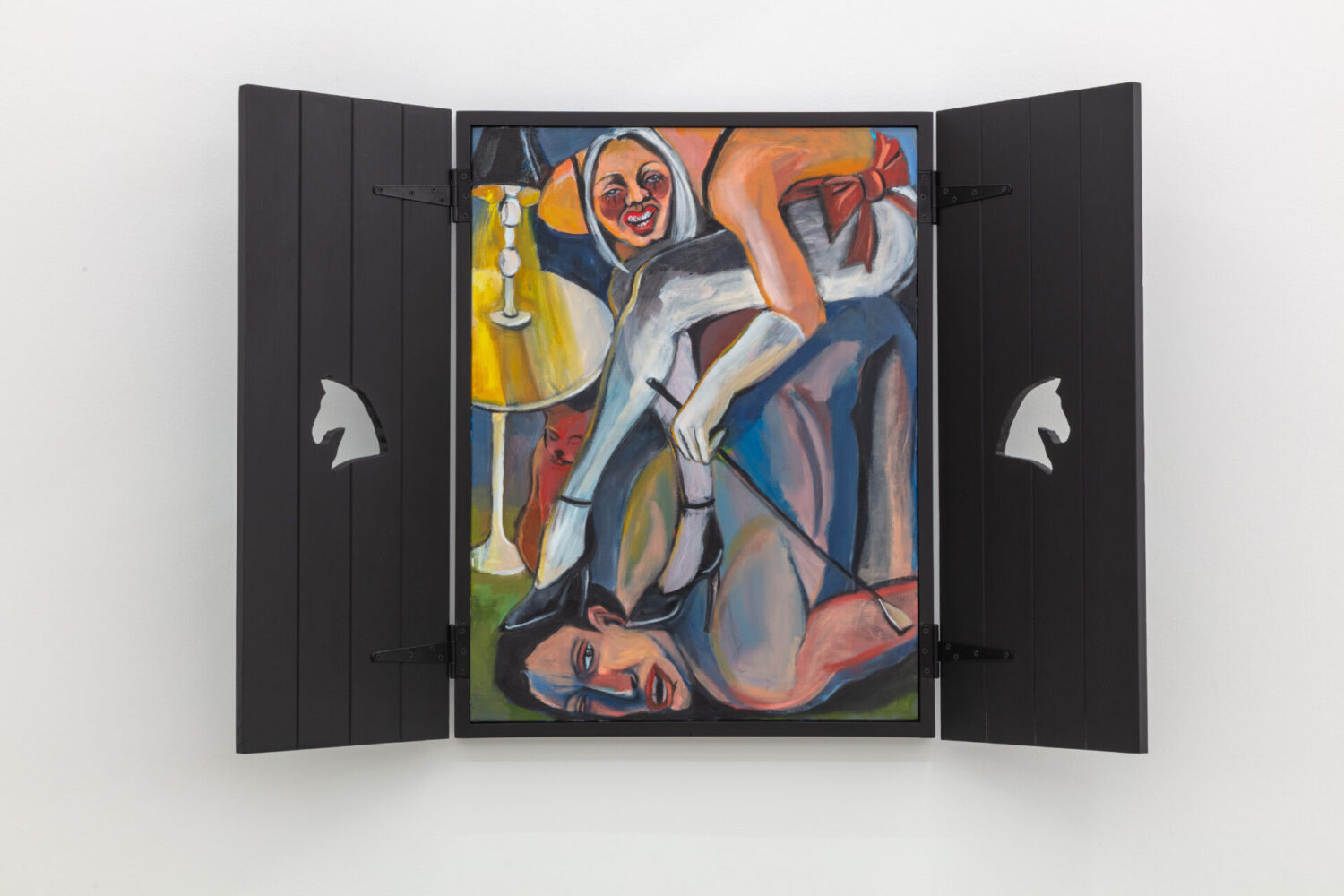
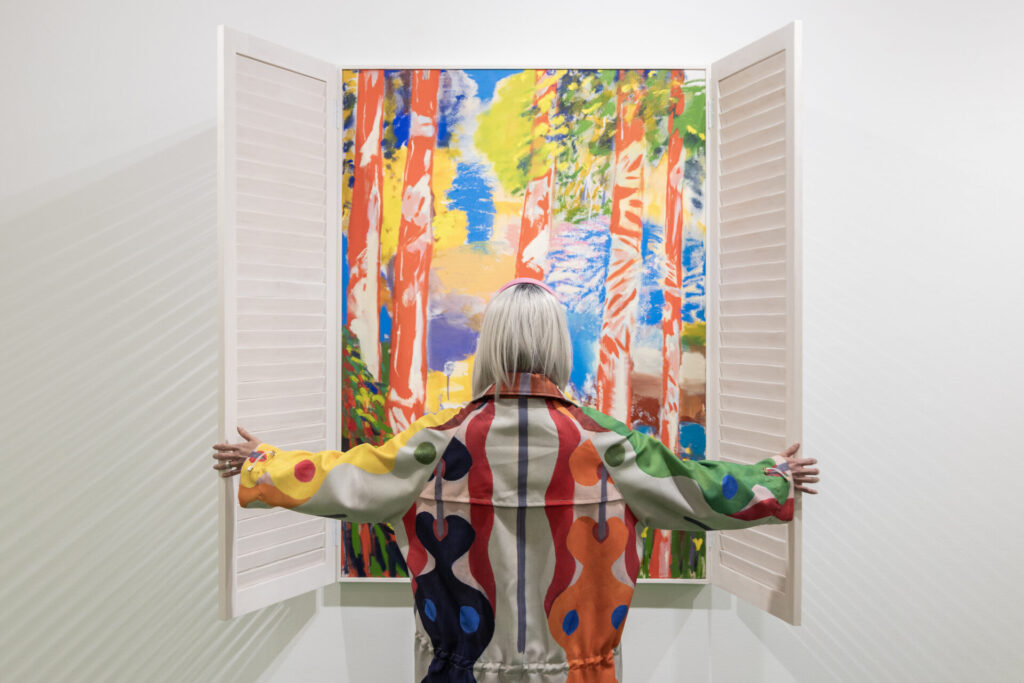
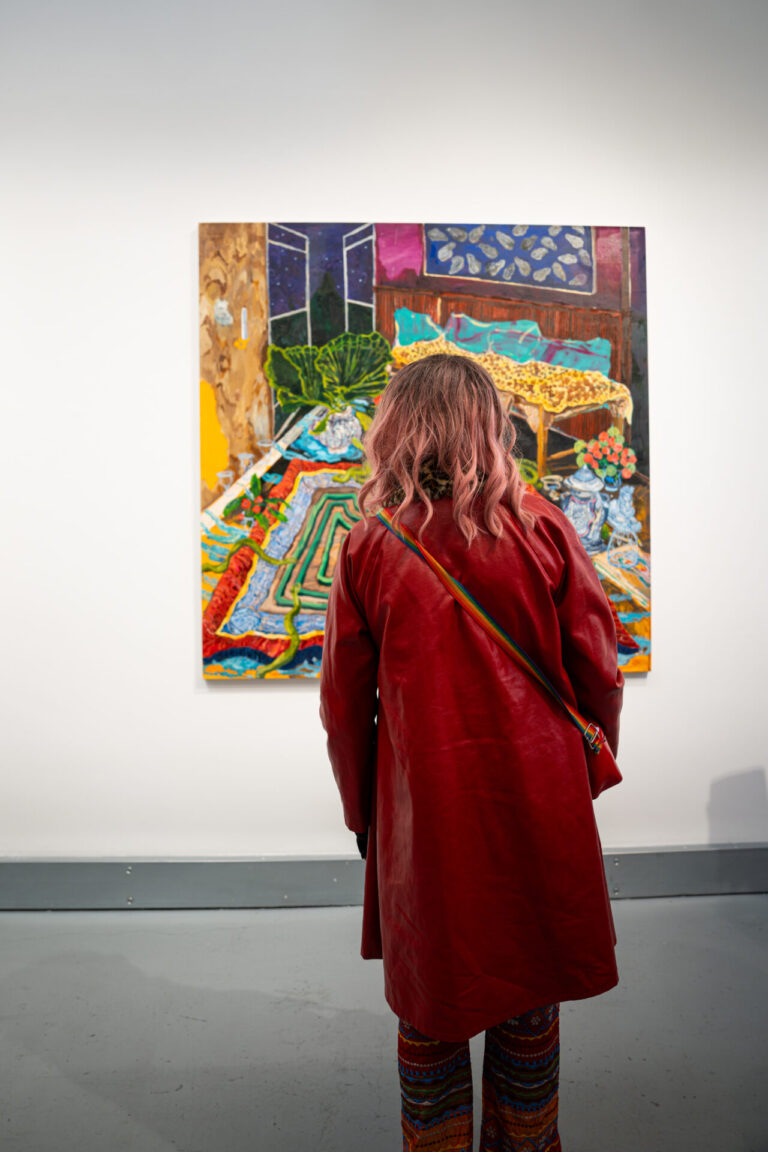
Lady Godiva’s condition for riding bare was that no one, not even the Earl, should watch her. After all, she was parading for the benefit of the people and expected their respect in return. Everyone obliged, except for a young tailor named Tom, or Thomas, who allegedly carved a hole in his curtains to peep on the lady. It is curious to note that, while the story itself is set to have happened in the 11th century, Tom would not take part in the narrative until at least six centuries later. In Bestia, Camil plays with the burning desire to look that consumed Peeping Tom and is said to have caused him blindness as punishment, by installing shutters over her paintings. These can be placed in different positions, allowing various degrees of visibility; small woodcuts with idyllic motifs ensure that at least a fragment of each painting is always visible. The compositions show moments of intimacy and desire that happen in a private sphere, thus turning the viewer into a voyeur. By playing with notions of inside and outside, these painterly installations ingeniously turn perspective into both a conceptual and a physical thread of the exhibition.
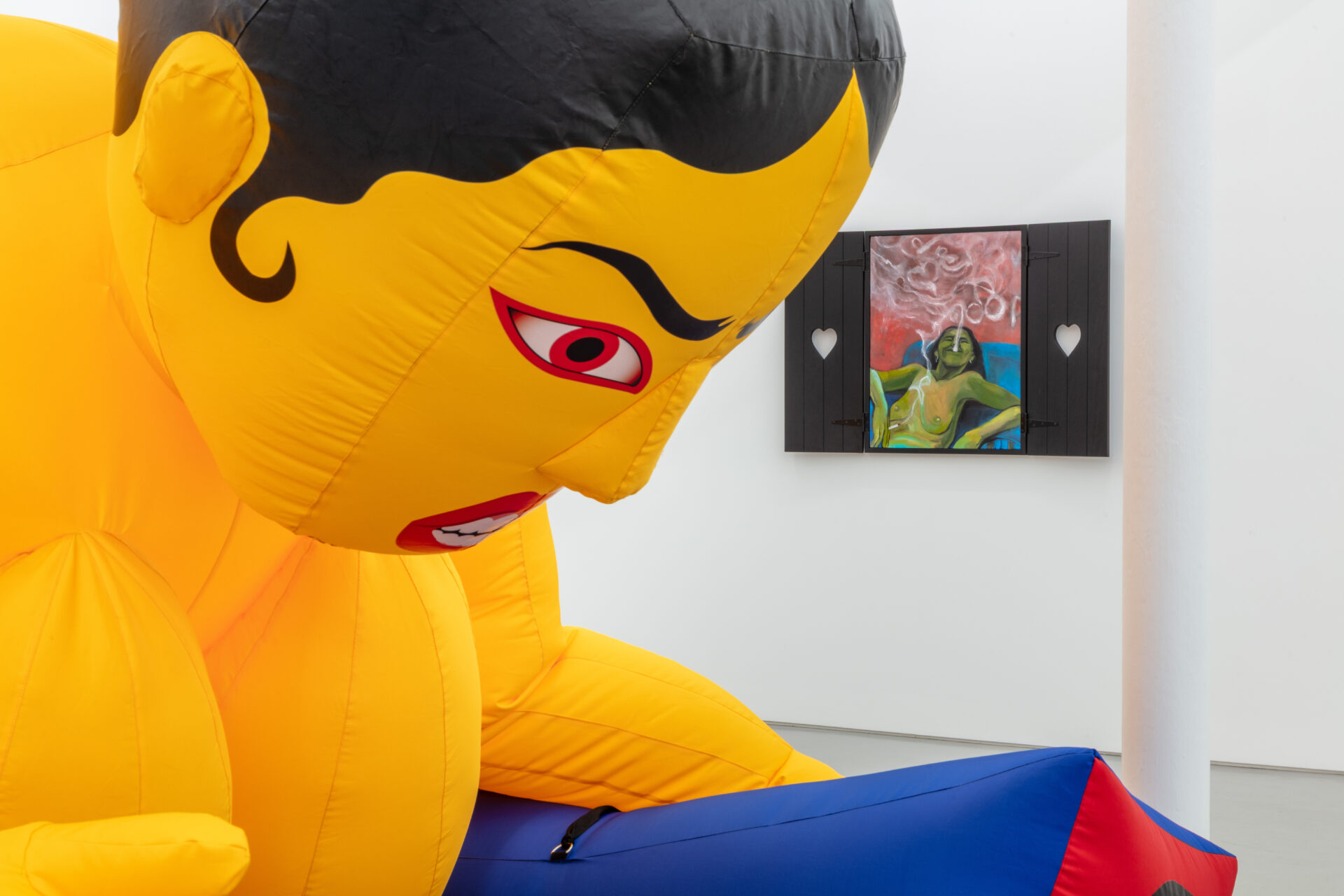
Further, Bestia encourages the viewer to reconsider their understandings of wildness and desire, openly informed by Jack Halberstam’s take on the subject. In Wild Things: The Disorder of Desire, the author traces the origin of wildness as an irredeemable category created to counterpoint the very notion of civilisation. If wild is the other, or what lies outside the human, then the idea of wildness paves the way for oppositions that structure modern life: we and them, good and bad, right and wrong. Following a decolonial and queer approach, Halberstam argues that wildness is not something alien but rather an unpredictable space that is intrinsic to us all, operating as a disruptive agent against systems of order. By merging Lady Godiva with her horse and thus creating a being that is both human and other, or bestial in every sense of the word, Camil reaches beyond a binary logic, opening instead to the possibility of a place where opposites may conflate, and perhaps shame can be abolished altogether.
Curated by Maria do Carmo M. P. de Pontes.
This exhibition will run from 9th October to 22nd November 2026, Wednesday to Sunday, 12-6 pm, or by appointment