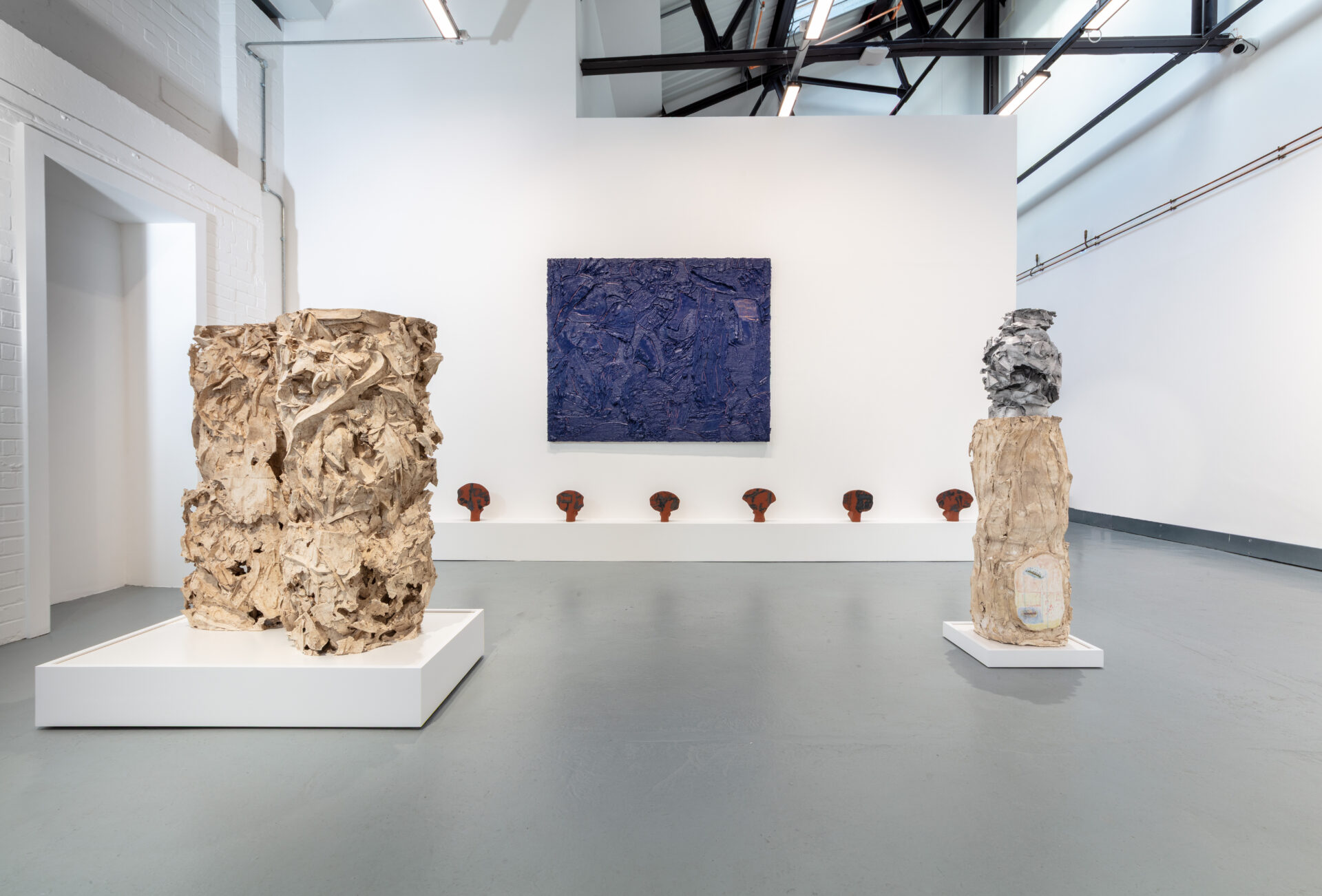
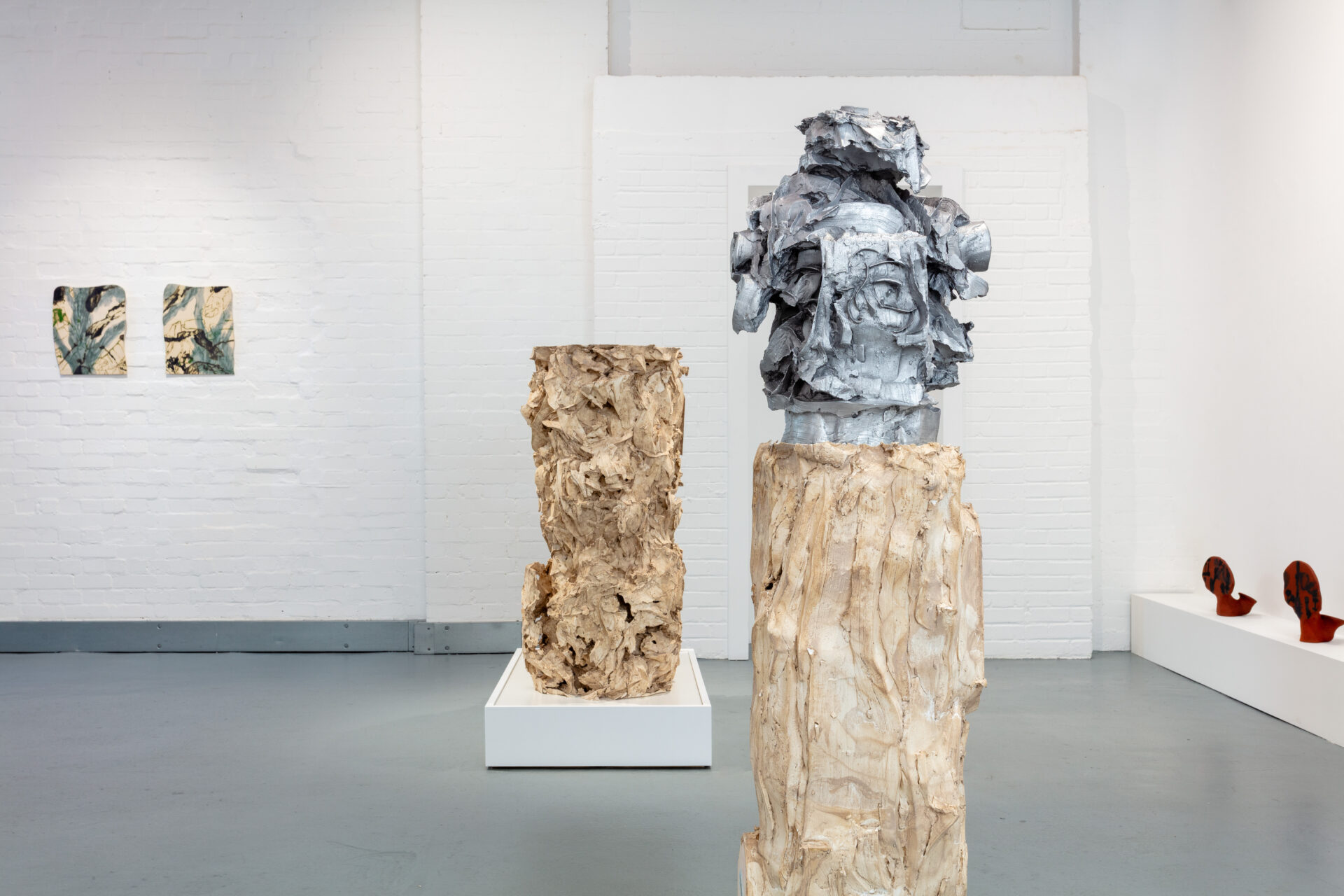
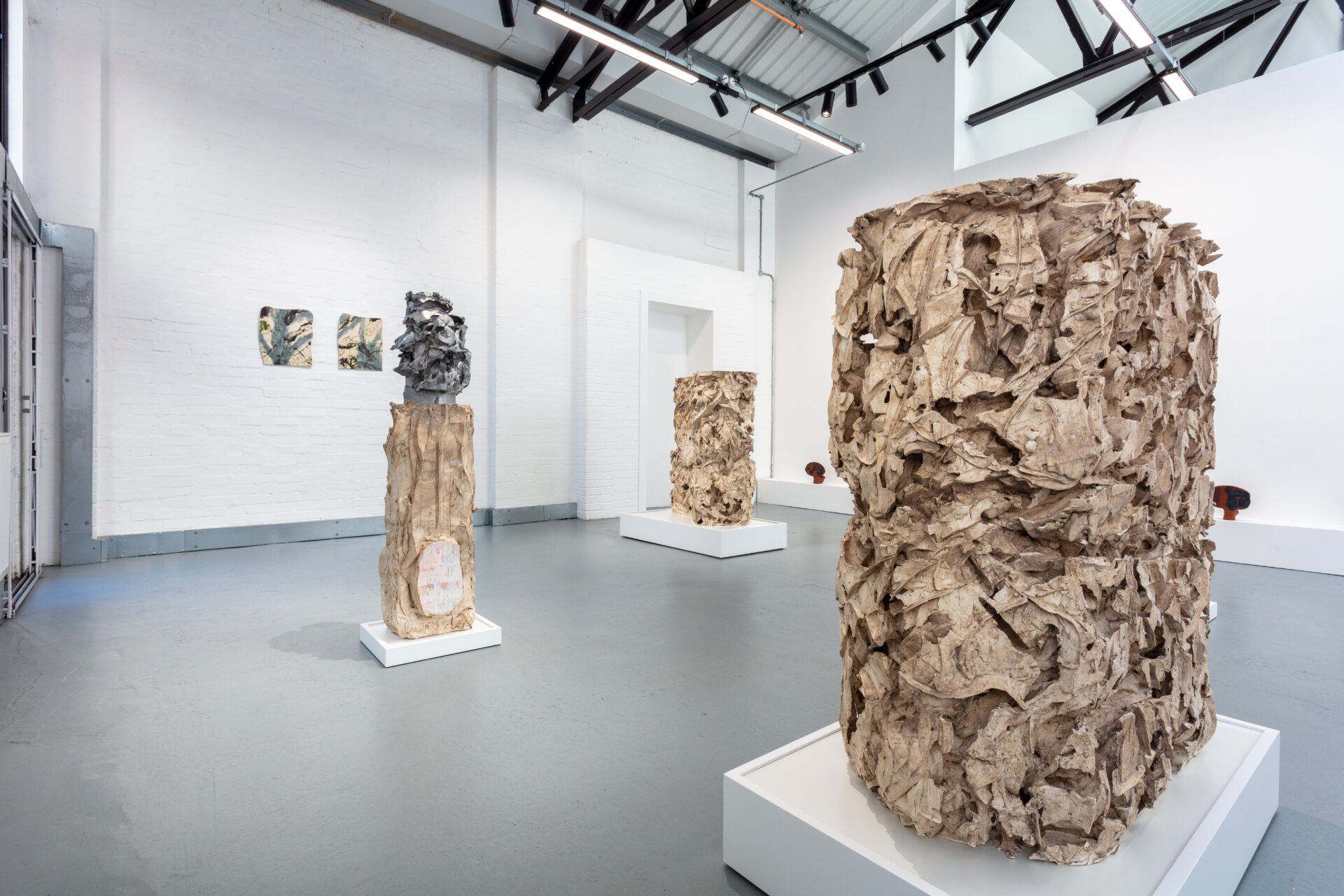
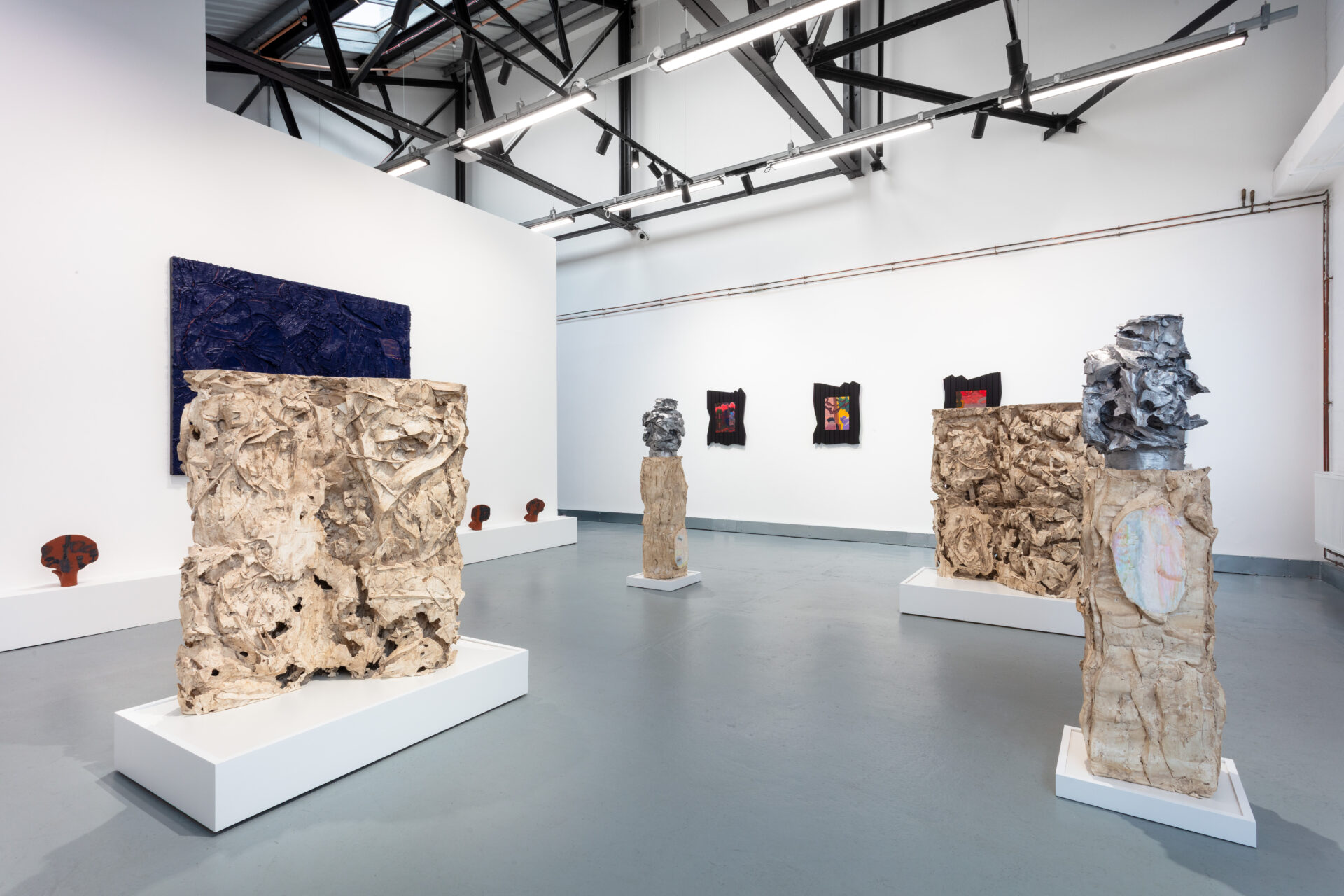
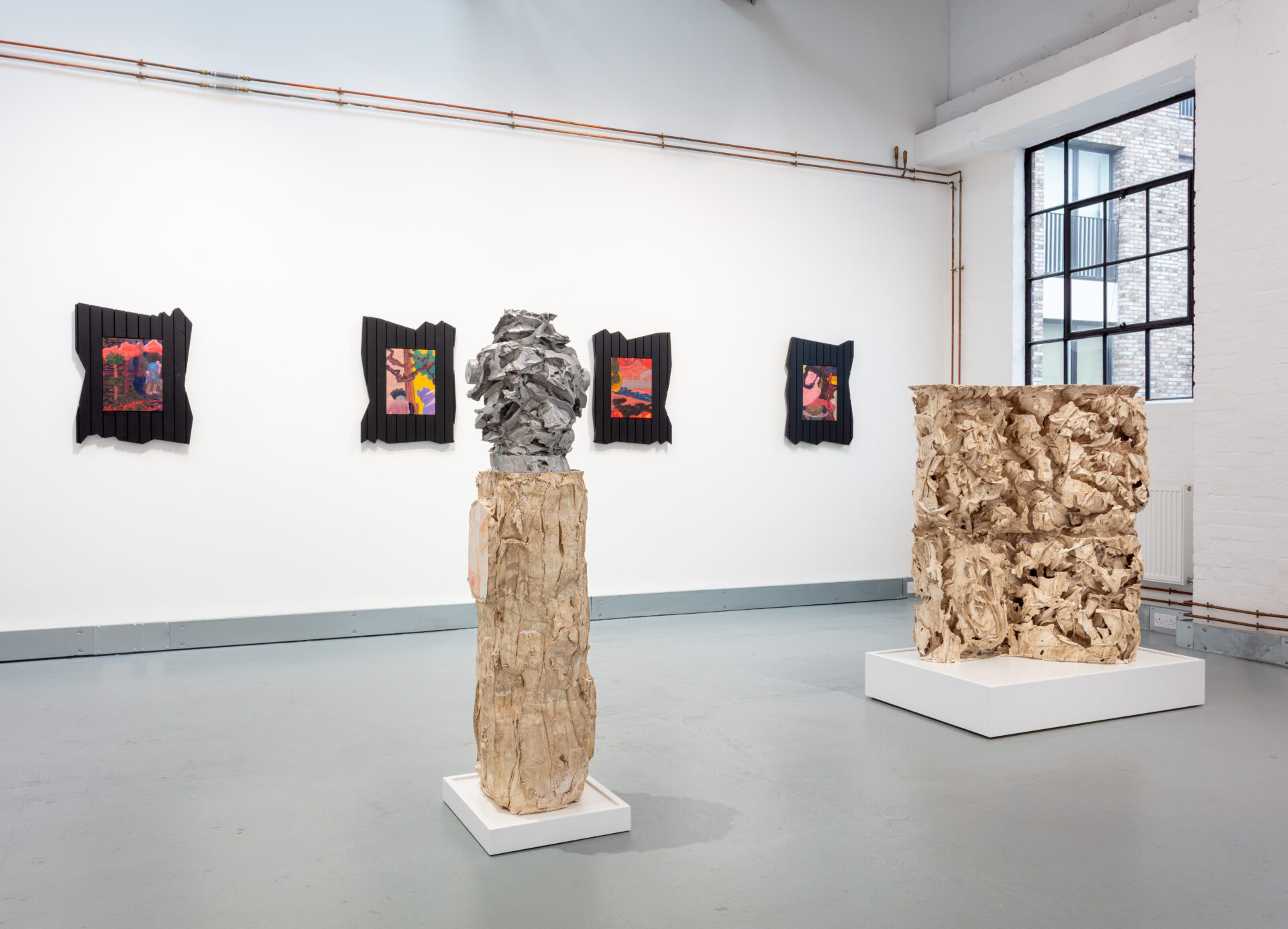
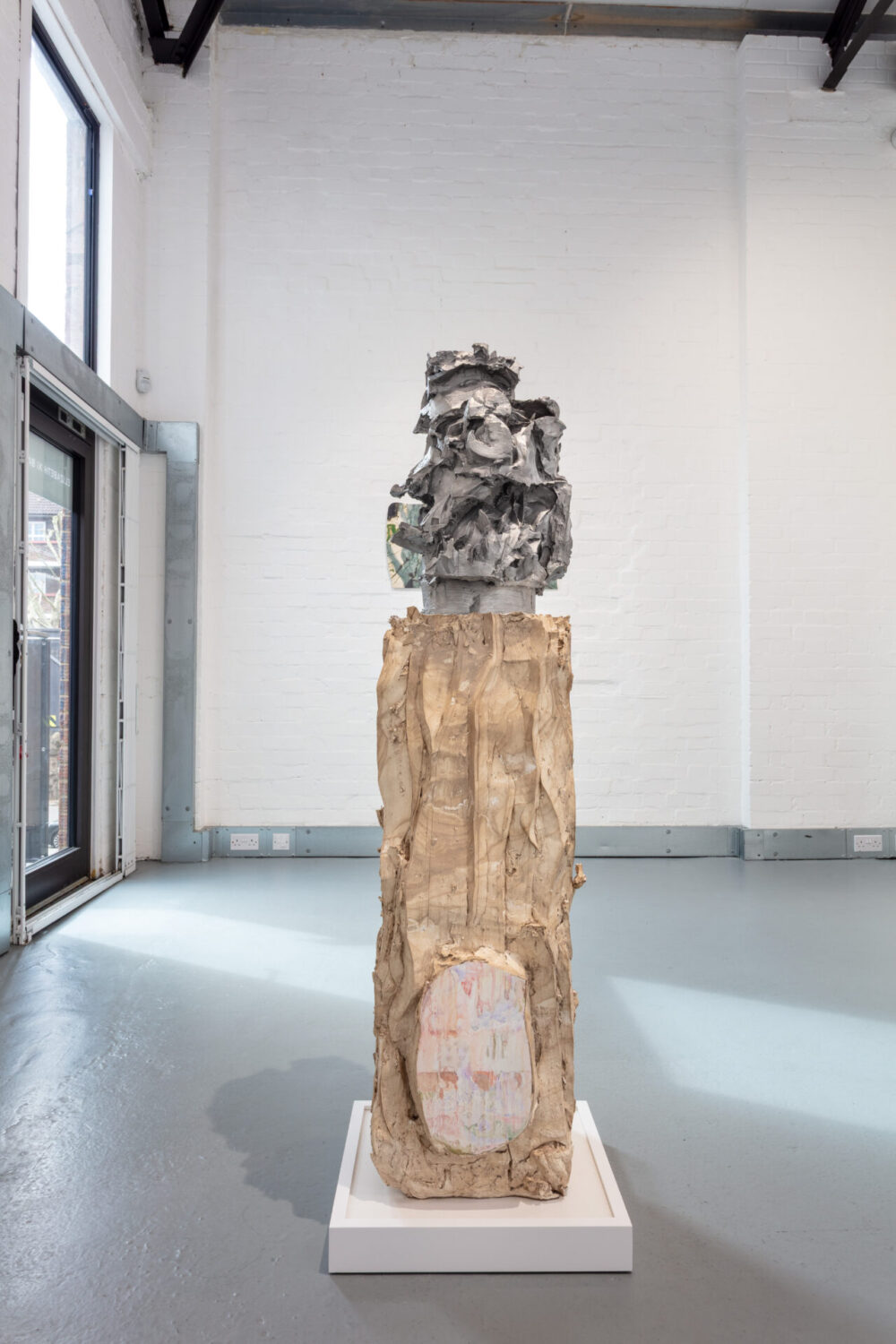
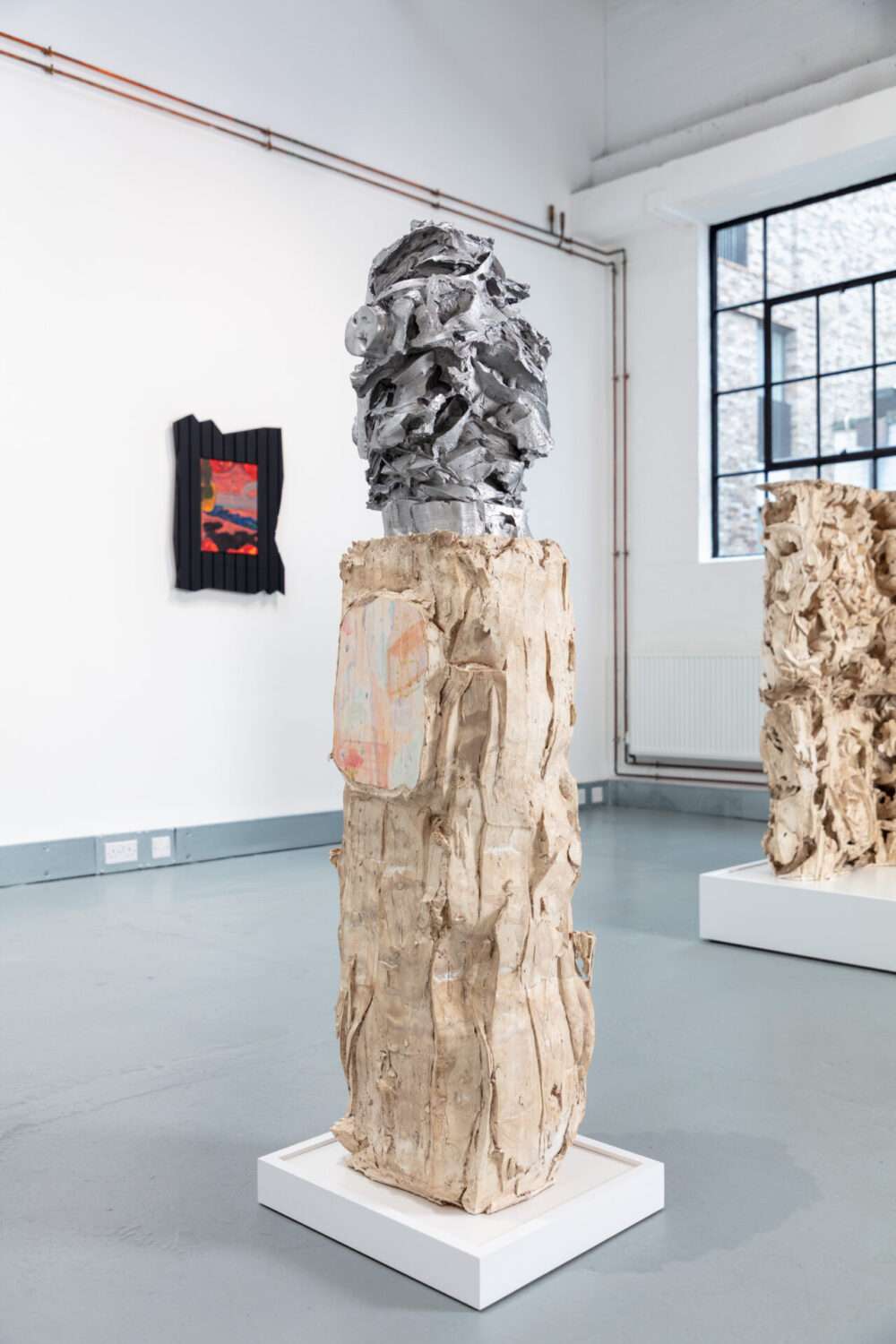
Architecture, memory, and the passage of time continue to inform Kritzman’s work. In this exhibition, his sensibility has been particularly inspired by regular visits to Greece. Rather than romanticising the aesthetics of ancient sites, the artist portrays it with plenty of matter-of-factness, lavishing the many flaws and imperfections they have acquired through the passage of time. Fidus Achates (2026), for instance, is a new series of aluminium sculptures, again executed with the help of metalsmith Katrin Hanusch. It continues the artist’s exploration into creating forms through negative spaces, as their mould is first cast in wet clay, and the resulting sculpture is made by the metal cast into the negative spaces of these moulds. Kritzman has pursued mastering these negative spaces for over a decade now, a diligence that is visible in his increase of control over the shape of the resulting works. He explains that: ‘one aspect that particularly interests me is the ability to work with undercuts; spaces that are impossible to cast. While most modern sculpture tends to avoid undercuts, I have sought ways to embrace these inner spaces and engage with them in unique ways’. The title of the series stands for loyalty among friends, alluding both to the collaborative aspect at the heart of the series, and to the value of friendships in all spheres of life.
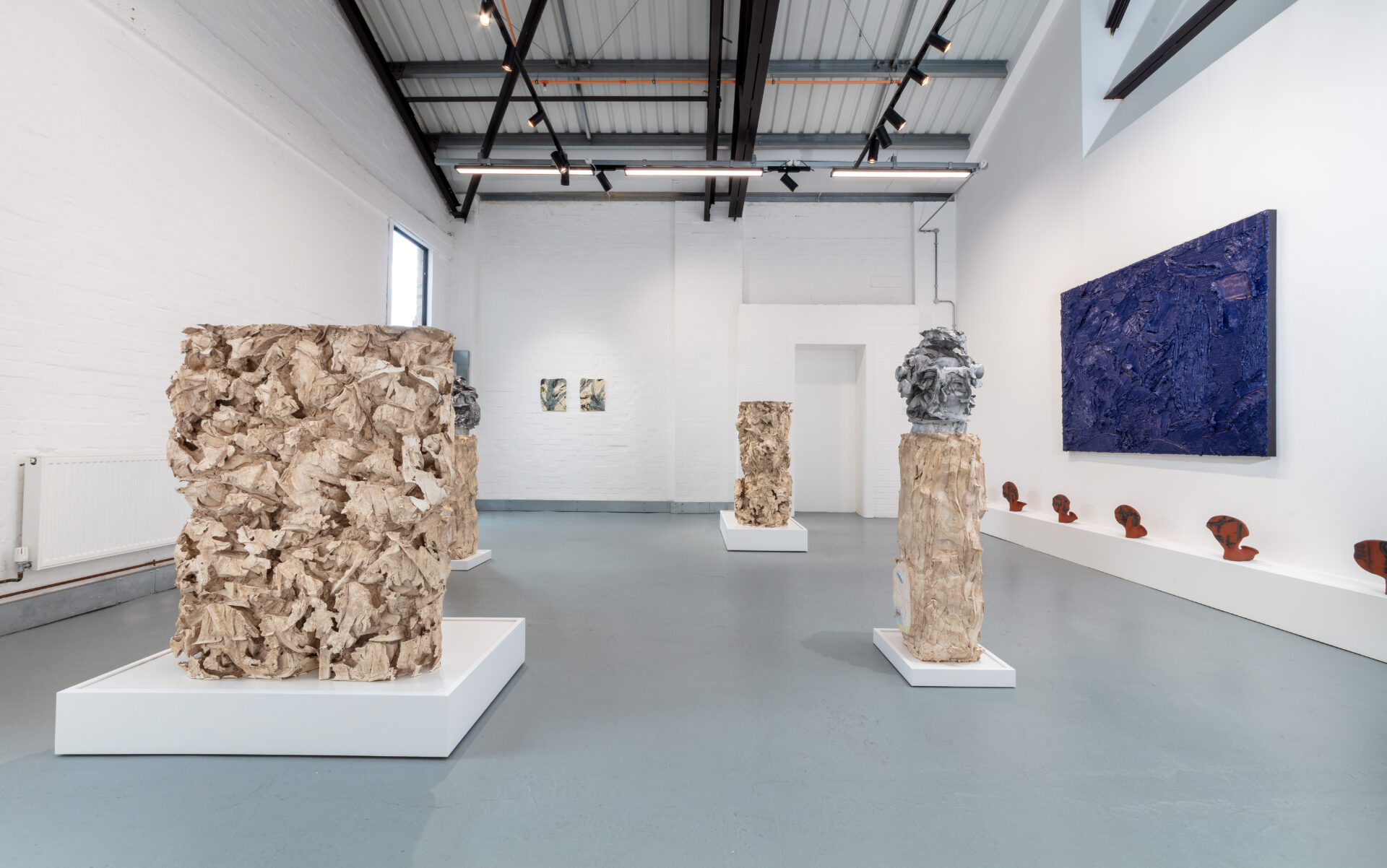
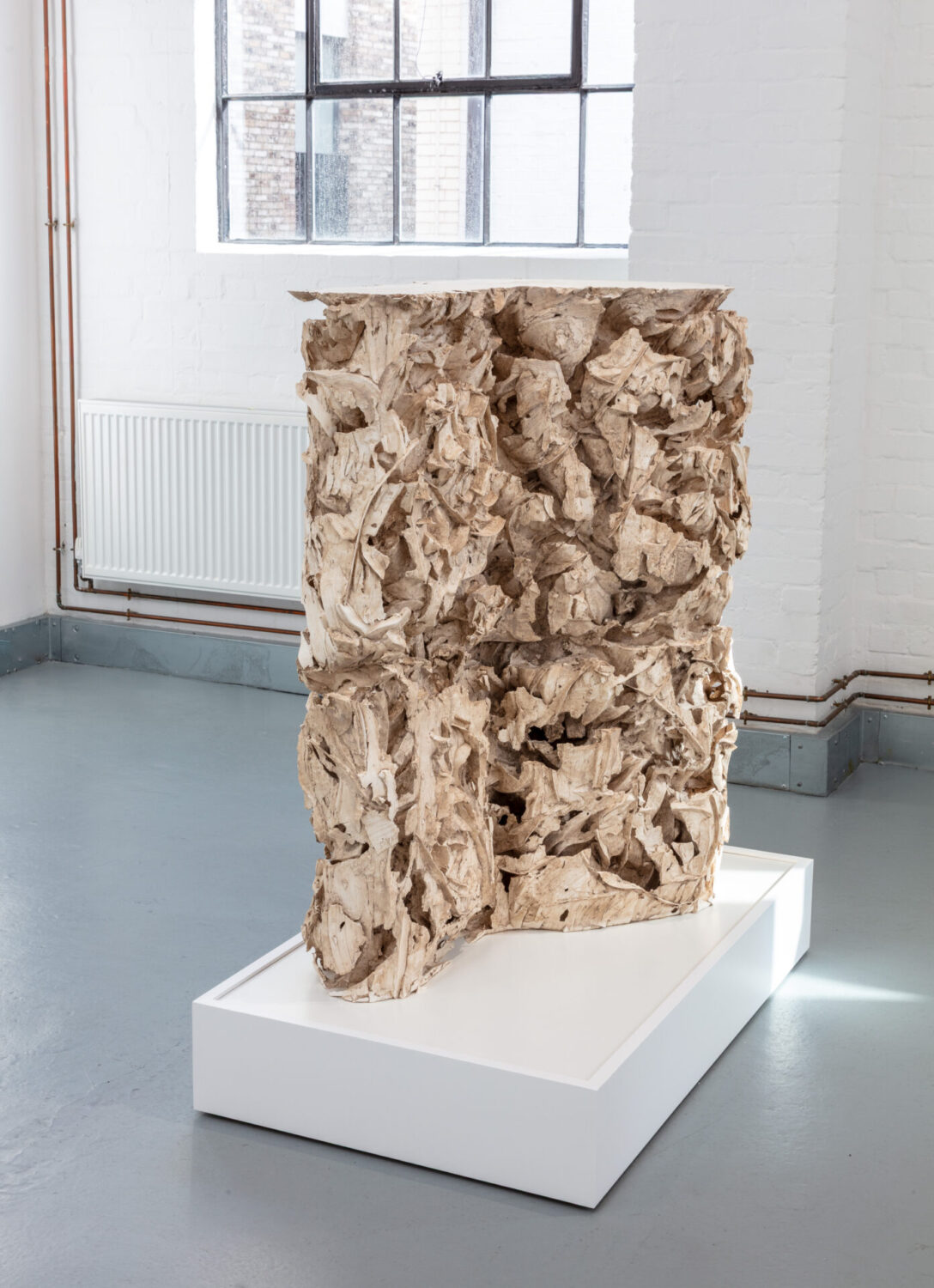
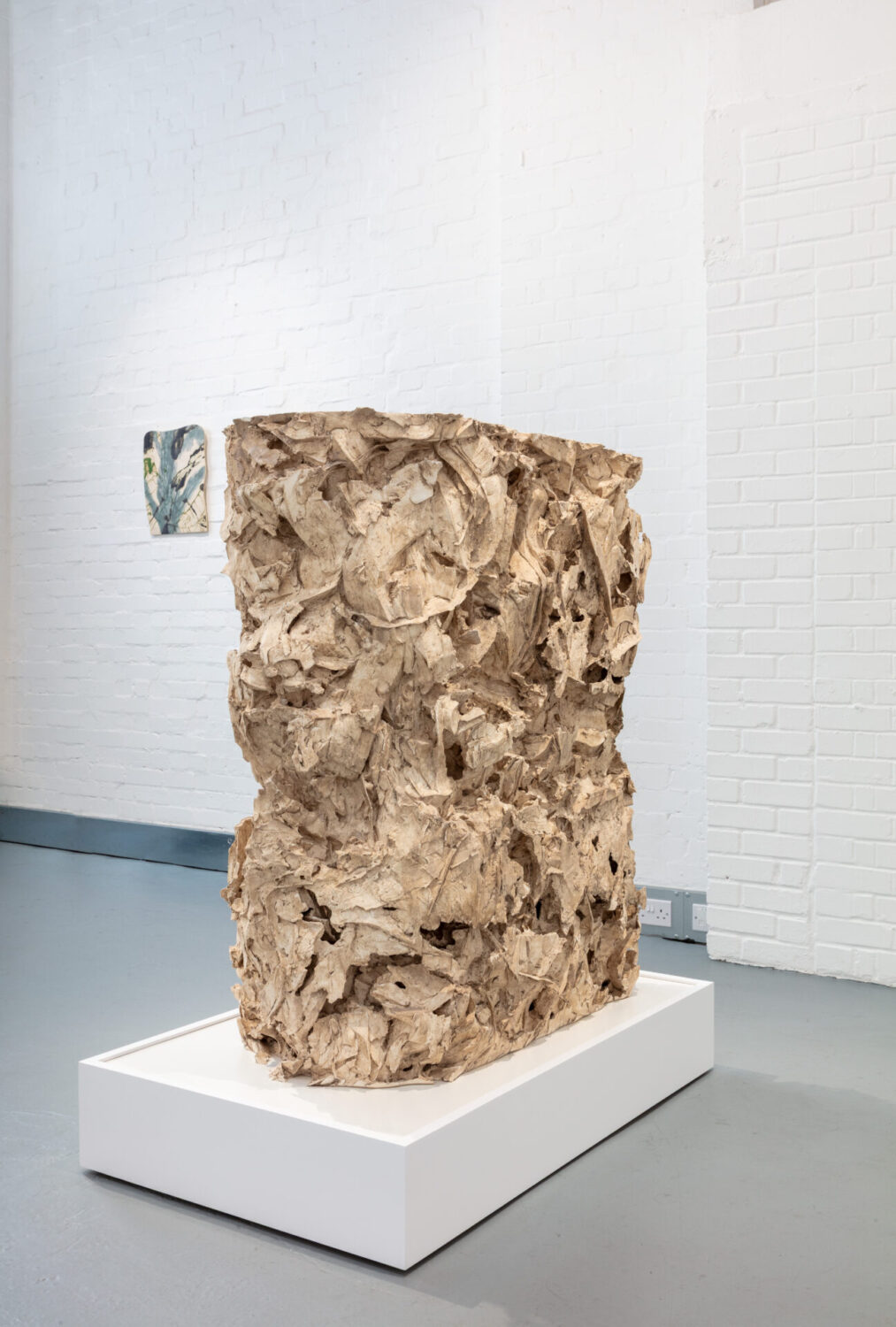
Works from the Fidus Achates (2026) series sit atop plaster pillars that were made using the same negative carving technique, but to less porous results. What’s more, sections of these pillars are adorned with faint yet colourful watercolours in pastel shades, charging them with a quaint note. They are distinctively different from the plaster works from the Key’s Grotto (Round, Collapse) series (2025) – not least of all beacuse these are the largest plaster works that Kritzman has made to date. Yet the differences go beyond scale, manifesting themselves through an abundance of undercuts that, as the title suggests, emulate the interiors of grottos and caves. The artist is fascinated by these geological occurrences, for they are nature-made shelters, at once dangerous and safe. Unlike natural grottos, Kritzman’s creations present a flat, table-top like upper surface, that both creates a horizon and nods to manmade architecture: from ancient Greek buildings to modernist villas.
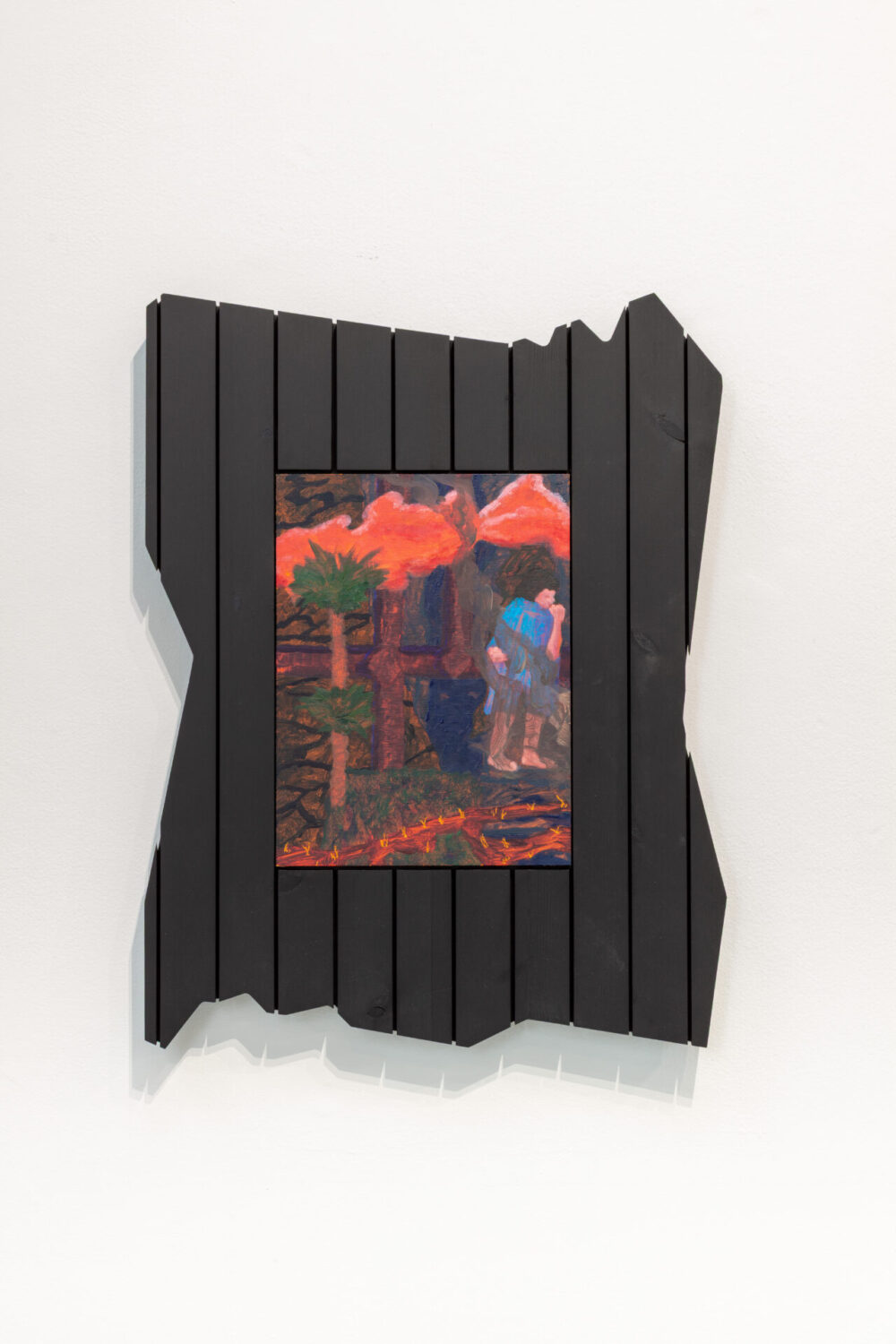
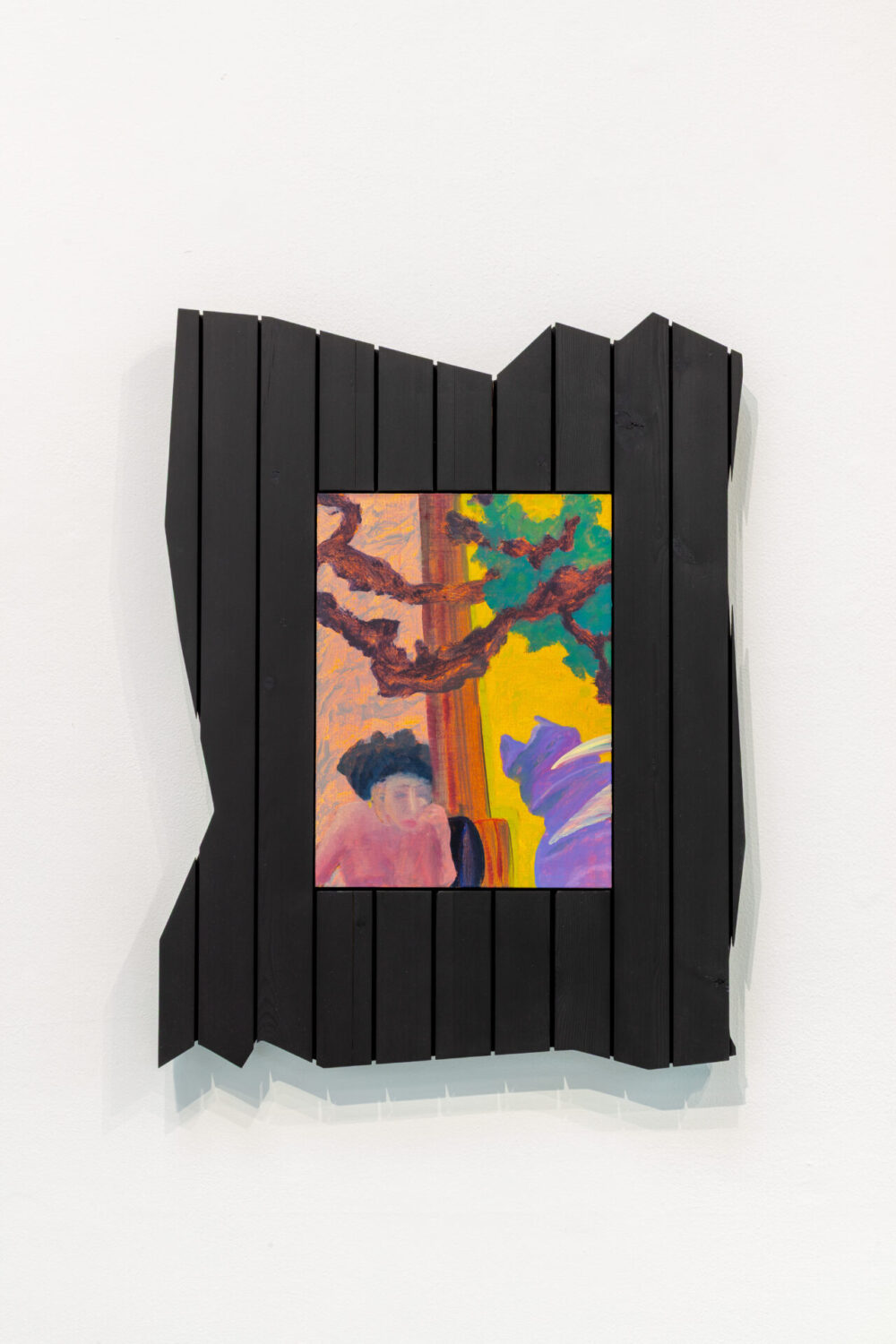
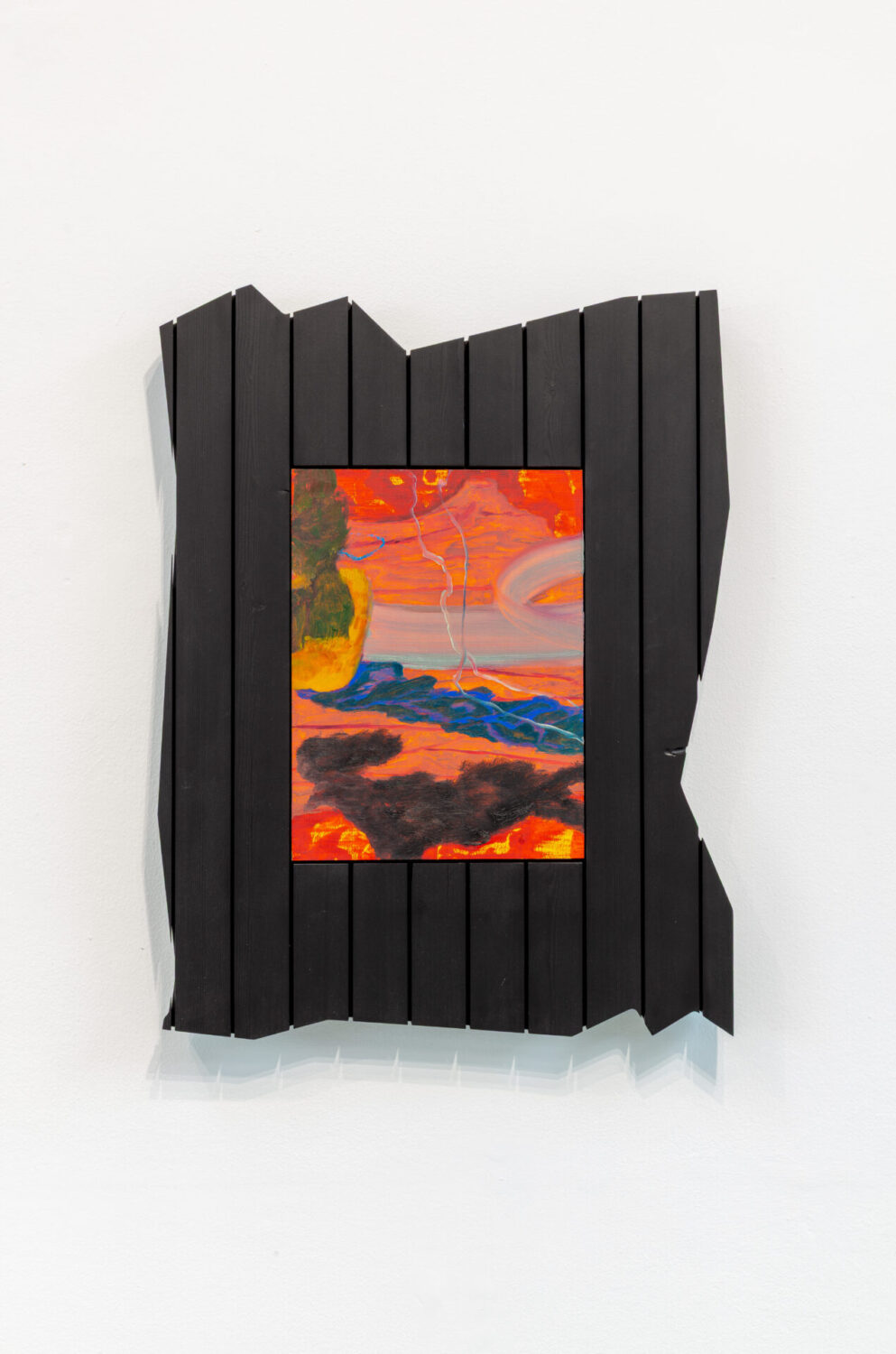
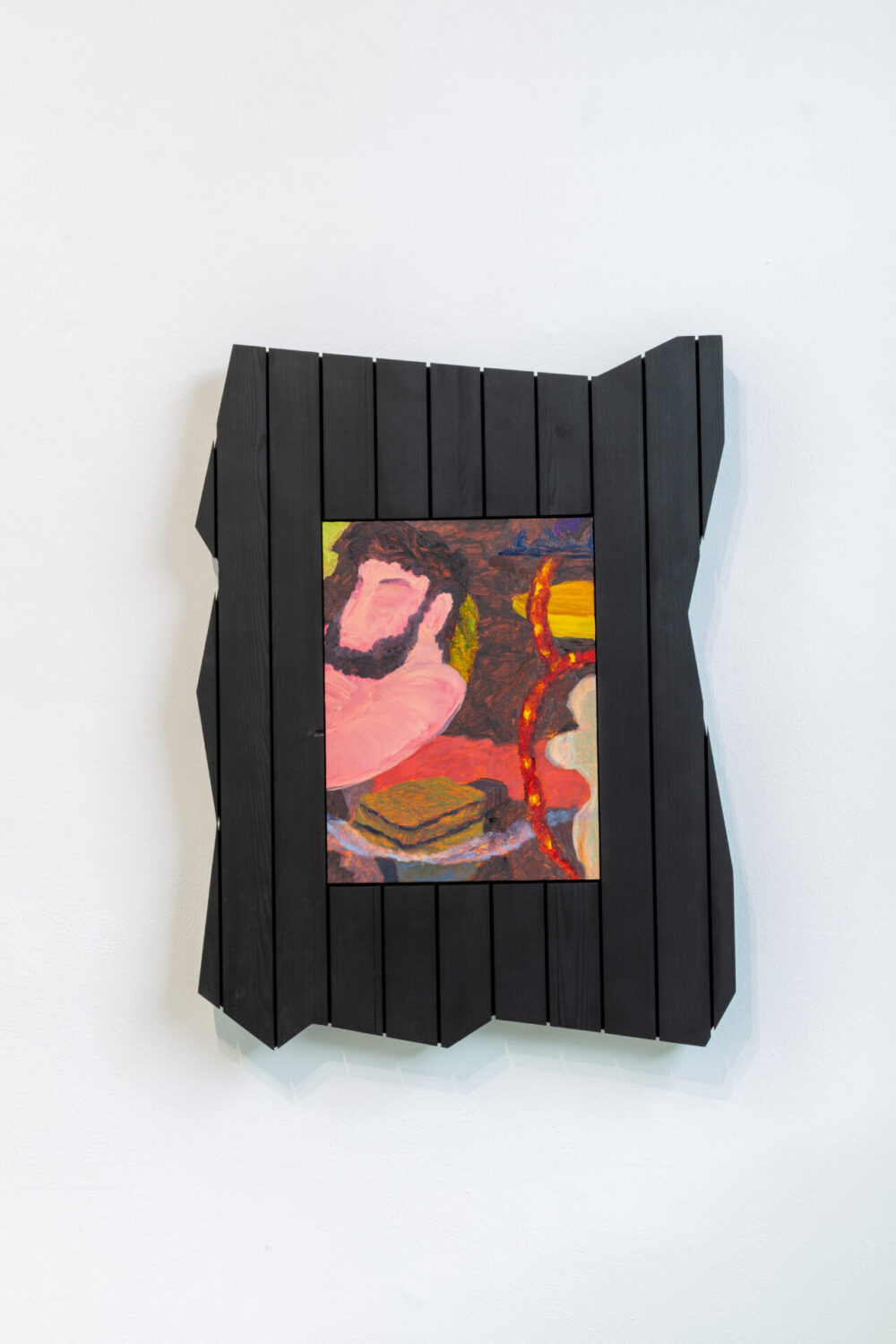
Another hint towards architecture, particularly from the modernist period, is visible in a group of four paintings adorned with black wooden frames from the No Sleep series (2025). It’s not the first time that Kritzman uses black wood to frame his paintings, but it’s the first time that he uses the material to a geometric effect, contrasting with the freeform organic aesthetics of the canvases. These black frames further allude to altars and alcoves where one would encounter icons within churches or even in public streets, in religious countries such as Greece and Italy. The artist has composed them by amalgamating memories, fears, hopes and desires – that is, elements that populate the brain during late, sleepless hours.
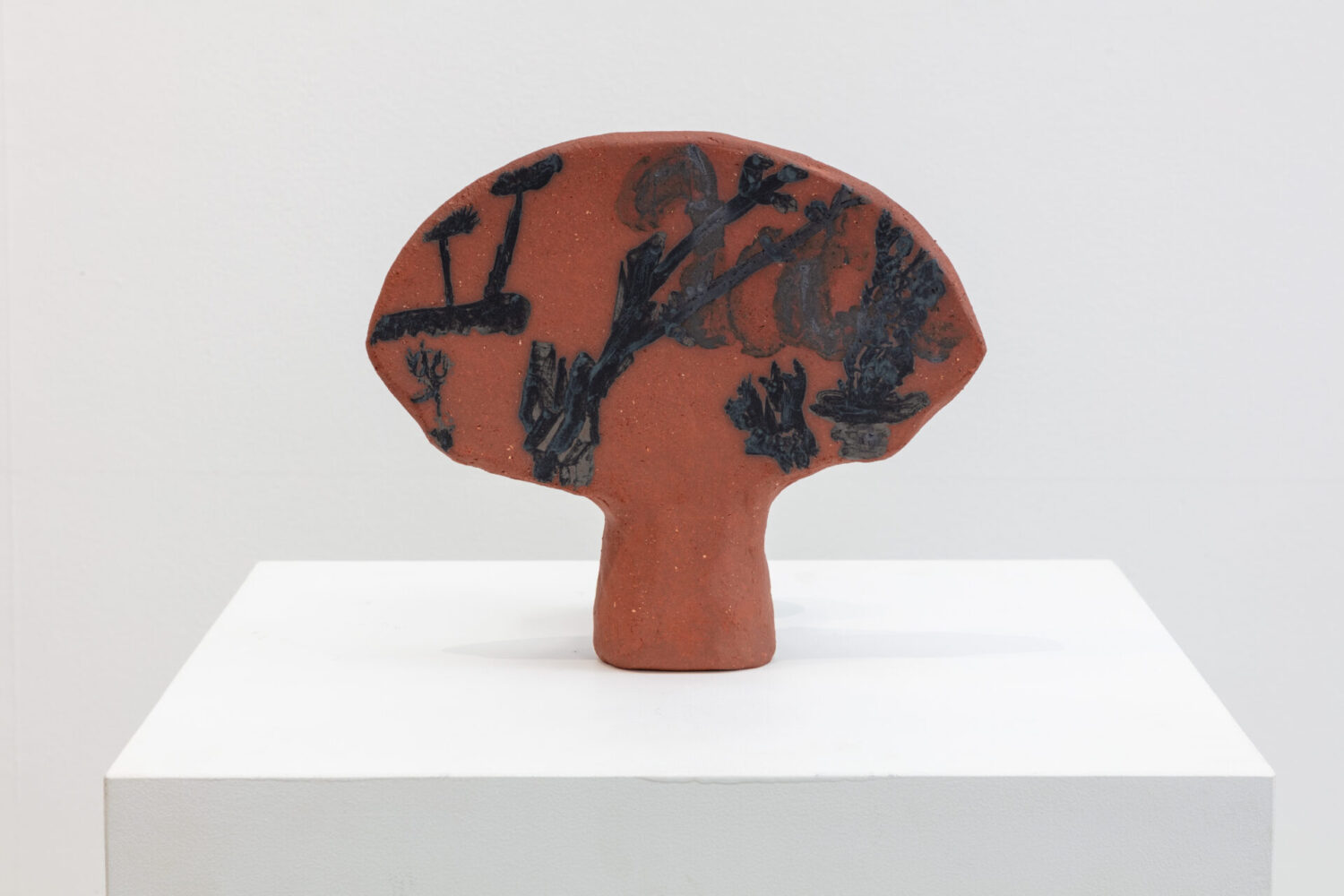
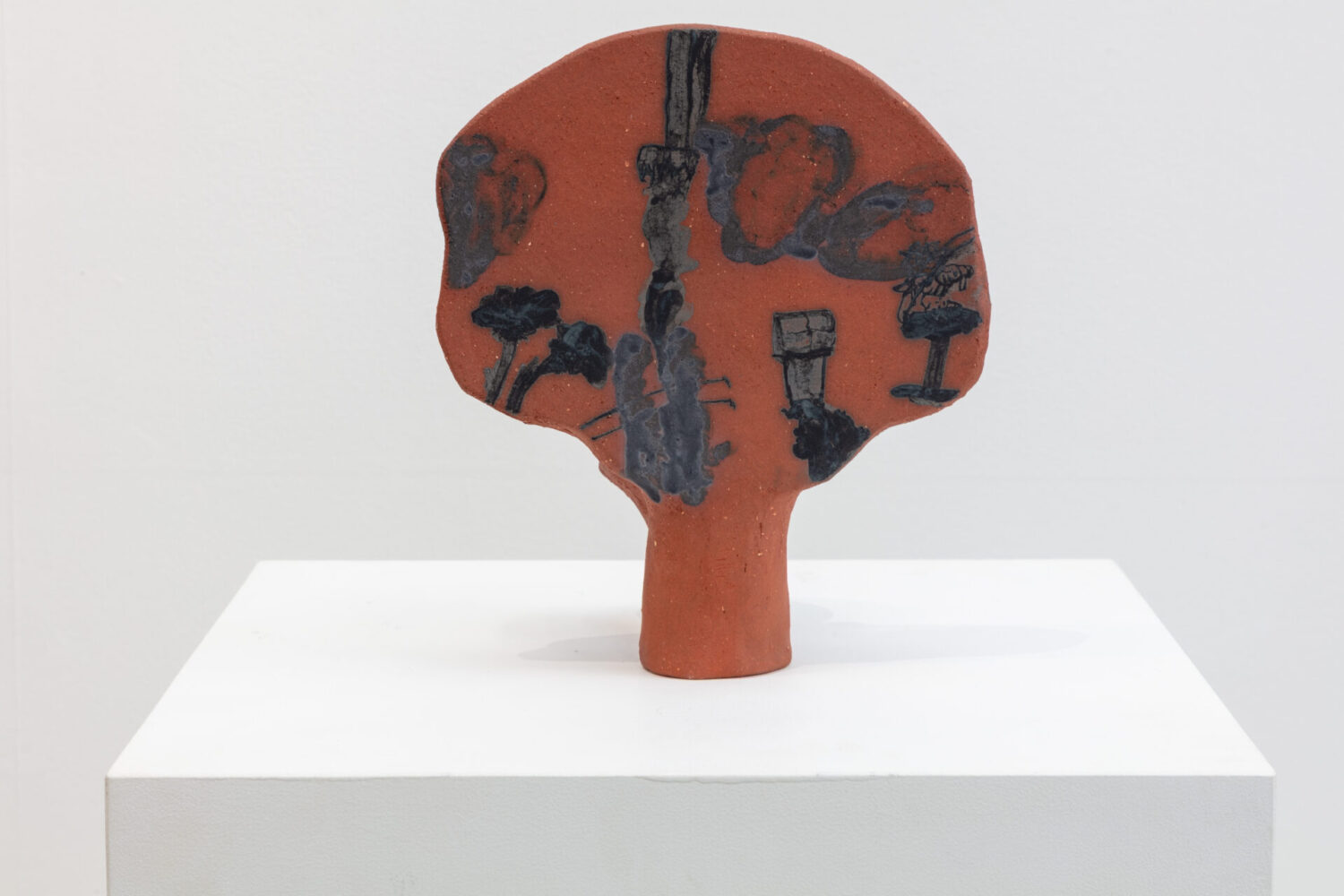
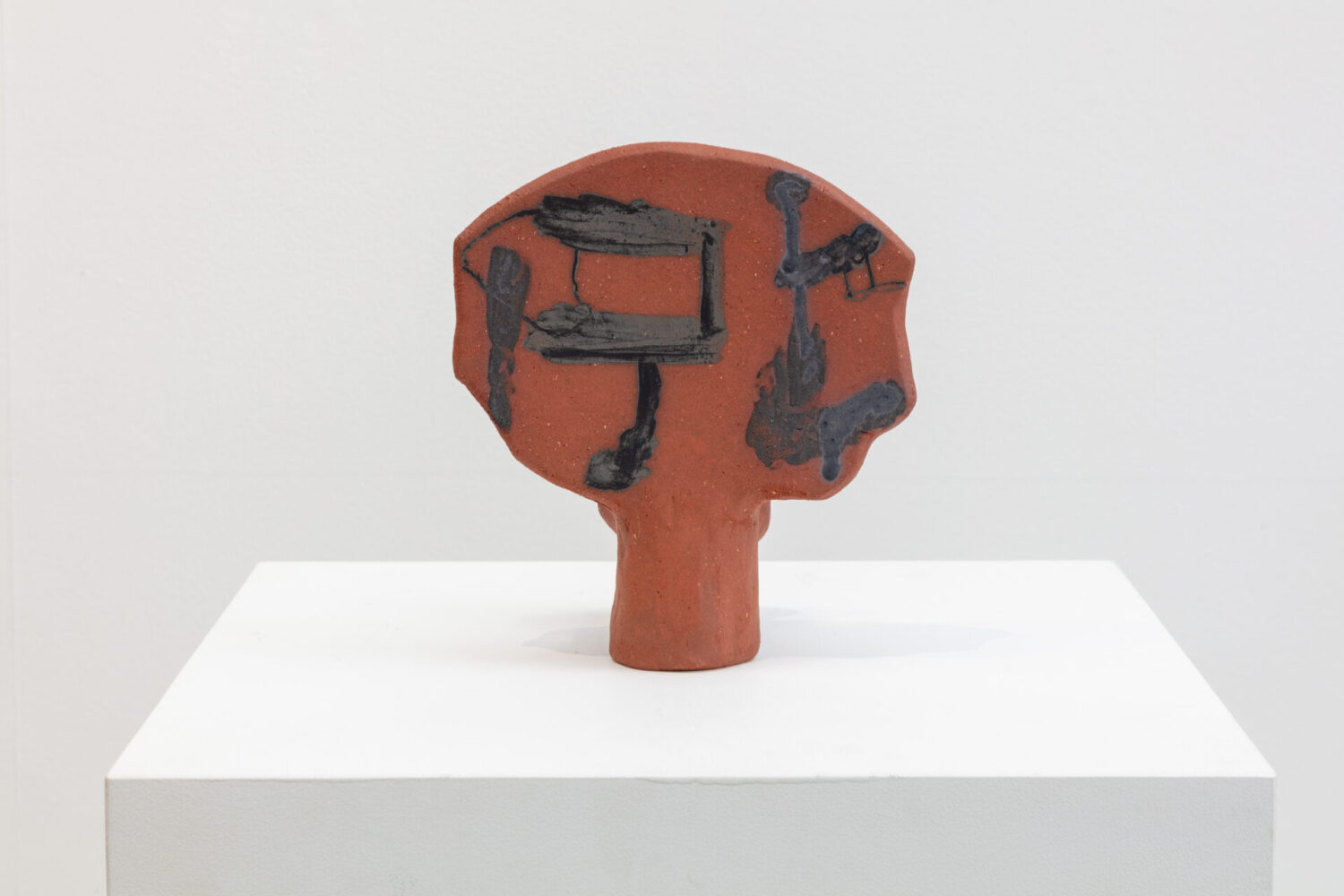
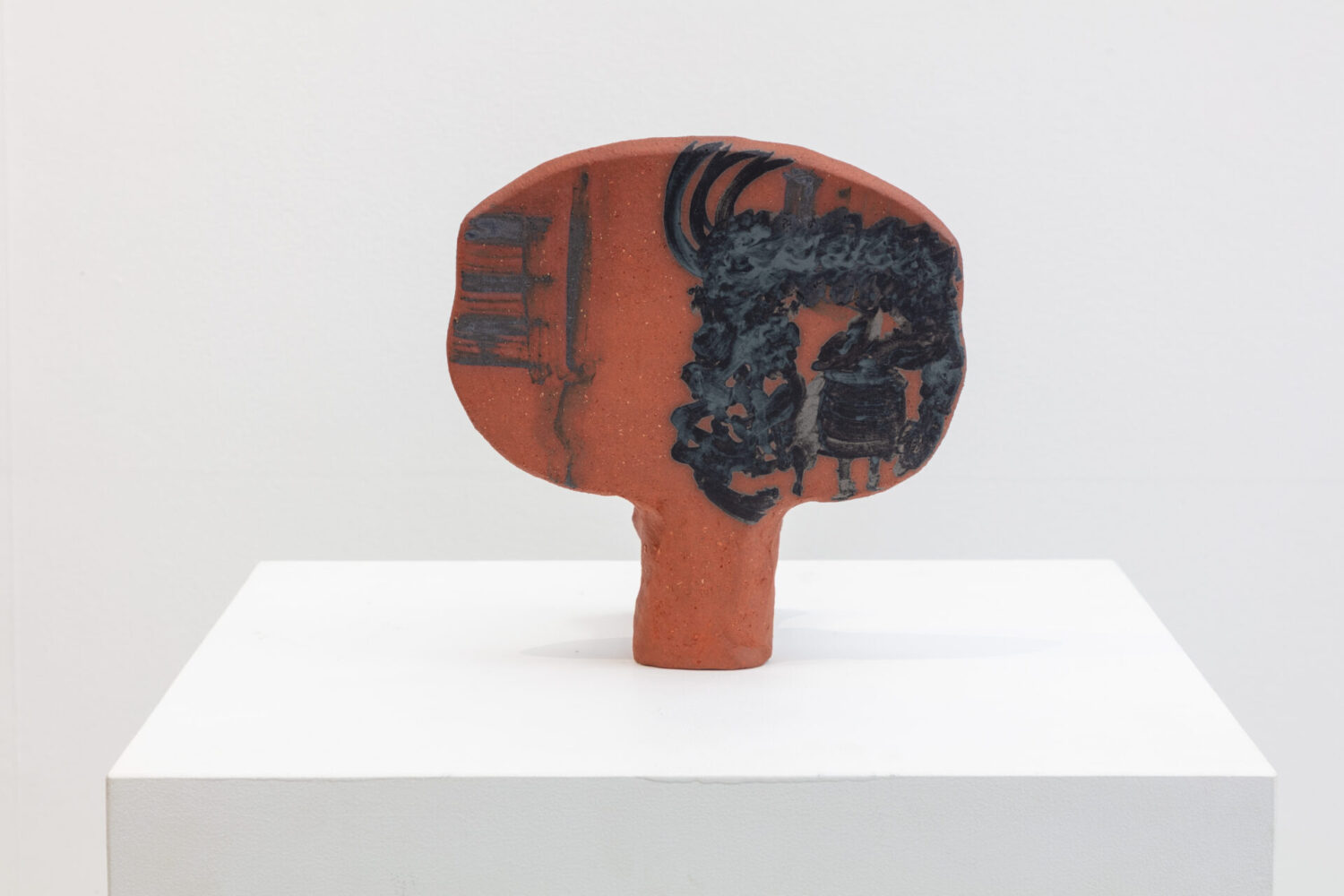
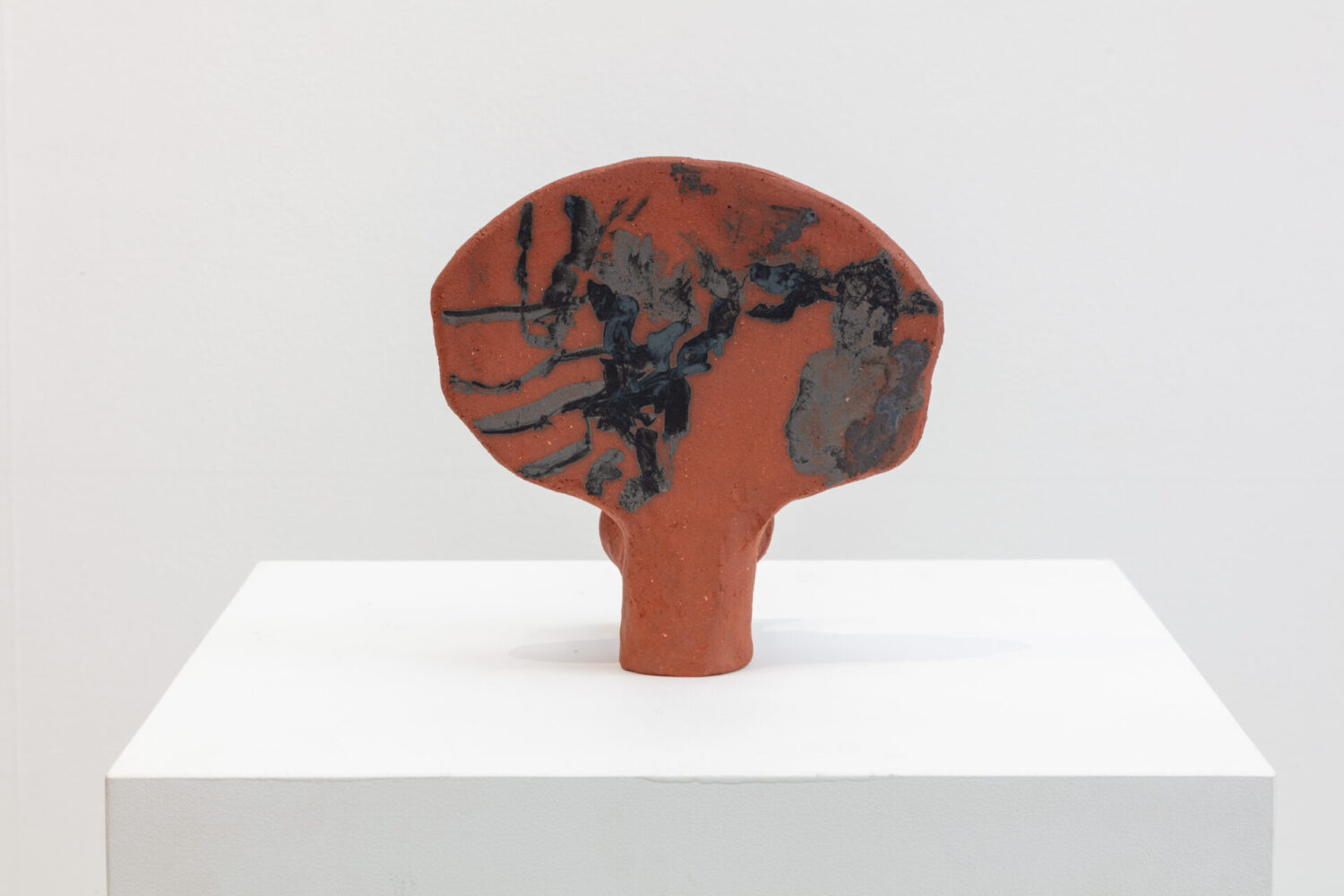
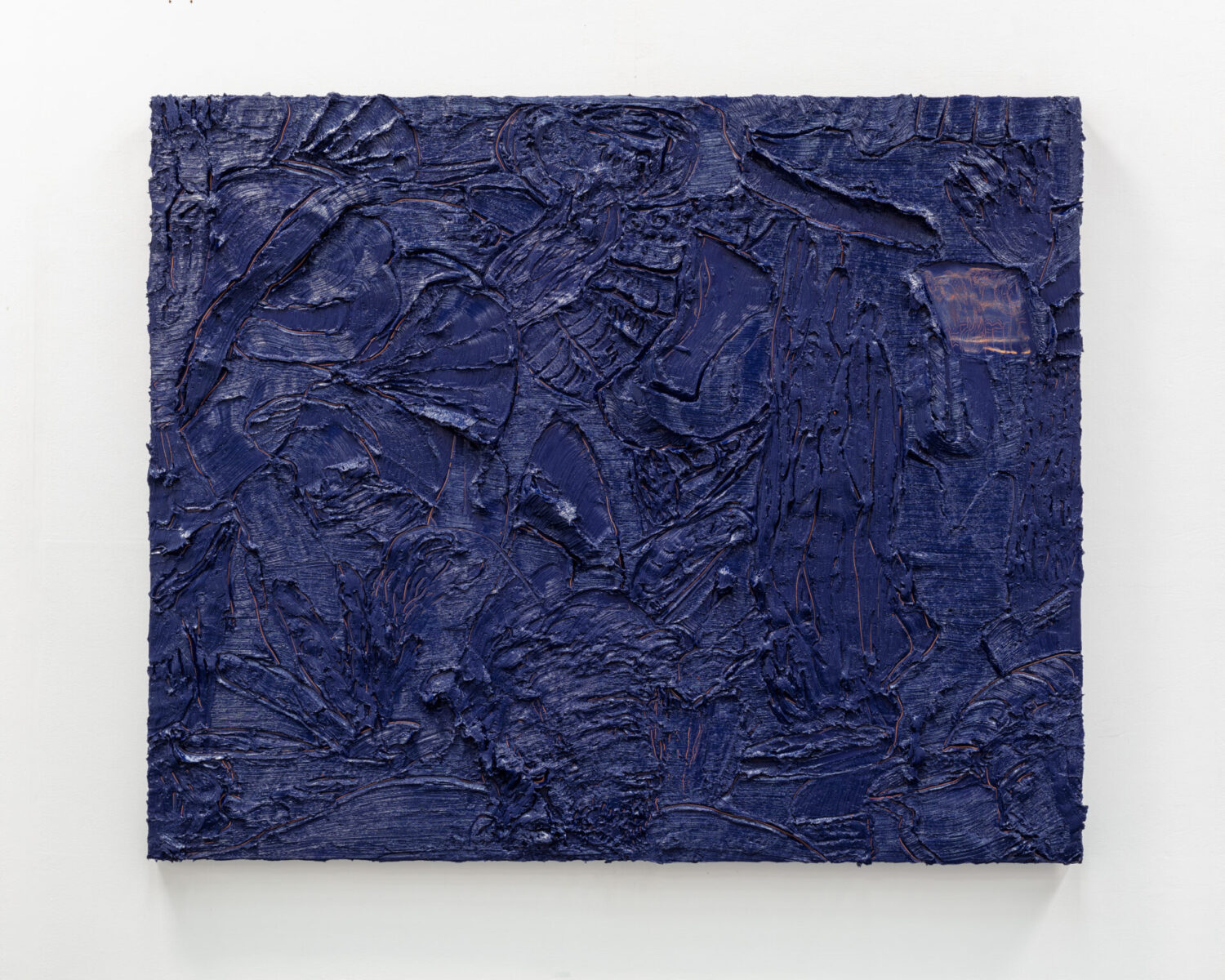
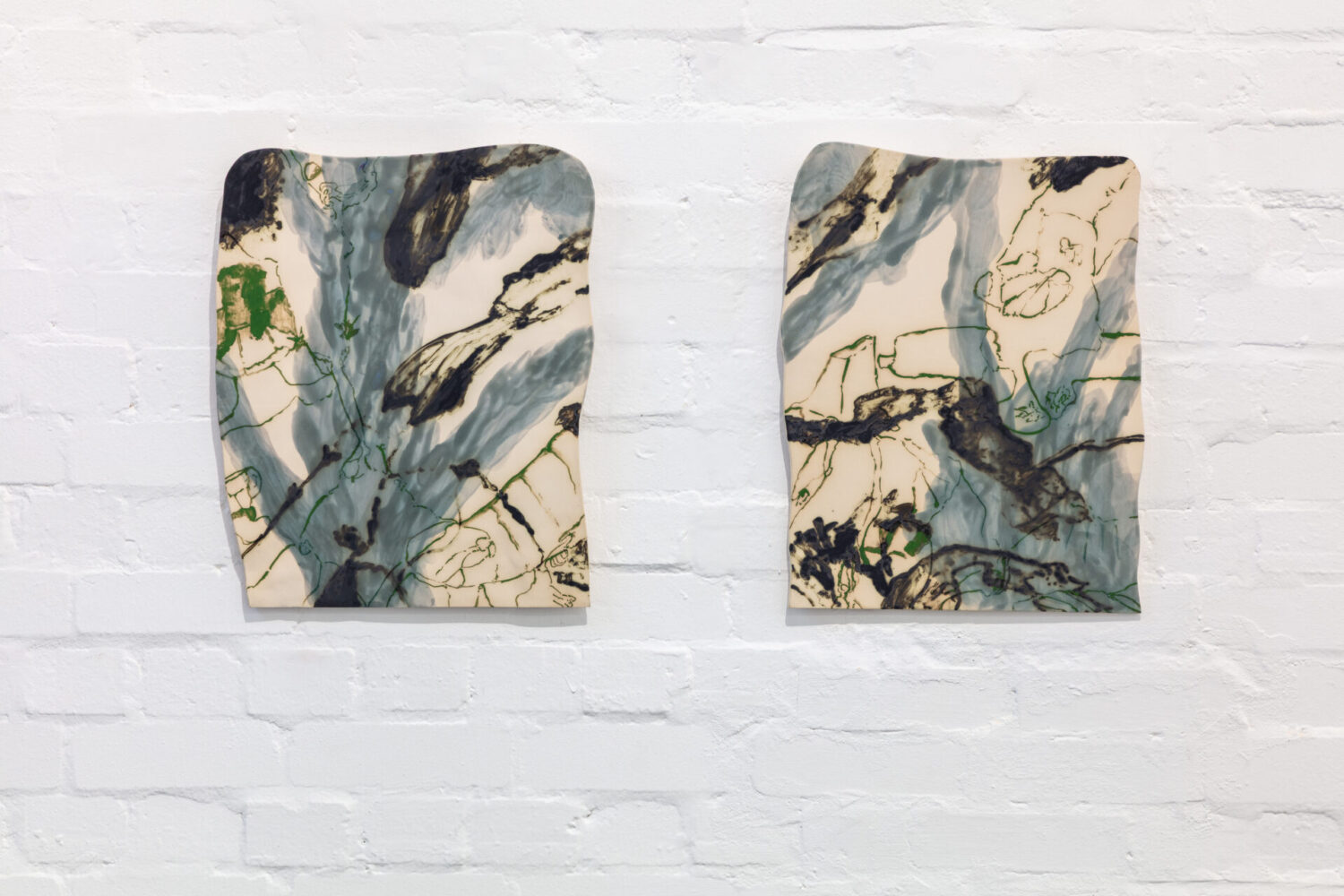
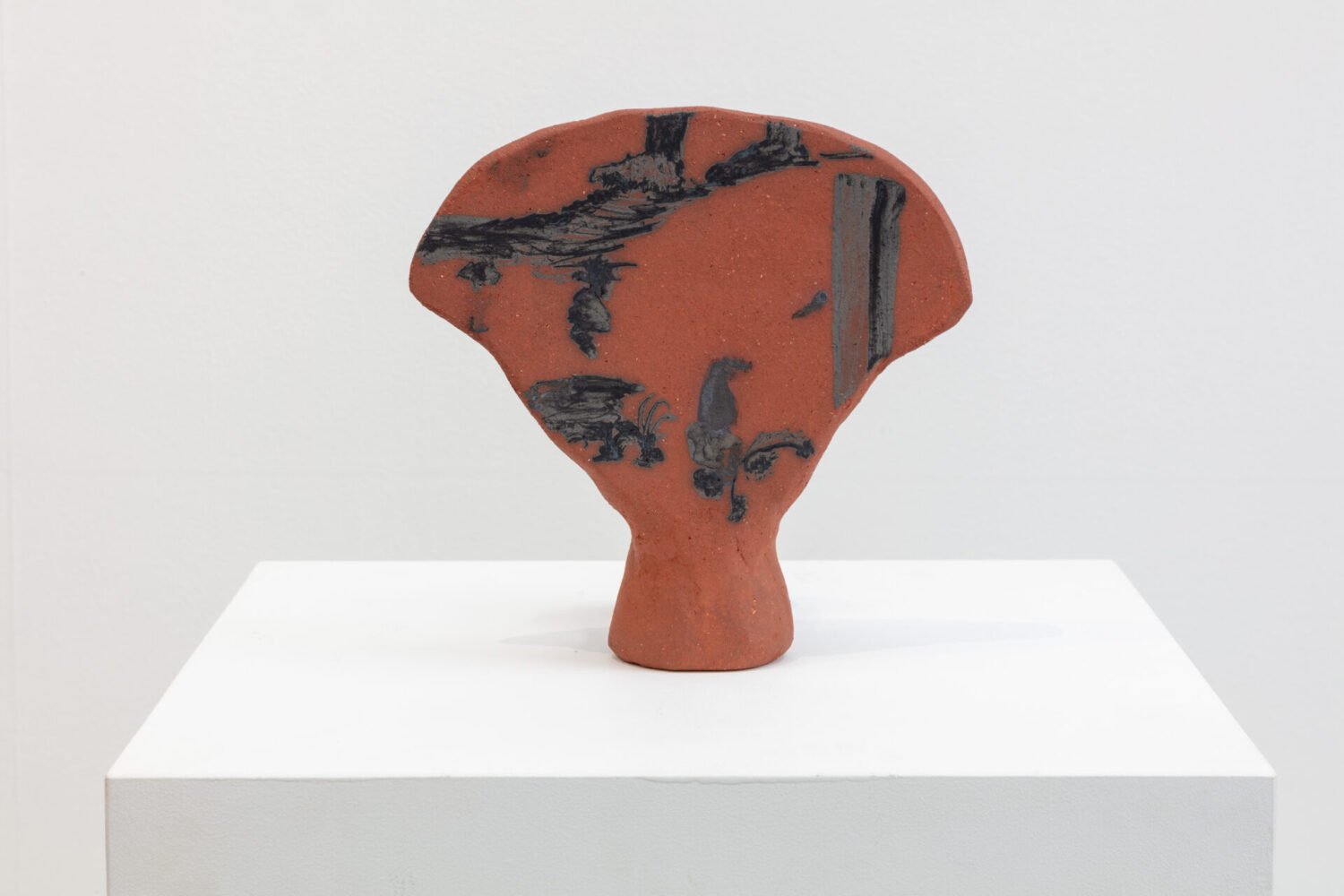
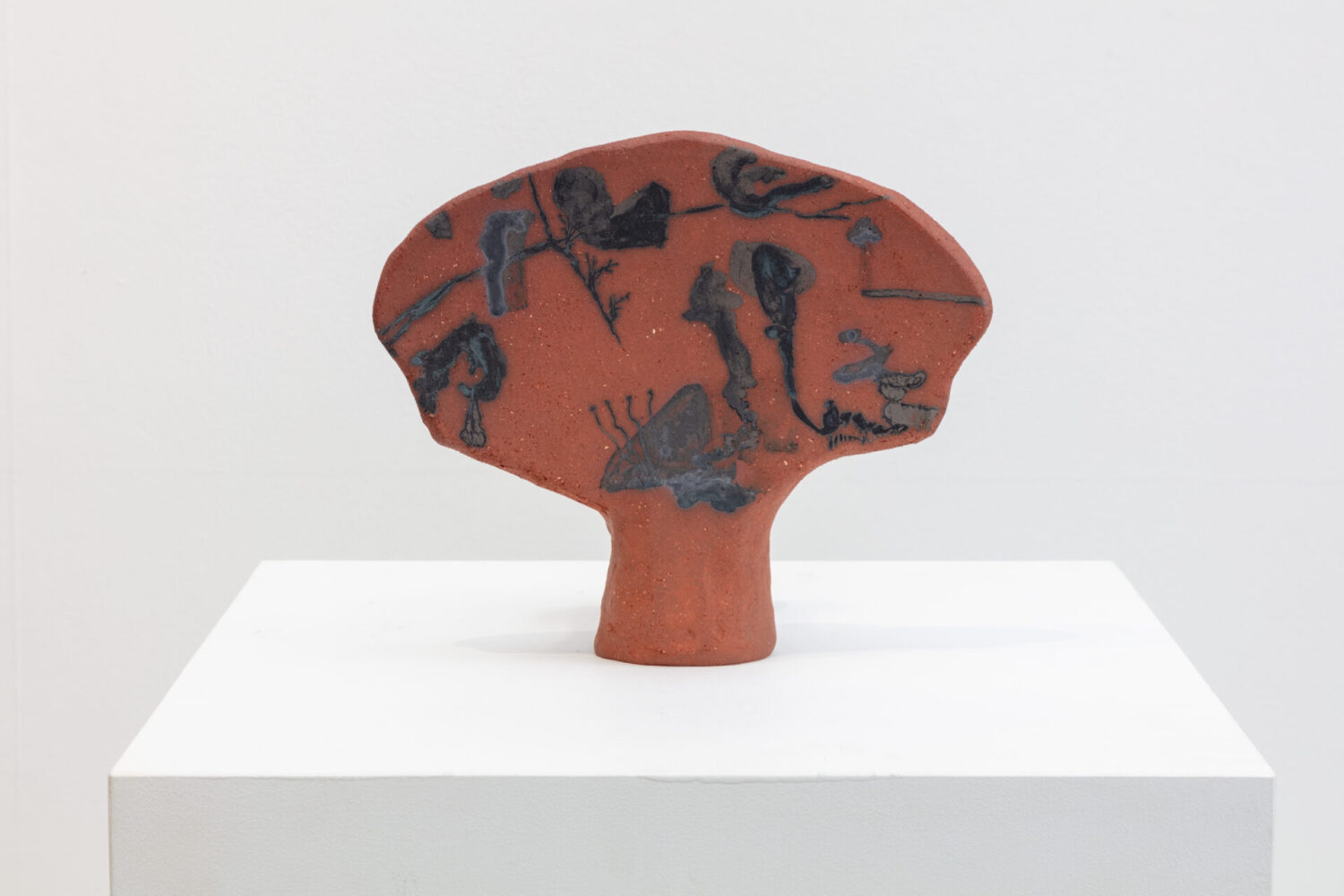
The other compositions that inhabit the walls of the gallery are a clay diptych painted with metal oxide (Man On Edge, 2024) and a large, chunky canvas titled The Long Way Ahead Of Us (2024). The latter belongs to an informal series of monochromes made by the accumulation of oil and acrylic paint, a laborious and painstaking process that the artist has been invested in for the past few years. Whilst the driving force behind these compositions change – hence its designation as an informal series – their thick and monochromatic aesthetics unite them. This particular work, like the diptych, has been inspired by frescoes and sculptures that the artist has seen during his travels in Greece, observing how the figures they portray, and therefore their contexts, evolve over time. Below the monochrome, over a white shelf placed close to the floor, are small ceramic works shaped as a tree of sorts with a tail behind, reminiscent of tadpoles with large heads. The works all have a flat edge, whereupon Kritzman has drawn figures, once again inspired by places he visited and the things he saw – although they can also be interpreted as little abstractions. These drawings were executed using metal oxides as paint – specifically chrome, cobalt, copper, and a small amount of iron – thus crowning the artist’s constant, and by now signature shift between two and three dimensions, blurring the boundaries that separate painting and sculpture.
Curated by Maria do Carmo M. P. de Pontes.
This exhibition will run from 10th April to 7th June 2026, Wednesday to Saturday, 12-6 pm, or by appointment.