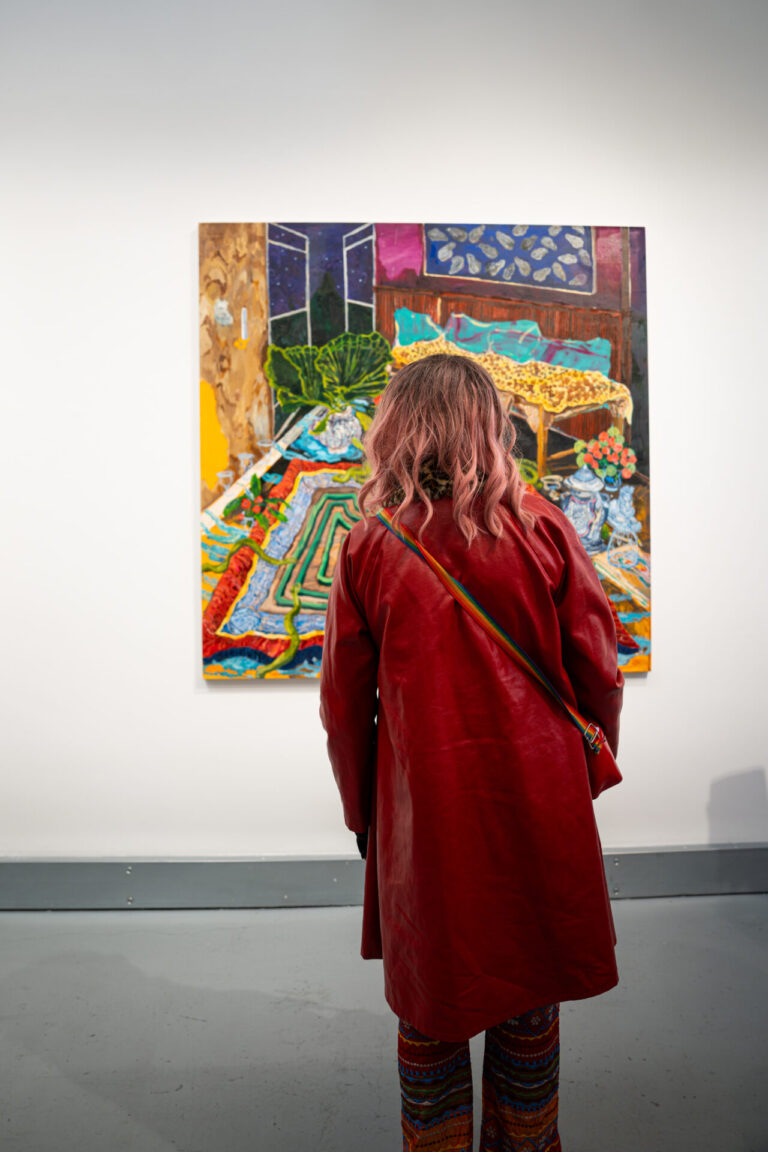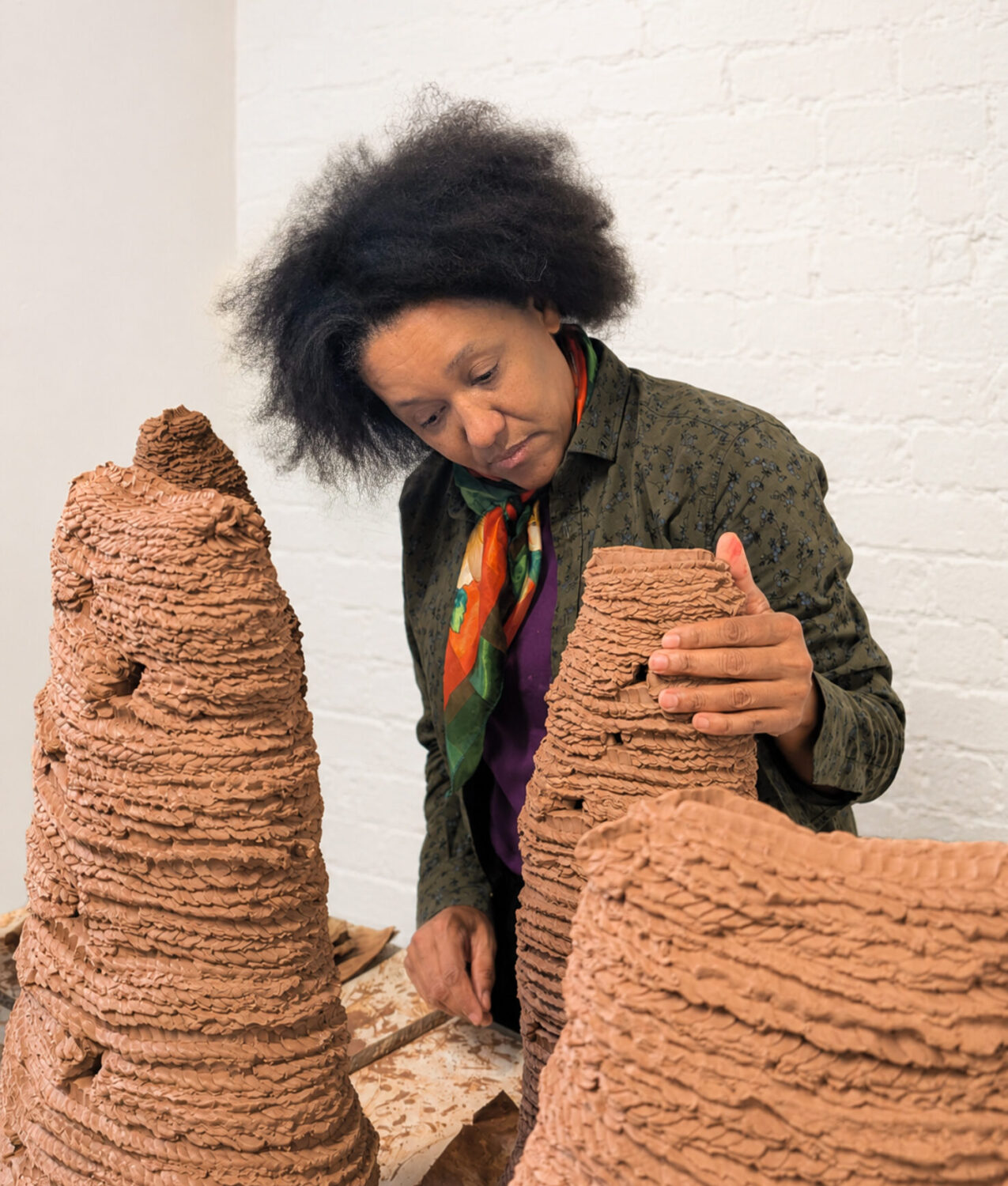
Brazilian artist Lidia Lisbôa discusses her work in Elizabeth Xi Bauer’s latest exhibition exhibition, Hand in Hand – from their genesis in EXB’s Deptford studio to the final installation alongside Thiago Barbalho.
EXB: Can you tell us about the works you’ve created for your duo exhibition ‘Hand in Hand’ at Elizabeth Xi Bauer?
LL: For this exhibition, I created termite mounds, lace memories, breasts that nourished the world, and umbilical cords. They are all part of a body of work that I have been developing for many years. Each piece carries themes that have accompanied me throughout my practice and continues an investigation that is deeply connected to my personal history and to the stories I want to tell through art.
EXB: How have you found the experience working from EXB’s Deptford studio?
LL: This is my first time in London. I leave home and walk to work. At first, this was an unfamiliar place, but little by little I adapted to it and found it beautiful and welcoming. Here I have danced, feeling like a ballerina, and I have produced work, but I have also written, and I enjoyed it until the very end.
Being in London has also helped me a great deal with focus. Solitude played an important role in that. Being alone in a new city, working, and not speaking English very well made me pay closer attention to things and to myself. I believe this allowed my creativity to flourish. I had more time to observe, think, draw, and produce. It has been a very important experience for both my work and for me.
Lidia Lisbôa in the Elizabeth Xi Bauer Deptford Studio.
EXB: How did you go about developing work for this exhibition knowing that they would be in dialogue with Thiago Barbalho?
LL: It was wonderful. The connection began through Juniara Albuquerque, who was once my assistant. She worked with Thiago Barbalho and, through conversations, they realised that our practices shared many points of contact. Later, Thiago invited me to give a talk with him at Nara Roesler Gallery, and from that moment this partnership was born. Our works naturally speak to one another.
EXB: For ‘Hand in Hand’, you’re exhibiting ceramics, textiles, paintings, and drawings. Do different materials bring out different ways of thinking for you?
LL: Yes, all the time. Different materials awaken different ways of thinking and creating. Crochet, for example, has been part of my life since I was five years old. I learned how to crochet before I learned how to read and write. Before I was literate, I was already learning through my hands, by observing and making. Perhaps this is why I have such a deep connection to materials and to manual work. Each material has its own rhythm and teaches me a different way of thinking and understanding the world.
EXB: Would you say that these materials carry personal or cultural memories? If so, how do those associations enter the work?
LL: Absolutely. Everything I make is an extension of my body and my history. The materials I work with are connected to memories, experiences, and cultural knowledge that I carry with me. They become a way of transforming personal and collective memories into form.
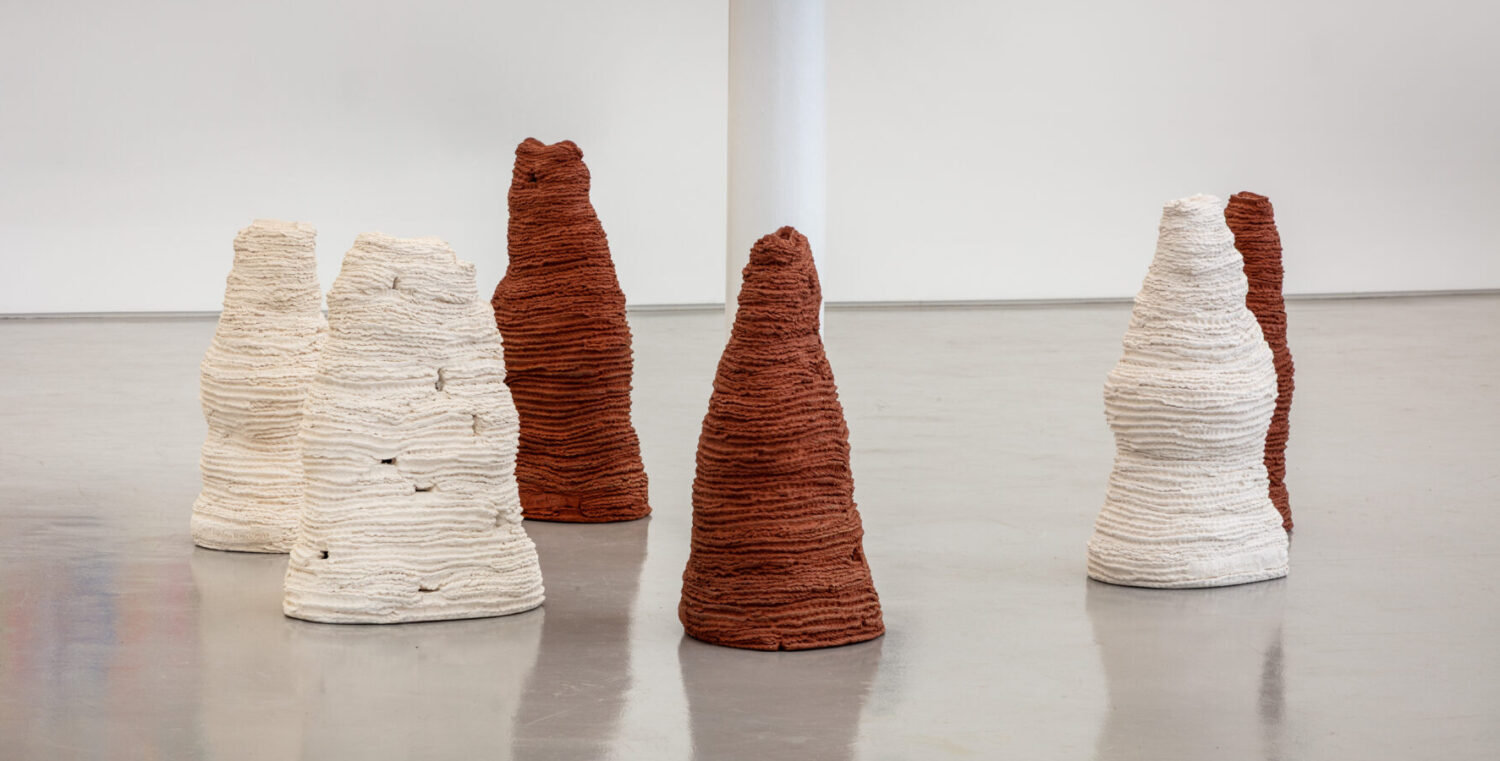
Lidia Lisbôa, Cupinzeiros Series, 2026. Terracotta and white earthenware, dimensions variable. Photograph: Richard Ivey.
EXB: Could you expand on your celebrated ‘Cupinzeiros’ (Termite Mounds) series. Why is this concept so important, and why for this exhibition?
LL: I wanted to bring with me some of my childhood memories from the rural area of Paraná, in Vila Guarani, Terra Roxa. My mother told me that I would stand looking at termite mounds, and she would say, “Lídia, don’t touch them,” but I would stay there like a statue, simply looking.
I grew up, and when I started working with ceramics, the first thing that came to mind was: “I am going to make my termite mound.” That was in 1996, and I have never stopped since. Bringing my termite mounds to London means bringing the smell of the earth, a piece of my childhood, my memories, and the place where I come from.
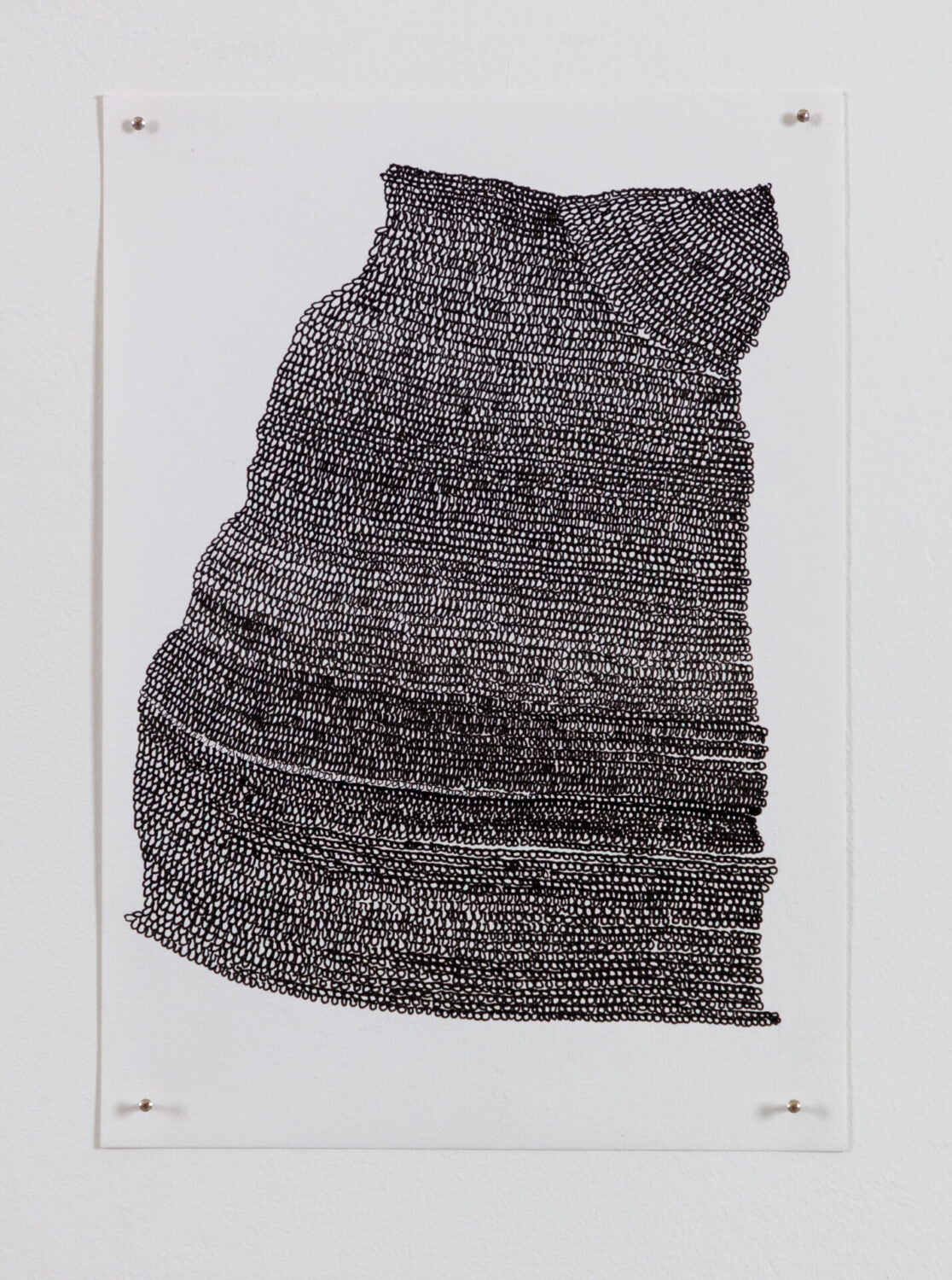
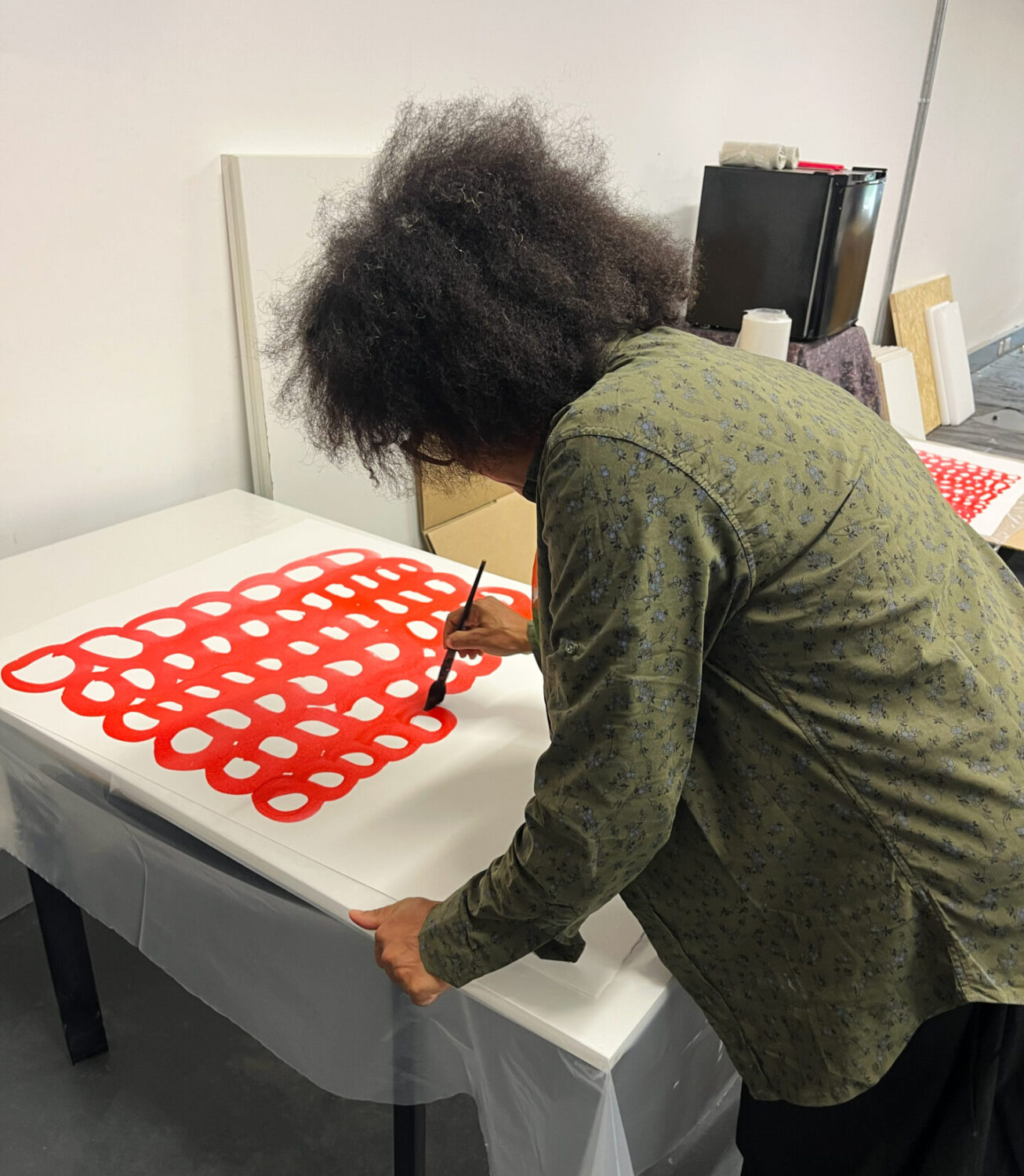
Lidia Lisbôa, Untitled (from the series Memórias de renda), 2026. Ink on paper, 30 x 21 cm. Photograph: Richard Ivey.
EXB: How do your works on paper develop on or work in relationship with the ceramics you’ve created for this exhibition?
LL: The series on paper is called Correntes (Chains). There is a certain physical resemblance between these works and the termite mounds, but Correntes is really about chains and connections. It comes from my relationship with crochet and from thinking about how one element links to another, creating structures that are both fragile and strong.
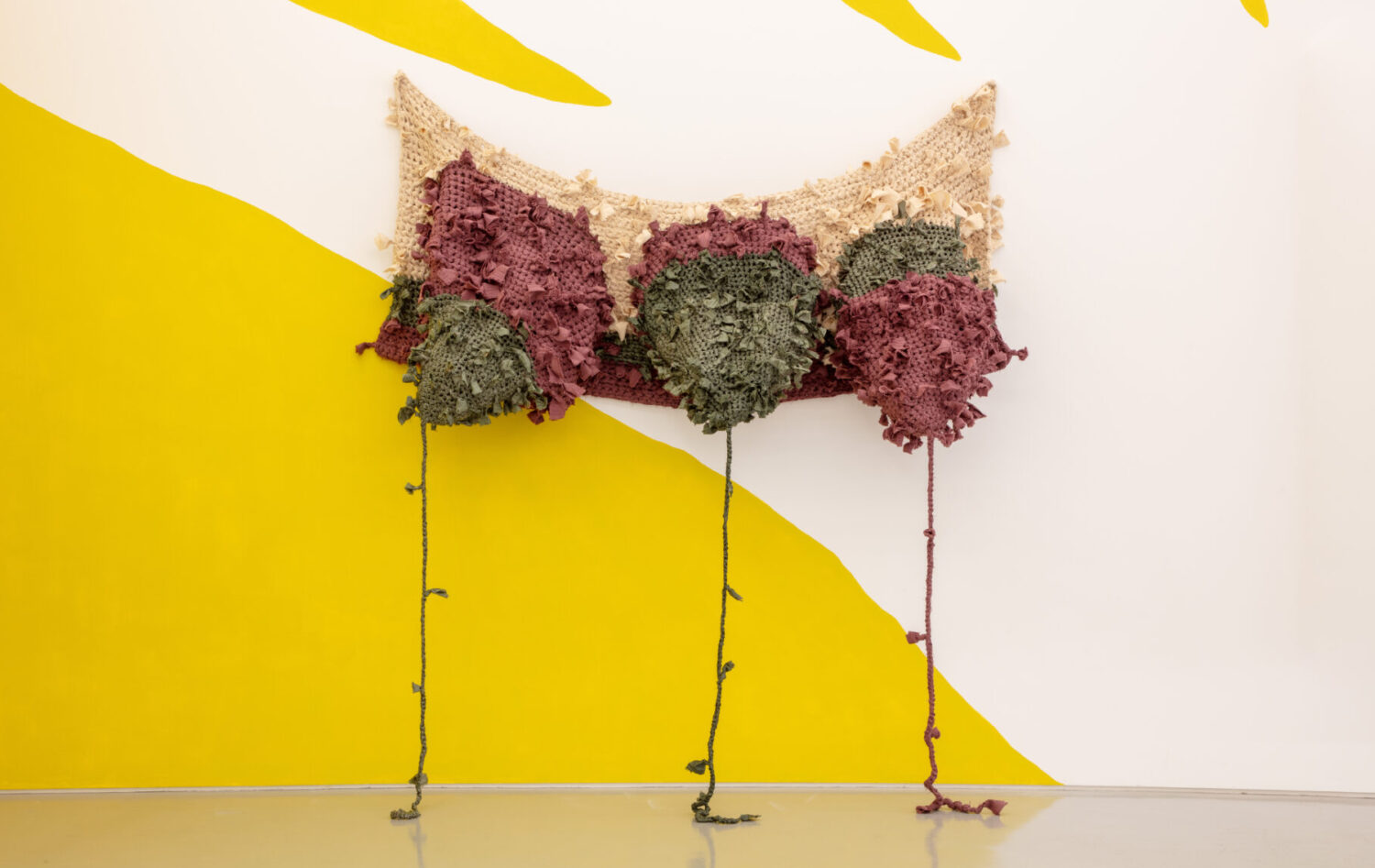
Lidia Lisbôa, Untitled (from the series Teats that Fed the World), 2026. Hand-crocheted crepe and polyester fabric. Approx 195 x 190 x 40 cm. Photograph: Richard Ivey.
EXB: You often incorporate themes of womanhood and the female body into your work. What do you hope these works convey?
LL: Many of my works refer to female organs and to the female body. For me, these forms are a way of speaking about the importance of women, their strength, and their ability to nurture, create, and sustain life. Through these works, I hope to encourage reflection on care, ancestry, motherhood, and the essential role that women play in the world.
The body is present in many forms throughout this exhibition. It appears in the shapes, in the materials, and in the ideas behind the works. For me, Hand in Hand also speaks about connection. The world should move hand in hand, and the body becomes a way of expressing this sense of relationship, care, and interdependence.
EXB: Many of the themes that have long informed your practice continue to resonate throughout your work. How do you see your engagement with these themes evolving in the future?
LL: I intend to continue working with these themes throughout my life. They are part of who I am and of the way I understand the world. Many students and researchers approach me seeking support for their studies on crochet, ceramics, and other aspects of my practice. This exchange is very meaningful to me. I hope my work continues to inspire new generations of artists and researchers, while also allowing me to keep learning and discovering new possibilities within these investigations.
Hand in Hand, with Lidia Lisbôa and Thiago Barbalho, is on display at Elizabeth Xi Bauer, Exmouth Market, until 9th August.