This vast realm of ‘something else’ is what ties together the practices of Petra Feriancová and Amanda Kyritsopoulou, artists who place the accumulation of gestures that make our days and weeks and years at the centre of their creative endeavours. Each approach this shared interest through rather different strategies: Kyritsopoulou seems to thrive in a structured, even if occasionally chaotic environment, where ideas can be tested beforehand, colours exchanged, layouts rehearsed. She has a studio that she visits as often as life allows her to, but also speaks of the city – in her case, London, where she’s been based since 2014 – as her ultimate creative partner. Feriancová, by turn, embraces chance as a driving force. It is as if most of her artistry came from long and not always linear mental processes, that are subsequently translated into objects – and even then, there’s always a sense of impermanence permeating them, as she reconfigures artworks time and again to dialogue with new circumstances.
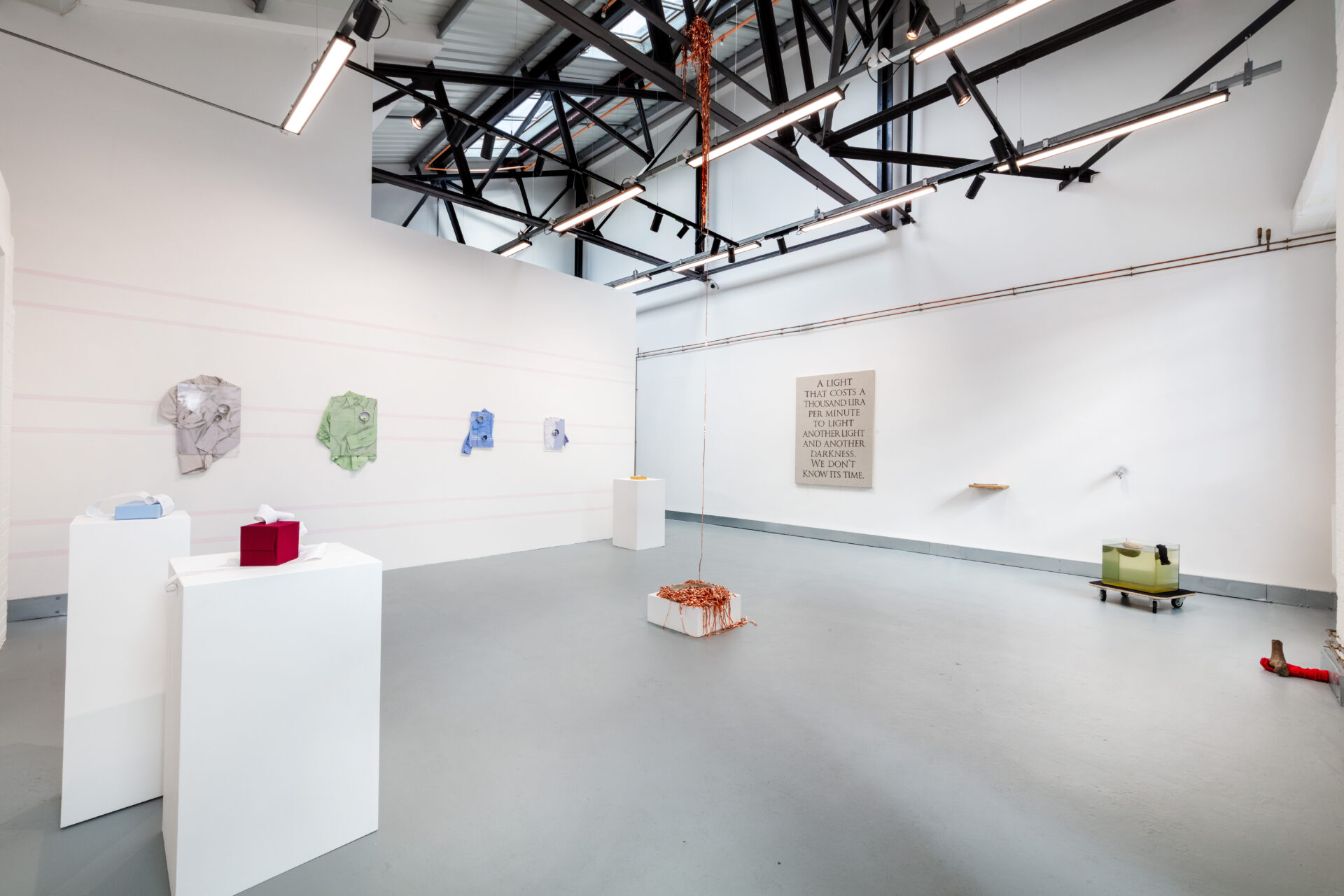
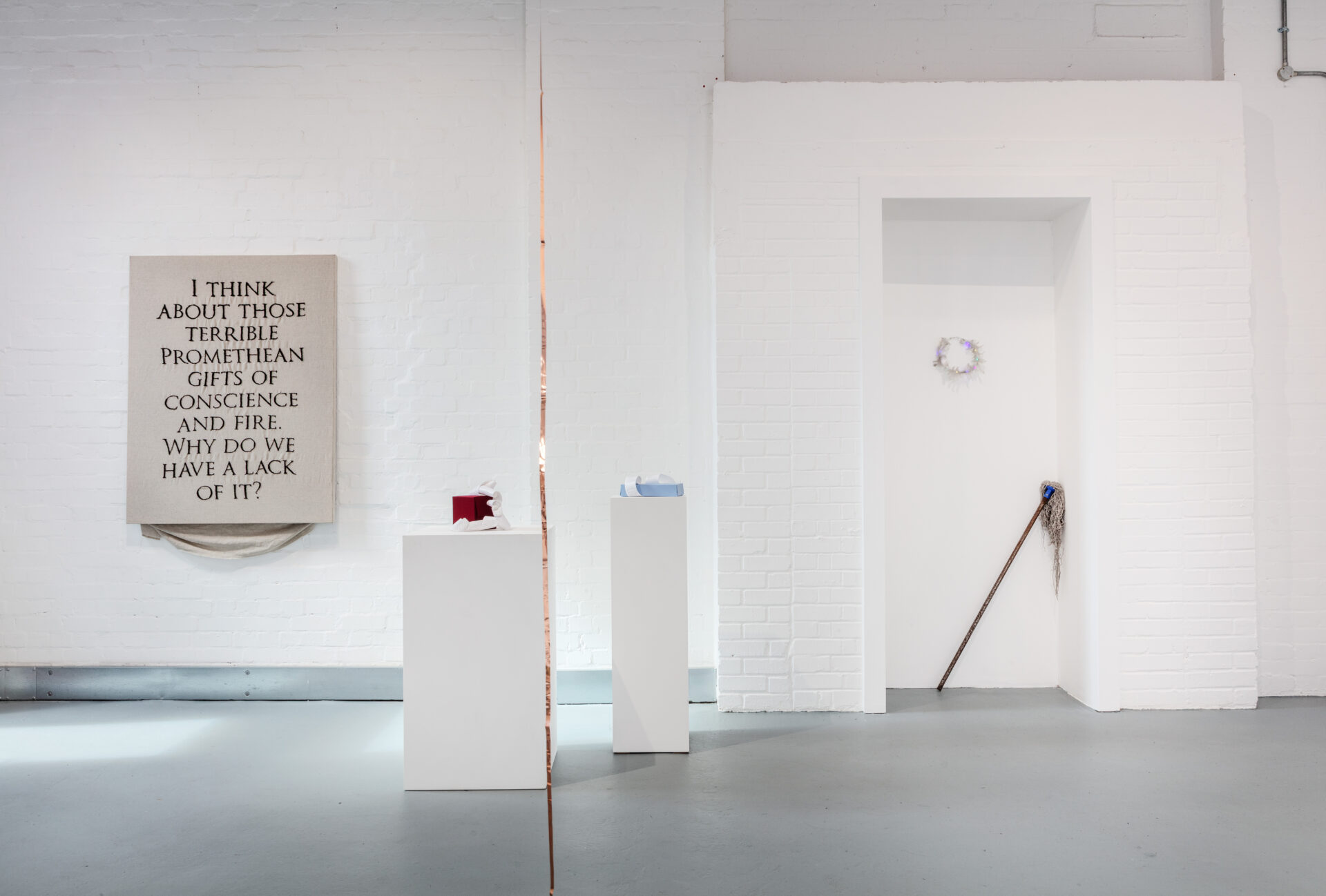
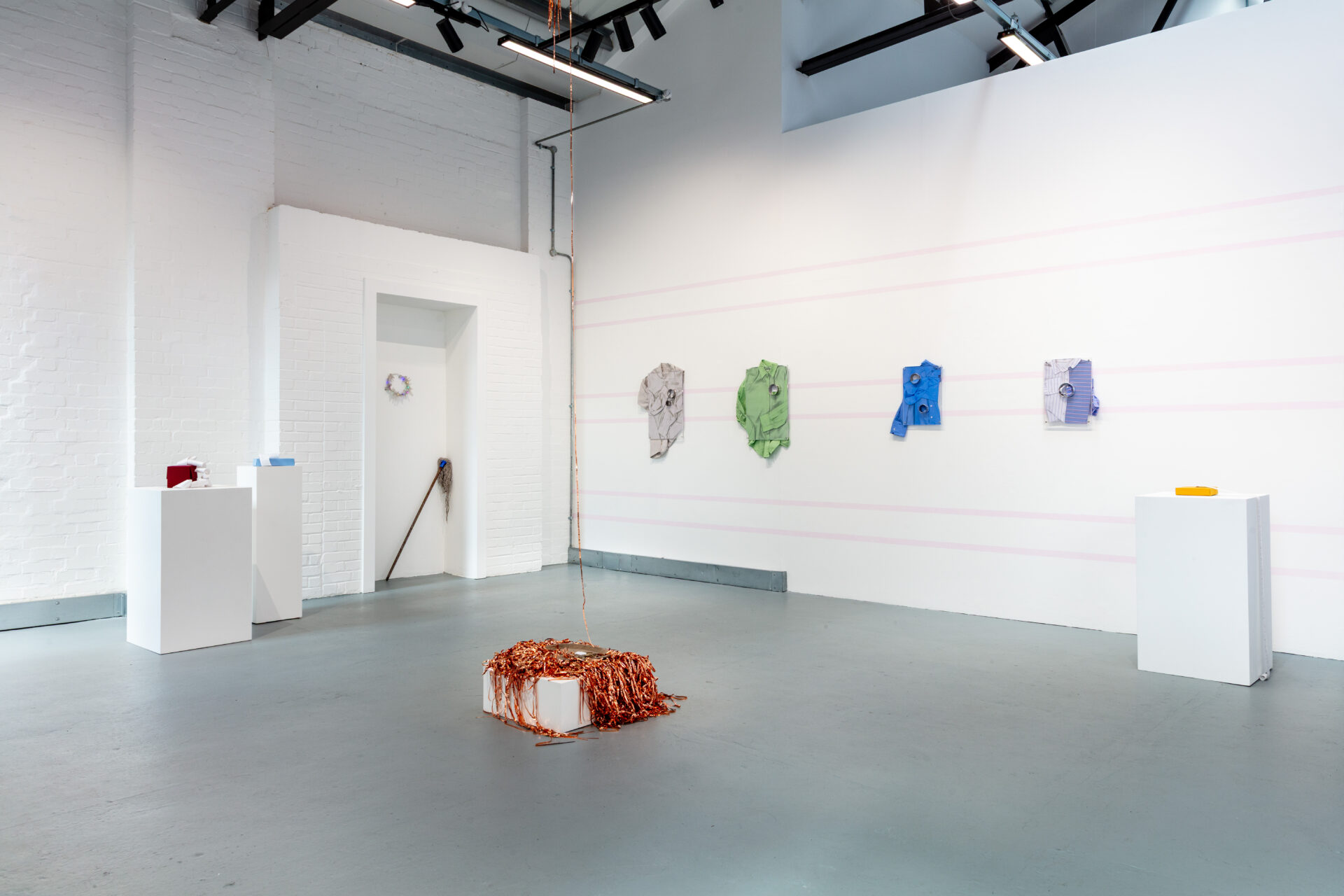
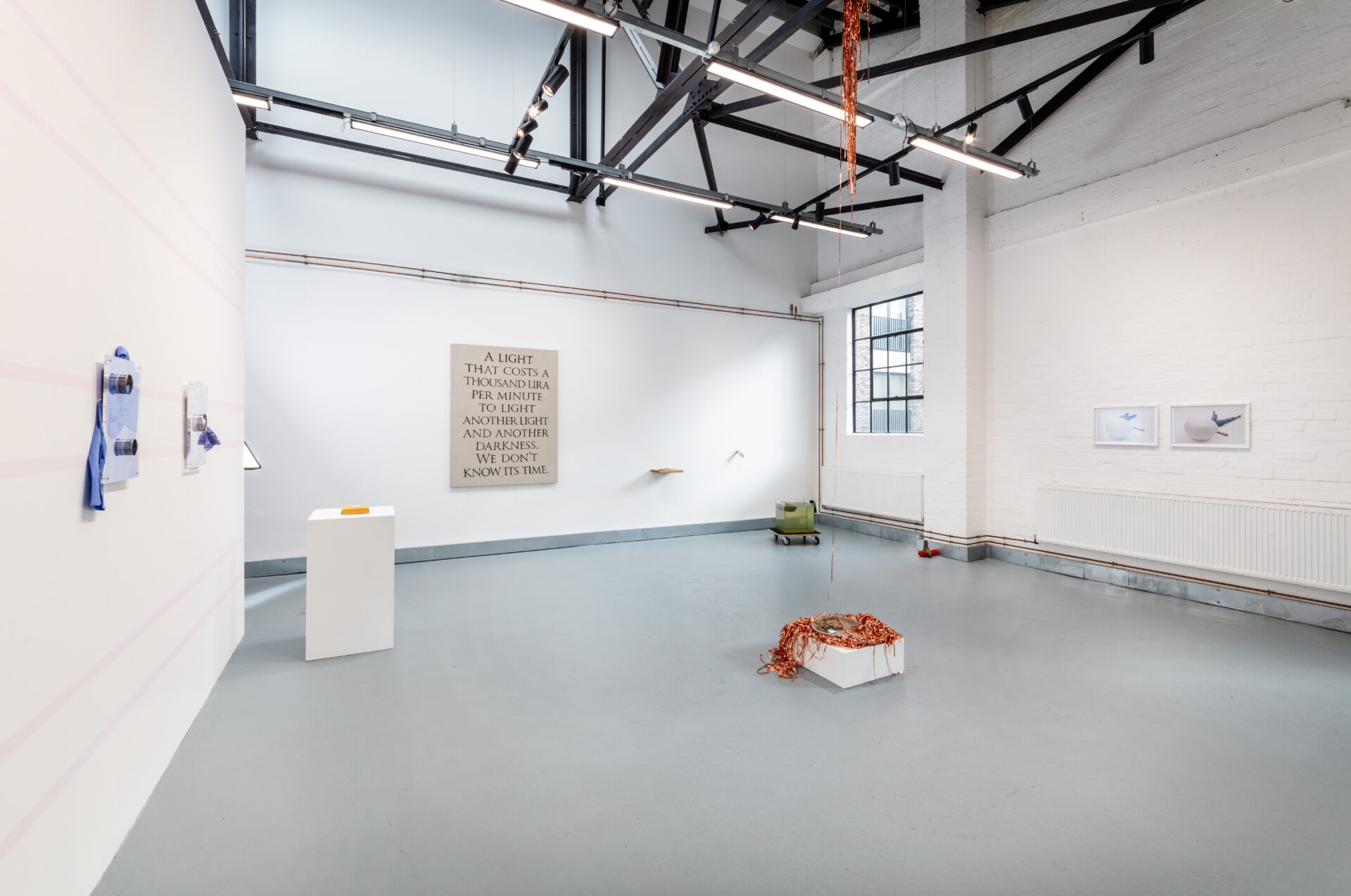
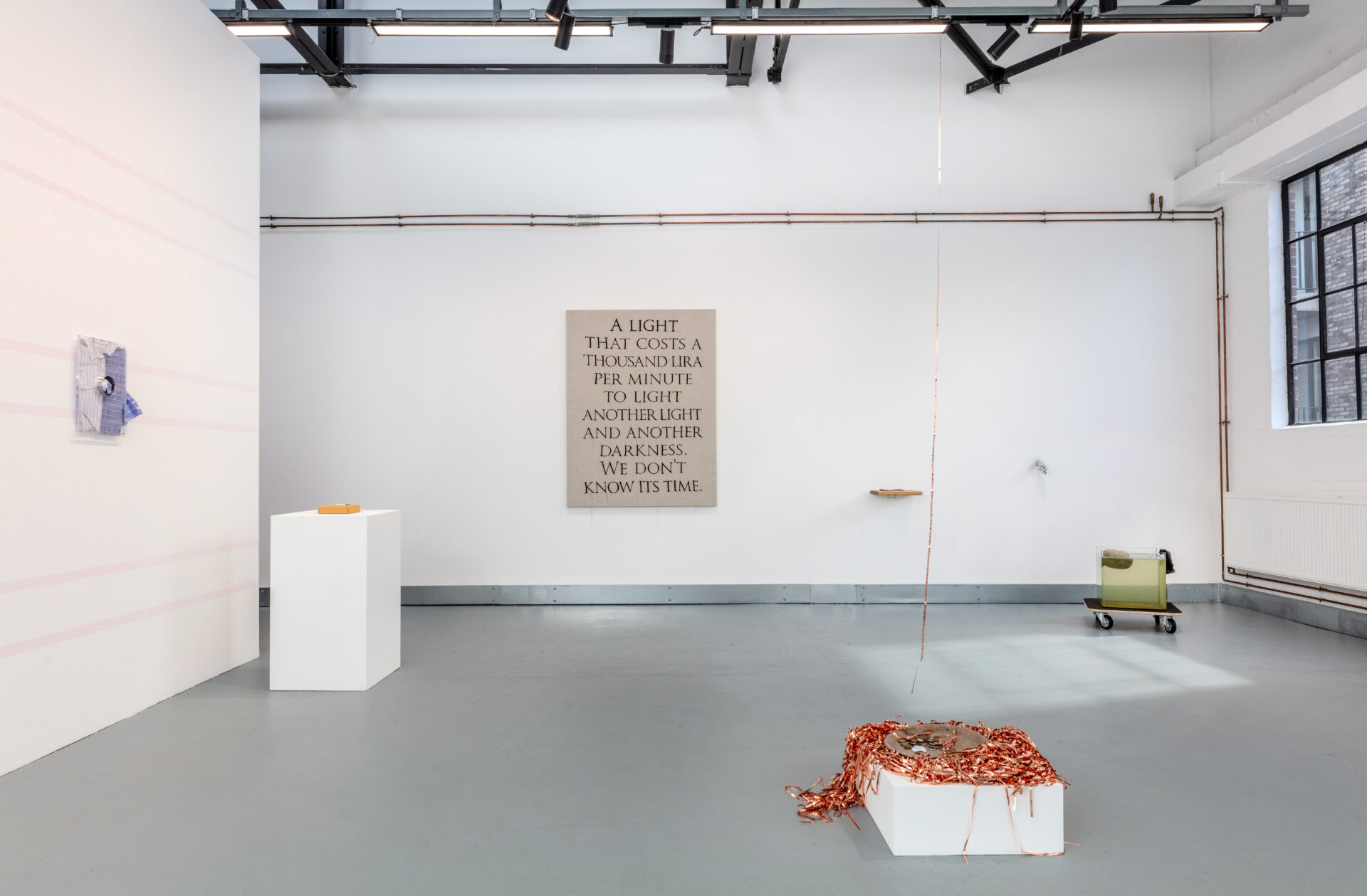
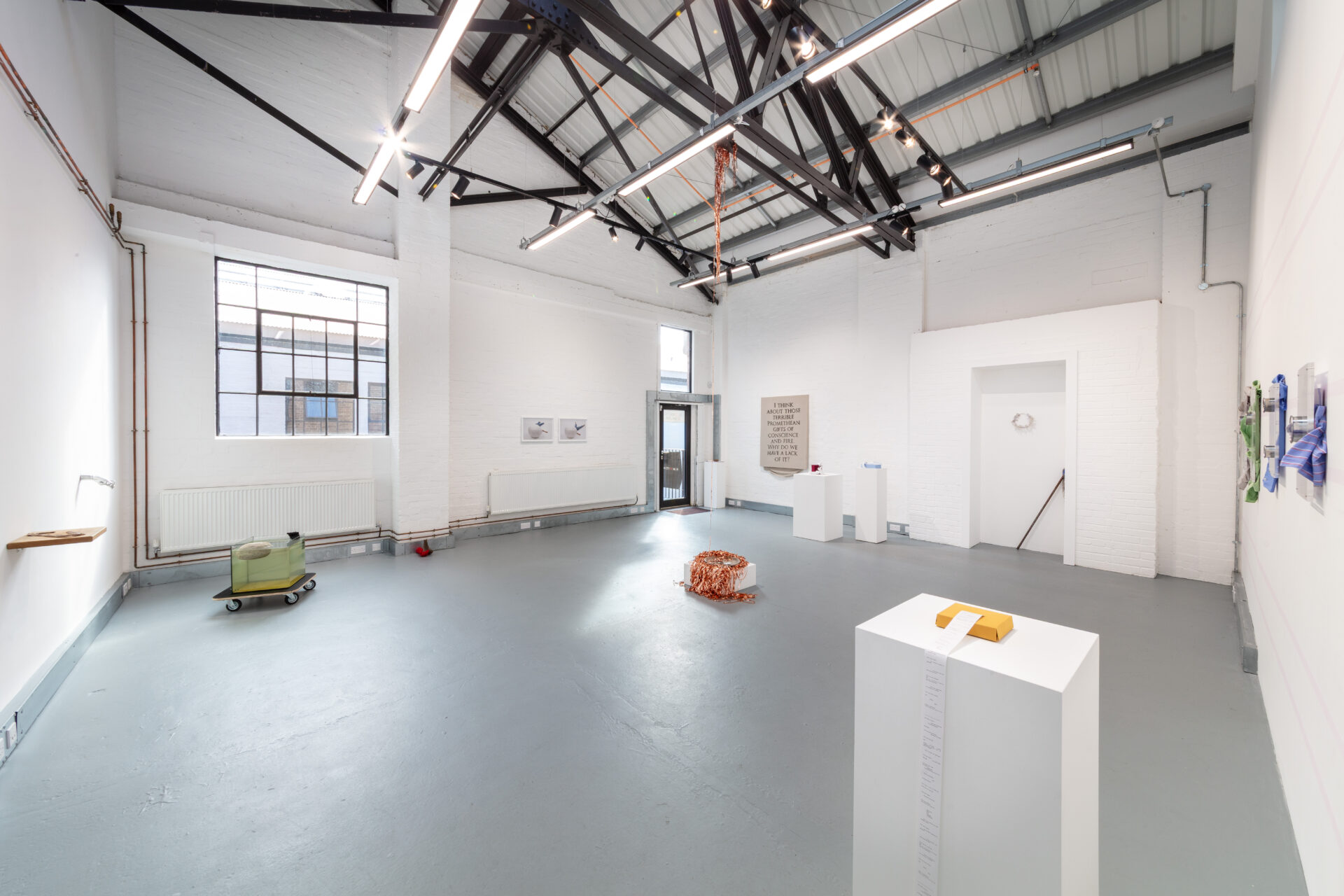
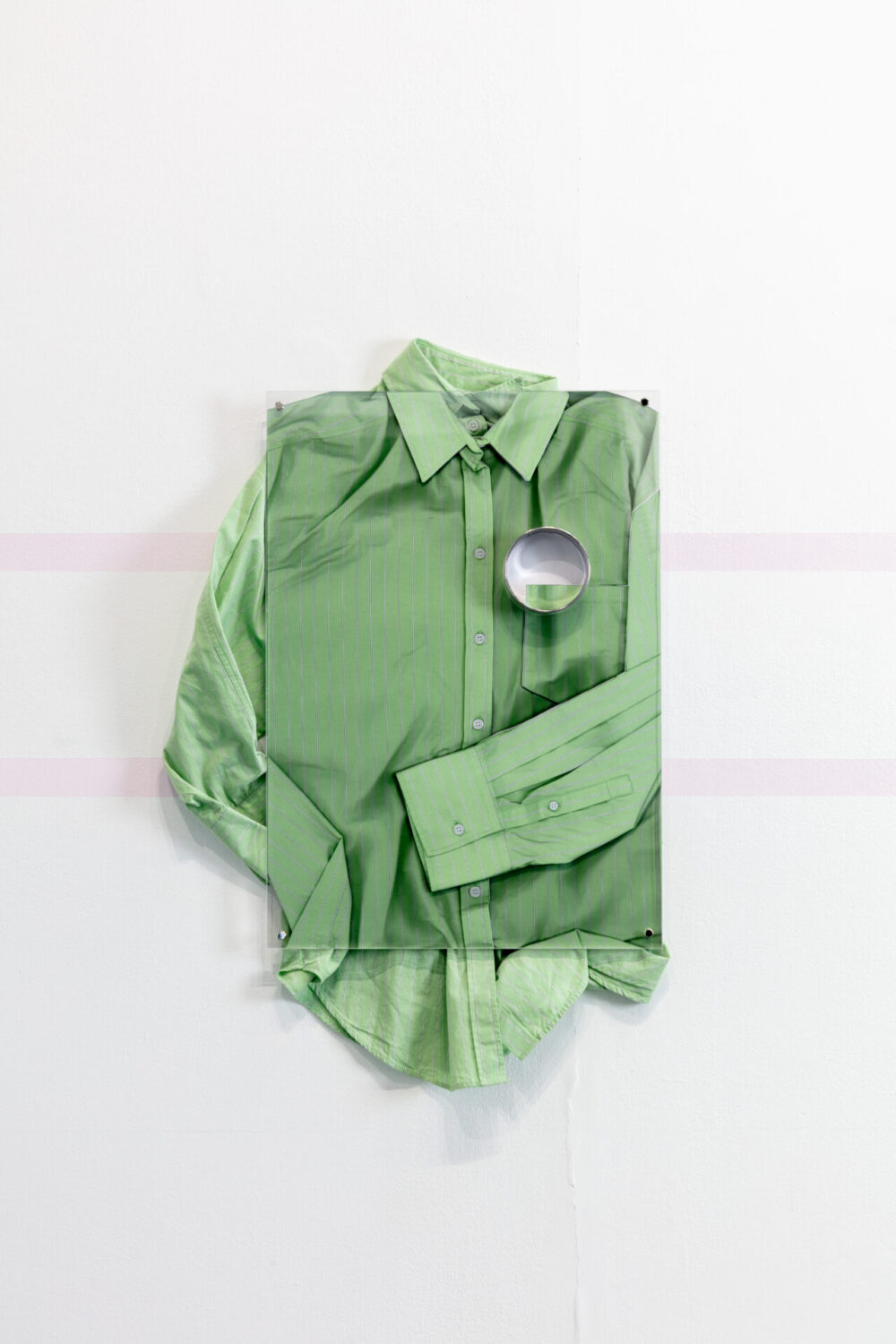
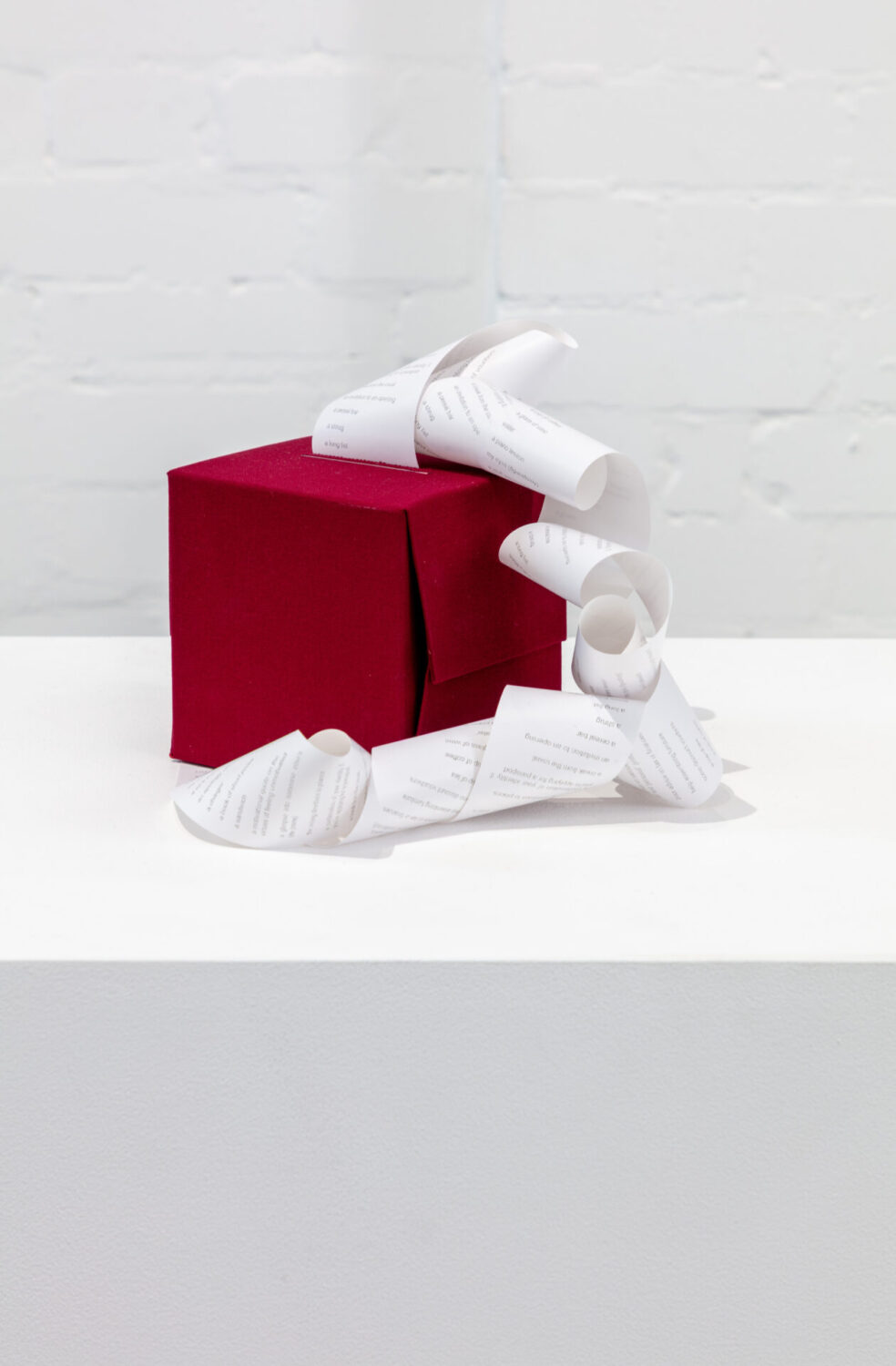
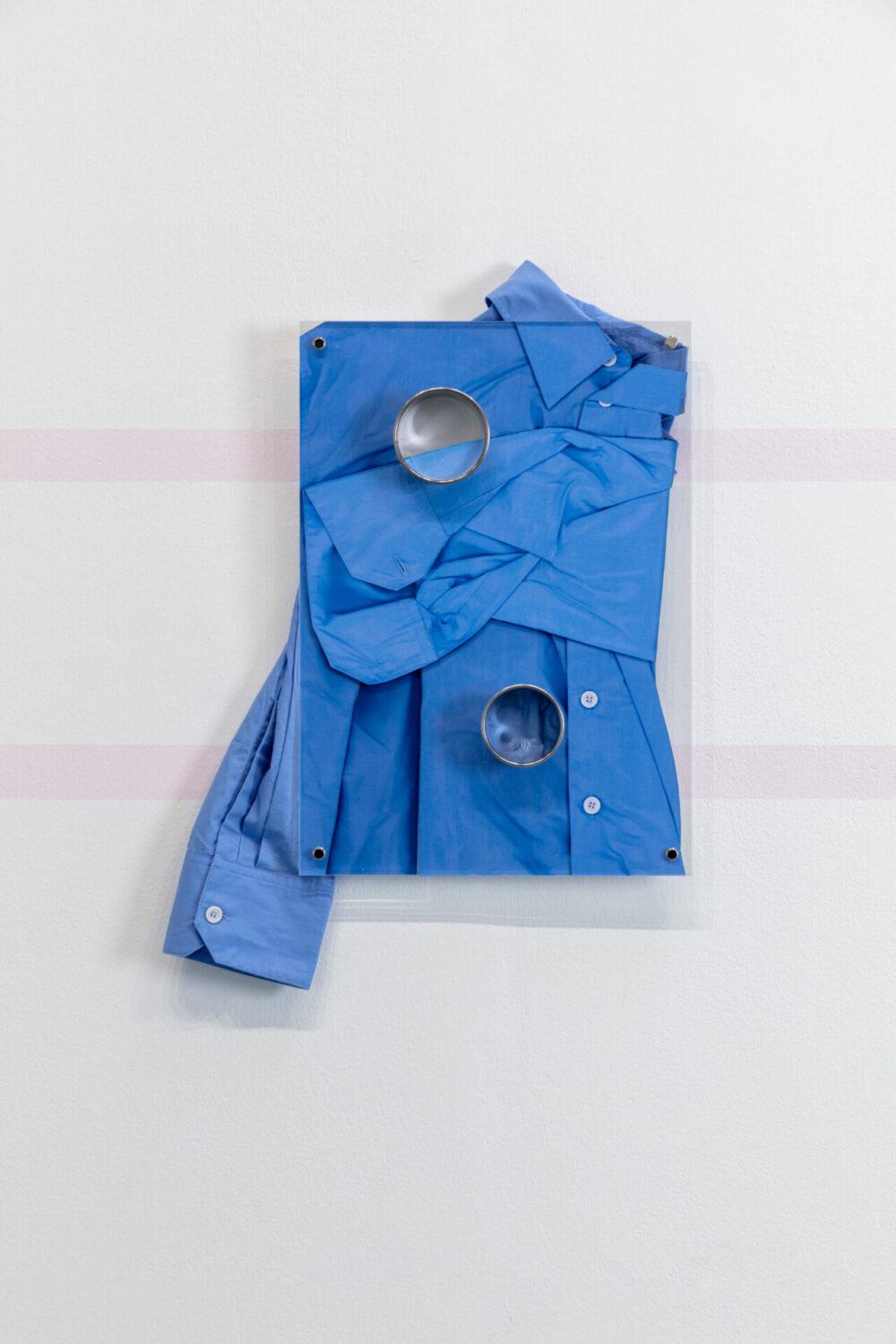
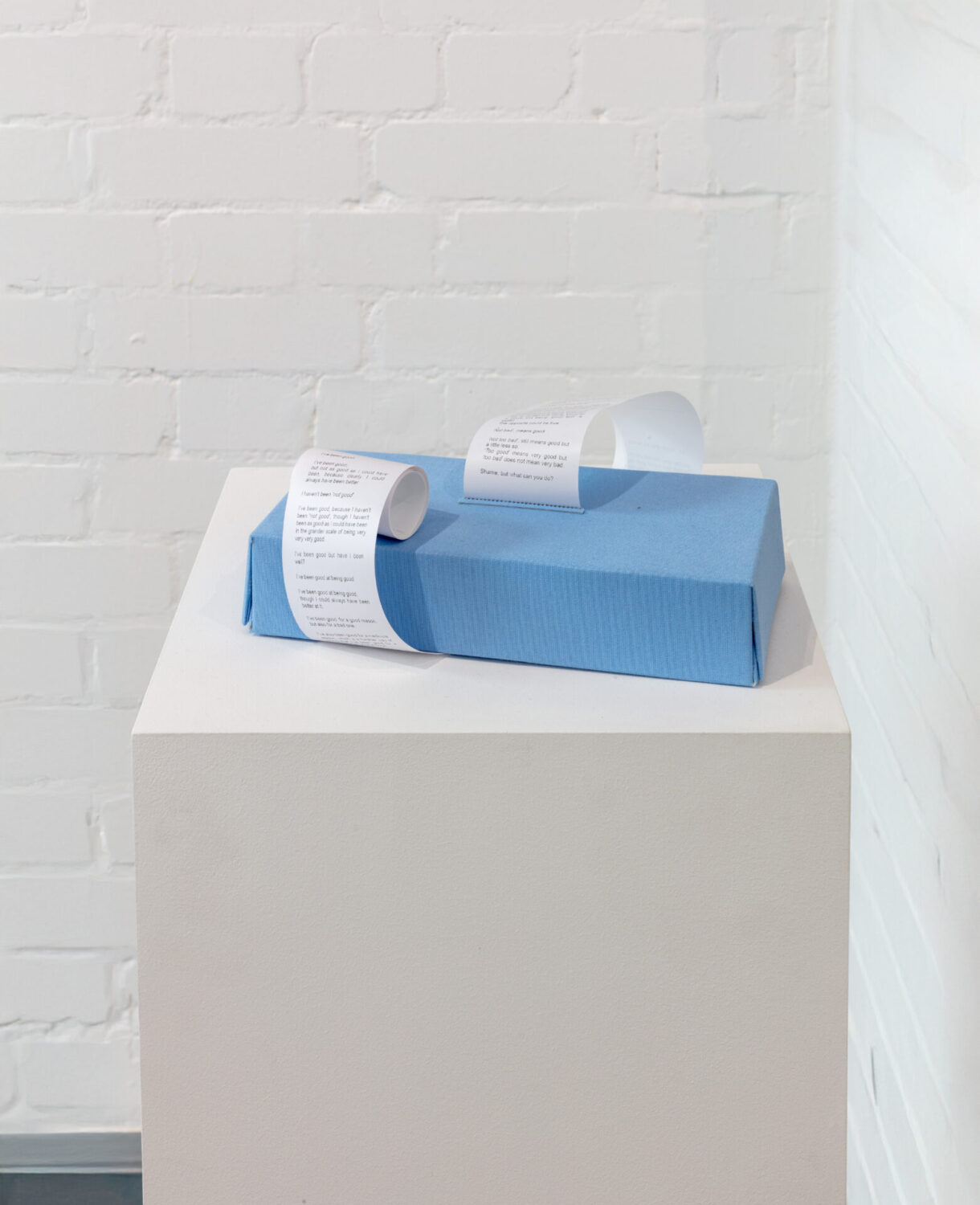
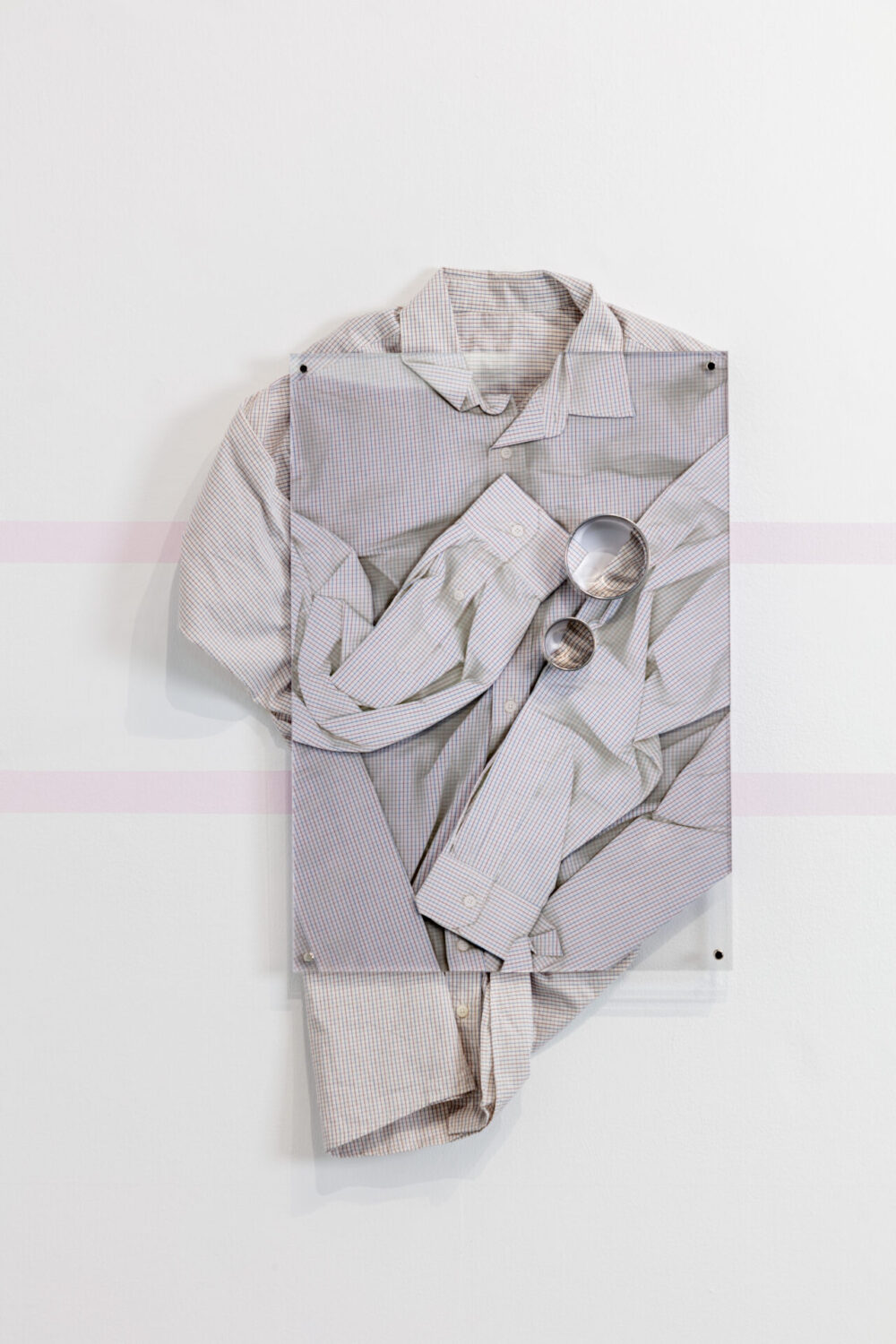
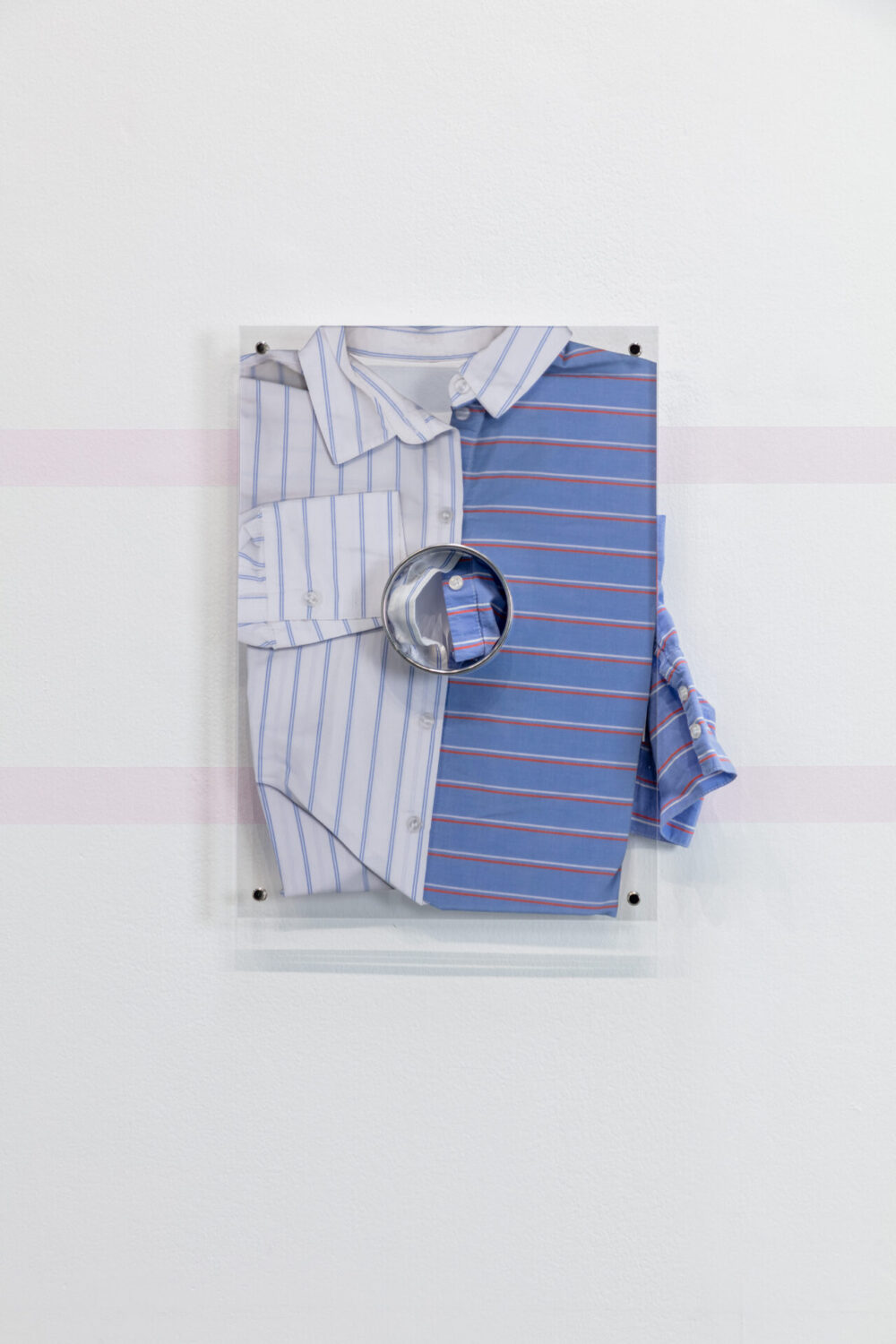
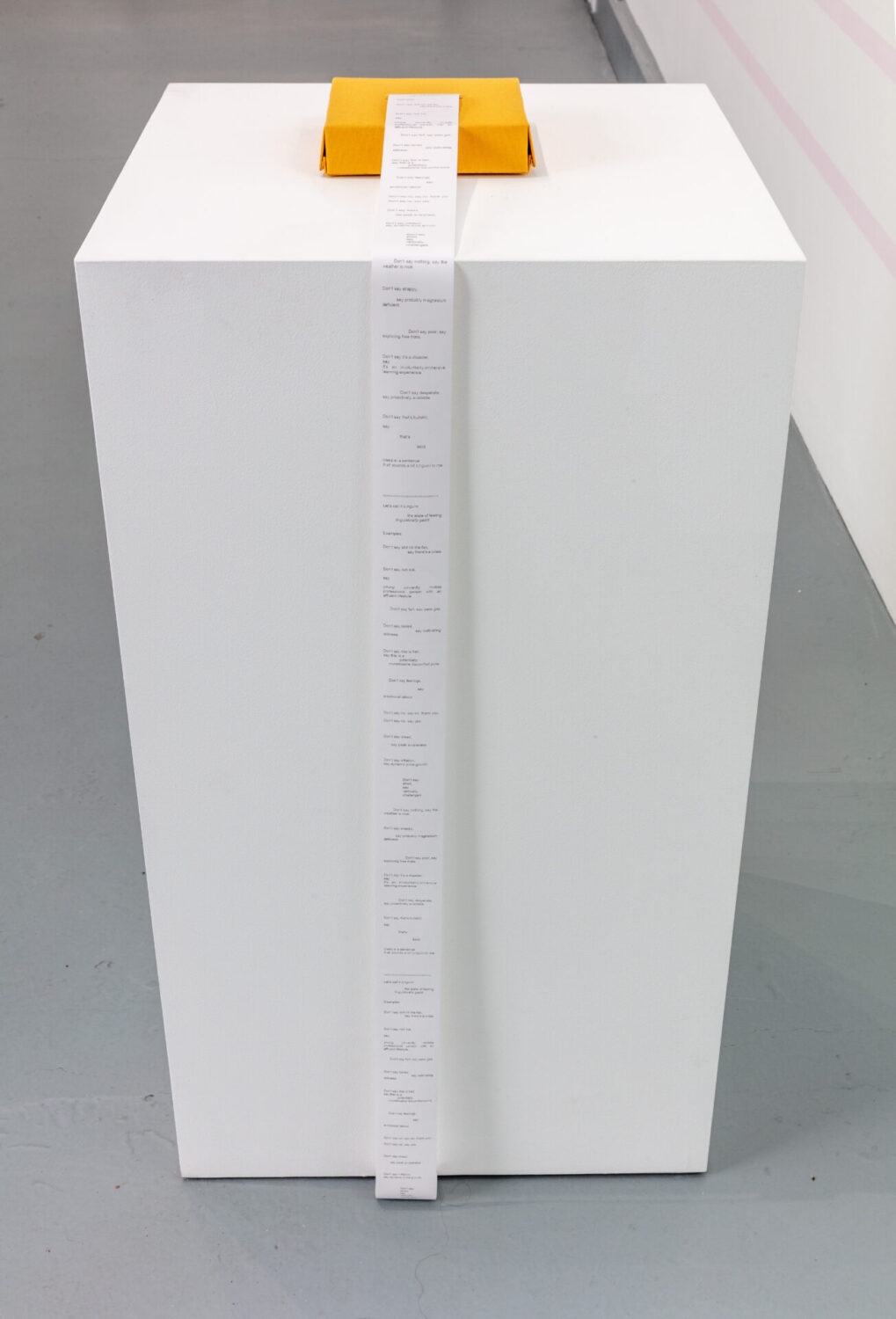
They both find inspiration by being on the move and people-watching, observing the ordinarinesses that constitute the very fabric of life. Accordingly, many of the utensils that exist around us and are perhaps taken for granted for their over-familiarity make way into their works. Kyritsopoulou, for instance, places shirts at the heart of her Too close to the ironing board series (2025), where she creates optical illusions by sandwiching together both actual shirts and their printed counterparts between four acrylic sheets. She then cuts through these fabric, paper and plastic sandwiches with metal cookie-cutters, at times revealing an empty white background, at times the coloured fabric of the shirts. These works are hung atop pastel pink parallel stripes painted on the wall in a way that gives both structure to the works and a sense of cohort, grouping them like an installation. In another hat, Kyritsopoulou is also interested in writing experiments, and that aspect of her practice is evidenced in three sculptures shaped as tissue boxes. From within, instead of tissues emerge poems written over thermal paper – the kind that shops use to print receipts – addressing the many perils and anxieties of daily life: “Don’t say it’s a disaster, say it’s an involuntarily-immersive learning[1]experience”, reads a stanza in one; “I’ve been good, but not as good as I could have been, because clearly I could always have been better”, states another.
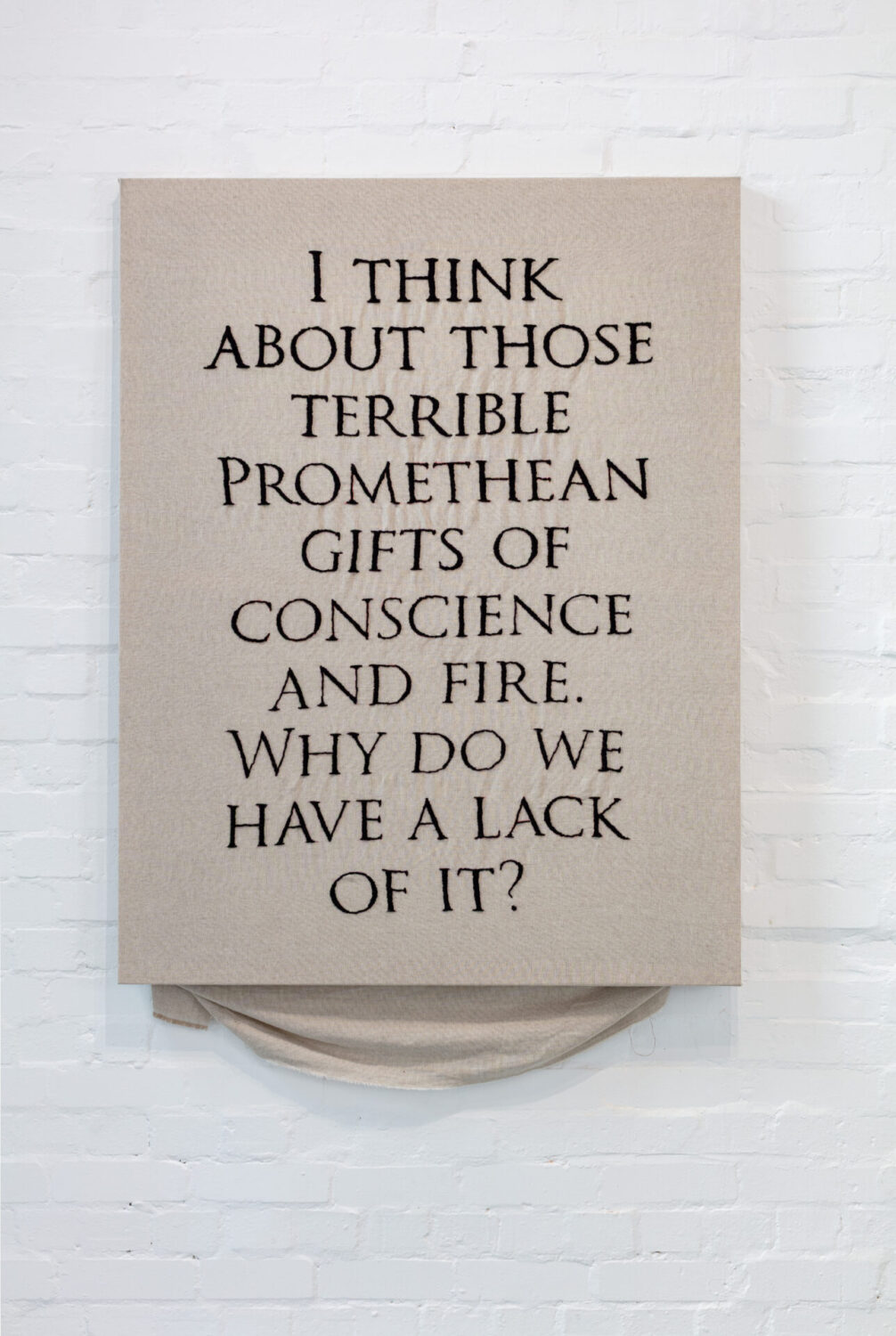
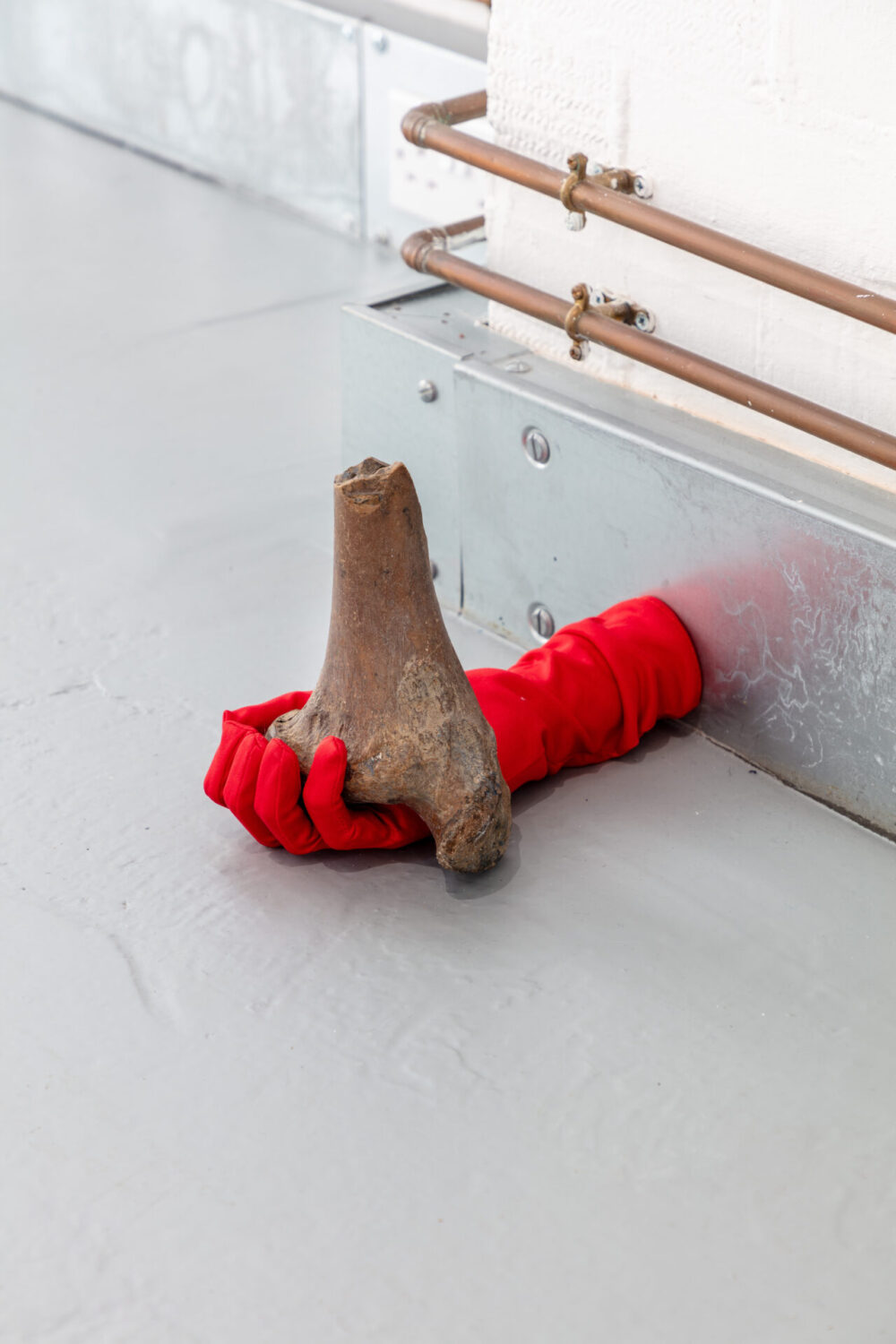
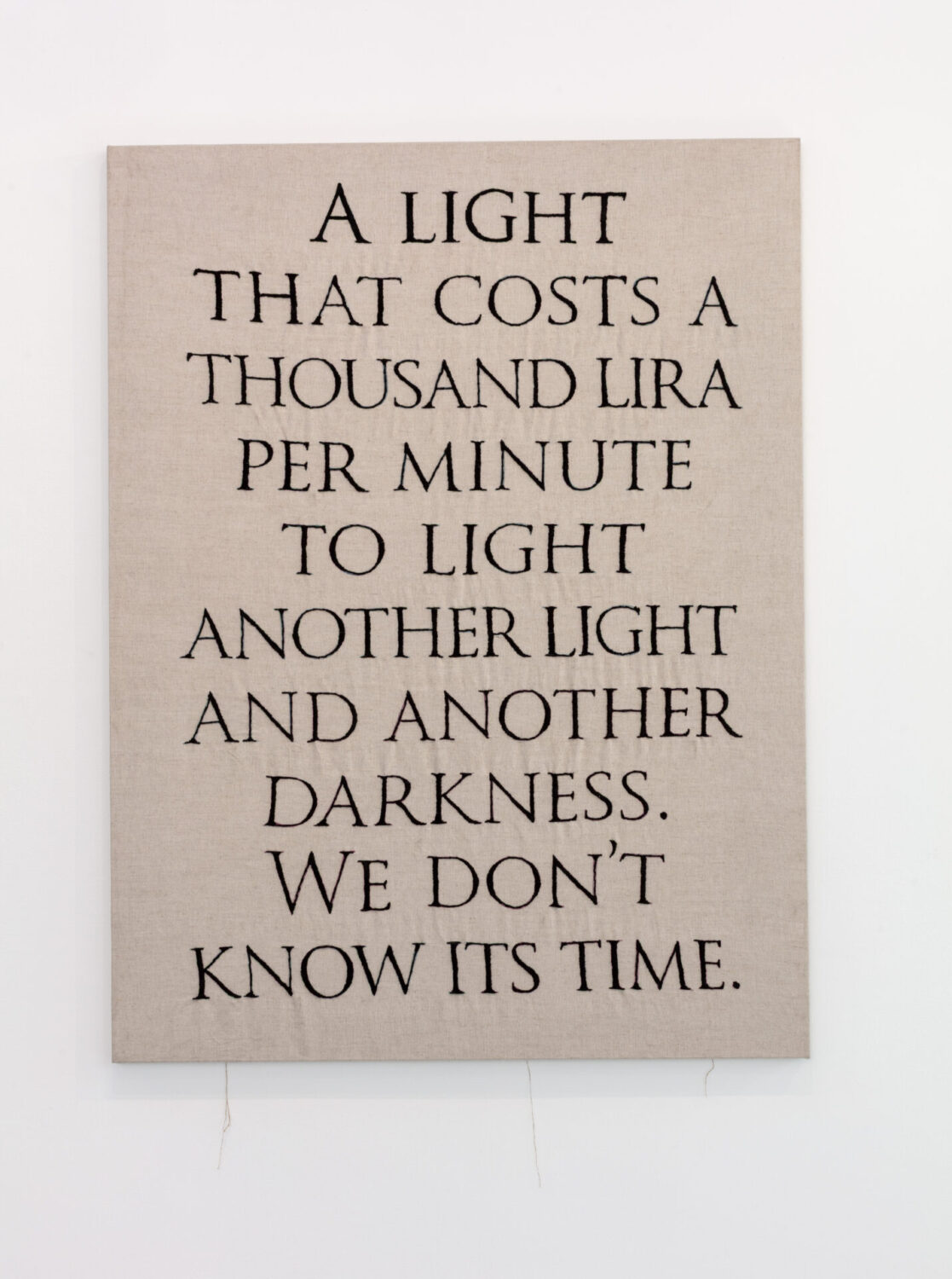
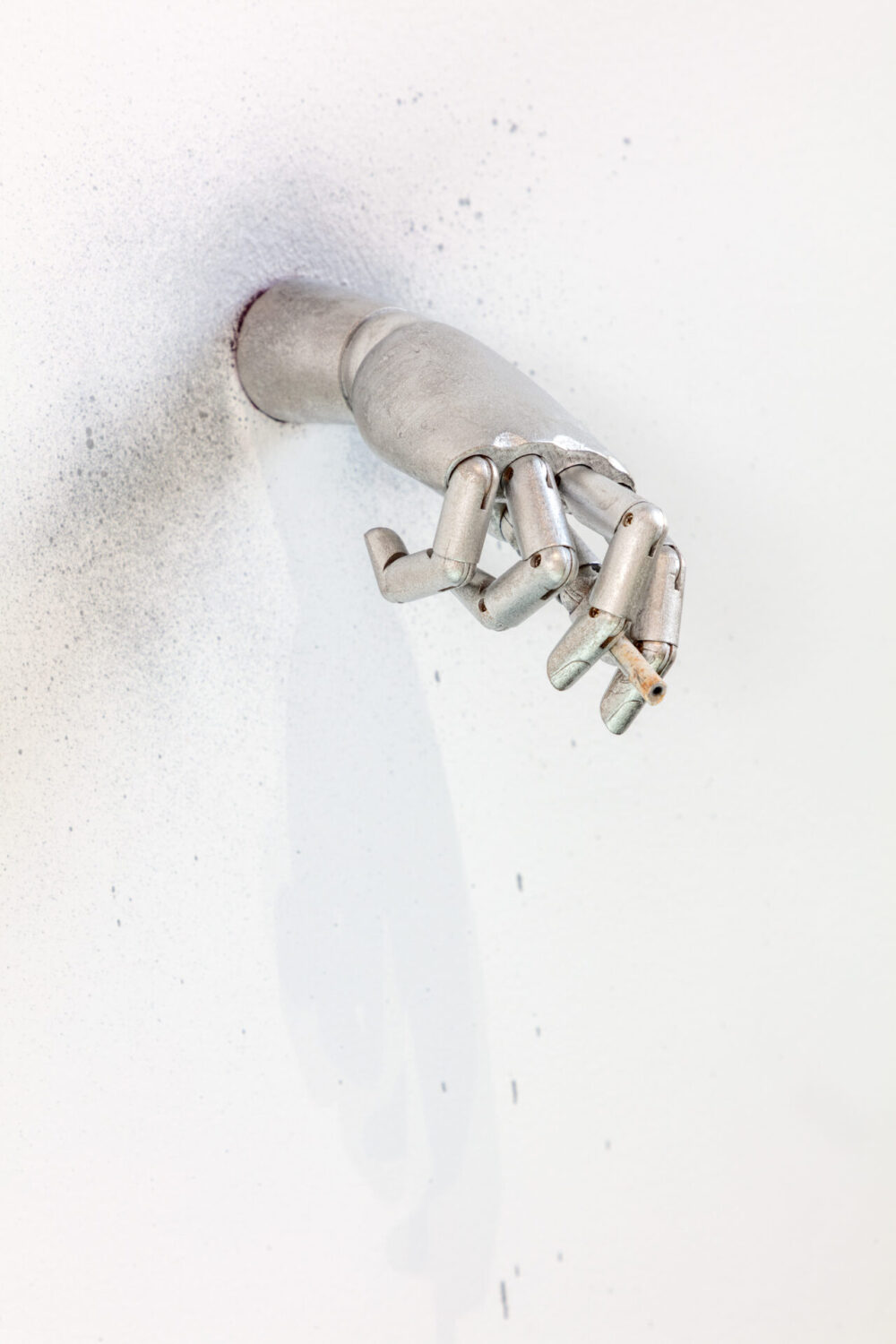
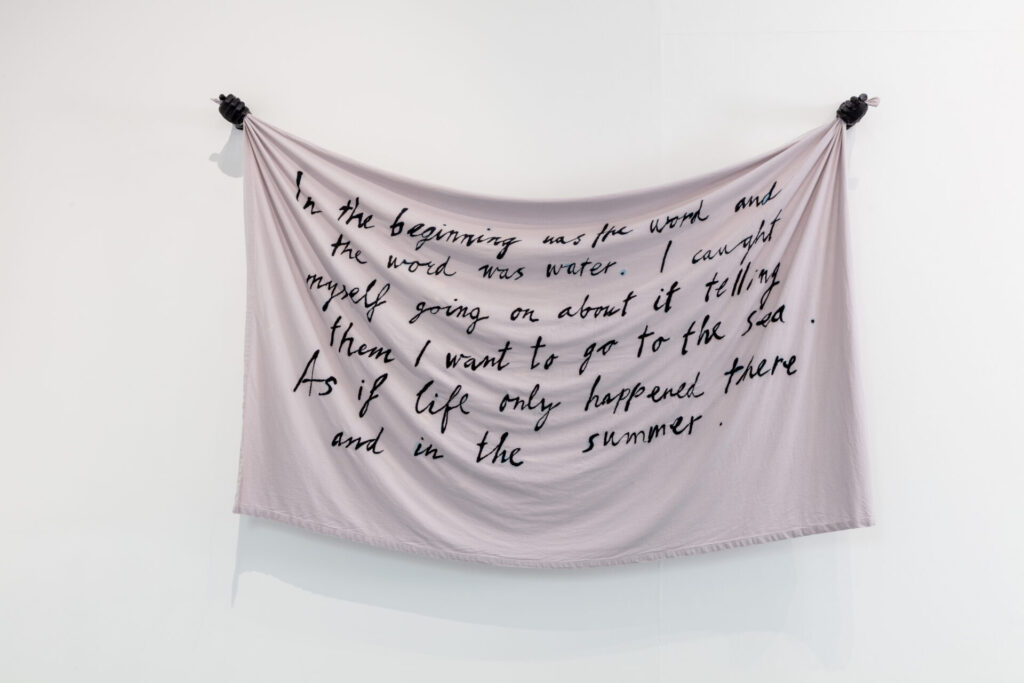
The use of language also finds fertile ground in Feriancová’s practice. She has several series where she uses fabrics – silk, cotton, tablecloths, souvenir tea-towels and so on – to write sentences constructed with a mix of pun, prophecy and deadpan humour, such as “I think about those terrible Promethean gifts of conscience and fire. Why do we have a lack of it?” or “A light that costs a thousand lira per minute to light another light and another darkness. We don’t know its time” (both 2025). These are written in capitalised Times New Roman, and the bulkiness of the text, when approached as an image rather than content, references the orderly architecture of a Roman city. Even more so than text, there’s an element of storytelling that is embedded in both artists’ practices, and with Feriancová, that trait is evident in narratives that she attributes to each of the objects. For instance, a used mop that is placed diagonally in the gallery’s alcove was found by chance years ago, and she immediately had a sense of identification with the object, as if it were a portrait. There are various hands spread around the exhibition space, and each tells a story: one holds a pipe that dates back to Elizabethan times and was found by the Thames bank, another has a thorn crown around it, as if a bracelet, and was sourced on a recent trip to Naples.
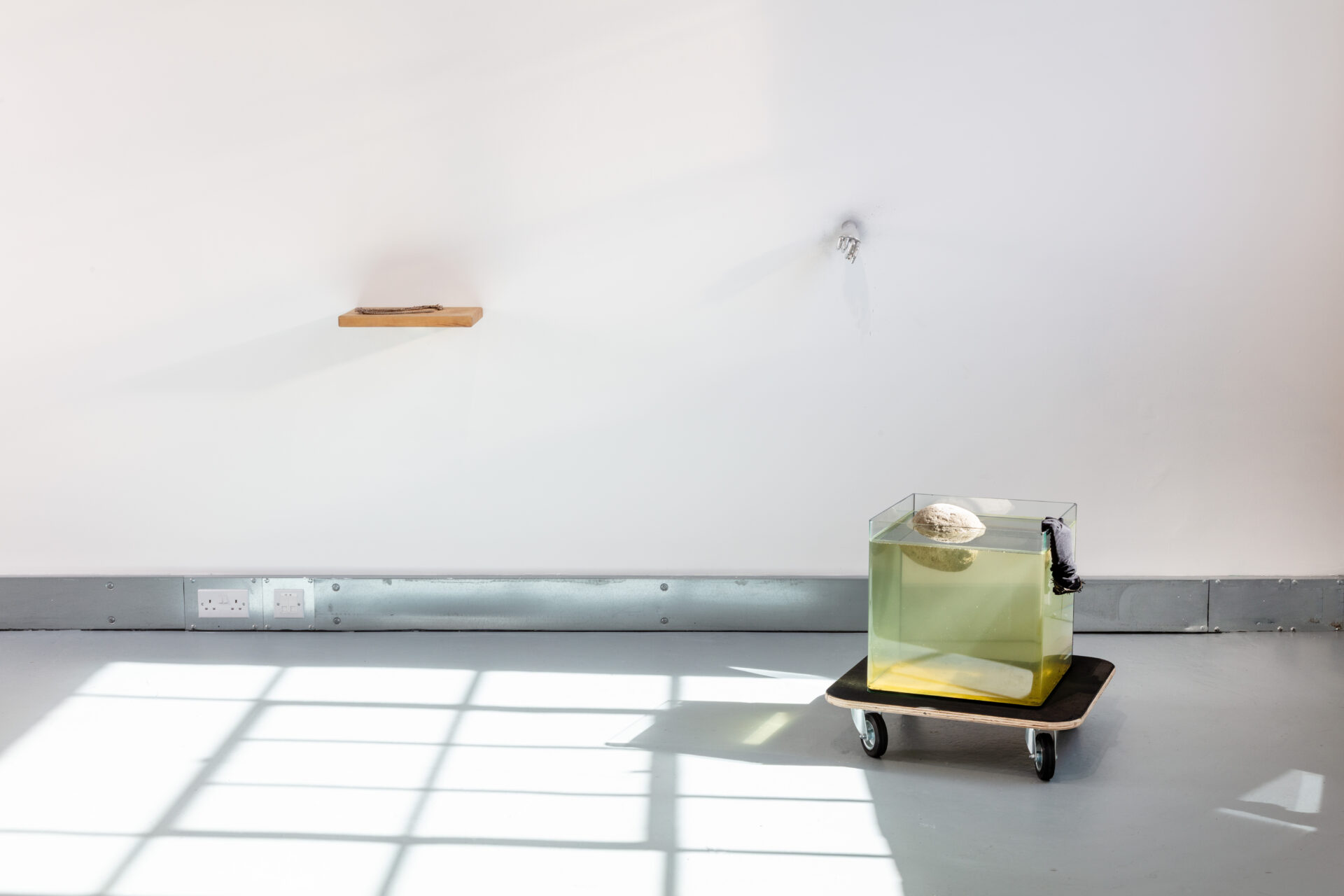
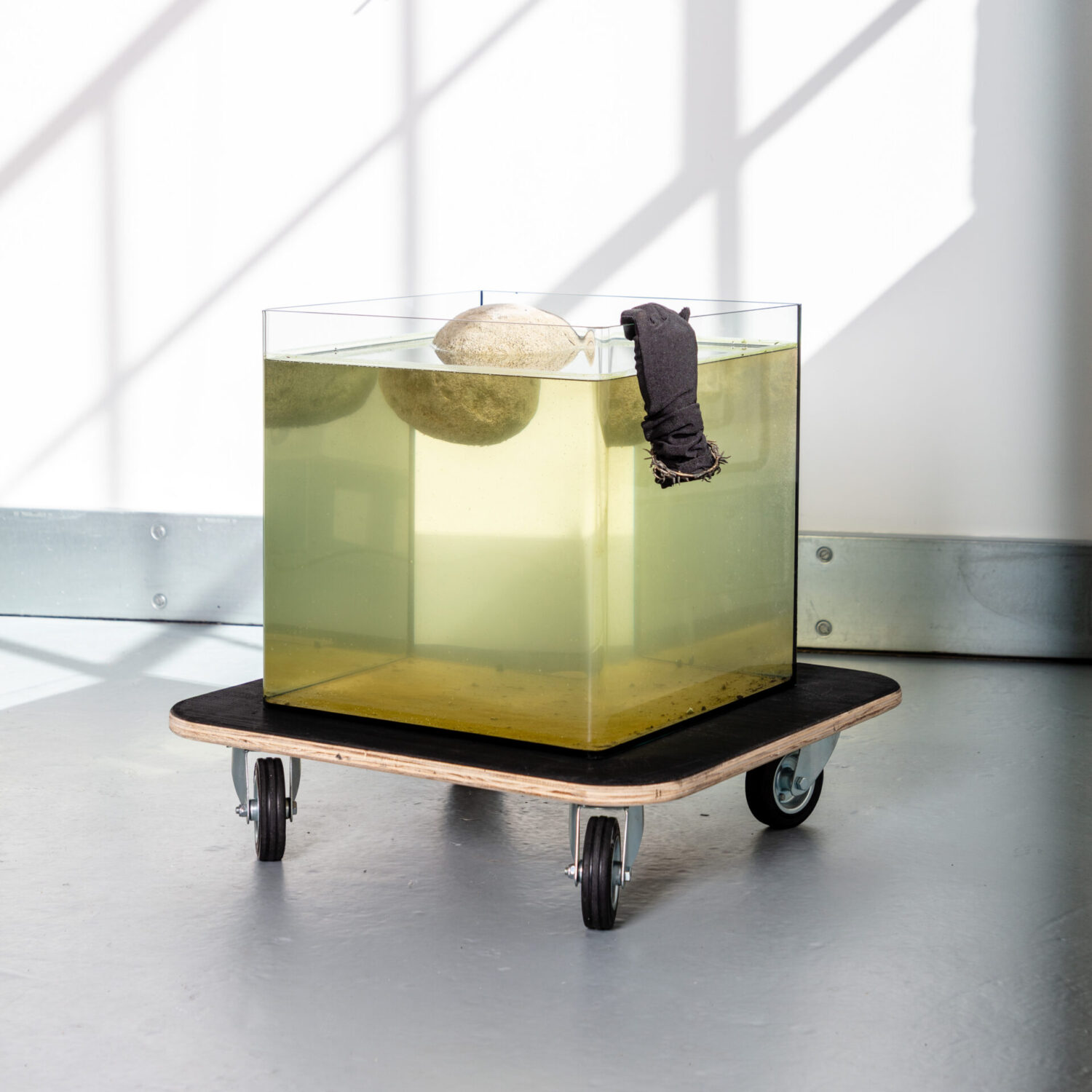
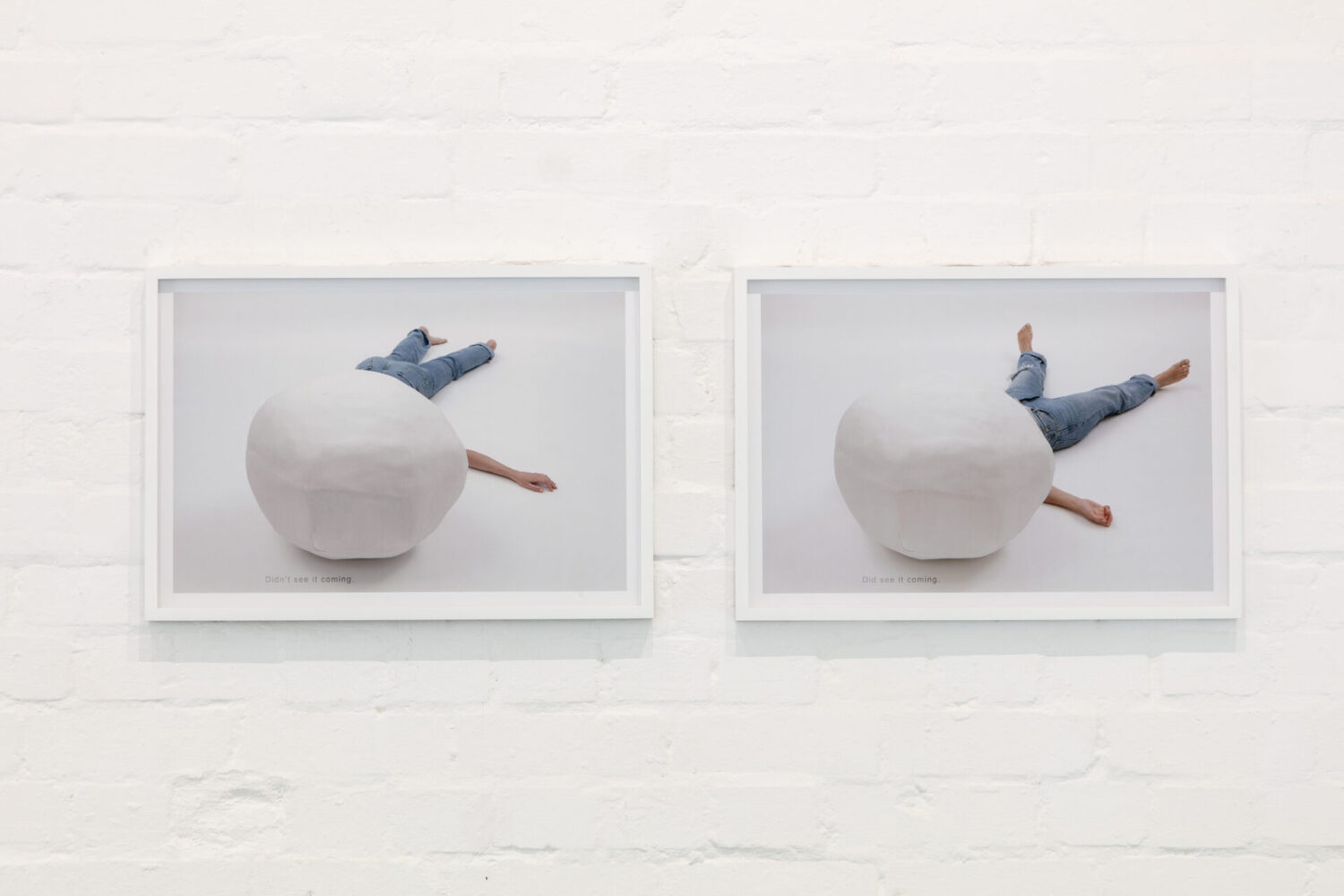
The latter hand is scratching Ophelia, an aquarium nesting a stone that stands for a resting head. In addition to nods to Shakespeare, in title, and Brancusi’s Sleeping Muse, in shape, Feriancová adds her own mythologies to the work: it is essential that the water that fills the tank comes from the Hogsmill River, which is allegedly where John Everett Millais painted the most famous representation of Hamlet’s tragic heroine. The roundish shape of the pumice stone in this work echoes Kyritsopoulou’s The forensics of seeing it coming (2025), a diptych where the same character is being smashed by an enormous rock, in a proper Wile E. Coyote versus the Road Runner, the-boulder-always-wins scenario. In one photograph, the fellow is being hit by the stone, body up – they saw it coming. In the second half of the diptych, the character faces the floor, equally defeated by the stone – they did not see it coming. And what better metaphor for creativity, this fleeting itch that one must grasp when it comes their way, considering they see it coming? Or life itself? Whether or not you see it, there ought to be something coming. This inevitable truth haunts a recent experience that Feriancová went through, namely, an arson attack on her home in Bratislava. Amid the burnt remnants, the artist found an angel crown, its original white feathers now greyed by soot, that she exhibits here as a Promethean gift.
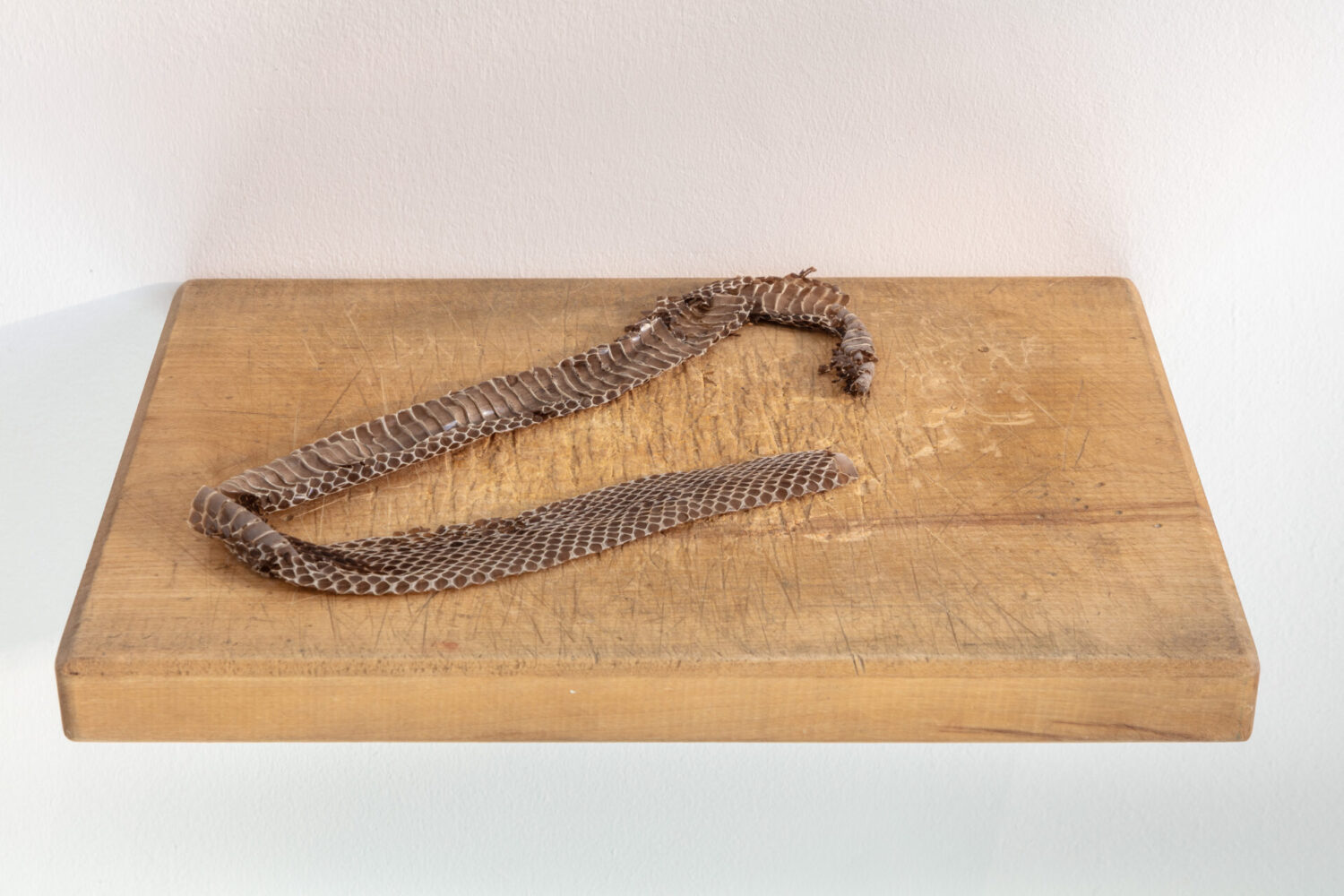
The title of the show pays homage to the extraordinary Brazilian scholar Antonio Candido, who, when inaugurating a library in 2006, made a famous speech rebuffing the maxim often attributed to Benjamin Franklin, stating that “time is money”. “That is a monstrosity”, argued Candido. “Time is the fabric of life”. Curiously, the spirit of Franklin is present twice in this show, the second time around in Join or die (2013-2025), a wall-sculpture by Feriancová consisting of a used chopping board with a snakeskin on top. The shape of the reptile is a direct reference to a cartoon published in 1754 by Mr 100-dollar bill, whereupon the animal is presented sliced into eight pieces, each symbolising a British colony. This cartoon, an early piece of political propaganda, was originally a woodcut, and in tune with Feriancová’s characteristic meta-humorous style, her snake is exhibited over a surface that is essentially a wood, cut.
This exhibition is curated by Maria do Carmo M. P. de Pontes.
This exhibition is now extended until 15th November 2025. Open Wednesday to Saturday, 12-6 pm or by appointment.