Central to the exhibition are works created during Kritzman’s residency at the gallery’s Deptford studio, featuring recurring elements such as composite surfaces, articulated forms, and a tension between stillness and expression. Building on the developments explored in his previous exhibitions: Land’s End, Choir, and + Days + Nights, Kritzman further explores the interplay of sculpture and painting, deepening the layered methodology that defines his multidisciplinary practice.
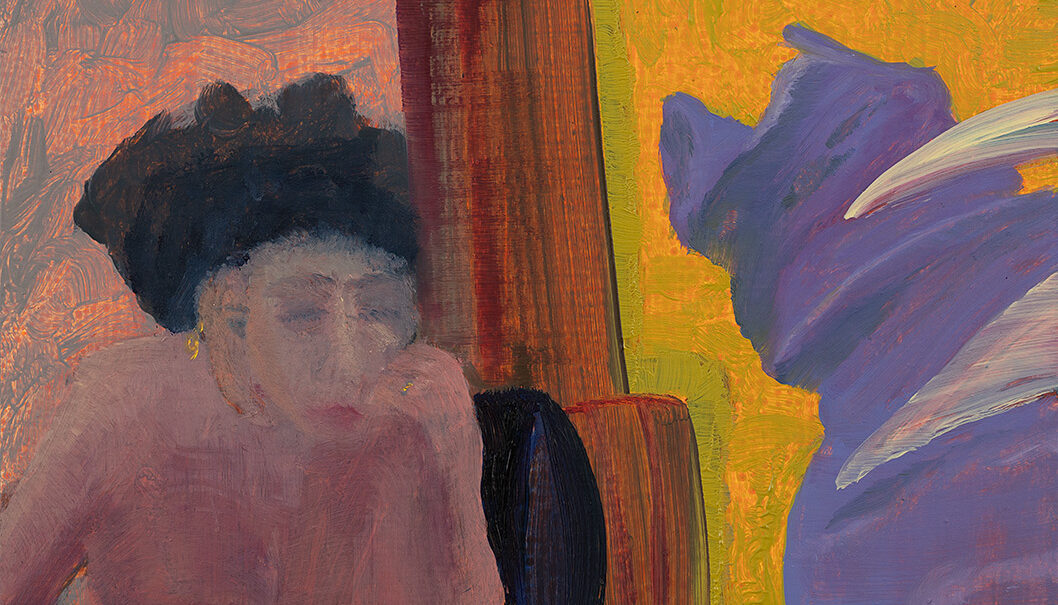
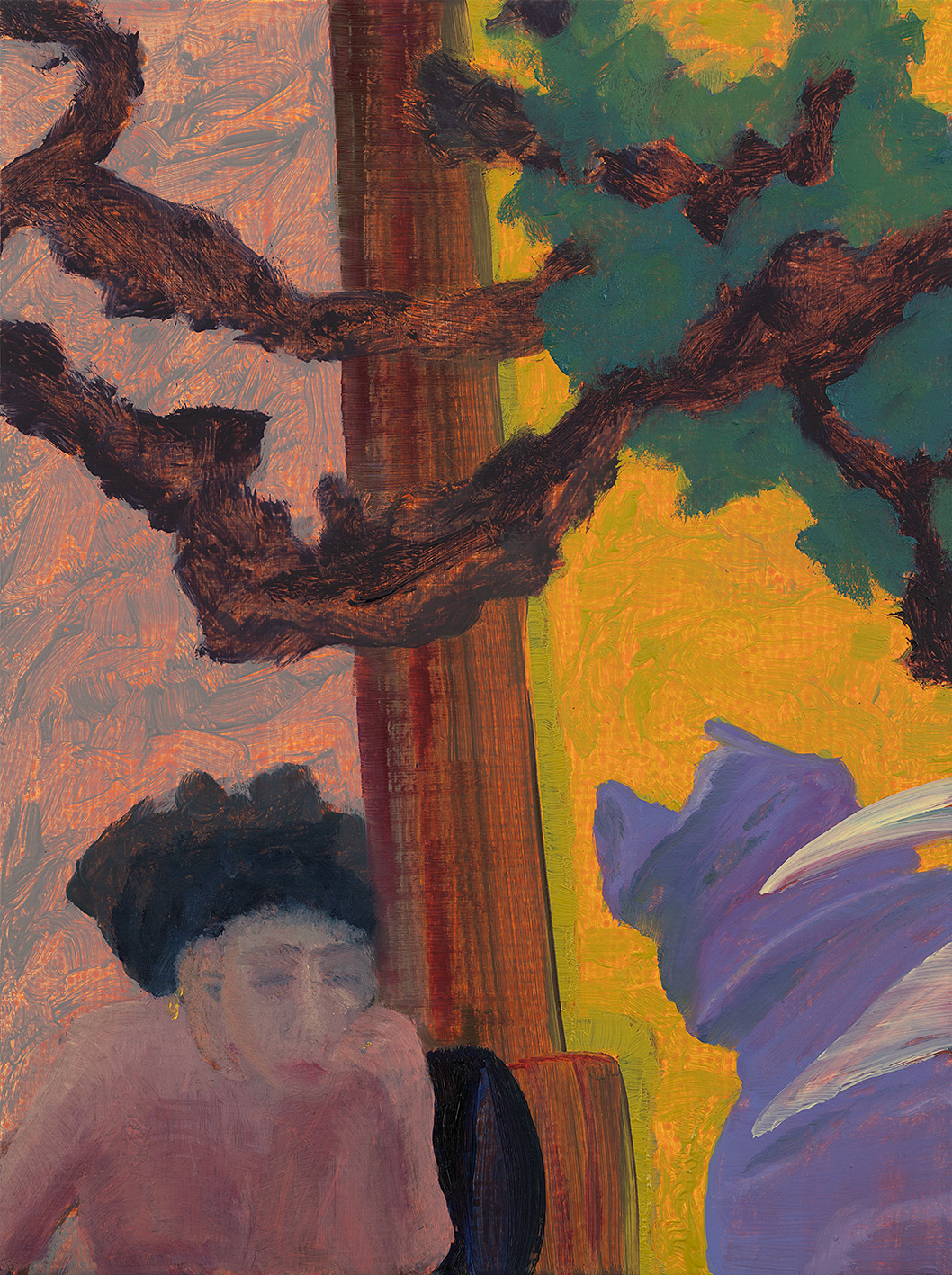
Drawing on art historical and architectural references, Kritzman’s visual vocabulary combines precision and detail with dynamism. His small-scale paintings echo the strange intimacy he finds in Veronese’s paintings, while sculptural forms channel the shifting movement and the ornate energy of the Baroque, as well as drawing inspiration from modern attitudes of futurists like Umberto Boccioni. Figures emerge in moments of quiet contemplation, neither performing nor concealed, inviting viewers to navigate a fluid choreography of form, material, and perception.
Layering remains central to Kritzman’s practice, as he builds up planes and underlayers. Drawing on mythology, human imagery, and landscape, along with the artist’s own journeys, the works merge historical and contemporary elements, creating a dialogue between gesture and detail. Kritzman’s recent work emerges from memory and imagination rather than from reference photos, allowing a fluid, thoughtful approach to form-making. Most recently, the artist has been exploring elements of queer identity and emotion through these imagined subjects, creating works that are not directly biographical but deeply expressive of a reflective state of mind. Kritzman explains, “The figures aren’t tied to any era or identity. I want them to exist outside of time so that someone a century from now could still connect with them.” This approach translates personal and collective experiences into visual form while maintaining a poetic and open-ended quality.
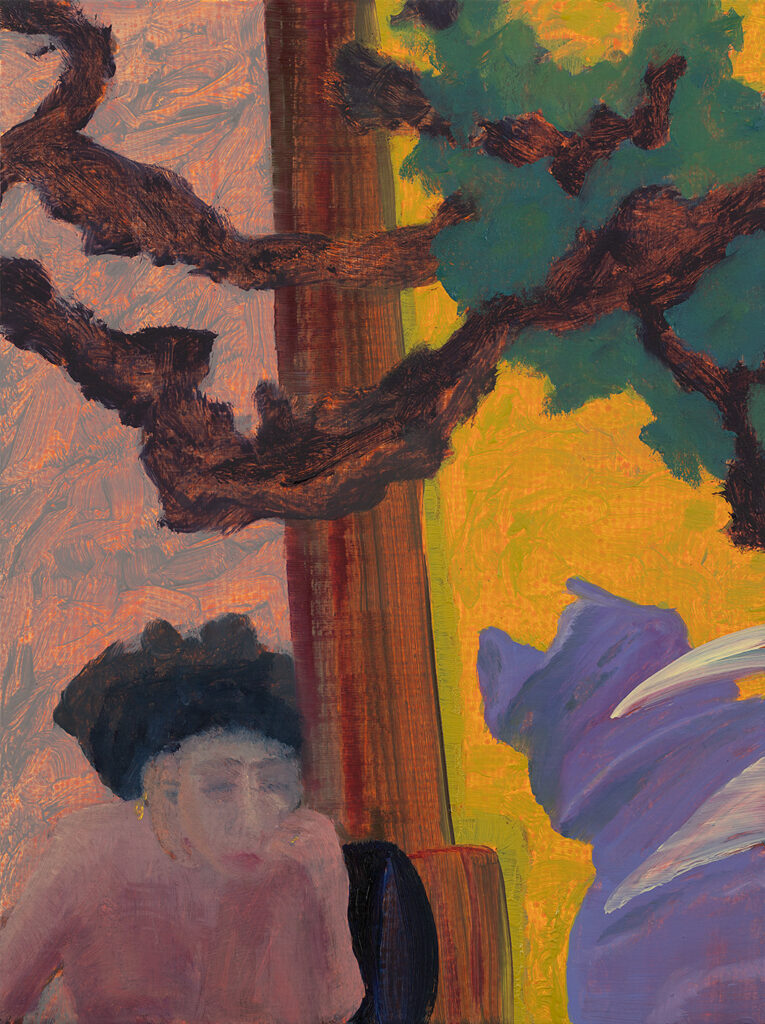
Kritzman’s new paintings, though marked by vivid colour, share a cohesive palette anchored by a recurring red motif, creating visual continuity across the series. This deliberate exception yields a distinctive blend that unifies the works while remaining vibrant and varied. Each piece combines oil paint and oil pastel in built-up surfaces that heighten tactility and depth. Though small in scale, the paintings invite close engagement due to their intricate details. Figures emerge as imagined presences, timeless and psychological, at times narrative, offering moments of quiet inward observation without reference to specific identities or events. On his process, the artist explains, “These paintings evolve from a long process. I start with images, then make drawings, sometimes several rounds, before moving to paint. There’s a big distance between the original reference and the result, and that transformation makes the work more personal. Not biographical, but intimate.”
Custom black wood frames with sharp angles, inspired by Byzantine icon frames, add architectural resonance to the presentation of these works. The plinths and frames act as small structures that give the sculptures and paintings a sense of place while also blurring the line between artwork and structure.
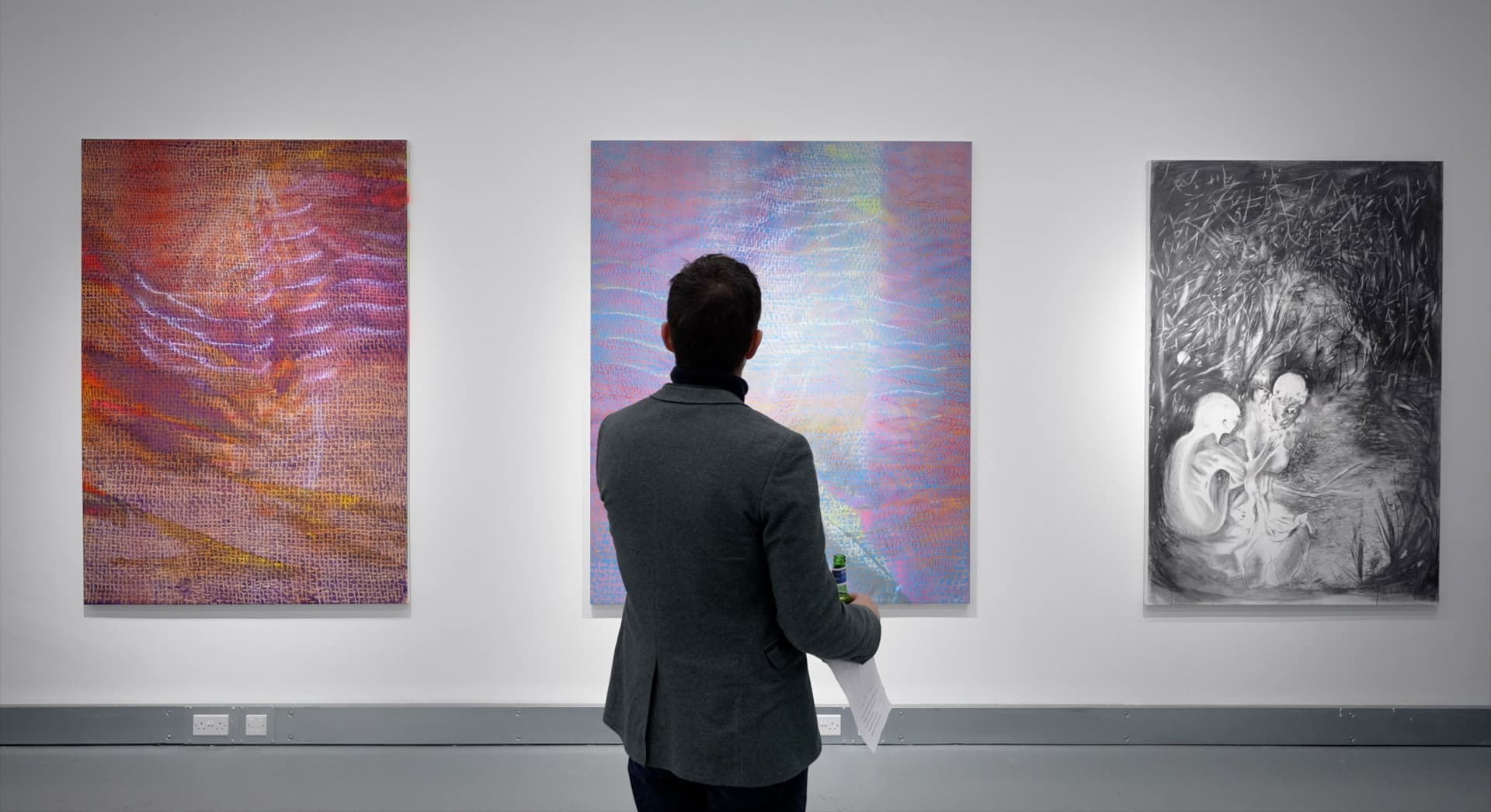
Kritzman’s ceramic works introduce a distinct material discourse shaped by transformation and chemistry. Using metal oxides such as chrome, copper, titanium, and zinc, the firing process produces a smoky finish with an ethereal quality. These pieces dance between being a surface and an object, creating a sense of observation and hierarchy within the space. A large, blue, textured painting is centred in the gallery, with ceramic pieces positioned in front, creating a dynamic spatial exchange. Conceptually, the presence of these ceramic works extends the exhibition’s enquiry into change and materiality, where fire and chemical reaction become integral to the artwork’s form and meaning.
The exhibition presents large plaster sculptures alongside aluminium works, specially cast from the plaster originals by Katrin Hanusch at The Foundry. For the first time, Kritzman’s plaster pieces have been cast in aluminium, marking a significant new direction in his practice. Each sculpture retains its idiosyncrasies and intricate details, translating Kritzman’s painterly language into three dimensions and extending the gestures and expressive vocabulary of his paintings into sculpture.
Two large plaster sculptures, each approximately 120 centimetres in height and length, represent Kritzman’s largest works in this medium to date. These pieces continue his exploration of how objects define and interact with their surroundings, echoing the function of wooden backing panels in his paintings. Across both bodies of work, Kritzman examines how presentation and materials engage their surroundings, allowing frames, plinths and supports to become active components that blur the boundary between art and architecture.
Kritzman’s sculptural works combine technical precision with expressive form. Cast as single blocks, the aluminium pieces reveal intricate folds and curves that evoke movement, while the large plaster works carry a strong structural presence. Each sculpture is displayed on a custom plinth designed by the artist, raising the works to eye level and further dissolving the distinction between object and support.
The contrast between rigid, tectonic “mountain-like” forms and the softness implied by more malleable materials underscores Kritzman’s interest in material and conceptual tension. Despite variations in texture— smooth, scorched or rough—the aluminium sculptures maintain a unified, continuous presence. Positioned at eye level, the works encourage viewers to move around them, revealing shifting depths that intensify their immersive impact.
In a moment of synthesis, Palms and Smoke presents a culmination of Kritzman’s artistic evolution. By weaving ceramics, paintings, sculpture, and architectural forms into his practice, Kritzman positions these works as psychological investigations that transcend narrative and identity, offering viewers an experience of his multifaceted artistic language.
This exhibition is curated by Maria do Carmo M. P. de Pontes.