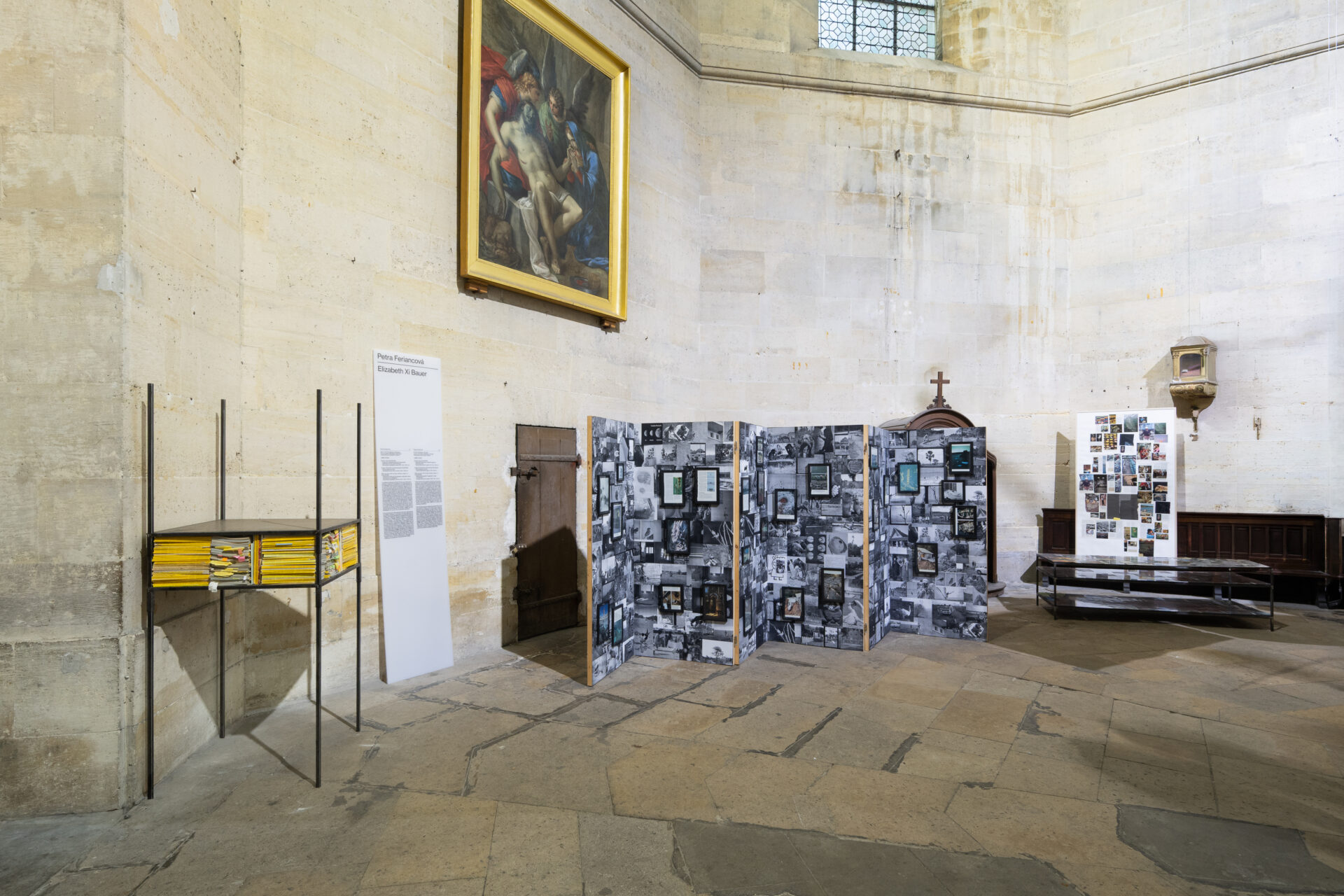
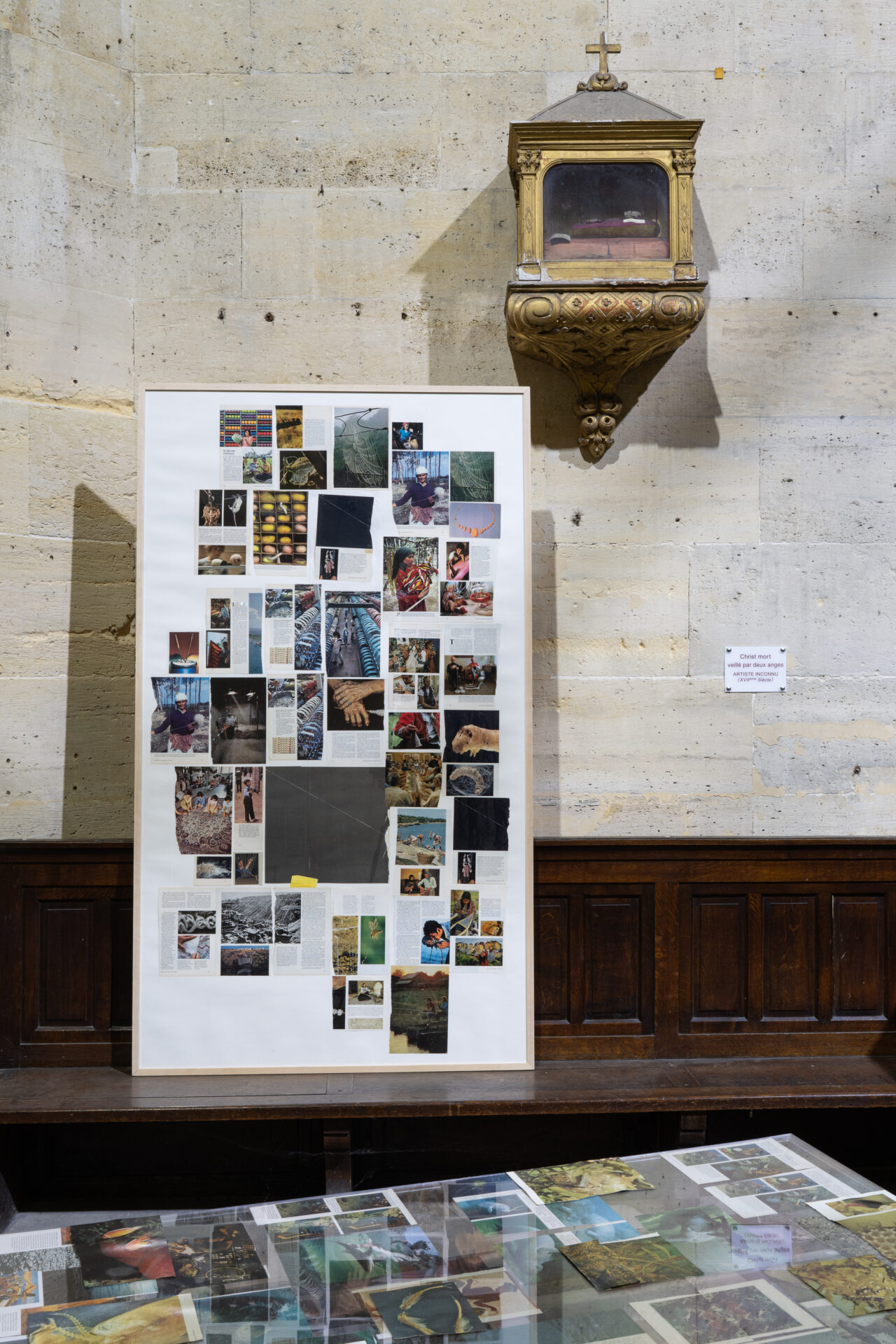
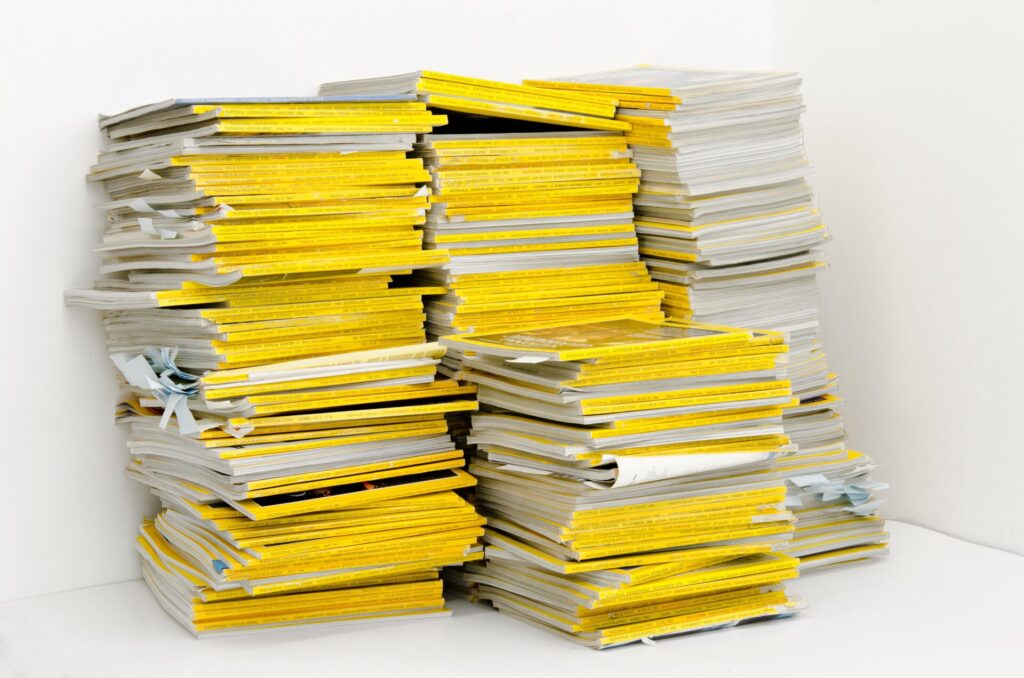
Feriancová’s archives comprise objects, her own photographs, and images collected from National Geographic publications, which hold special resonance. During Cold War-era Czechoslovakia, they became her family’s access to the outside world, a symbolic source of hope and optimism. Western publications were scarce and difficult to obtain; her parents carefully preserved and took them wherever they moved. They became repositories of personal and cultural memory, akin to a family photo album. Through her practice, Feriancová uses the images as key source material, categorising them into themes and collections based on both historical and personal systems.
A central framework is Systema Naturae, Carl Linnaeus’s eighteenth-century foundational taxonomic model that organised the natural world through hierarchical classification. Across an ongoing series of publications, including Class, Genus, Species, Family, and Domain, Feriancová adopts the terminology and architecture of scientific taxonomy while disrupting its underlying logic. Drawing on thousands of images from Nat Geo magazines alongside her own family archive, the artist constructs visual catalogues governed not by biological distinctions but by association, memory, intuition, and affect. What initially appears to be a rational system gradually reveals itself to be profoundly subjective. Images are grouped through visual resonance rather than scientific criteria; individual histories intersect with public imagery; chance correspondences challenge assumptions of objectivity. Through these processes, Feriancová’s work questions the human desire to categorise, exposing how systems of knowledge can obscure complexity and suppress the unruly potential of lived experience.
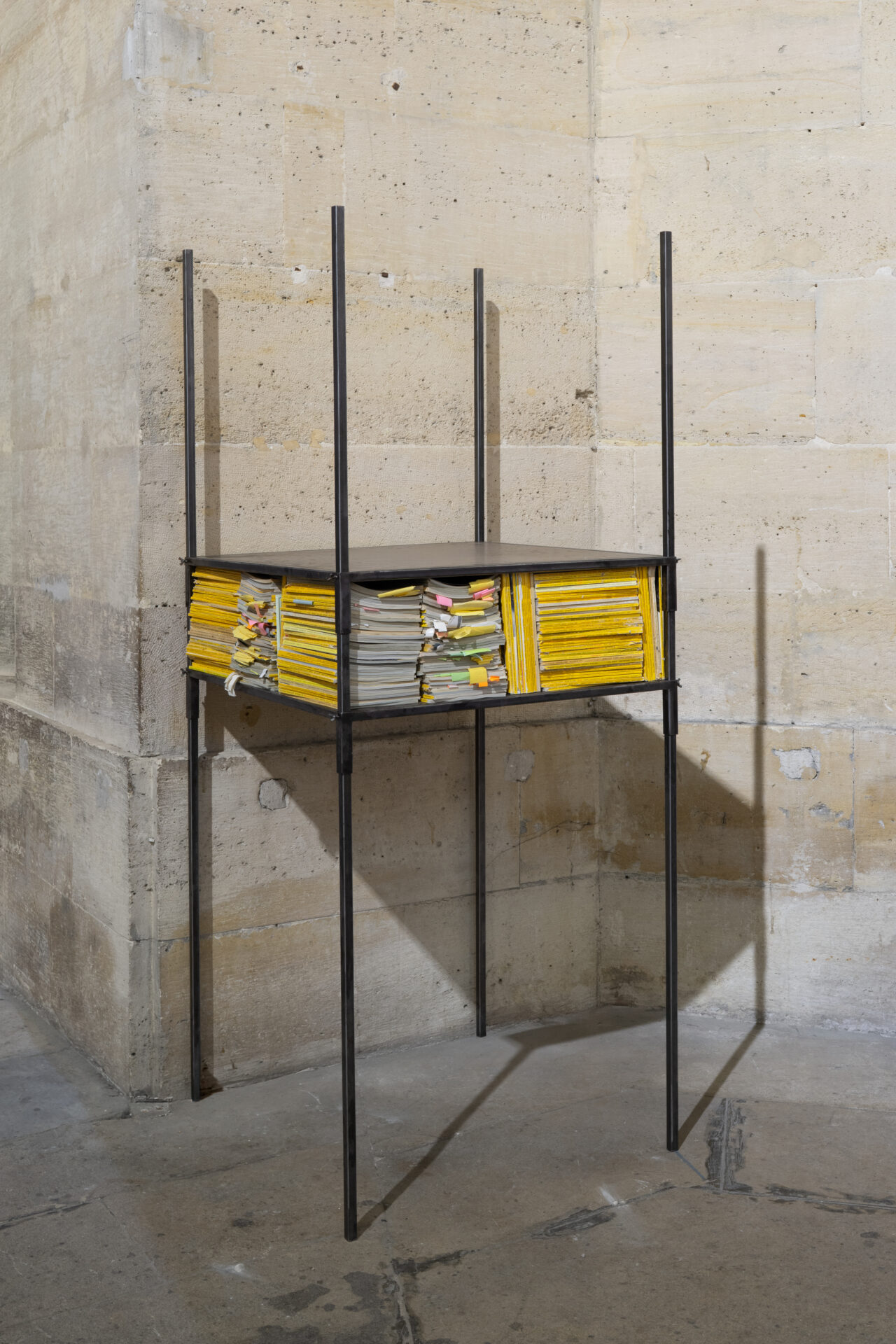
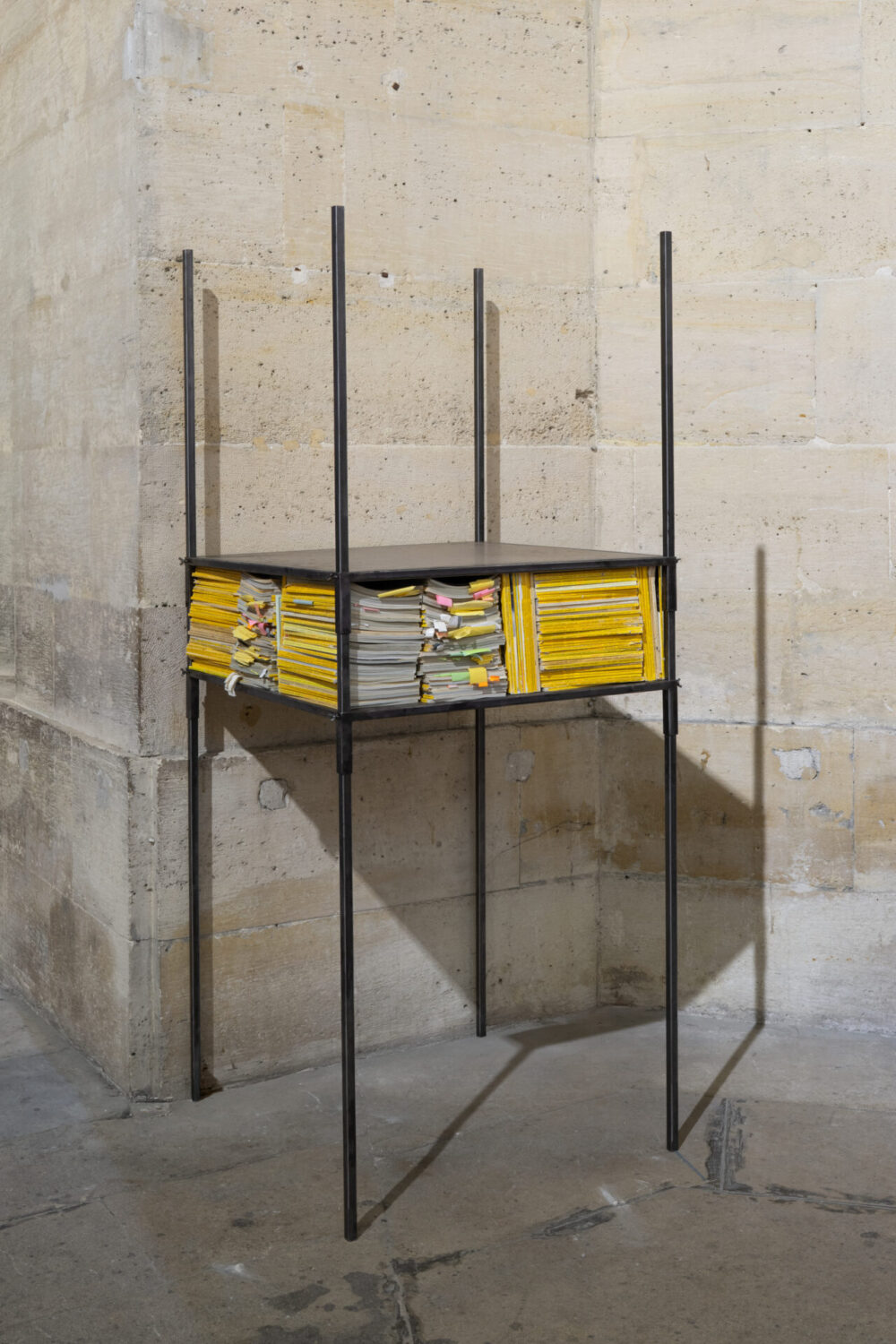
With my mom, with my dad, brothers, sisters… II (2010/2026) comprises an evolving archive of Nat Geo magazines housed within a metal framework. Here, the viewer experiences the presence and corporeality of the index’s source. Exhibited over sixteen years and repeatedly reconfigured, the work functions both as a repository of knowledge and as a record of its own exhibition history, such as at the 55th Venice Biennale in 2013. Layers of sticky notes, deterioration, and traces of handling attest to its history as a fountain of source material and personal family significance. Enclosed within a cage-like structure that recalls both museological storage and scientific display, the archive is rendered simultaneously visible and inaccessible. Preserved yet unusable, the conditions of its presentation suspend its original function. Through this gesture, Feriancová highlights the paradoxes of archival practice itself: conservation can also become a form of containment, while systems designed to safeguard knowledge may simultaneously limit access to it.
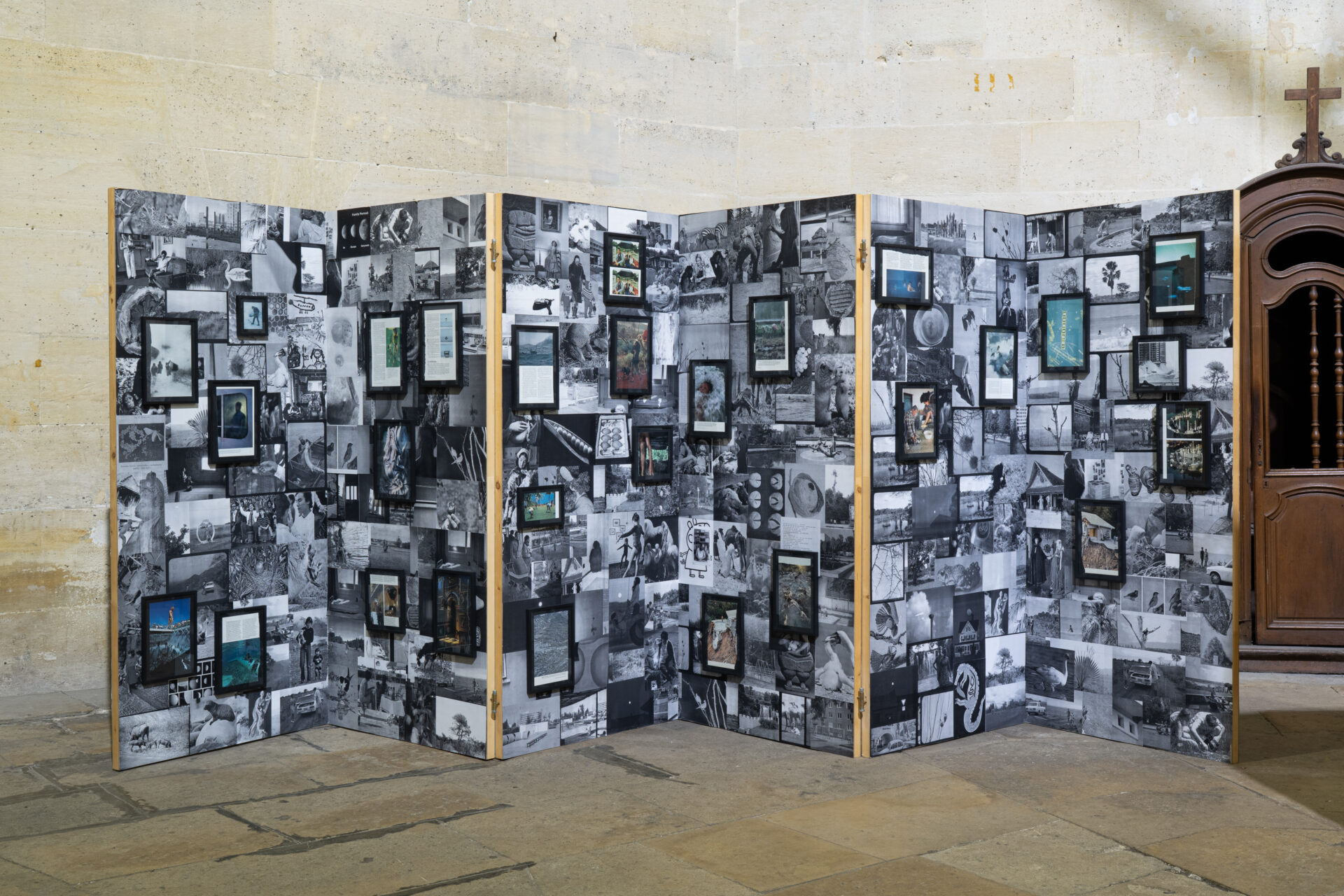
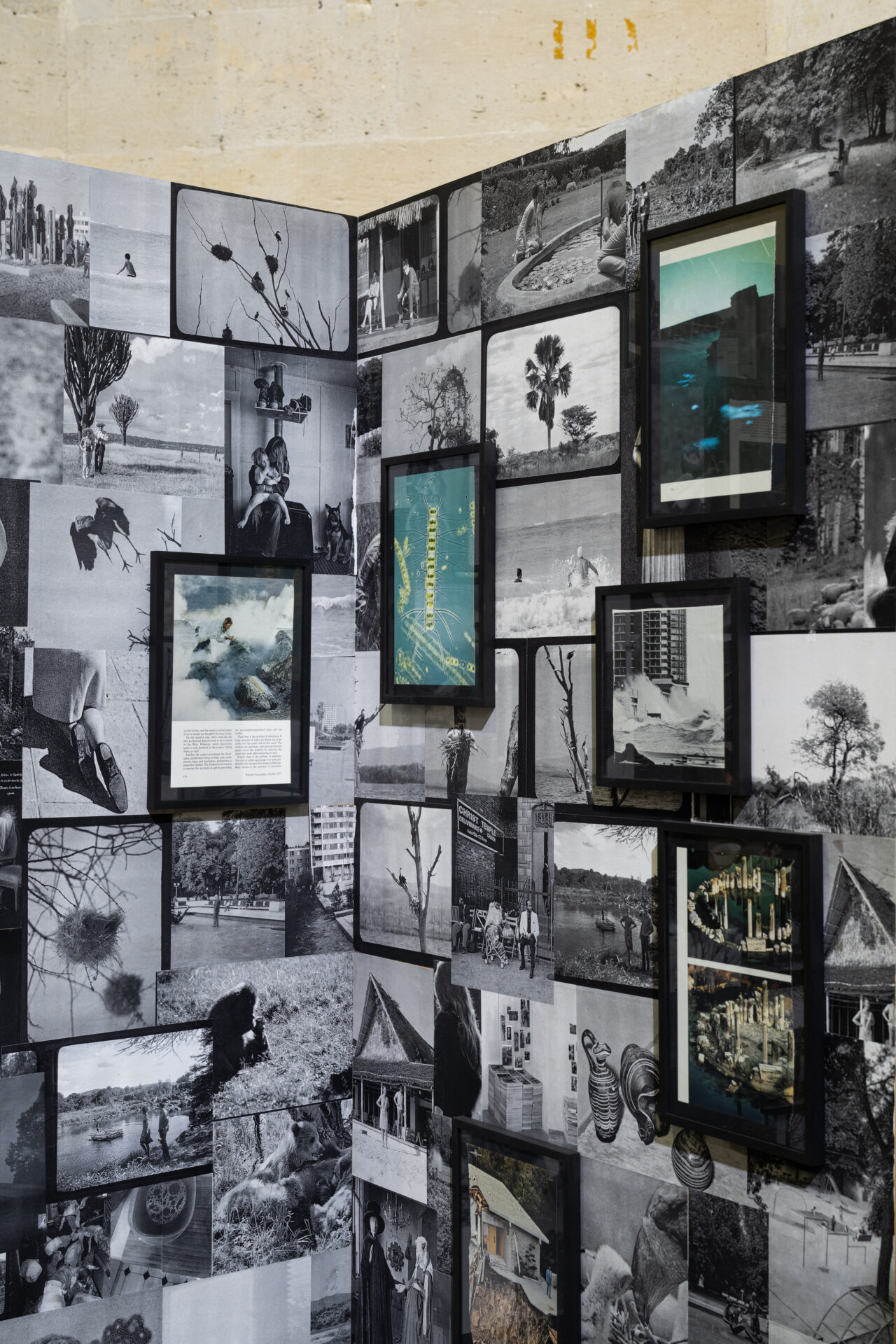
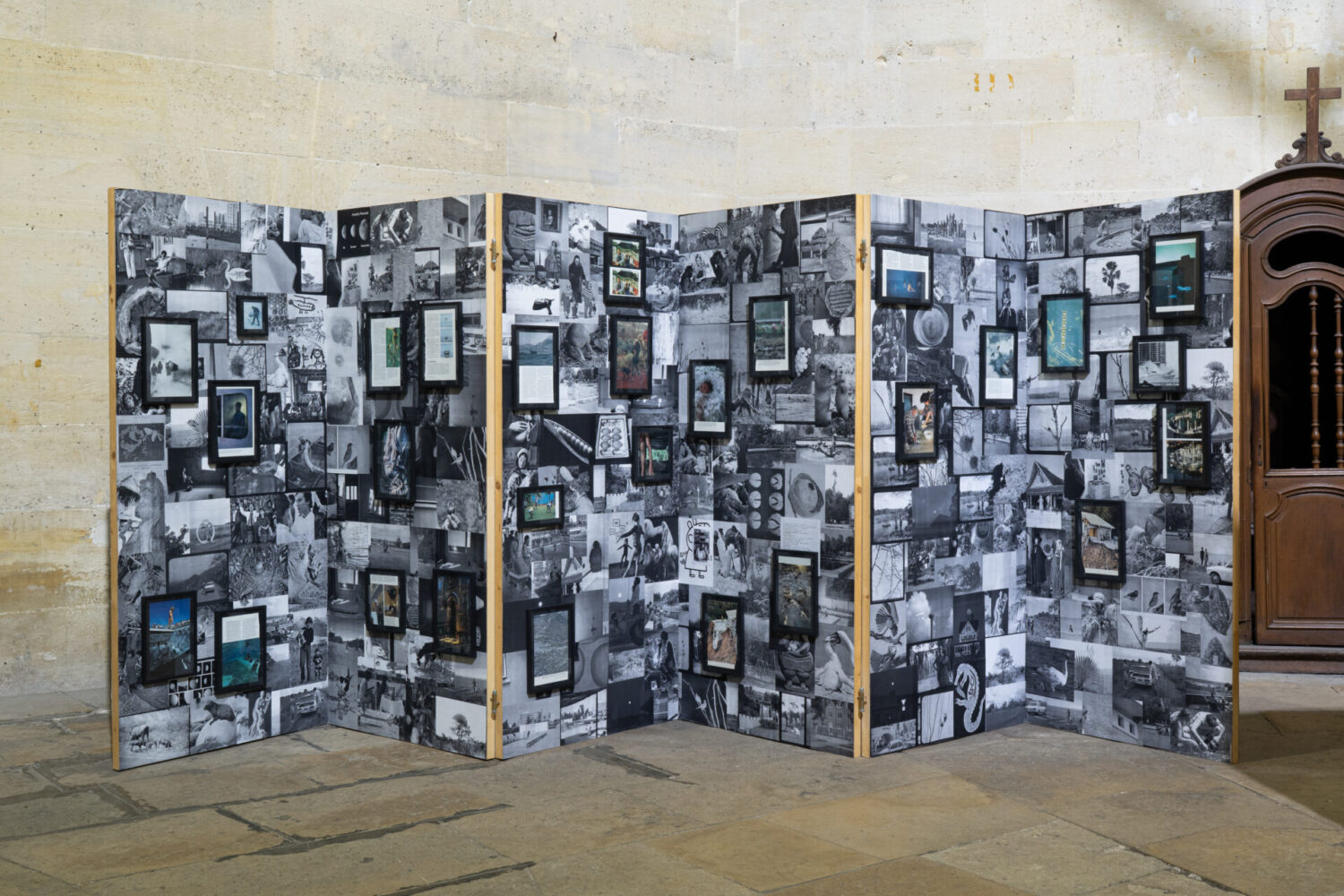
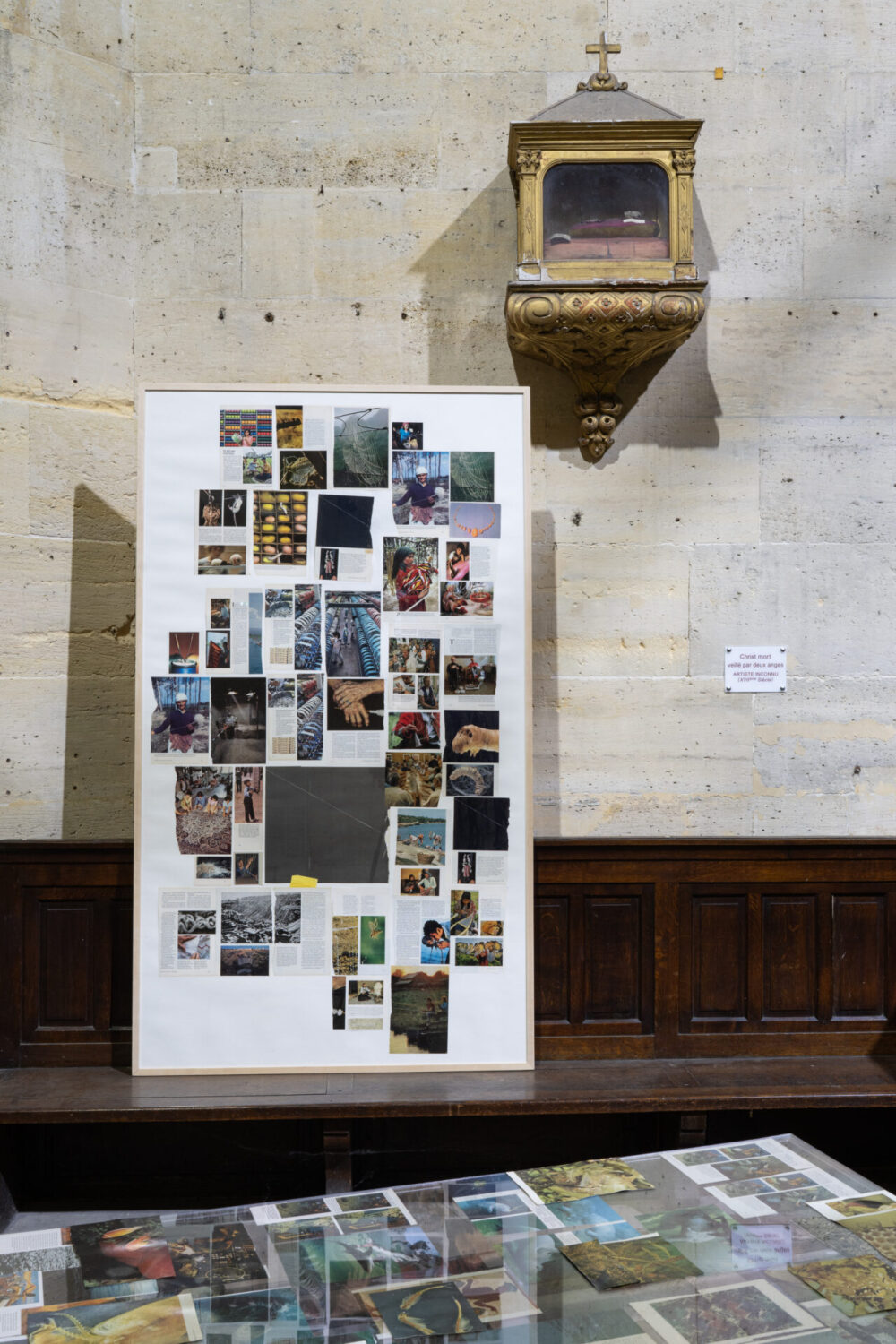
In Family (Vulnerable yet Everlasting) (2015/2026), photocopied images drawn from both Nat Geo and the artist’s own family photographs are presented within a large double-sided leporello. The work deliberately destabilises distinctions between the individual and the collective, the documentary and the intimate; the viewer cannot tell which is which, aided in part by the process of photocopying. As in Feriancová’s volumes, the work explores the overarching category of Family, which she refines into her own sub-groups of personal yet universal classification: motherhood and reproduction across the whole spectrum of possibilities. The artist chooses images from nature, zoology, botany, and cell division; society; and the autobiographical, mother and daughter. These are only related because they share the same category and because the artist chose each image. By refusing a fixed narrative, the work encourages viewers to construct their own associations between images. Meaning emerges through relationships rather than sequence, positioning the viewer as an active participant in the archival process.
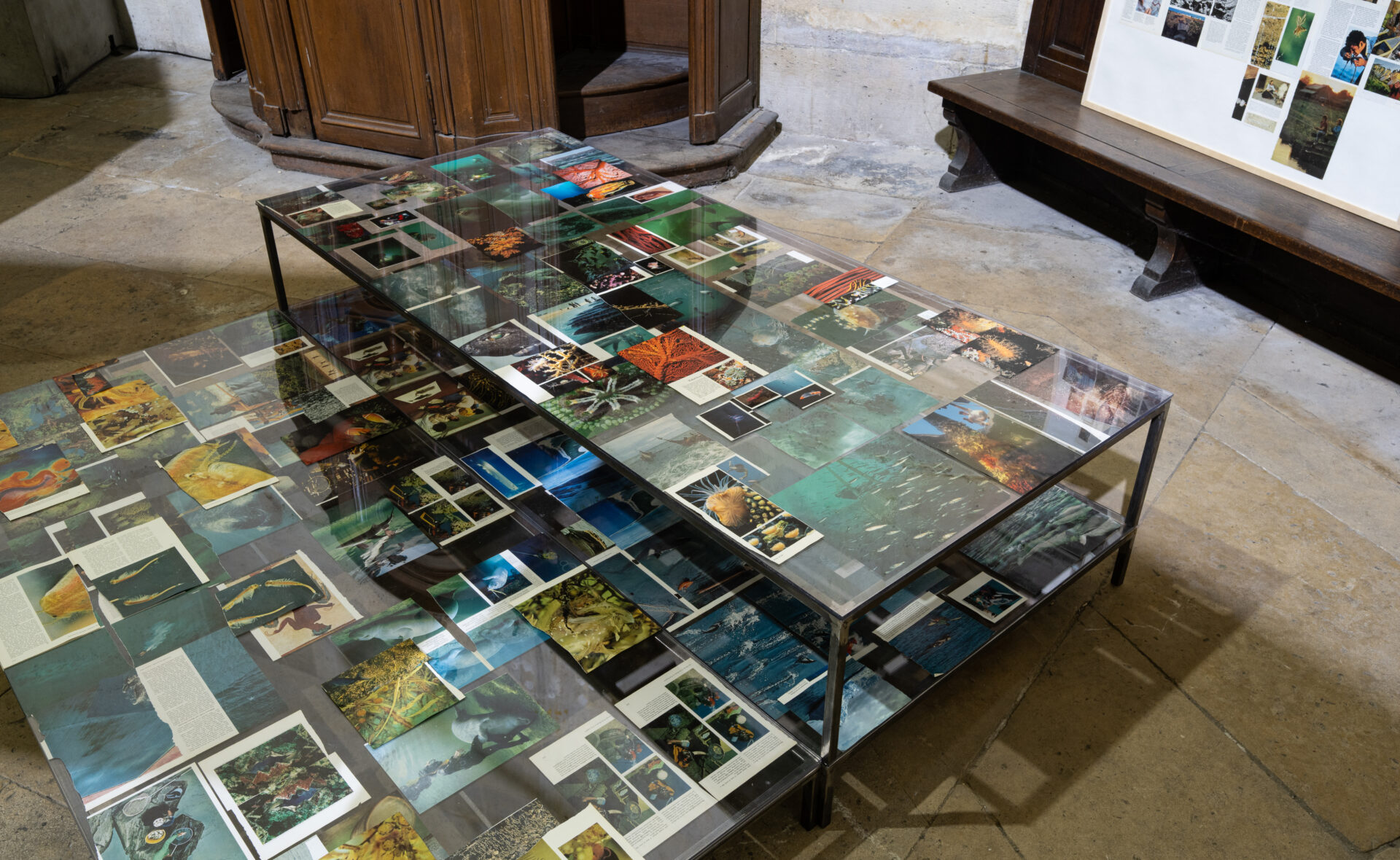
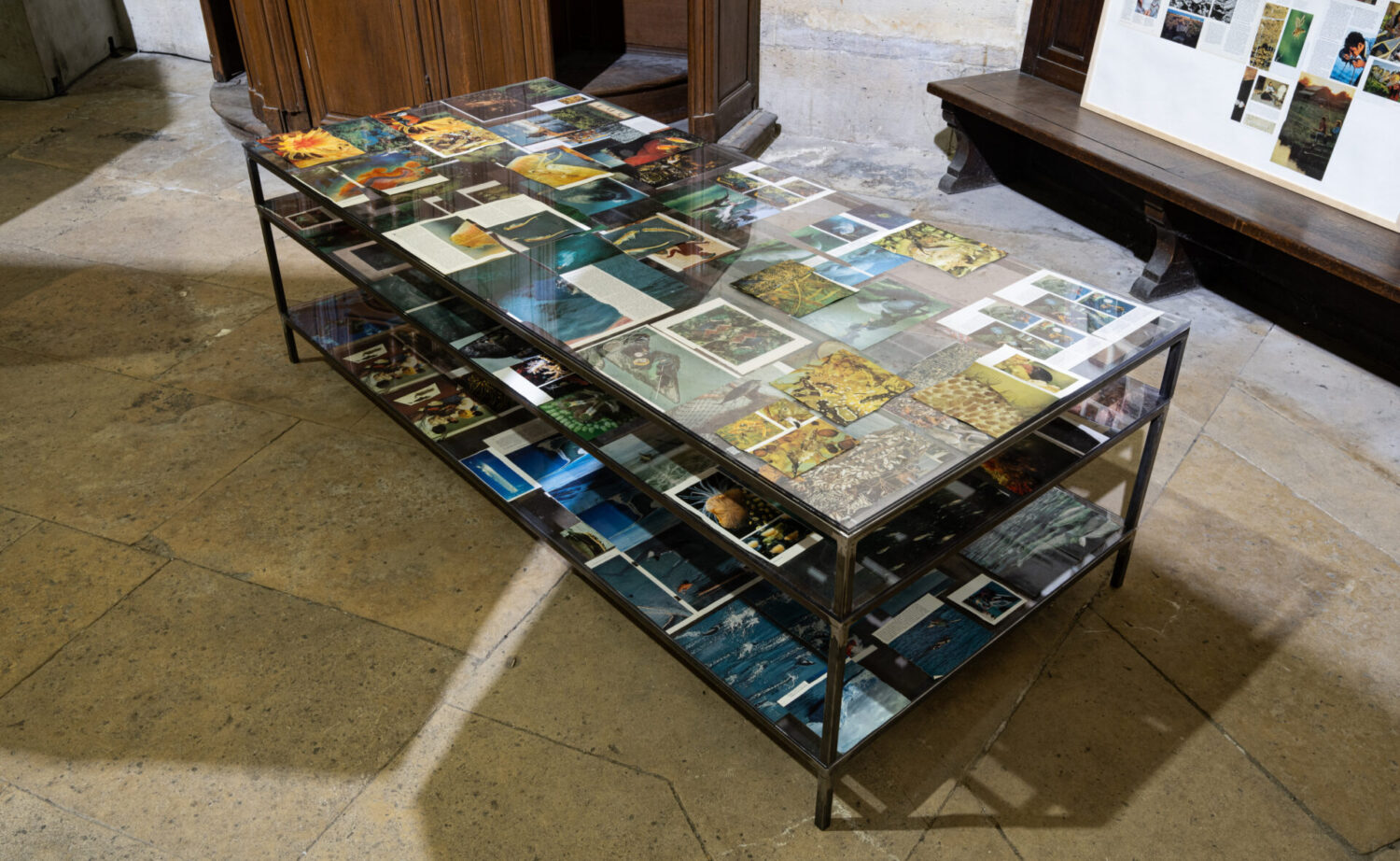
A similar tension between classification and dissolution underpins Domain: Sea (2010/2026), composed of selected cut-out images from Nat Geo pages arranged within a three-part layered table structure. Domain originates from the artist’s largest category, yet is still related to Family as an under group. This ongoing work is a meditation on water, origin, family, and human existence. The horizontal axis evokes the water horizon, while the arrangement of strata resembles the accumulation of knowledge, yet it obscures some of the information. Feriancová shows reverence for the sea and water as vital creators and forces of life; they resist the stability that classification seeks to impose. Fluid, mutable, and without fixed boundaries, it functions as a counterpoint to systems of order, perpetually in limbo. As the artist describes, “we have forgotten the sea behind us, though it used to be our habitat. Water is now a medium totally different and unknown, just like our inner side”. As manifest, the artist deconstructs and further dissolves this category by ignoring the images’ original representational content, pushing the work into a new sub-category: blue. Reflecting back at the viewer, we see the representation of blue in various incarnations; the artist’s perception of blue, an attempt to categorise the uncategorisable. Feriancová further endeavours to try to achieve this through a short accompanying poetic text on the colour, and explains, “much like Systema Naturae, the colour blue is just a human invention, it is anthropocentric, as if nature starts and ends to exist based on our sight or willpower”.
Across LIMBO, archives become sites of continual reconfiguration, where memory and experience remain unresolved. Existentially, one explores the limits of human knowledge when confronted with the vastness of life, nature, and possibility, as well as the immortality of the natural universe. Between order and ambiguity, preservation and transformation, the archive remains unfinished. It is within this state of suspension that the potential for new meanings emerges: LIMBO.
Text by Edward Sheldrick, Artistic Director.
OFFSCREEN will run from 20th to 25th October 2026, at Chapelle Saint-Louis de la Salpêtrière, Paris. A VIP Preview, by invitation only, will be held on 19th October 2026, 2 — 9 pm.
20th to 24th October 2026 | 11 am — 7 pm, 25th October | 11 am — 6 pm. Weekend VIP Special Access starts at 10 am.
Address: La Chapelle Saint-Louis de la Salpêtrière, Access through Marie Curie Garden, 47, Bd de l’Hôpital, 75013 Paris.