Echo’s Bones (1933) is one of Samuel Beckett’s earliest short stories. Apart from a standalone poetry collection edition of 25 signed copies issued in 1935, it was not properly published until 2014, long after the author’s death. The prose was originally conceived as an afterlife tale to Belacqua Shuah, the protagonist of all ten stories from More Pricks Than Kicks (1934); his name is borrowed from Belacqua, a figure in Purgatorio (part of Dante’s The Divine Comedy). The original Belacqua was not exactly a bad fellow, but was so utterly lazy that he gave up on the ambition of ever reaching Heaven, finding contempt instead with an eternal life in Purgatory. Echo’s Bones was deemed by Beckett’s editor at the time to be too bizarre to publish and was omitted from the final version of the book.
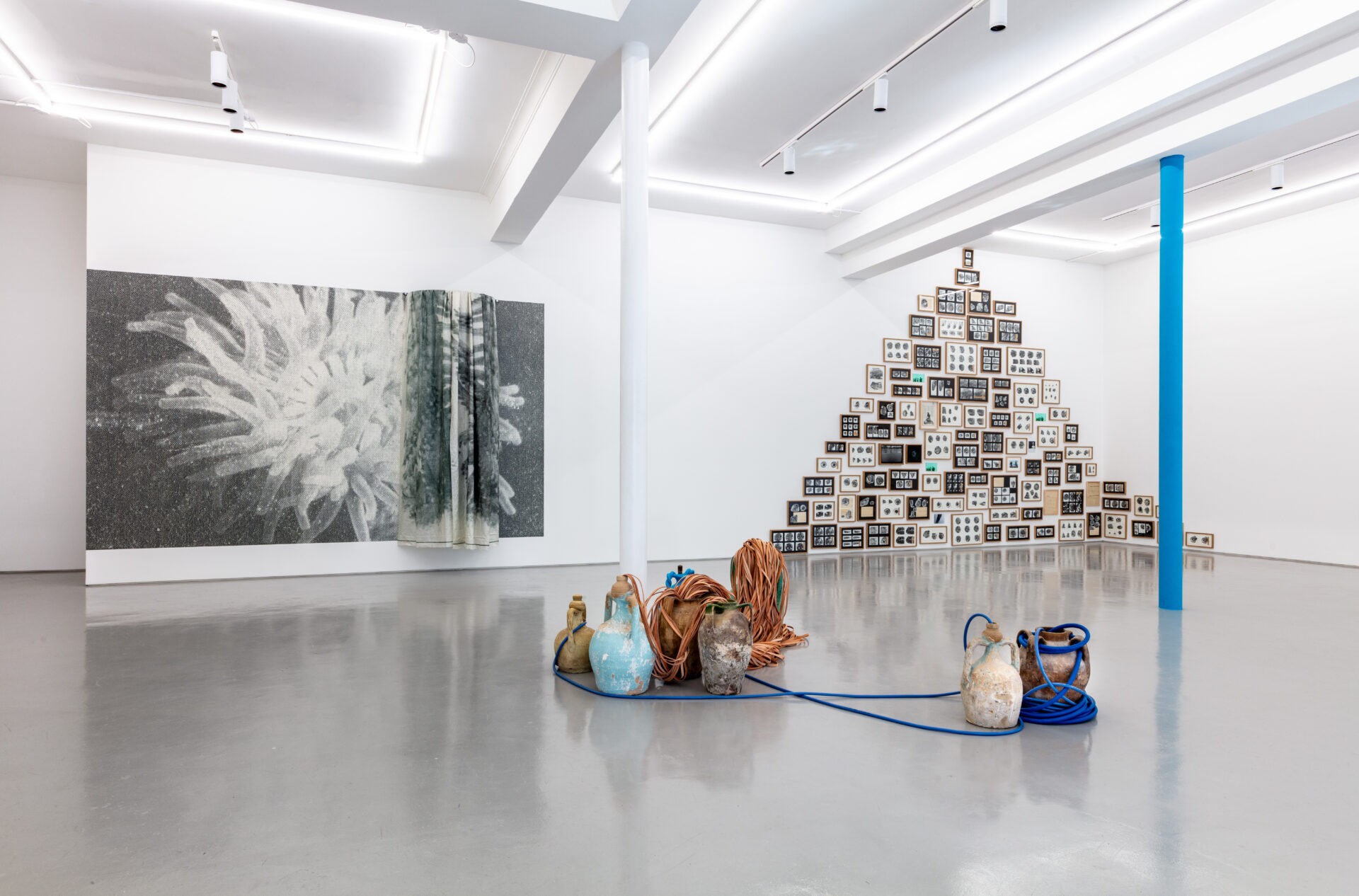
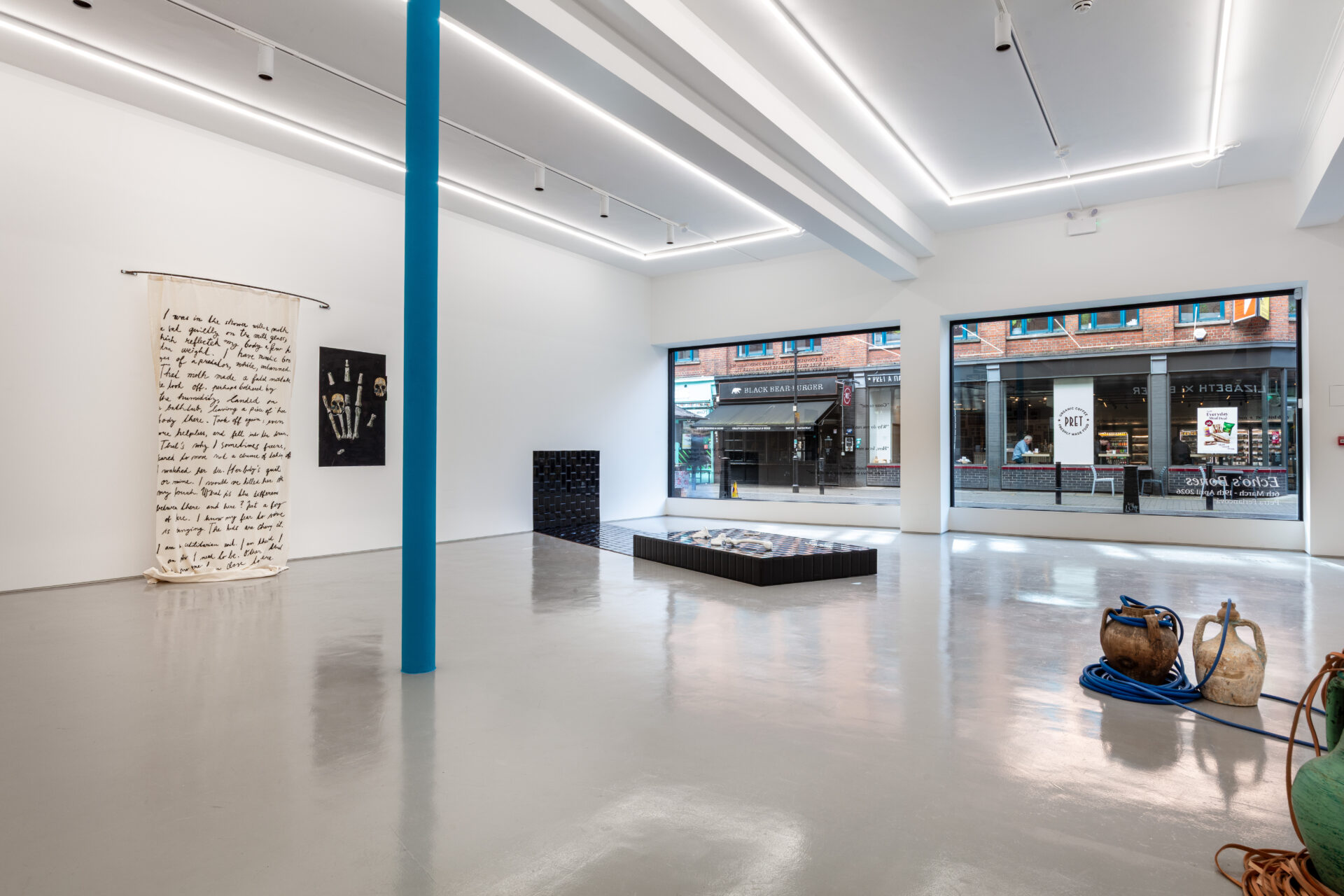
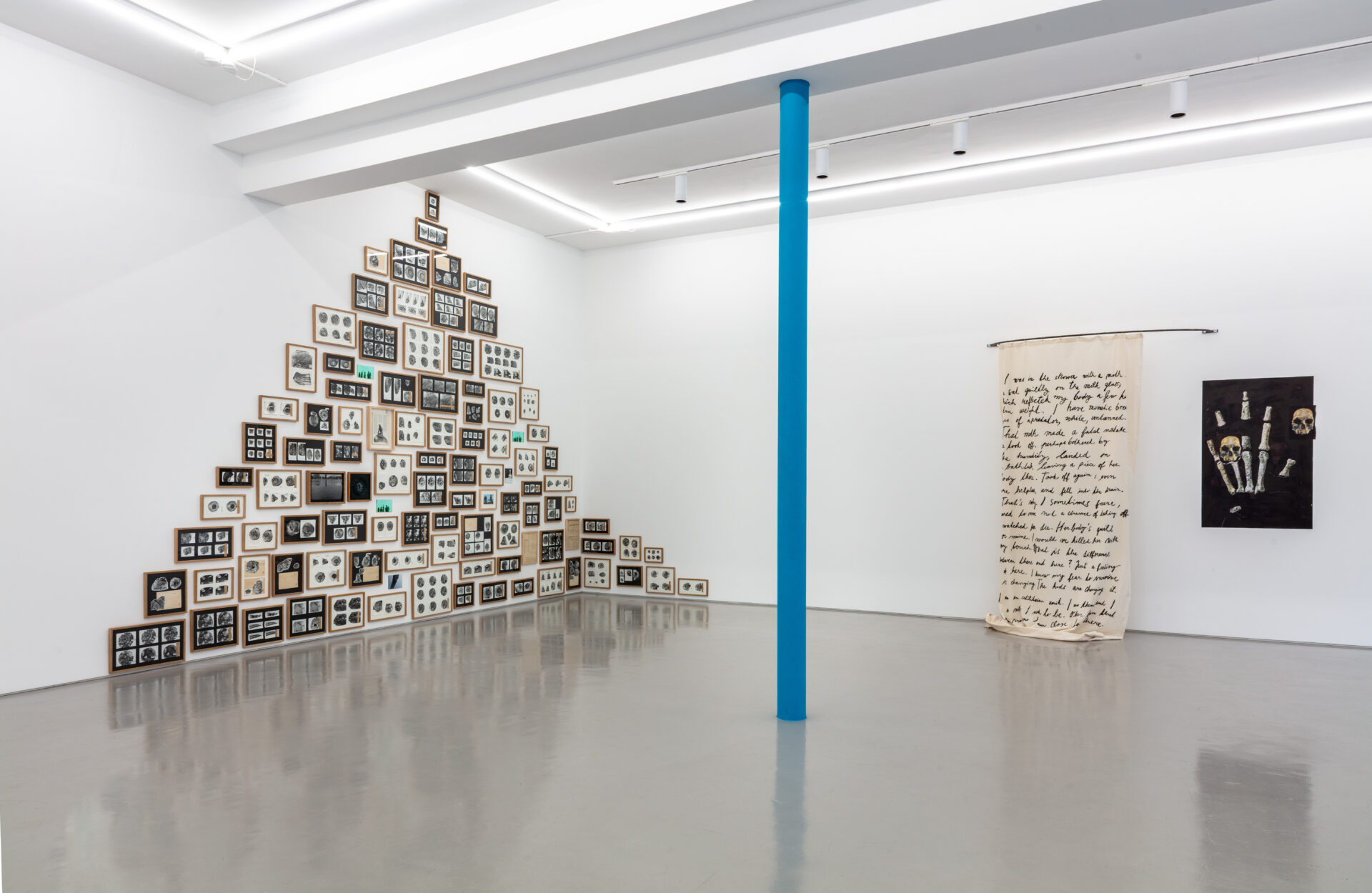
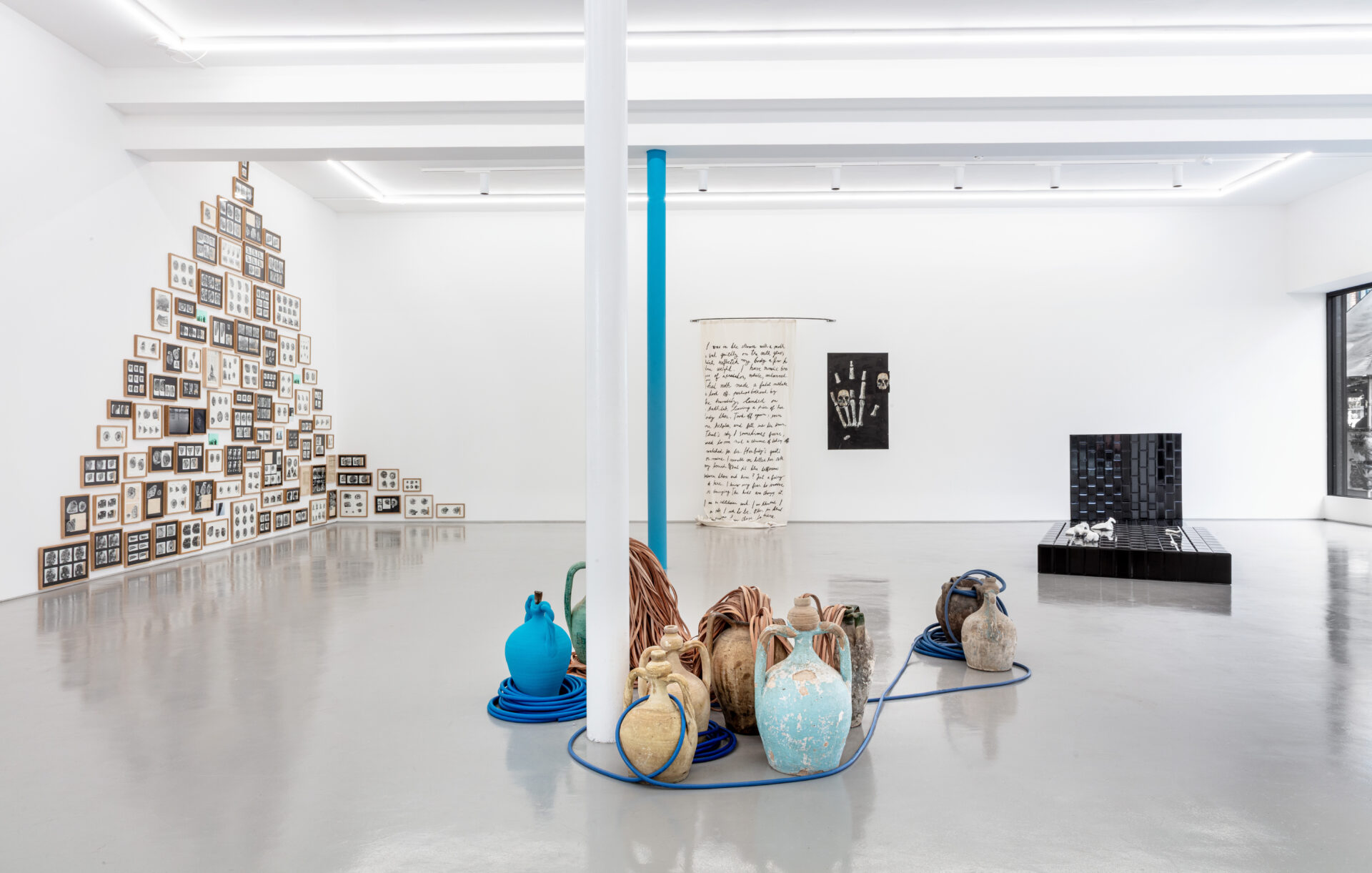
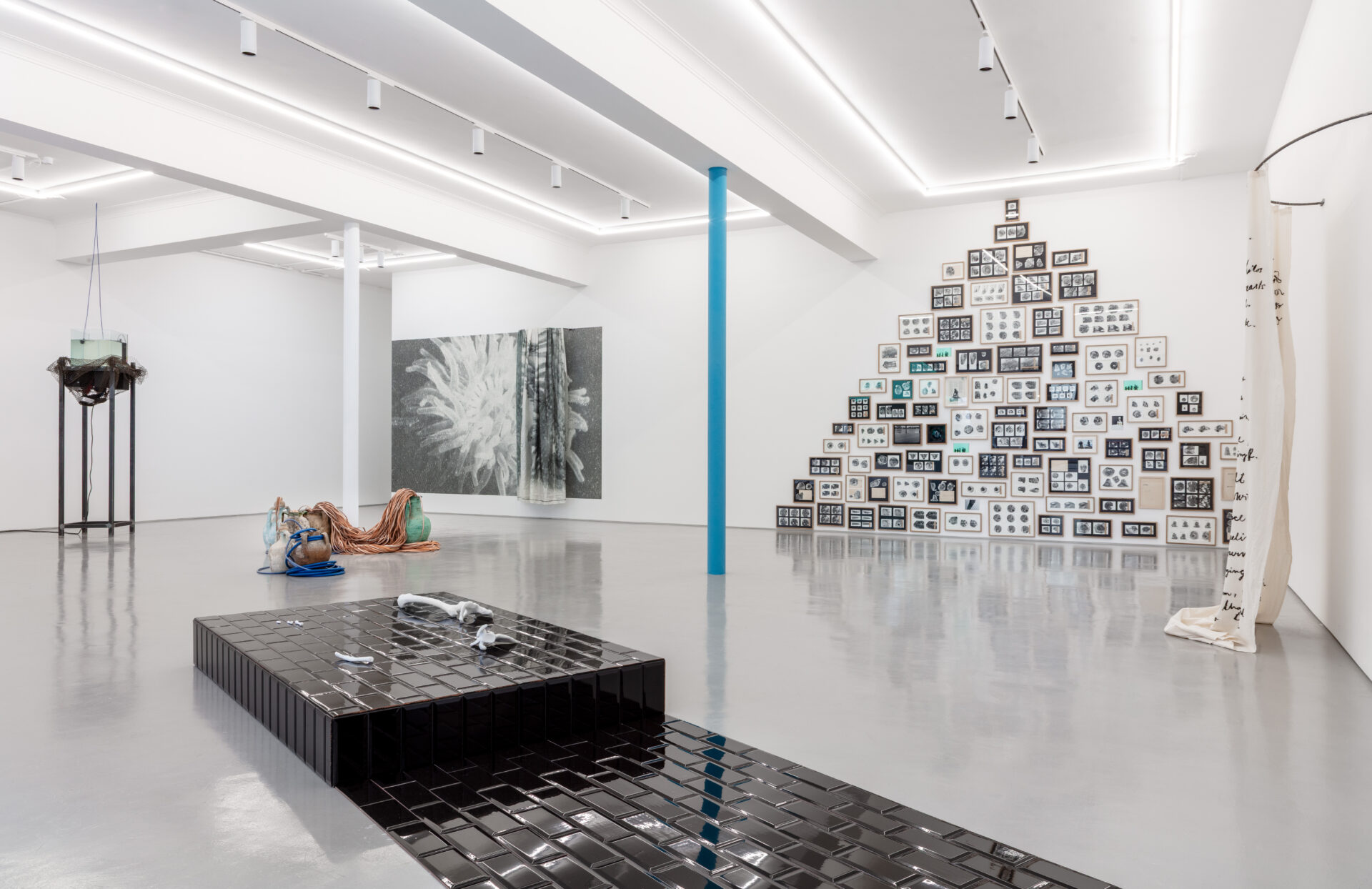
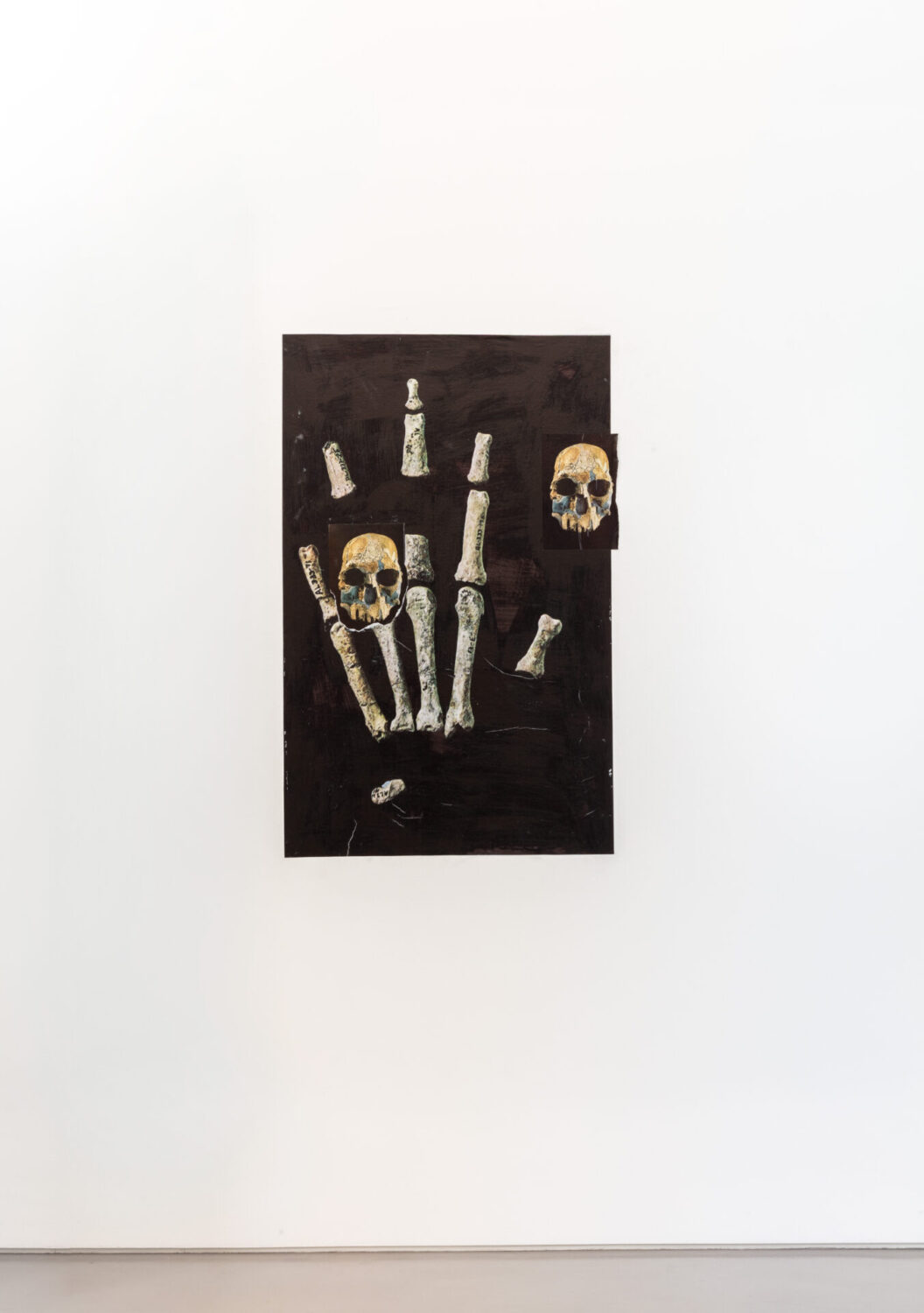
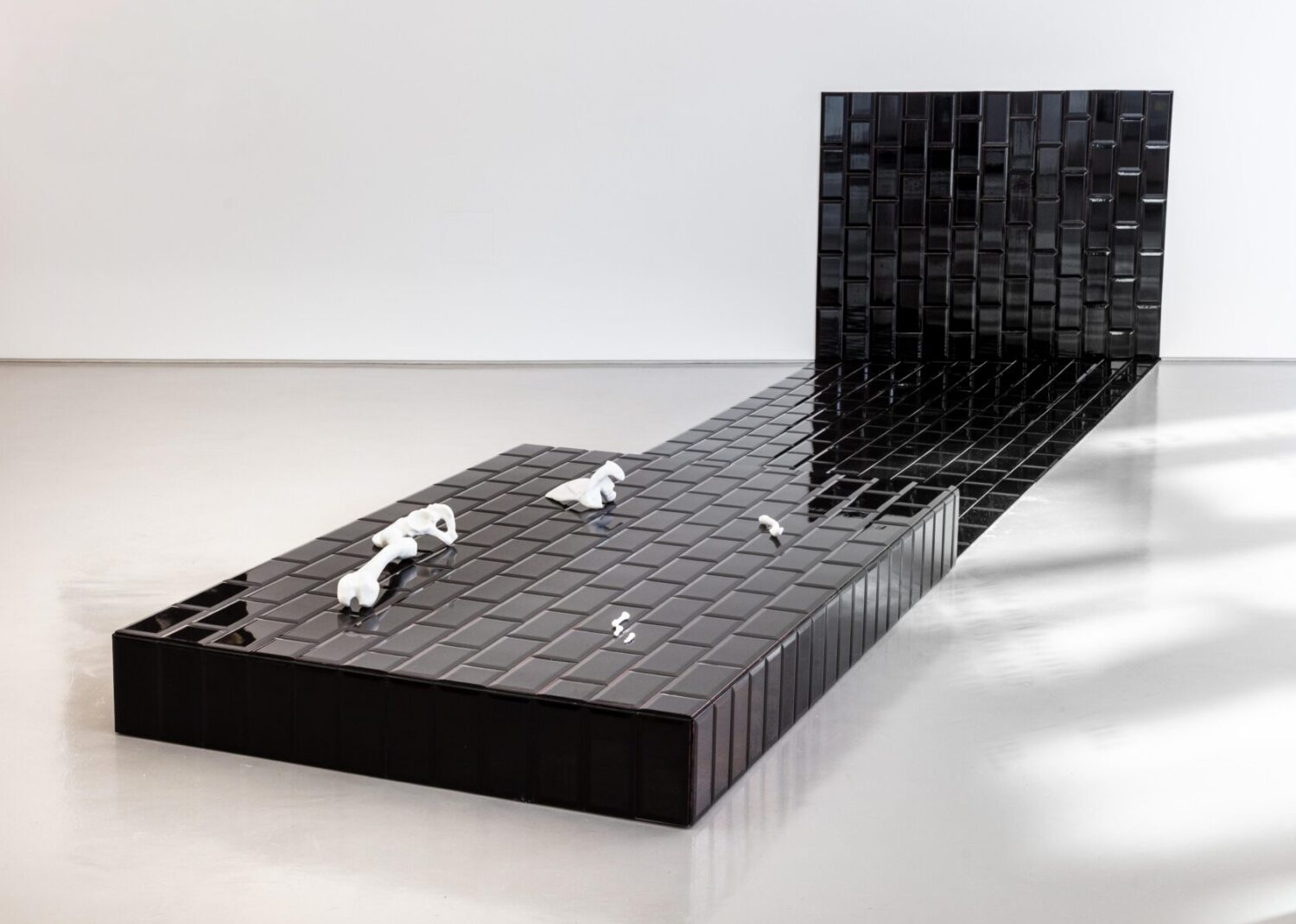
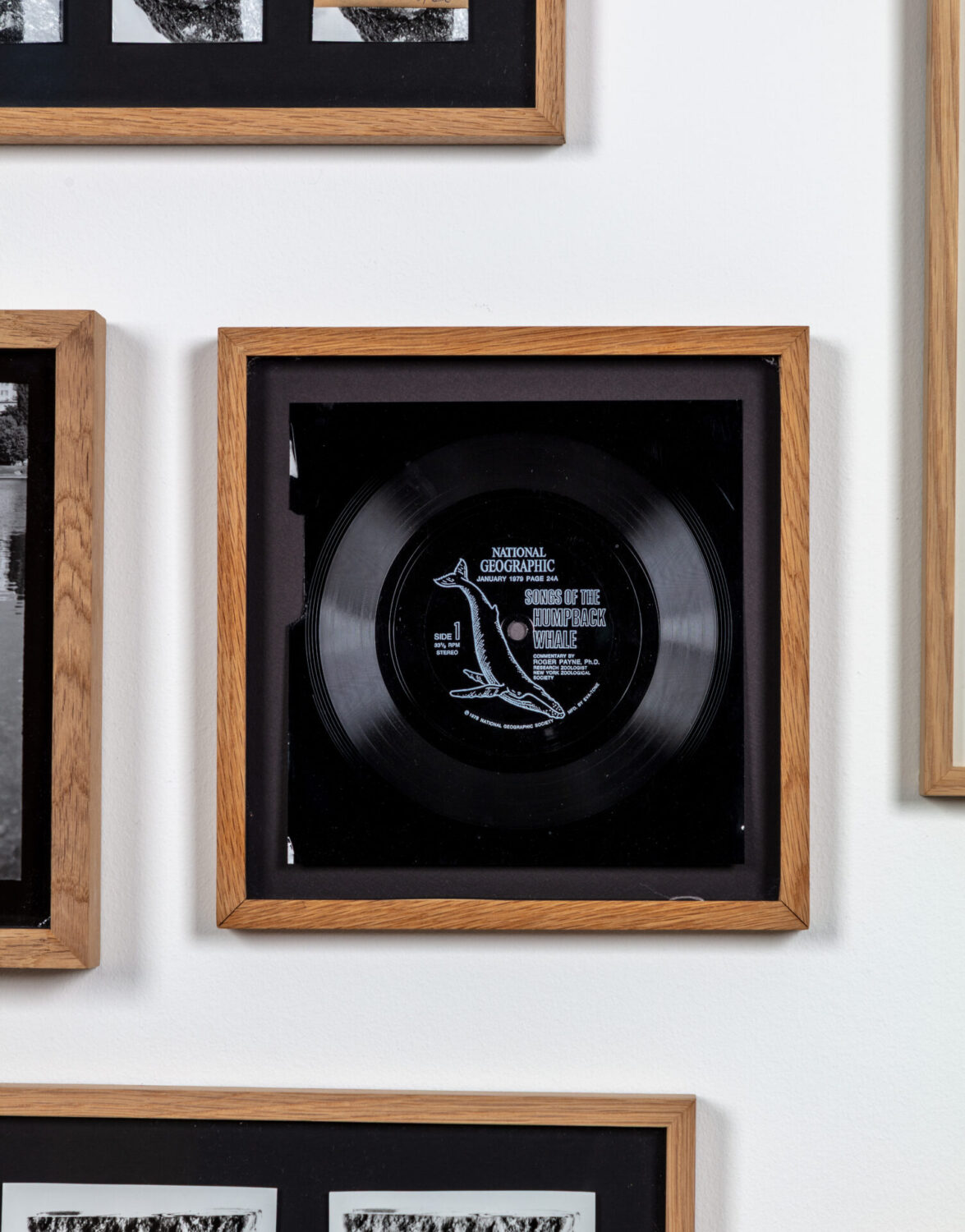
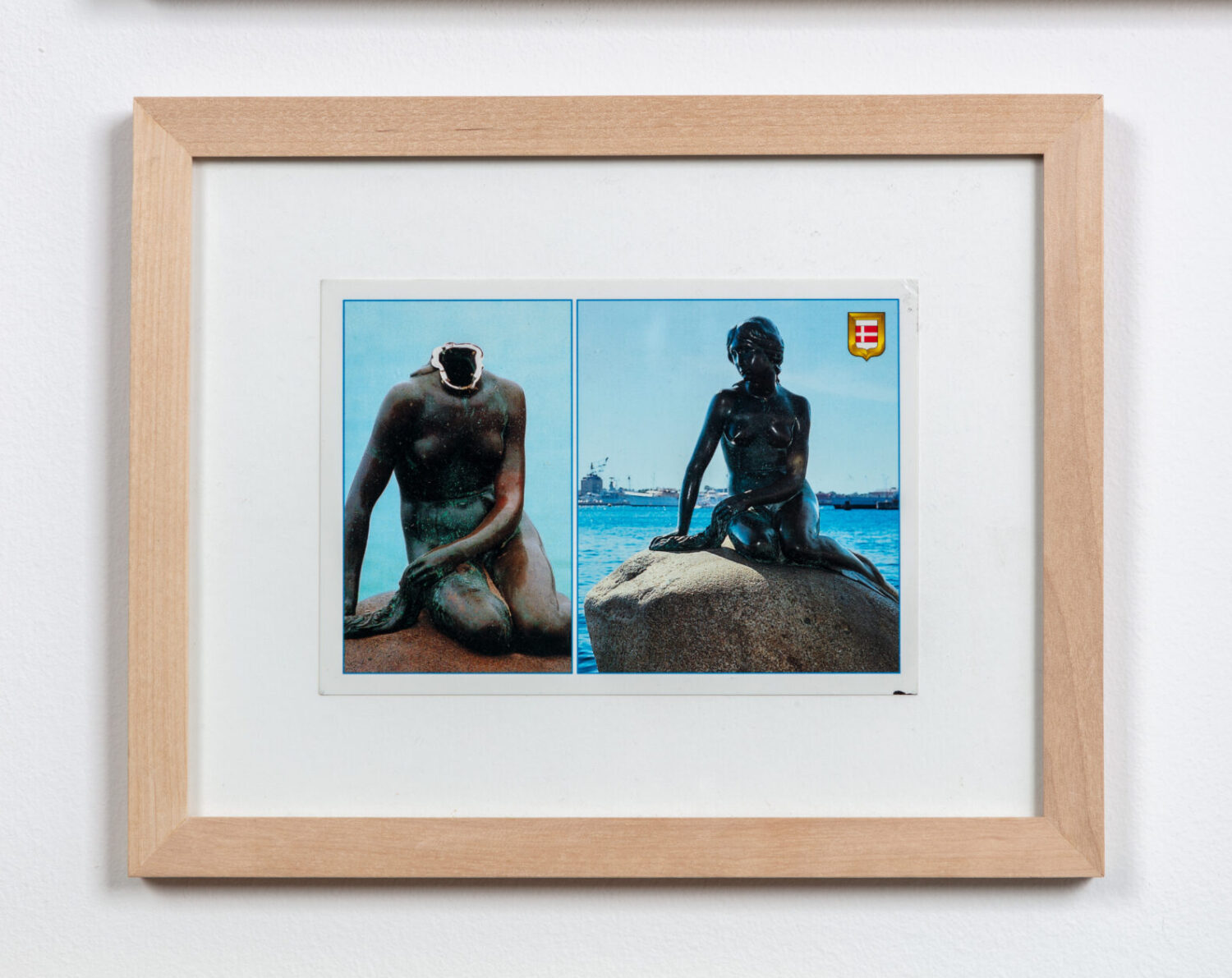
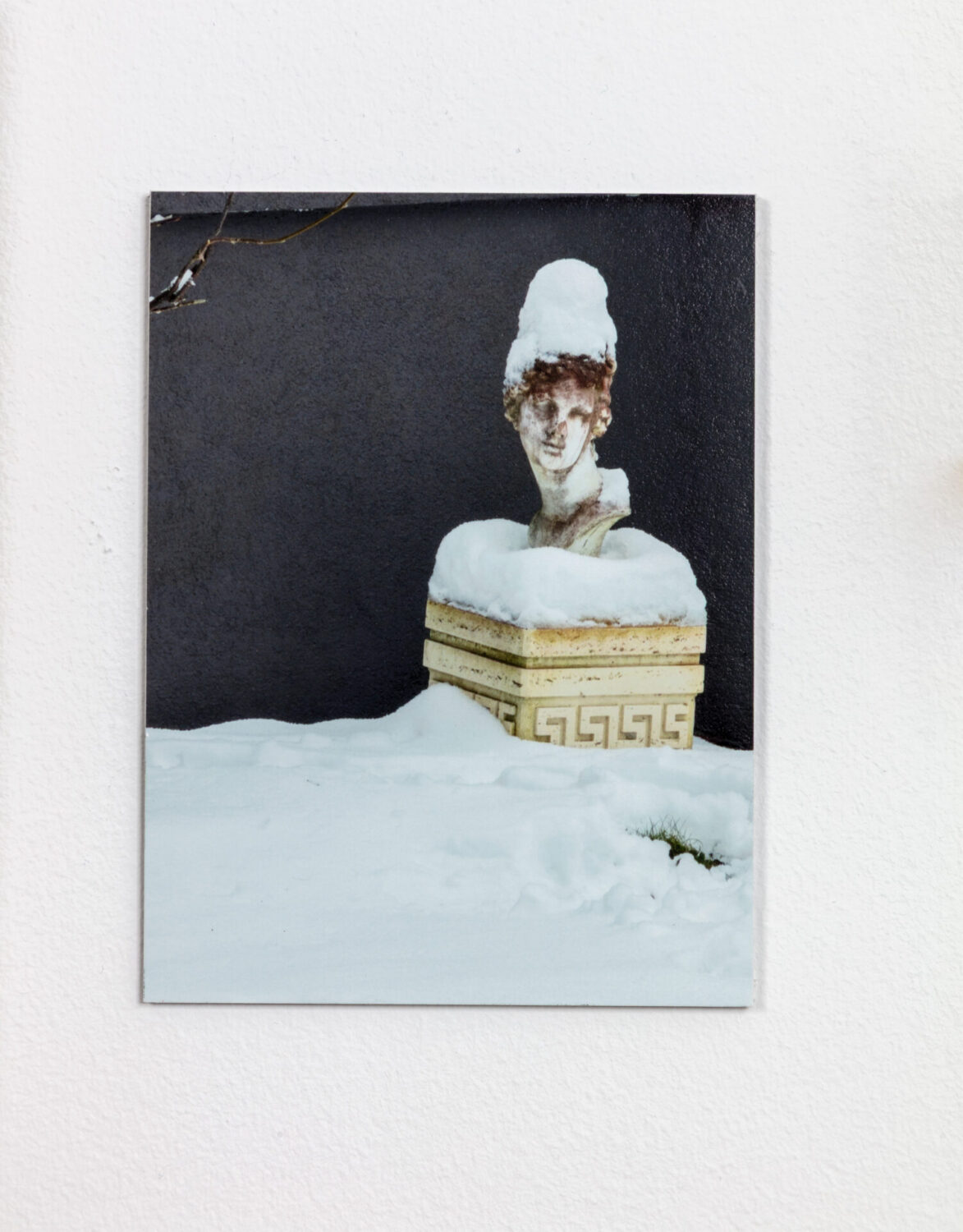
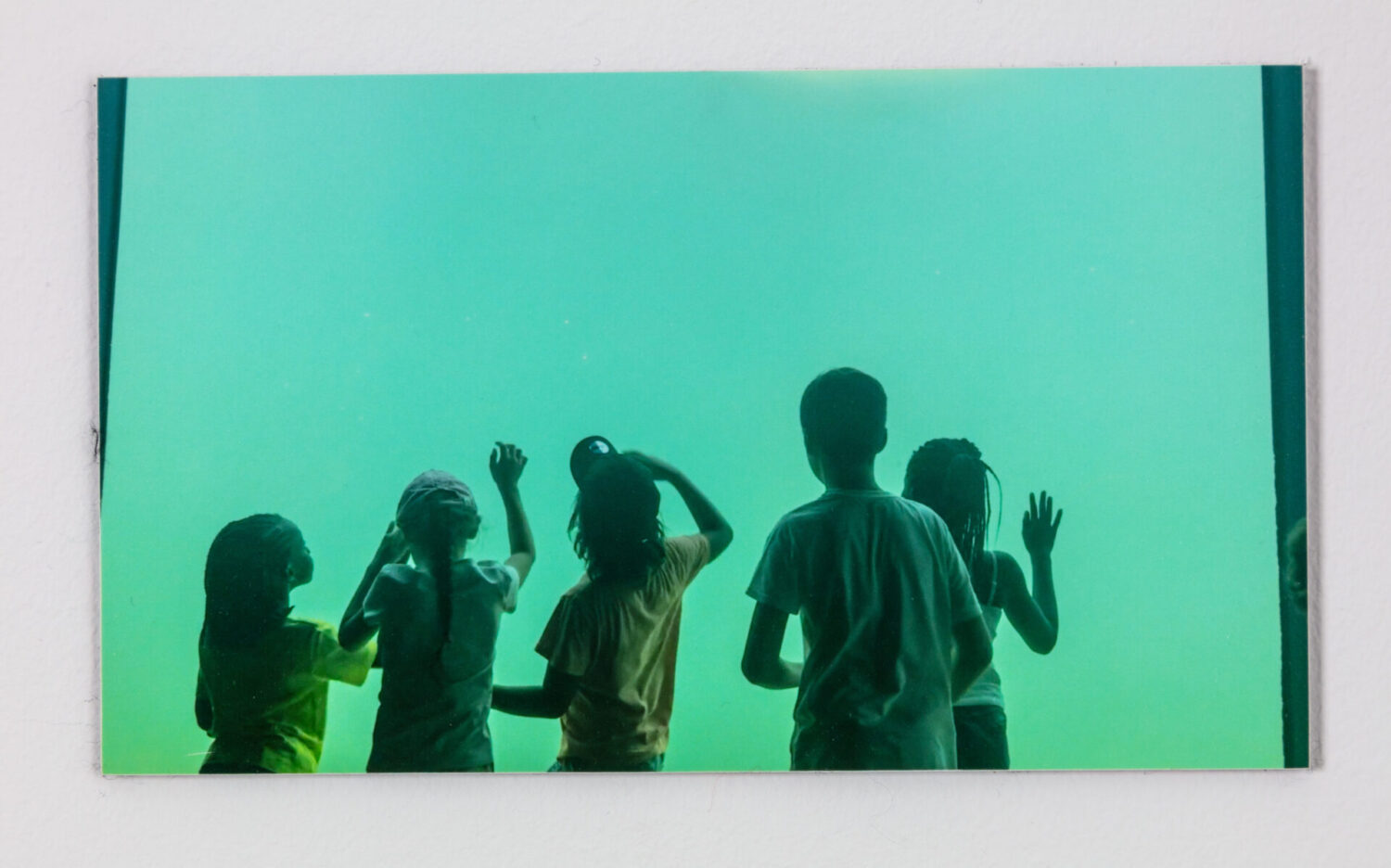
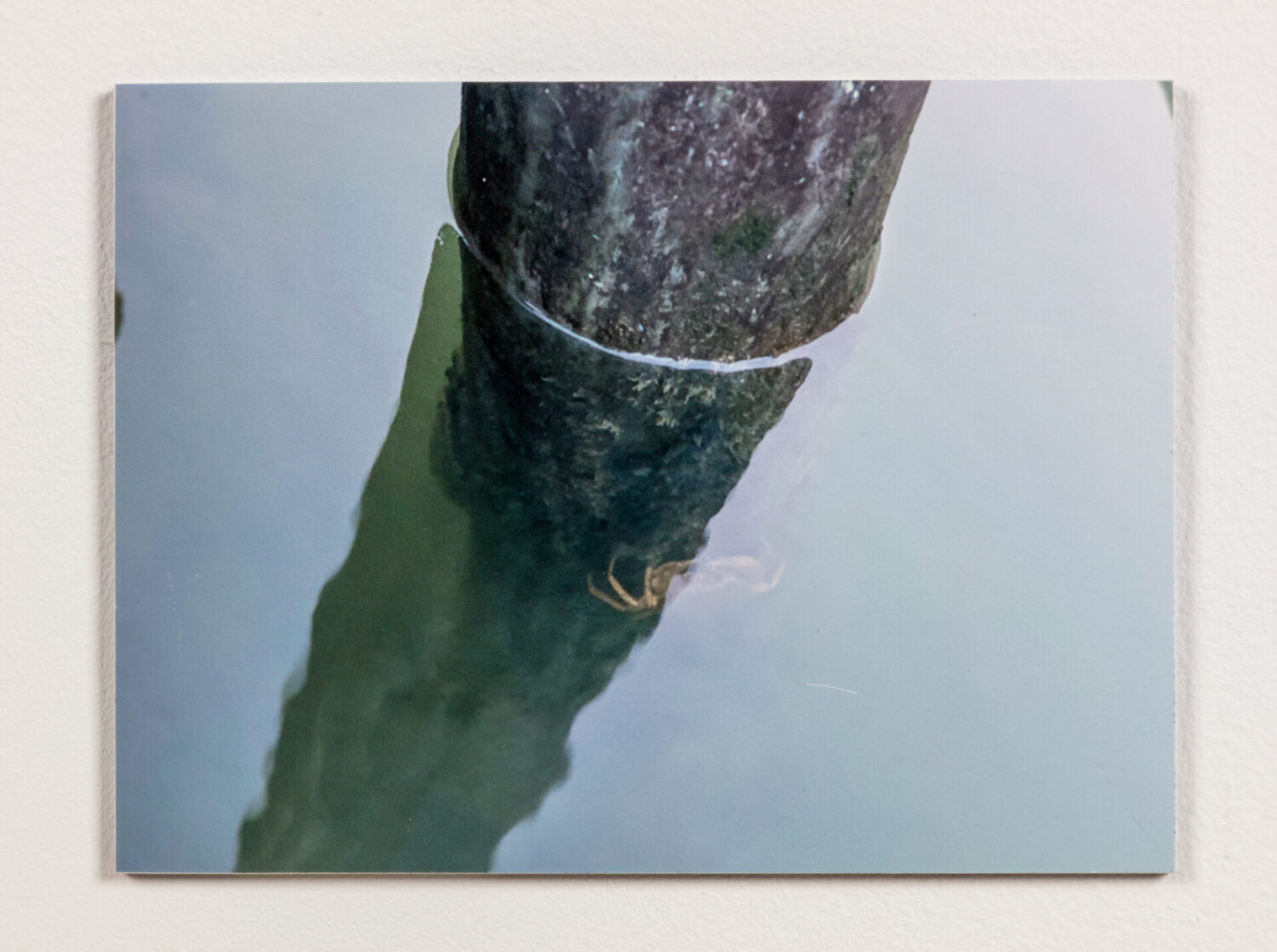
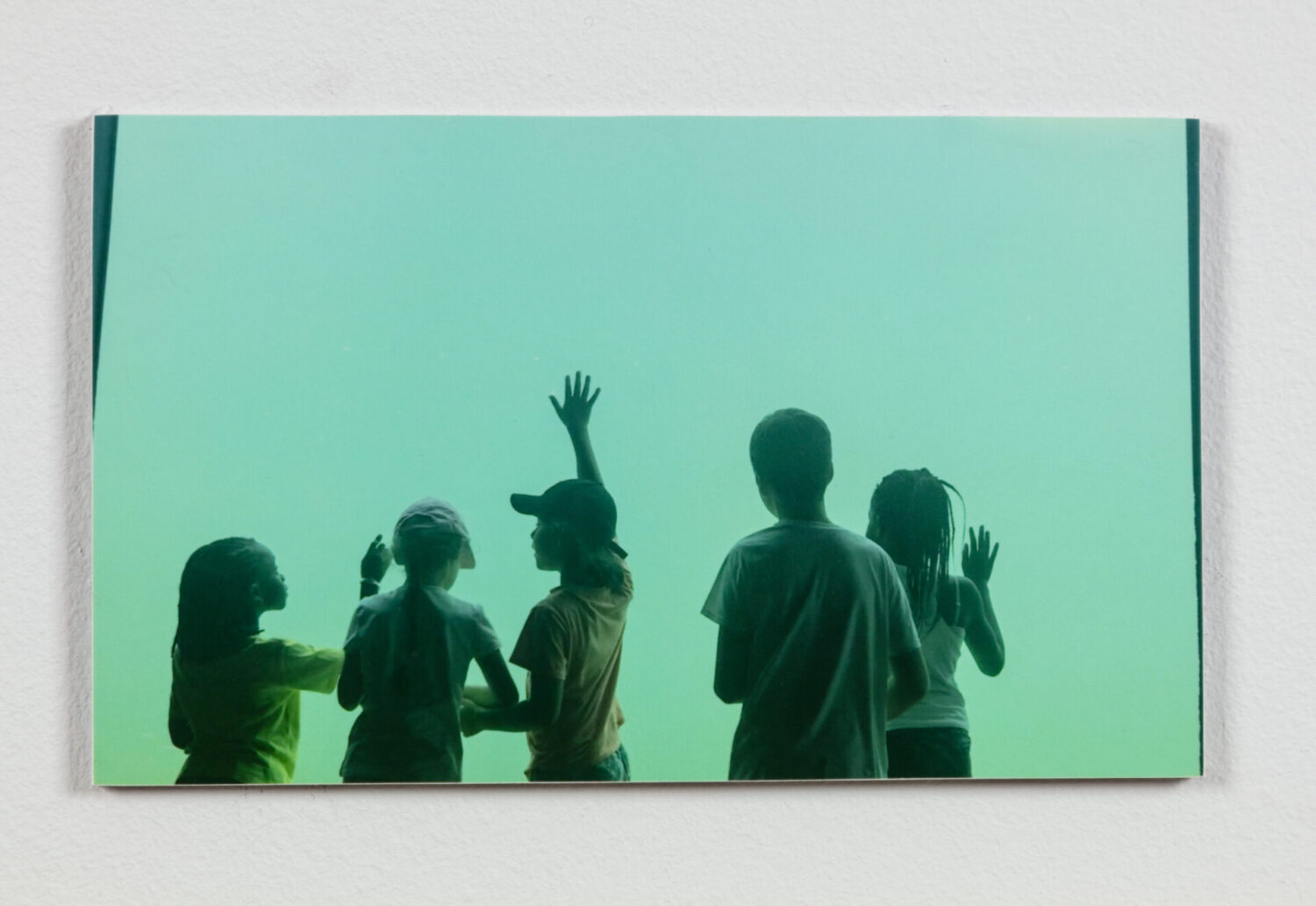
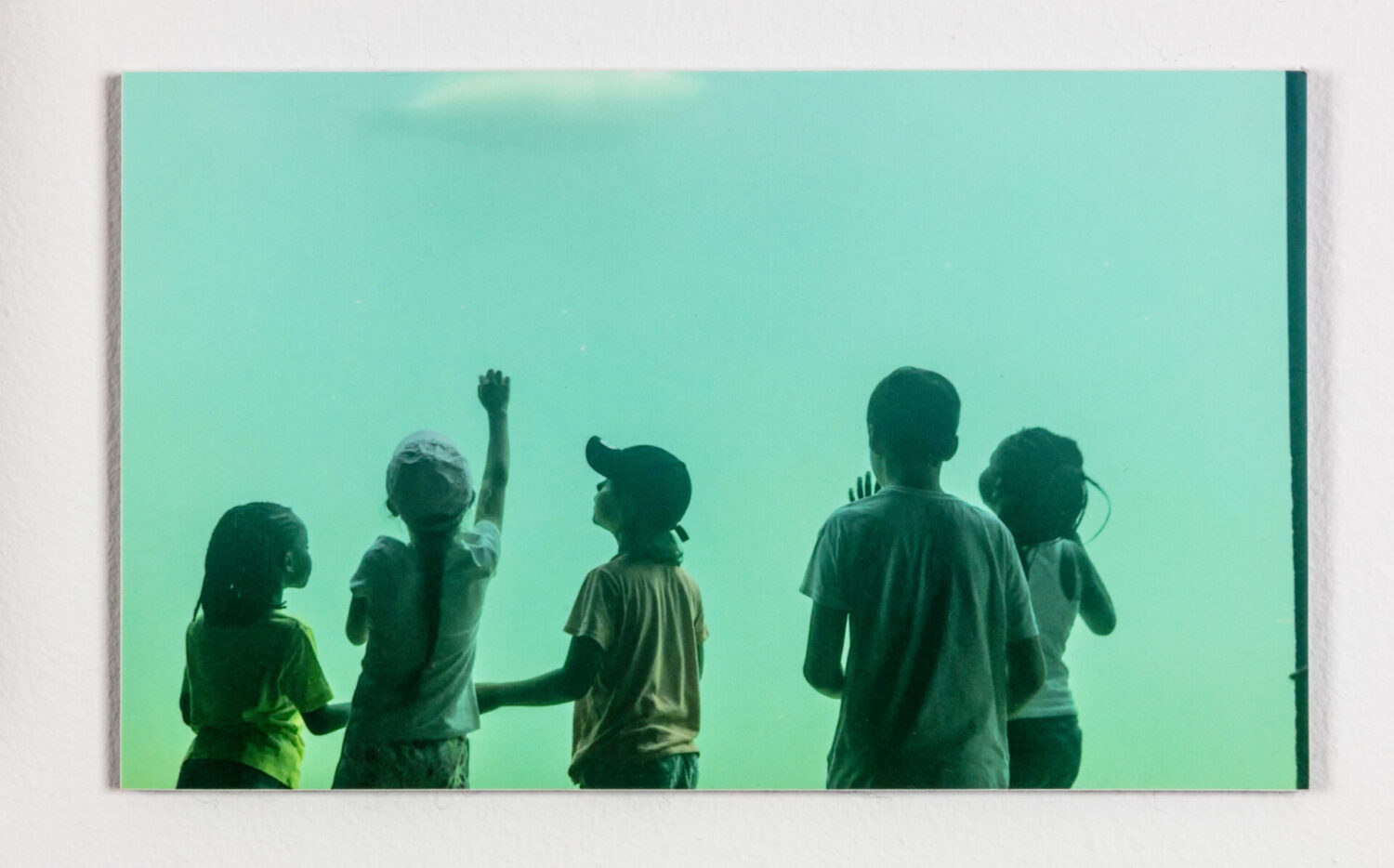
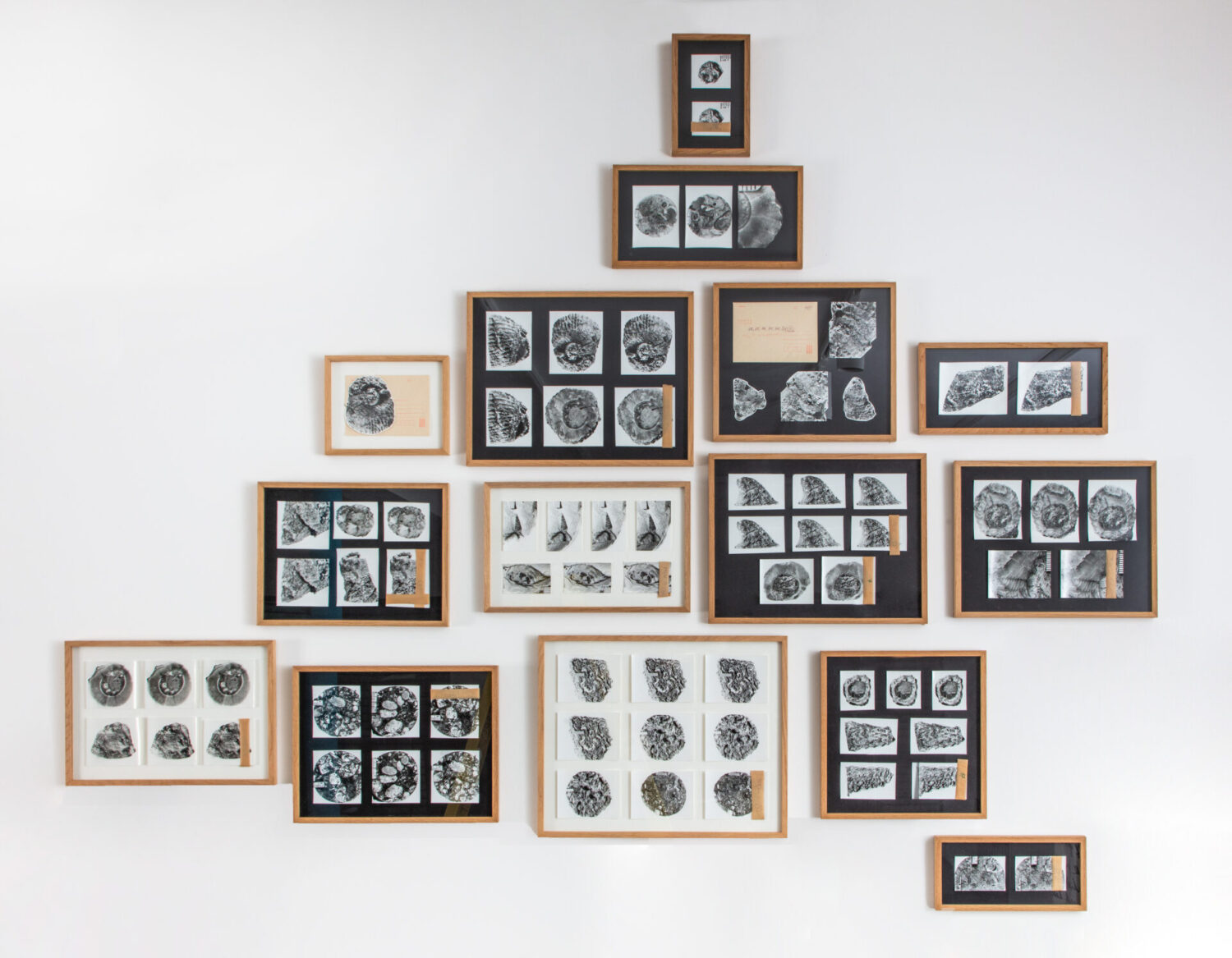
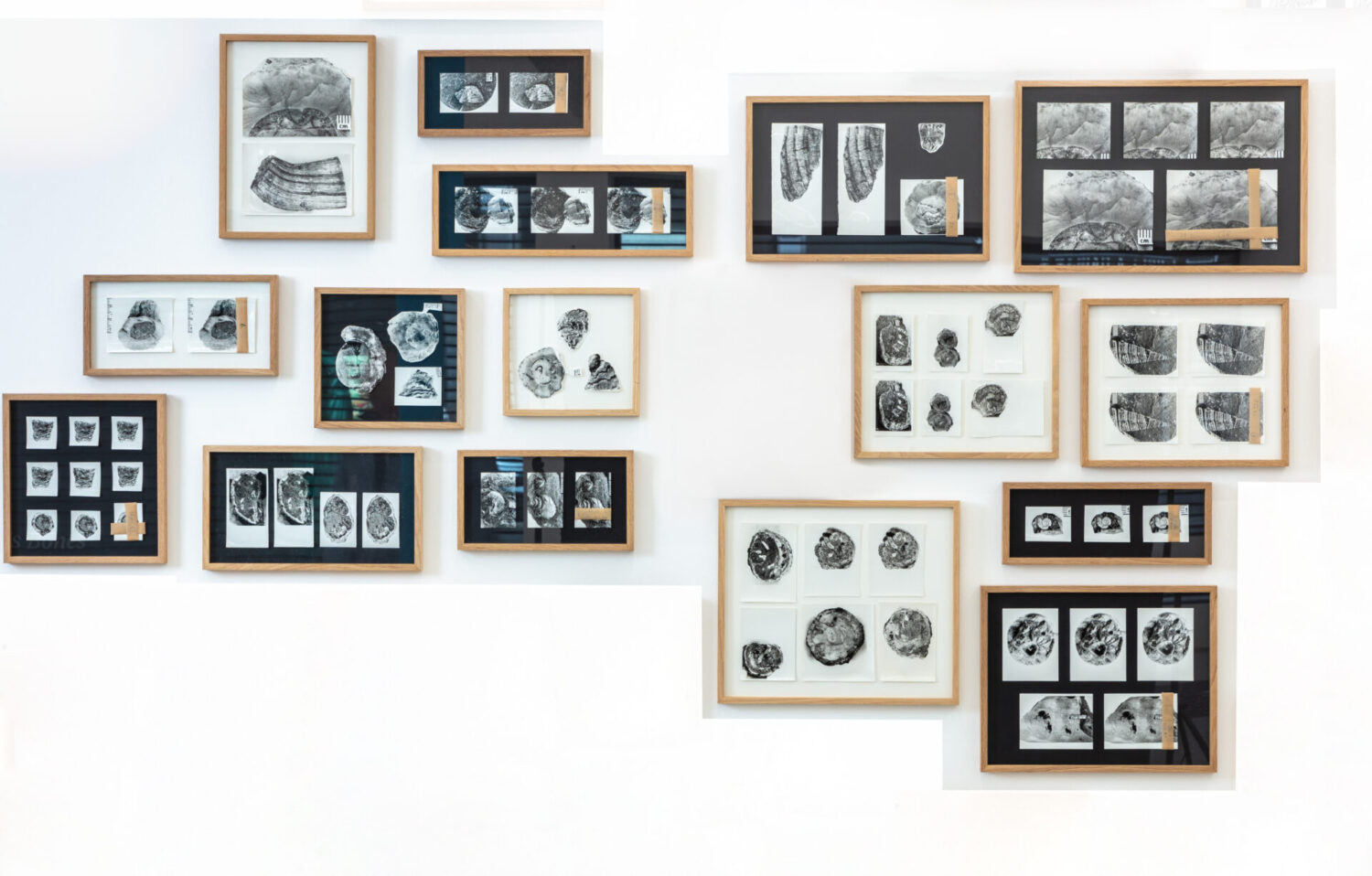
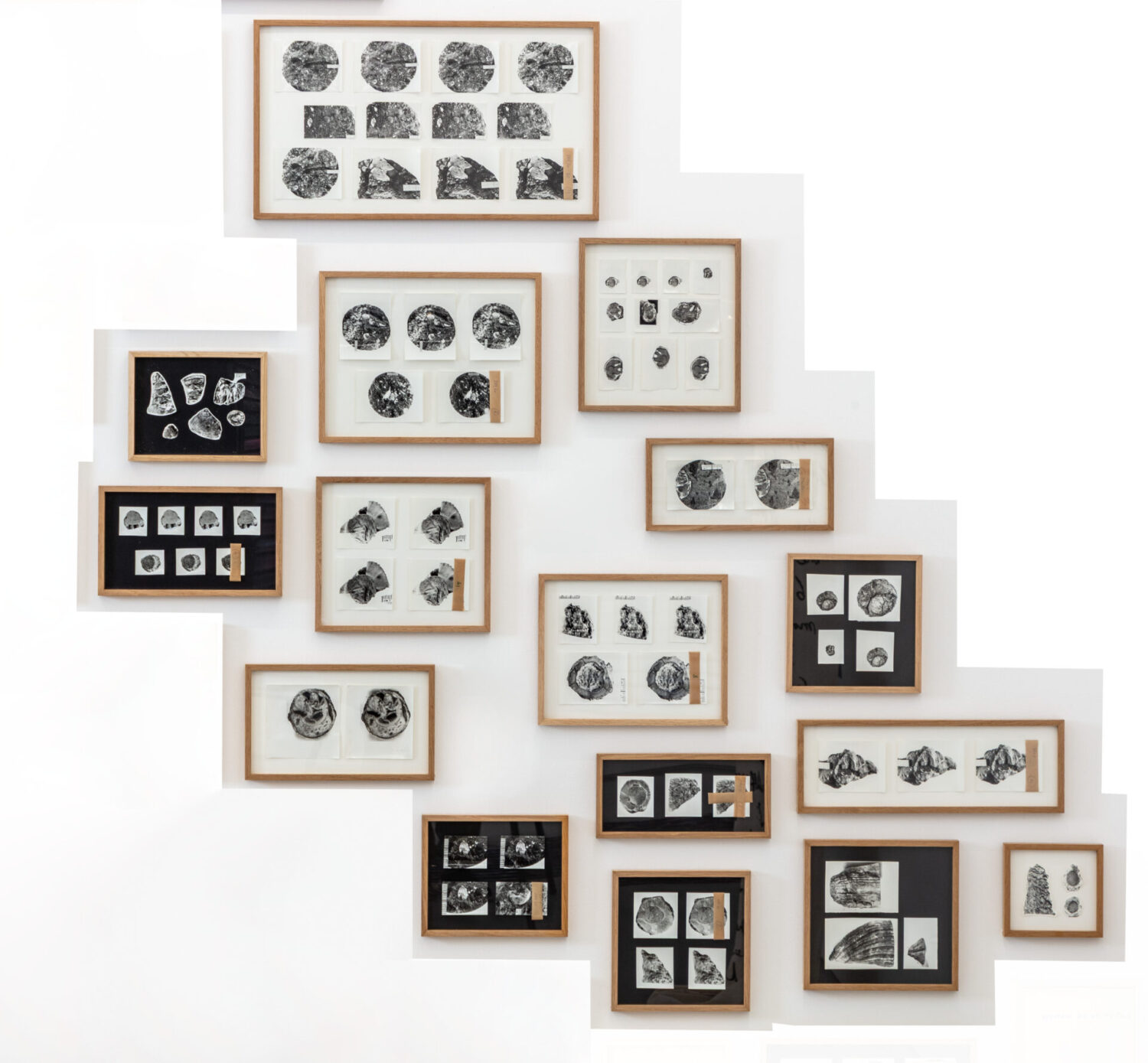
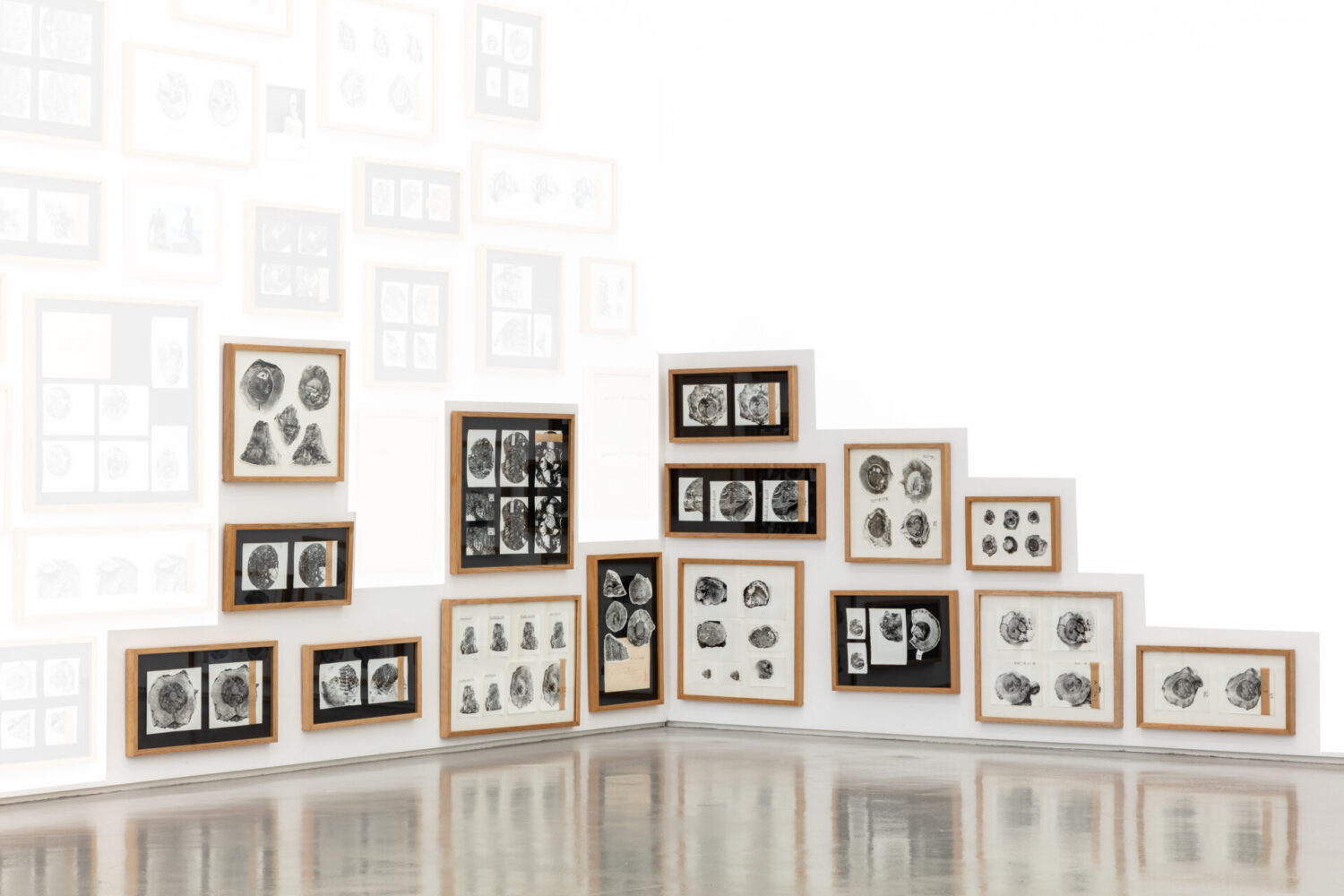
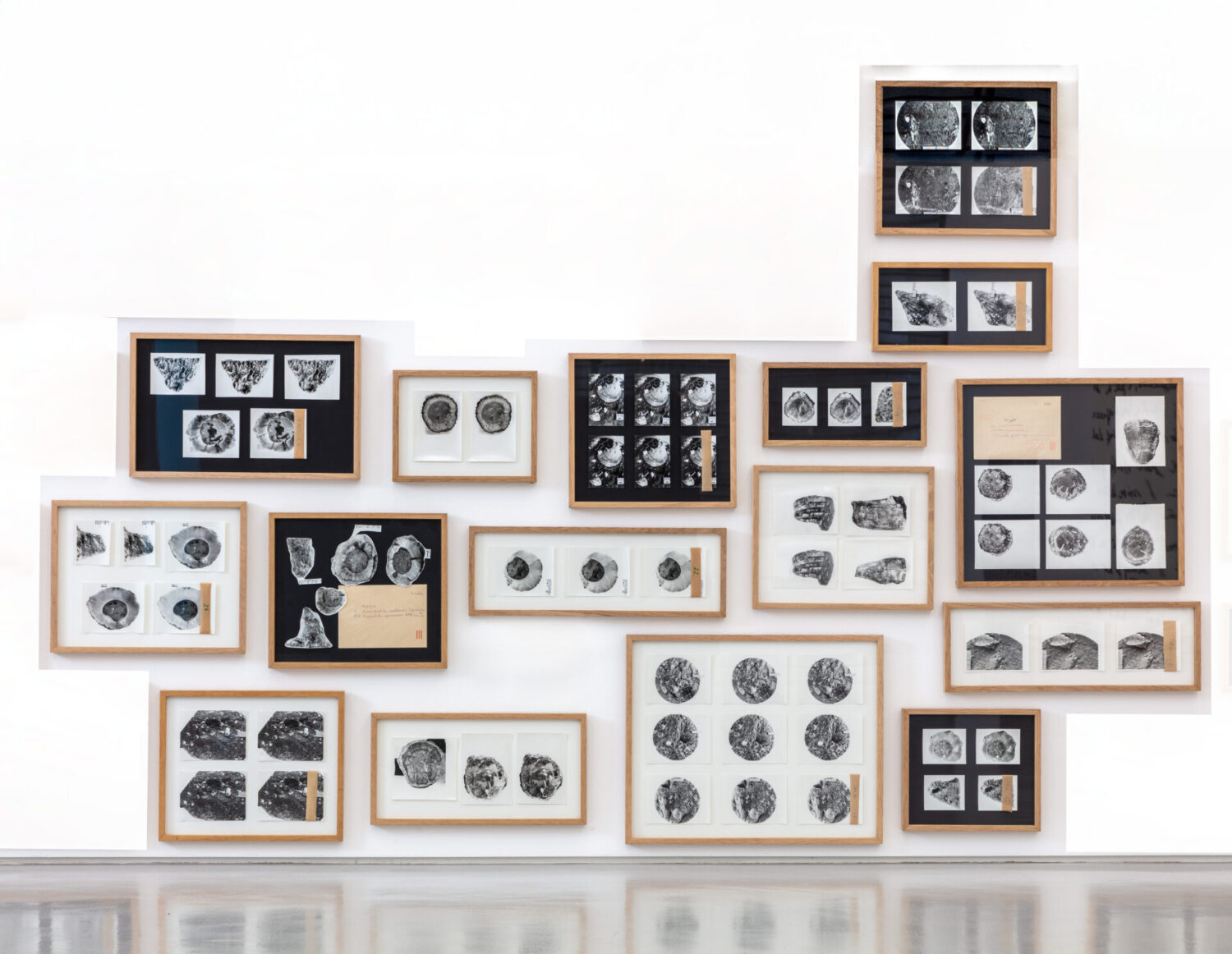
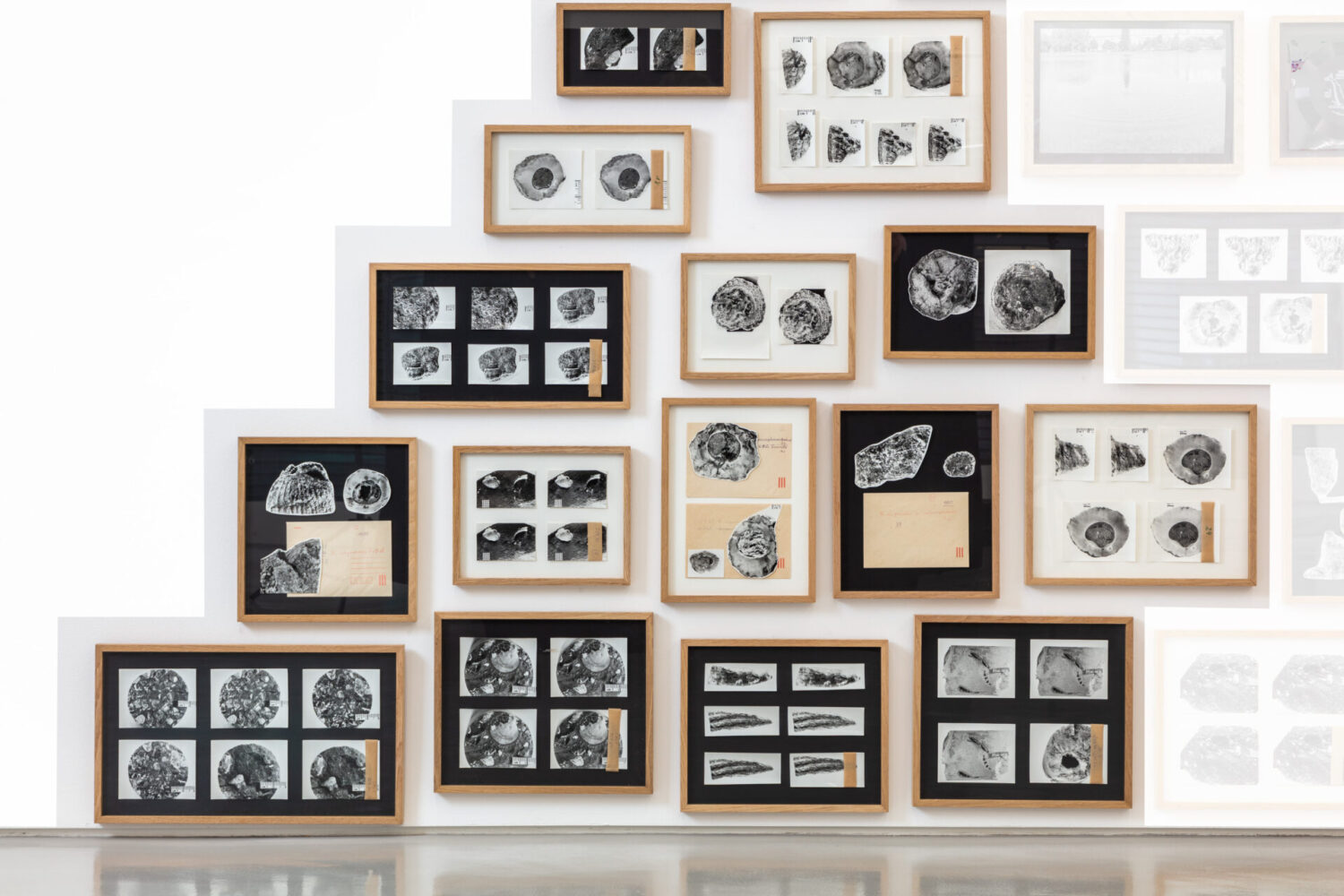
Such amalgamation of references sets the tone of this exhibition, introducing the very circumstances from where Feriancová’s practice sings: erudite and multifaceted at the core. As in an Agatha Christie novel, nothing in the artist’s work is arbitrary or devoid of meaning. In her vocabulary, elements exist on their own, as well as parts of a well orchestrated narrative – or rather narratives – that constitute her body of work. The notion of archaeology is key, and beautifully represented by an assortment of fossils and, indeed, bones. These once organic matters fascinate Feriancová for they are indexes of time, reminding us of the inevitable decadence of all living things – good and bad, pretty and ugly, great and small. They are present in works such as Echo’s Bones 2026 (2026), an assortment of marble bones that she imagined as belonging to the nymph Echo. Also, in Untitled (Hand/Skulls) (2015/2026), the eerie wallpaper of half a hand of bones with photos of skulls placed atop, as well as Found and Given 2015/Fossils 2026 (2015/2026), a pyramid-shaped collection of photographs and objects. The bulk of the images that constitute the latter came to her via a friend, who was the last person to work on a photo-developing studio in Budapest, where these images – of fossils and other organic matter from some ancient forest – were forgotten. Feriancová added some extra imagery to the composition, where the subject of water is always nodded at – scenes in the aquarium, photos of Venice, pieces of The Little Mermaid – charging the work with new resonances whilst disrupting the simple displacement logic of the readymade. As the artist would put it, by mixing found and made elements together, she becomes both the audience and the creator of the work.
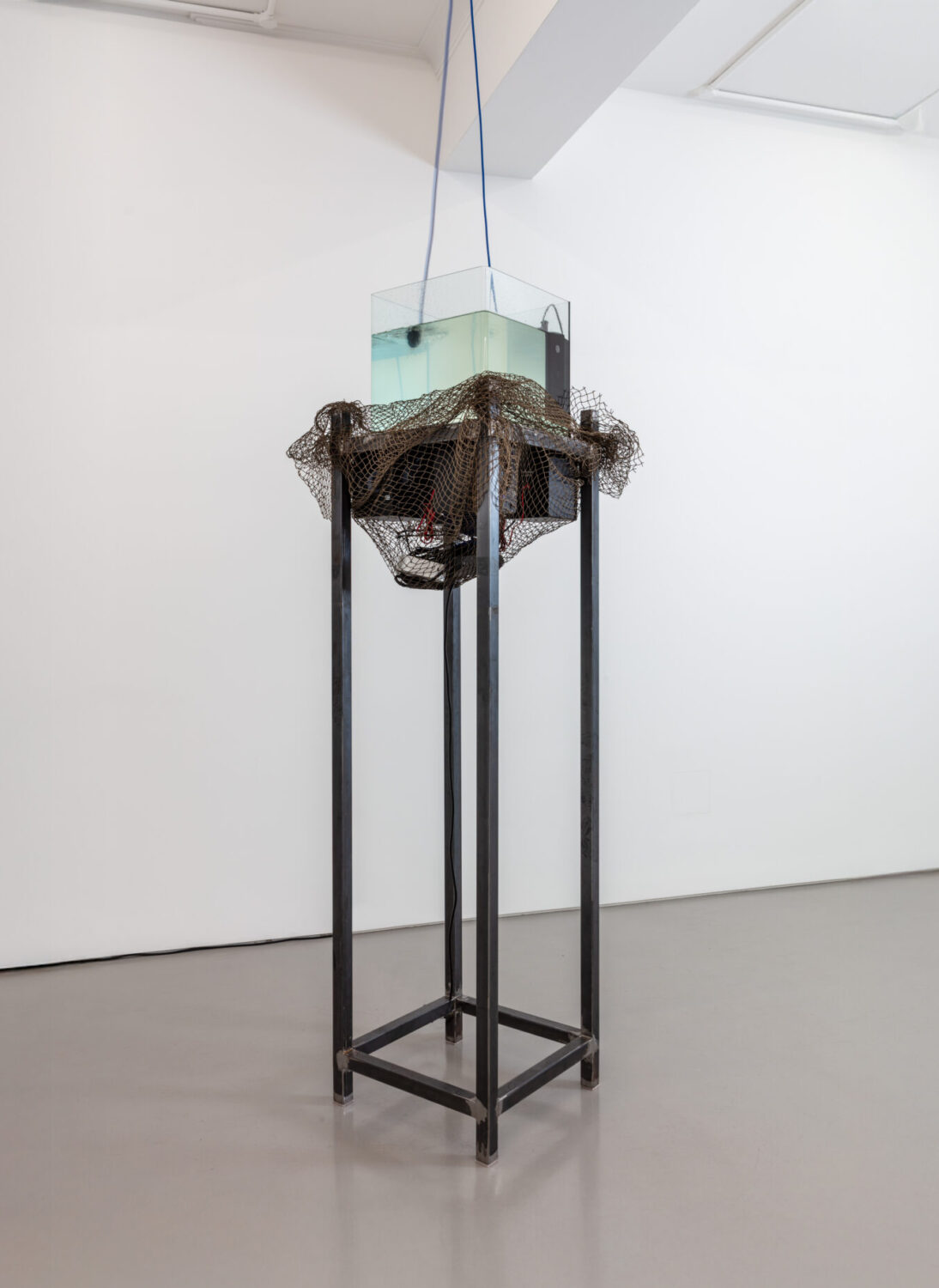
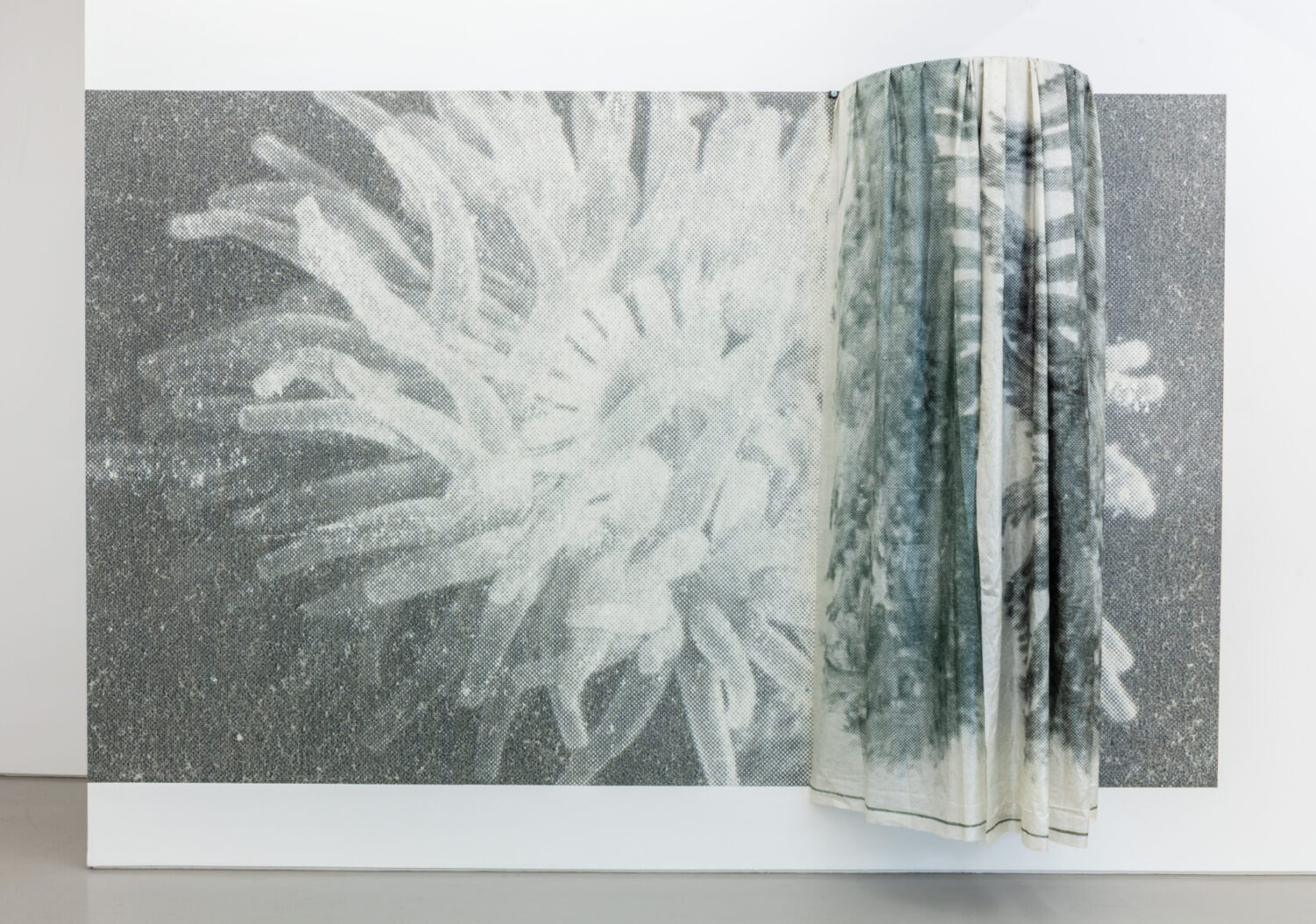
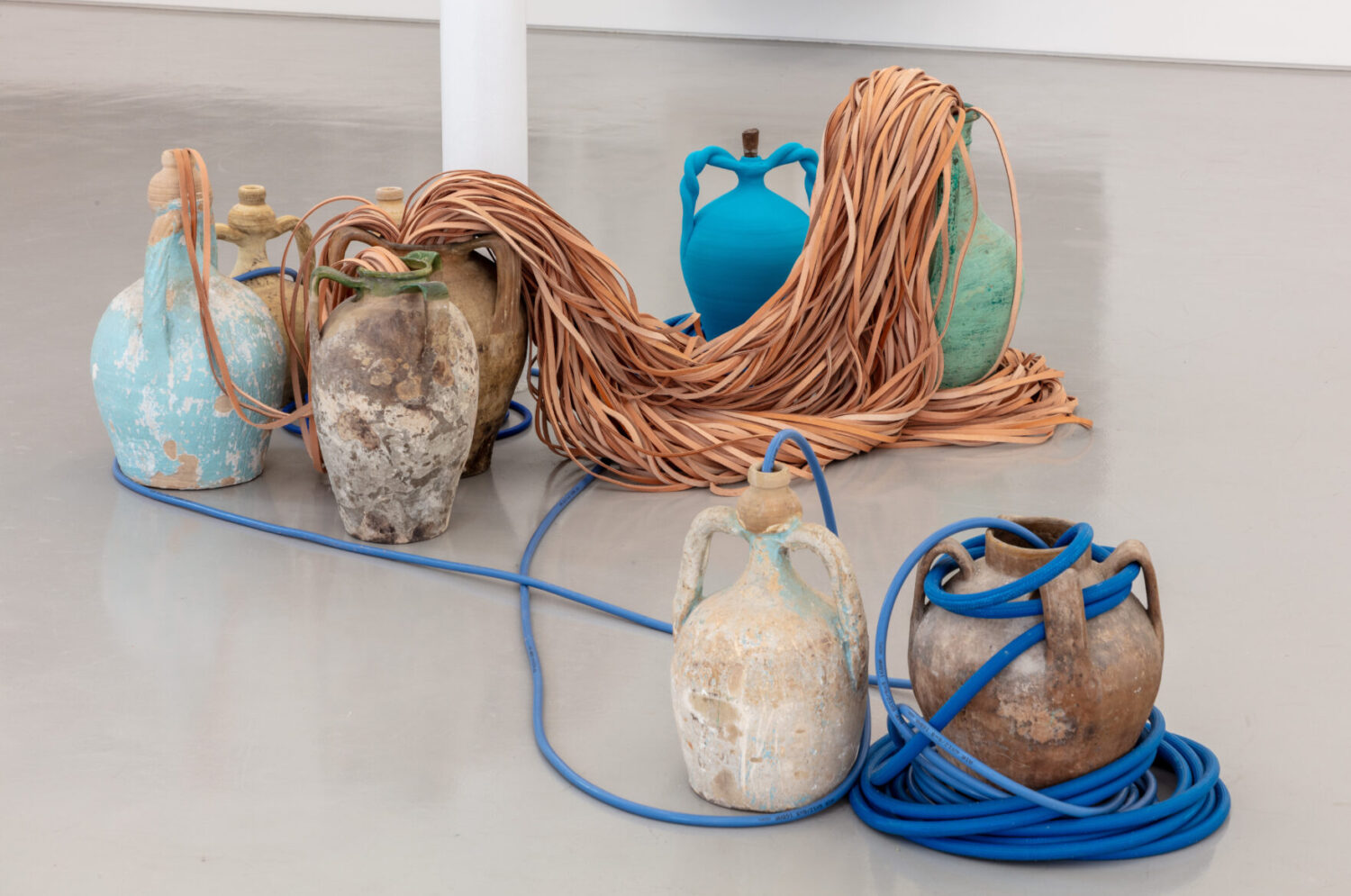
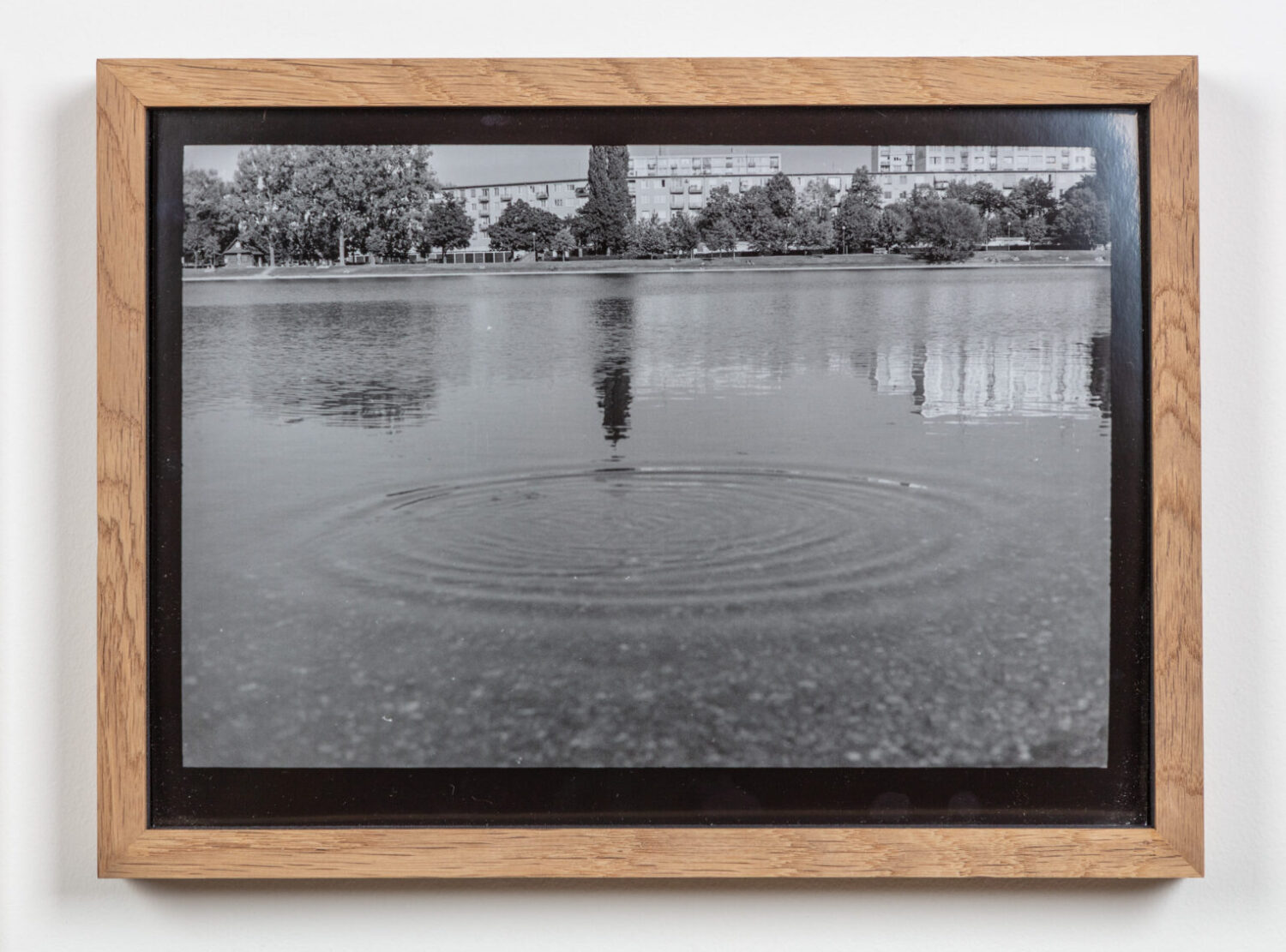
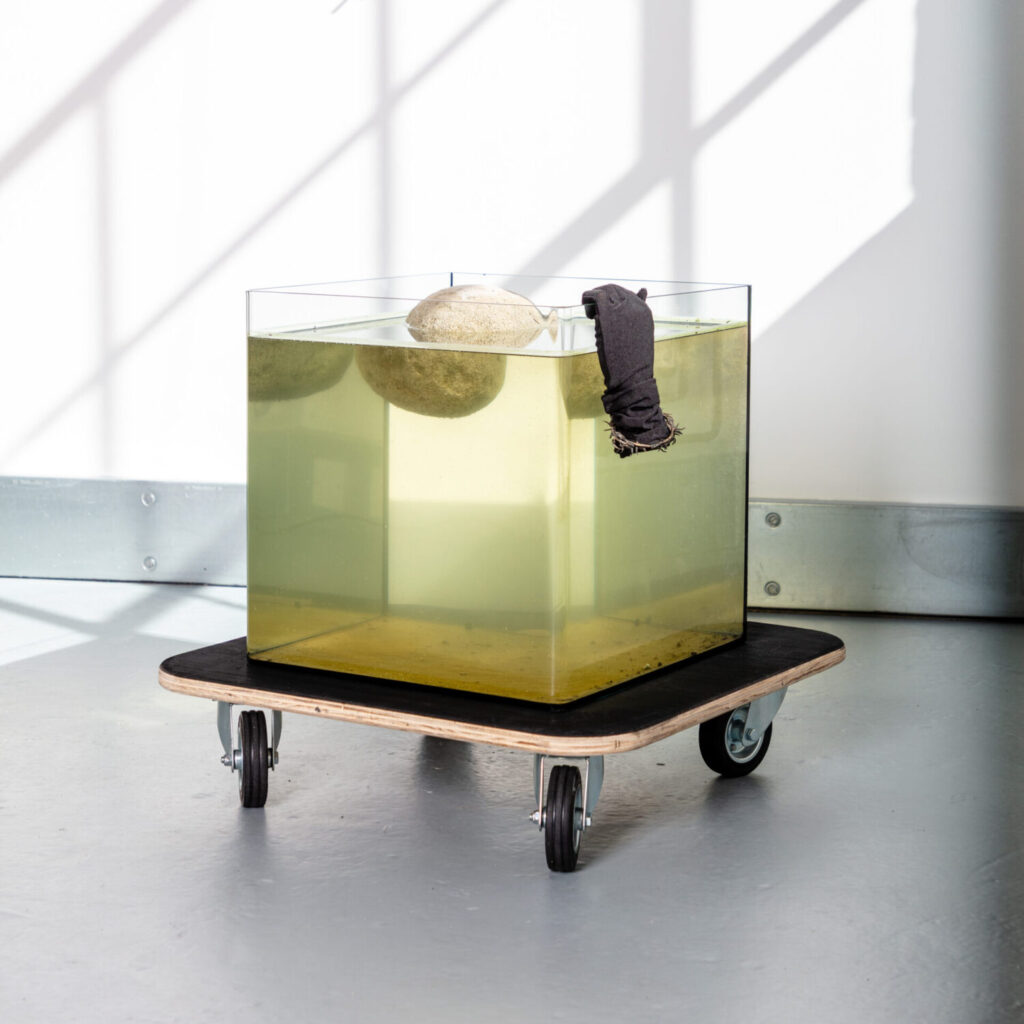
The passing of time is also the substance of a large piece displaying an anemone (Anemones, 2016/2026), a creature that, despite its appearance, is not a flower but an animal. Feriancová has recurrently turned her attention to maritime life, fascinated by peculiarities of species that can live long, self-regenerate and defy time – in addition to the anemone, this includes, for instance, poriferans and hydras. Noteworthy, all of these creatures are named with Greek words and, in some cases, after Greek myths, adding to this connection. A group of ceramic vases that are displayed on the floor (Untitled, 2014/2026) allude to such aquatic creatures in their form, while they dialogue with the artist’s fascination with archaeology. Furthering her explorations with water is Formants of Water 2026 (in collaboration with Stroon) (2026), an aquarium filled with tap water, a filter that gently waves the liquid, as well as a special microphone that records the sounds created by the waves – which are then amplified and played over the gallery space. This work nods to a previous piece Feriancová created with an aquarium, paying homage to Ophelia, Hamlet’s tragic heroine. Noteworthy, Ophelia’s death has many parallels with the passing of Echo: both muses died prematurely, with a broken heart, and water played an essential role in both deaths – by acting as a mirror for Narcissus, and by drowning Ophelia. Hans Christian Andersen’s The Little Mermaid’s (1837) original fate – not the Disney sweetened version – also resonates here tragically.
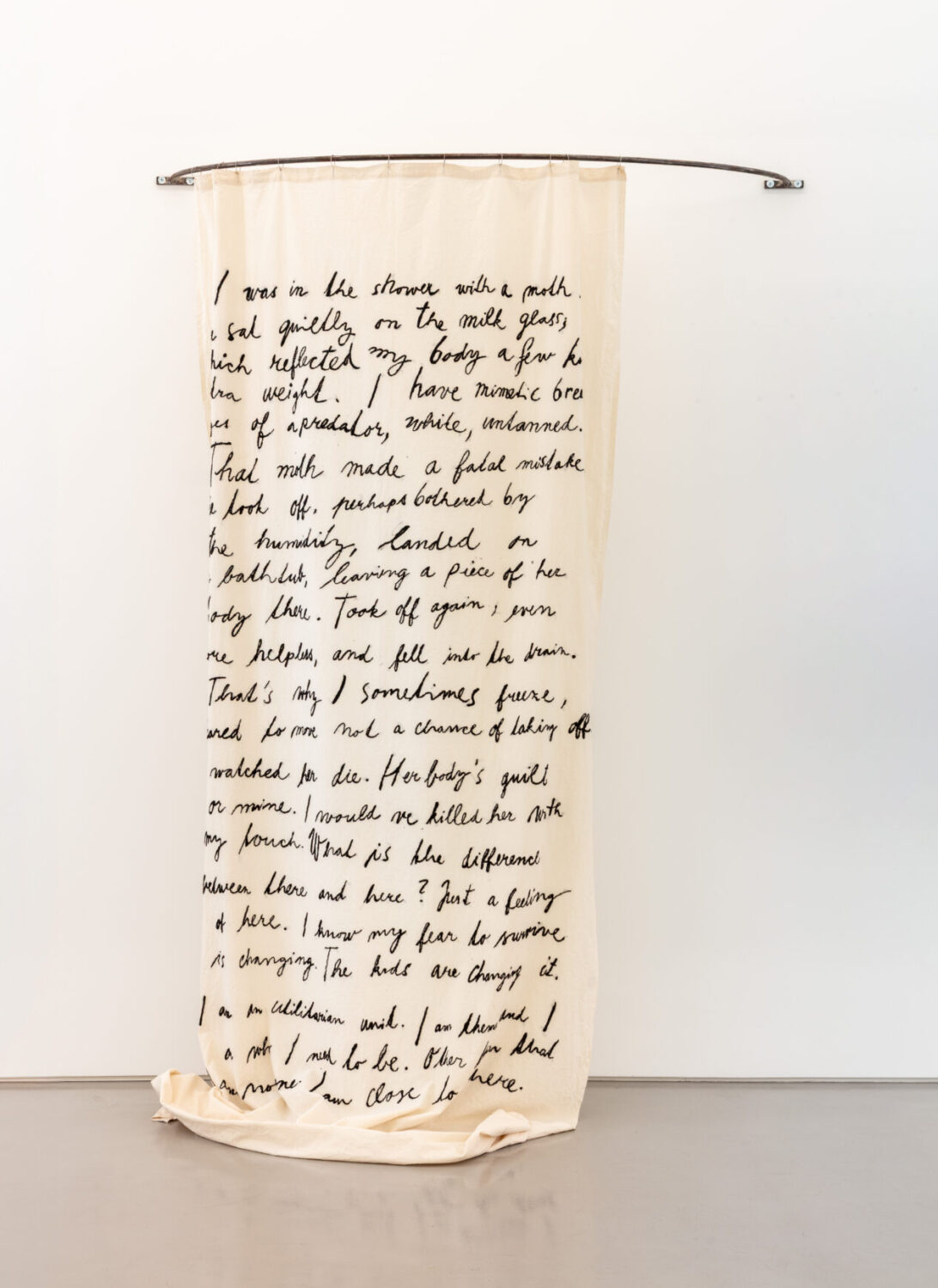
Feriancová’s enduring interest in womanhood hits a personal note in the most autobiographical work on show, I was in the shower with a moth (2025). It consists of one of her signature embroidered fabrics, telling the story of the artist’s encounter with an ordinary moth and all the sentiments that it triggered: around parenthood, decay, mortality and utility in its most basic definition. References to literary masterpieces such as Franz Kafka’s The Metamorphosis (1915) and Clarice Lispector’s The Passion According to G.H. (1964), and their transformative dealings with insects, come to mind. I was in the shower with a moth (2025) is an incredibly earnest piece, through which the artist expresses a personal experience that, to some extent or another, echoes with us all. Time and again, Feriancová shows us where to look, offering insights on how to deal with our vulnerabilities along the way.
This exhibition will run from 6th March to 19th April 2026, Wednesday to Sunday, 12-6 pm, or by appointment.